Posts Tagged ‘psychiatrists’

The New Yorker: Does Psychiatry Need Science? (Answer—Yes, because they have none)

Thursday, April 25th, 2013

The New Yorker - April 23, 2013

by Gary Greenberg

Watch Video: Dr. Niall McLaren, practicing psychiatrist,
22 years

In 1886, Pliny Earle, then the superintendent of the state hospital for the insane in Northampton, Massachusetts, complained to his fellow psychiatrists that “in the present state of our knowledge, no classification of insanity can be erected upon a pathological basis.” Doctors in other specialties were using microscopes and chemical assays to discern the material causes of illness and to classify diseases accordingly. But psychiatrists, confronted with the impenetrable complexities of the brain, were “forced to fall back upon the symptomatology of the disease—the apparent mental condition, as judged from the outward manifestations.”

The rest of medicine may have been galloping into modernity on the back of science, but Earle and his colleagues were being left in the dust.

Thirty years later, they had not caught up.

In 1917, Thomas Salmon, another leading psychiatrist, echoed Earle’s worry in an address to his colleagues, drawing their attention to the way that their reliance on appearances had resulted in a “chaotic” diagnostic system, which, he said, “discredits the science of psychiatry and reflects unfavorably upon our association.” Psychiatry, Salmon continued, needed a nosology that would “meet the scientific demands of the day” if it was to command public trust.

In the century that has passed since Salmon’s lament, doctors in most medical specialties have only gotten better at sorting our suffering according to its biochemical causes. They have learned how to turn symptom into clues, and, like Sherlock Holmes stalking a criminal, to follow the evidence to the culprit. With a blood test or tissue culture, they can determine whether a skin rash is poison ivy or syphilis, or whether a cough is a symptom of a cold or of lung cancer. Sure-footed diagnosis is what we have come to expect from our physicians. It gives us some comfort, and the confidence to submit to their treatments.

But psychiatrists still cannot meet this demand. A detailed understanding of the brain, with its hundred billion neurons and trillions of synapses, remains elusive, leaving psychiatry dependent on outward manifestations for its taxonomy of mental illnesses.

Quote from “DSM: Diagnosing for Money and Power” by Ofer Zur, Ph.D., and Nola Nordmarken, MFT

Indeed, it has been doubling down on appearances since 1980, which is when the American Psychiatric Association created a Diagnostic and Statistical Manual of Mental Disorders (D.S.M.) that intentionally did not strive to go beyond the symptom. In place of biochemistry, the D.S.M. offers expert consensus about which clusters of symptoms constitute particular mental illnesses, and about which mental illnesses are real, or at least real enough to warrant a name and a place in the medical lexicon. But this approach hasn’t really worked to establish the profession’s credibility.

In the four revisions of the D.S.M. since 1980, diagnoses have appeared and disappeared, and symptom lists have been tweaked and rejiggered with troubling regularity, generally after debate that seems more suited to the floors of Congress than the halls of science. The inevitable and public chaos—diagnostic epidemics, prescription-drug fads, patients labelled and relabelled—has only deepened psychiatry’s inferiority complex.

But it’s not entirely clear that psychiatrists want a solution to the problem, at least not to judge from what happened when the experts conducting the most recent revision of the manual, the D.S.M.-5, were offered one… Read the rest of the article here

« Return to news items


Share

NaturalNews—Five lies psychiatry tells for power and profit

Monday, April 15th, 2013

Natural News -  April 15, 2013 by Mike Bundrant

The field of psychiatry has succeeded in branding some whoppers into the minds of millions, to the tune of billions, with no accountability.

You’d think the Federal Trade Commission would hold psychiatry accountable for blatantly misleading the public, but there is zero accountability.

You’d think people would take a second to think before putting their mental health into the hands of a psychiatrist – someone who has zero training in mental health.

You’d think people would ask for evidence that their poor moods are caused by these mysterious chemical imbalances, but there is zero logic.

Here are the five lies psychiatry tells for power and profit

1. Poor moods are caused by chemical imbalances

These chemical imbalances are profitable for doctors who tell you they have the antidote, the pill that will put your brain back in balance. The problem is, there is no such thing as a chemical imbalance that creates a poor mood. At least there is not one shred of evidence to back this idea.

Put it this way: You lose your job. You feel discouraged. Is the discouragement caused by a chemical imbalance or by your response to this unfortunate event and the perception of an uncertain future? Is the remedy a pill or a new job?

You get into a car wreck. You feel anxious while driving after that. Is the anxiety caused by a chemical imbalance? Is the remedy a pill, or to learn to reconcile the trauma that rests in your mind?

Where is the evidence that chemical imbalances cause poor moods?

2. Psychiatrists are trained in mental health

Mental health is a vast field, filled with models of human relations and subjective experience. In mental health, we create models of thinking and relating in order to improve the prospect of happiness.

Psychiatry is based on the medical model. The assumption is NOT that people need to learn skills, but take pills. There is no mental health in this. Psychiatrists have ZERO training in mental health.

3. Normal feelings are disorders

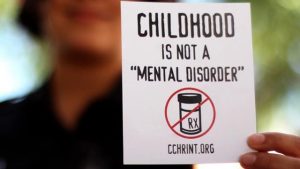
Psychiatry is succeeding on a large scale in convincing people that there normal human feelings are wrong – disorders. When you feel down, especially for more than two weeks, you must have major depressive disorder. If you child is super active and creative, he must be ADHD.

In fact, I challenge you to find any normal human emotional challenge that is not labeled as a disorder in the Diagnostic and Statistical Manual, the psychiatric bible.

4. Pills are the solution

If you listen to average people talk these days, you’ll hear it. When poor moods or misbehaved children are discussed, doctors and pills are discussed.

“I’ve been feeling down lately. I wonder if I have some sort of chemical imbalance. I should see if my doctor can give me something for it.”

5. Doctors are the ‘go to’ people for emotional angst

Family doctors and psychiatrists are branding themselves as the “go to” people for mental health concerns. A shocking number of non-psychiatric family doctors prescribe for mental health concerns – 59% of anti-depressants prescribed in the US are prescribed by family doctors, 75% with no formal diagnosis.

Want a pill? Here’s a pill. Make your co-pay on the way out. This is how we treat mental illness today.

Where psychiatry lacks in honesty, it makes up for in marketing. You’ve got to give that to them. They are succeeding in convincing the world that psychiatry is the solution to mental anguish.

I wonder what a psychiatric society would look like? If psychiatry ultimately gets what it wants – total domination over emotional life – what would that look like?

« Return to news items


Share

Psychiatry Tops List of Medical Professionals Making a Mint from Big Pharma

Monday, March 11th, 2013

Dollars for Docs Mints a Millionaire

by Tracy Weber and Charles Ornstein
ProPublica, March 11, 2013, 11 a.m.

Half of the top earners are from a single specialty: psychiatry.

Dr. Jon W. Draud, the medical director of psychiatric and addiction medicine at two Tennessee hospitals, pursues some eclectic passions. He’s bred sleek Basenji hunting dogs for show. And last summer, the Tennessee State Museum featured “African Art: The Collection of Jon Draud.”

But the Nashville psychiatrist is also notable for a professional pursuit: During the last four years, the 47-year-old Draud has earned more than $1 million for delivering promotional talks and consulting for seven drug companies.

By a wide margin, Draud’s earnings make him the best-paid speaker in ProPublica’s Dollars for Docs database, which has been updated to include more than $2 billion in payments from 15 drugmakers for promotional speaking, research, consulting, travel, meals and related expenses from 2009 to 2012.

Payouts to hundreds of thousands physicians are now included.

Draud is not the only high earner: 21 other doctors have made more than $500,000 since 2009 giving talks and consulting for drugmakers, the database shows. And half of the top earners are from a single specialty: psychiatry.

“It boggles my mind,” said Dr. James H. Scully Jr., chief executive of the American Psychiatric Association (APA)P, referring to the big money paid to some psychiatrists for what are billed as educational talks.

Paid speaking “is perfectly legal, and if people want to work for drug companies, this is America,” said Scully, whose specialty has often been criticized for its over-reliance on medications. “But everybody needs to be clear — this is marketing.”

When Dollars for Docs launched in 2010, it gave the first comprehensive look at the money that drug companies spend to enlist doctors as a sales force. The new data show how payouts to psychiatrists like Draud and other doctors have added up over time. And they underscore the key role physicians play for drugmaker profits even as scrutiny and criticism of such payments grows.

Read the rest of the article here


« Return to news items


Share

Don’t let your child see a psychiatrist. Ever

Friday, December 14th, 2012

NaturalNews.com—Dec 14, 2012

by John Rappaport

If you have a child, don’t let him/her see a psychiatrist. Ever.

Read Mike Adams new article about psychiatry.  It’s one of the best I’ve ever read, and I’ve been researching this pseudoscience for 20 years.

Then read this one, too. It’s also excellent. I wrote it.

Yes, I know, I’m bragging, which is a sign of a mental disorder: Self-Inflation at the Expense of Sacred Psychiatry Disorder. The preferred treatment is electroshock therapy and MKULTRA re-programming. I’m opting for a walk in the park coupled with two doses of outrage at these fake doctors who poison brains and believe they’re healers.

Here is a clue. The government gives psychiatry its fake legitimacy. That’s how the game works. The government blesses the medical licensing boards that award psychiatrists permission to drug your children, alter their brains, poison them, and of course make all the fake diagnoses in the first place.

Without the government, these fakes would sink into the waves and be gone forever. Nobody in his right mind or wrong mind would ever step into a psychiatrist’s office. It would be like volunteering to stumble out on to a mine field seeded with explosives.

Media, naturally, go along with the psychiatric hoax. Thousands of articles keep coming out of the hopper to support the authoritative pronouncements of these deranged monsters with medical degrees and “training” in diagnosing mental illnesses.

There are no mental illnesses or disorders. There never have been.

There are people with problems, there are people who suffer, there are people who are in desperate circumstances, there are people who have severe nutritional deficiencies, there are people who have been poisoned by various chemicals, there are people who have been abused and ignored, there are people who have been told there is something wrong with them, there are people who are different and can’t deal with the conforming androids in their midst, but there are no mental disorders.

None.

It’s fiction. It’s a billion-dollar fiction. It’s a gigantic steaming pile of bullshit. Always has been.

There is not a single diagnostic test for any so-called mental disorder. Never has been. No blood test, no urine test, no saliva test, no brain scan, no genetic test. No science.

So why hasn’t psychiatry been destroyed and outlawed? Because there is money in it. Big money. Pharmaceutical money. And because the public is in a trance. Mothers and fathers are quite willing to take their children to these brain poisoners…lambs to the slaughter.

The silence of the lambs.

People are entranced by so-called professionals with fancy degrees who speak technical babble. It all seems real. Because if it weren’t real, then…what? People would be forced to admit they are living in a fantasy. And people don’t want to admit that. They would rather die than admit that.

But that’s what psychiatry is. An elaborate fantasy. If every psychiatrist in the world vanished tomorrow, the world would immediately become a far healthier place.

If every celebrity who outrageously whores for psychiatry would stop on a dime, the world would be a far healthier place right away.

You think Dr. Phil is a fake? He’s nothing compared to psychiatrists with their prescription pads. He’s a saint by comparison. The drugs are brain poisons. If you really want to know the truth about the drugs, go to breggin.com and read everything Dr. Peter Breggin has ever written about the drugs. He covers the whole slimy waterfront.

There is some horrendous handwriting on wall. Believe me. You can see it all around you if you look. The shrinks are treating younger and younger children with the brain poisons, every day. They’re diagnosing children who are practically toddlers and they’re drugging them. They’re ripping their brains. It’s happening. You may not want to know about it, but it’s there. It’s a crime on the order of murder.

And the bastards at the FDA and the bastards who train doctors in medical schools are going along with it. They’re accomplices to the ongoing crime. They have blood on their hands.

Here is a story Dr. Breggin told in his classic book, Toxic Psychiatry. It says it all:

“Roberta was a college student, getting good grades, mostly A’s, when she first became depressed and sought psychiatric help at the recommendation of her university health service. She was eighteen at the time, bright and well motivated, and a very good candidate for psychotherapy. She was going through a sophomore-year identity crisis about dating men, succeeding in school, and planning a future. She could have thrived with a sensitive therapist who had an awareness of women’s issues.

“Instead of moral support and insight, her doctor gave her Haldol. Over the next four years, six different physicians watched her deteriorate neurologically without warning her or her family about tardive dyskinesia [motor brain damage] and without making the [tardive dyskinesia] diagnosis, even when she was overtly twitching in her arms and legs. Instead they switched her from one neuroleptic to another, including Navane, Stelazine, and Thorazine. Eventually a rehabilitation therapist became concerned enough to send her to a general physician, who made the diagnosis [of medical drug damage]. By then she was permanently physically disabled, with a loss of 30 percent of her IQ.

“…my medical evaluation described her condition: Roberta is a grossly disfigured and severely disabled human being who can no longer control her body. She suffers from extreme writhing movements and spasms involving the face, head, neck, shoulders, limbs, extremities, torso, and back-nearly the entire body. She had difficulty standing, sitting, or lying down, and the difficulties worsen as she attempts to carry out voluntary actions. At one point she could not prevent her head from banging against nearby furniture. She could hold a cup to her lip only with great difficulty. Even her respiratory movements are seriously afflicted so that her speech comes out in grunts and gasps amid spasms of her respiratory muscles…Roberta may improve somewhat after several months off the neuroleptic drugs, but she will never again have anything remotely resembling a normal life.”

If the smug scum who run the NY Times put THAT story on the front page right under a huge headline, we might see something good happen in this country.

Chronic whiners want to claim the government has to protect everybody all the time, as if that were possible, as if that were really the government’s aim. These whiners are busy-bodies, meddlers, and self-made victims. They sometimes pose as scientists. They love psychiatry. They equate psychiatry with government. You know, “share and care.”

They assert that government knows best. At bottom, they’re vicious little idiots.

But they’re very useful idiots, because the government welcomes their help in keeping the populace in line.

And psychiatry is a cardinal strategy in that regard.

Chemical straitjackets for the lambs.

The silence of the lambs.

Jon Rappoport
The author of an explosive collection, The Matrix Revealed,  Jon was a candidate for a US Congressional seat in the 29th District of California. Nominated for a Pulitzer Prize, he has worked as an investigative reporter for 30 years, writing articles on politics, medicine, and health for CBS Healthwatch, LA Weekly, Spin Magazine, Stern, and other newspapers and magazines in the US and Europe.  Jon has delivered lectures and seminars on global politics, health, logic, and creative power to audiences around the world. You can sign up for his free emails at www.nomorefakenews.com


« Return to news items


Share

The DSM—New psychiatry manual adds to the oversupply of invented victims

Wednesday, December 12th, 2012

“What the gradual embrace of all human suffering into the DSM does is to create co-dependency and undermine individual resourcefulness, not to mention the arrogant appropriation of the role family and friends should play in each other’s lives in difficult times”

The National Post – Dec 10, 2012
by Barbara Kay

In 1952, the Diagnostic and Statistical Manual of Mental Disorders– the DSM – psychiatrist’s bible for diagnosis of mental problems, was a 132-page booklet. Today, in its fourth incarnation, it is a 886-page doorstop. Controversy is now swirling over the fifth instalment, slated for publication in May 2013.

It seems that every DSM upgrade contains more and more “disorders” that are open to question for their vagueness and open-endedness. In the upcoming edition, for example, the threshold for “generalized anxiety disorder” (GAD) is expected to broaden out to become the most commonly diagnosed mental problem. Originally the disorder was meant to identify anxiety for which there was no apparent source. The new definition would home in on domestic, financial or school problems for which anxiety is perfectly normal and justified.

Such a move would have manifold ramifications for employers, insurance companies, the pharmaceutical industry, the educational system and our already overburdened healthcare matrix.

According to the U.S. chairman of the task force for the DSM currently in use, the coming manual is bound to further obscure the “already fuzzy boundaries” between GAD and the normal life concerns of average people. Canadian medical historian Edward Shorter also expressed unease with the DSM tendency to therapeutize life, describing the DSM process as a kind of “horse-trading” amongst professionals (“I’ll give you your diagnosis if you’ll give me mine”). Shorter concludes: “The current DSM series is, in my view, a scientific disaster and should be discarded.”

Psychiatrists – like jurists and other revered high priests of our culture – are human beings like the rest of us. They are not mere conduits of law and science. They are, like us, a hodge podge of beliefs, ideals, prejudices, personal vanity and susceptibility to their era’s zeitgeist.

Psychiatry is also an industry like any other, creating stakeholders and turf defenders. For an in-depth appreciation of just how untrustworthy psychiatry is in general as a guide to what ails and what can fix the human condition, I recommend Dr. Tana Dineen’s 1996 book, Manufacturing Victims: What the Psychology Industry is Doing to People.

In this revelatory, evidence-based indictment of the profession, Dineen describes her sojourn from believer to critic. Early in her career in psychology (the 1960s) she was engaged to establish a system for monitoring and assessing the diagnostic treatment services in the Psychiatric Department of the Toronto General Hospital. Burgeoning disquiet with the personal, “patriarchal” beliefs of the mental health “experts” who were contaminating their work with patients prompted a career-long inquiry into the faults of the profession.

Her conclusions are damning.

Dineen was horrified at the flow of “beliefs disguised as findings” and the consistent tendency of psychologists to “translate all of life into a myriad of abuses, addictions and traumas.” Psychology “has become a big business,” Dineen writes. “It is simply no longer accurate to speak of it as a science and it is unscrupulously misleading to call it a profession.” It is rather, in Dineen’s view, “an industry focused on self-interest and propelled by financial incentives.”

Worse, she says, many psychiatrists are making “social action” part of their mandate. Not surprising, since almost all practising psychiatrists today are products of universities whose mission since the 1960s has been to program students with politically correct thought and inculcate the concept of politically correct proselytism as a noble mission for intellectuals.

Since this book was issued in the 1990s, much of it focuses on that decade’s highly controversial concept of “recovered memory syndrome,” which ruined the lives of so many individuals who were falsely accused of sexual abuse or satanic rituals by (largely) patients whose “recovered” memories were fabrications invented by their therapists. In convicting these hapless innocents, judges abetted the completely unscientific process. As noted, psychiatrists and judges are people, not gods.

Dineen’s final chapter, “Taking back our private lives,” makes for poignant reading. For Dineen knows what a real victim is and expresses compassion for them: victims of war, earthquakes, car accidents, toxic gas leaks and famines. Just as there are real victims, there are Fabricated Victims: and if she were writing today, the “victims” of GAD would be amongst them.

What the gradual embrace of all human suffering into the DSM does is to create co-dependency and undermine individual resourcefulness, not to mention the arrogant appropriation of the role family and friends should play in each other’s lives in difficult times. It inculcates the absurd idea that one can only recover one’s emotional equilibrium and achieve happiness through therapy. Once psychiatry was described as “the purchase of friendship.” Today it is the purchase of (the illusion of) insulation from unhappiness of any kind. In the creation of the DSM-V, we must ask, since it affects everyone eventually: Cui bono (to whose advantage?), not to mention Quis custodiet…(Who is monitoring the stakeholders)?

http://fullcomment.nationalpost.com/2012/12/10/barbara-kay-new-psychiatry-manual-adds-to-the-oversupply-of-invented-victims/

« Return to news items


Share

The Irish Times—Psychiatric diagnosis not scientific but subjective

Thursday, August 30th, 2012

Irish Times – August 30, 2012
By CIARÁN CRUMMEY


Psychiatry is not a science. Psychiatrists who believe otherwise are deluding themselves.

OPINION: I HAVE A PhD in science (in a non-medical field) that was based on the premise that progress is achieved by data-based proof. If I had a heart attack or a stroke my life would be in imminent danger to the extent that I would have no difficulty with the appropriate medical professionals acting in my best interests. This is because these are conditions that are easily empirically defined in ways that can very rarely be argued with.

However, this would not be the case if I found myself being involuntarily detained in a psychiatric hospital. Prof Aiden Corvin seems to think otherwise (Irish Times, July 31st). He argued that, “If you have a heart attack or stroke and are too incapacitated to consent, you will receive medical care using the ‘best interests’ principle. Many people with serious mental illness don’t believe that being admitted to hospital is in their best interest.”

The unstated assumption underlying this statement is that psychiatrists operate to the same standards as cardiac surgeons or stroke specialists.

This assumption is wishful thinking. Why? Because psychiatric diagnoses are based on the subjective interpretation of behaviour by third parties. A psychiatrist may be highly trained but their diagnosis is still subjective.

How often do they get it wrong? Unlike in most other areas of medicine, where misdiagnosis is taken seriously, nobody knows very much about the extent of it in psychiatry. It has been very poorly studied.

If I suffered a heart attack, lots of empirical data would be generated from an arsenal of equipment and this would largely inform the diagnosis and treatment.

Were I to survive it, I doubt very much that I would be anything other than eternally grateful to those who had saved me.

Imagine if, overnight, a third of the beds in cardiac or stroke units were closed? There would be an outcry. Heart attack and stroke victims would be left to die on the streets, in front of our eyes. Yet something very similar to this occurred in psychiatry in Ireland in 2006 and nobody blinked.

With the introduction of the Mental Health Act that year, involuntary detentions in psychiatric hospitals were reduced by a third. Our national body of psychiatrists was opposed to this legislation, but there is not a shred of evidence to show that patient outcomes were any worse because of it.

It can be inferred from this that, before the introduction of this law, at least a third of those who were incarcerated did not need to be.

Any suggestion that psychiatry is just like any other branch of medicine collapses when this is considered. And the argument that these decisions are always made in the patients’ best interests collapses with it.

Thankfully, I have never had a heart attack, or a stroke. But three years ago I was involuntarily detained in a psychiatric hospital in another jurisdiction, at the hands of mainstream psychiatrists.

My incarceration was by far the most barbaric, dehumanising and debasing experience of my life. The distress that caused this was hugely exacerbated by the experience, rather than relieved. This, it seems to me, was because those responsible for what I was subjected to believed that they were scientists.

Once there I became a faulty object in need of treatment. Not a cure. According to them I had an incurable “disease” that they, and they alone, were entrusted to “treat” – one that I would be afflicted with for the rest of my life, apparently in the same way as if I had suffered a heart attack or a stroke.

However, unlike any other established medical profession, they had no empirical test results to back this up with. Not a single one.

Even more extraordinary, compared to any other profession on earth, they could incarcerate me for as long as they deemed necessary until I agreed with their point of view.

To have done so would have broken my spirit, a not uncommon occurrence in psychiatric patients. After human beings become enmeshed in the mental health system many emerge as shadows. Luckily for me I escaped and got back home before this occurred.

I know what my heart is and, indeed, other organs in my body. But what exactly is the human spirit? What is the soul (psychiatry means the healing of the mind or soul)?

Great minds have considered these questions for millennia and we are still unable to define what these qualities are, even though they are so essential to defining what it is to be human.

The scientific method fails us when we enter these domains. It can, at best, only scratch the surface of these things.

This is why psychiatry is not a science. Psychiatrists who believe otherwise are deluding themselves.

The way forward is to recognise and acknowledge this. As consultant psychiatrist Dr Pat Bracken has pointed out (Irish Times, July 6th), it includes introducing far more checks and balances to protect patients.

Psychiatry has far too much power and we all know what that does. A good psychiatrist can be a life-saver, but bad ones are killers of that elusive, but core, quality of what it is to be human: the spirit. As a profession it needs to be knocked off its pedestal, reformed and humbled.

I had a lucky escape from the spirit-killing hands of mainstream psychiatrists three years ago. According to the scientific method that mainstream psychiatrists slavishly adhere to, since the human spirit cannot be measured, it does not exist.

They have forgotten that the absence of evidence is not evidence of absence. Consequently, psychiatry has become desensitised, worshipping at the altar of science to the extent that it has lost its way and can treat people as mere faulty objects with chemically imbalanced brains.

This is an unproven hypothesis and, although it has been good for psychiatry, it has not been good for its patients.

Read the rest of the article here  http://www.irishtimes.com/newspaper/opinion/2012/0830/1224323263385.html

« Return to news items


Share

The Huffington Post—Drug Companies Drive the Psychiatric Drugging of Children

Tuesday, July 24th, 2012
The Huffington Post—July 24, 2012
by Dr. Peter Breggin, Reform Psychiatrist

(click image to visit the psychiatric drug database) “The health professions would do far more good stopping the drugging of children than continuing or increasing it. Ethical professionals need to work toward removing children from psychiatric drugs.” – Dr. Peter Breggin

July 24, 2012 – Johnson & Johnson, the company that makes the antipsychotic drug Risperdal, has tentatively agreed to a settlement of $2.2 billion to resolve a federal investigation into the company’s marketing practices. Although details are not fully finalized, this includes “a roughly $400 million criminal fine for the illegal promotion of the antipsychotic Risperdal,” according to the Wall Street Journal. It’s been well documented that Johnson & Johnson confidentially paid psychiatrists such as Harvard’s Joseph Biederman to promote adult drugs such as the powerful antipsychotic drug Risperdal for children. The company has even ghost-written at least one of the Harvard professor’s “scientific” articles.

Another recent DOJ settlement with drug company GlaxoSmithKline resulted in Glaxo’s agreement to pay $3 billion in criminal and civil fines. As I wrote in an earlier Huffington Post blog:

In one of the most egregious examples of fraudulent marketing, “In the case of Paxil, prosecutors claim GlaxoSmithKline employed several tactics aimed at promoting the use of the drug in children, including helping to publish a medical journal article that misreported data from a clinical trial,” [according to the New York Times].

Glaxo manipulated and rewrote this study, which was rejected by the FDA for failing to show efficacy. The Glaxo rewrite made it appear as though the drug was useful for adolescent depression even though the FDA had not approved Paxil for adolescents. The company then got almost two dozen well-known researchers and “experts” to put their names on the article as if they had written it.

GlaxoSmithKline also secretly paid about $500,000 to psychiatrist Charles Nemeroff, while he was a professor at Emory University, to promote Paxil

GlaxoSmithKline also secretly paid about $500,000 to psychiatrist Charles Nemeroff, while he was a professor at Emory University, to promote Paxil. Glaxo even ghostwrote a psychopharmacology textbook for family doctors, who write many prescriptions for children, which was “coauthored” by Nemeroff and psychiatrist Alan Schatzberg. Nemeroff was sanctioned for failing to report the Glaxo payments he received while at Emory. But he’s landed on his feet running, now chairing the psychiatry department at the Miller School of Medicine at the University of Miami.

None of these drug-company-bought psychiatrists has suffered serious consequences. Biederman remains a star at Harvard and Nemeroff recently received a new $2 million federal grant from the National Institute of Mental Health. These influential psychiatrists are just two out of many doctors who have been investigated for extensive financial relationships with drug companies.

Meanwhile, the DOJ has now enforced a total of $8.9 billion in criminal and civil fines against GlaxoSmithKline, Pfizer, Eli Lilly, and Johnson & Johnson.

Drug-company marketing has bought rich rewards, as reflected in the increasing numbers of children and youth diagnosed with attention deficit hyperactivity disorder and other psychiatric problems. According to the Centers for Disease Control (CDC), 12.3 percent of boys and 5.5 percent of girls age 5-17 were diagnosed with the disorder in 2009. With the rates growing especially rapidly in the older children, considerably more than 12.3 percent of older boys are given this diagnosis, which almost inevitably leads to treatment with stimulant drugs such as Ritalin, Concerta, Focalin, Dexedrine and Adderall. Given estimates of 2.8 million children taking stimulants for ADHD in 2008, the number is now well over three million and rising.

“Drug-company marketing has bought rich rewards, as reflected in the increasing numbers of children and youth diagnosed with attention deficit hyperactivity disorder and other psychiatric problems.” – Dr. Peter Breggin

Last year, the American Academy of Pediatrics overrode FDA drug guidelines and advised that children as young as 4 could be diagnosed with ADHD and treated with stimulants. This will surely increase the numbers of younger children psychiatrically diagnosed and medicated with other drugs as well. In our professional experience, children given stimulants may become the targets of additional drugs as their conditions worsen due to the stimulants. Stimulants have been the entering wedge into the widespread psychiatric drugging of America’s children. Once the door was opened, nearly all the other psychiatric drugs came rushing in.

Keep in mind that the more than three million children on psychiatric drugs are for only one class of medication — stimulants for ADHD. Large numbers of other children are being put on highly dangerous adult antipsychotic drugs, antidepressants, and mood stabilizers, often to treat so-called “childhood bipolar disorder.” Psychiatrist Biederman’s work “helped to fuel a controversial 40-fold increase from 1994 to 2003 in the diagnosis of pediatric bipolar disorder … and a rapid rise in the use of antipsychotic medicines in children,” according to the New York Times. Bipolar disorder, like most other psychiatric diagnoses for children, is linked to the greater use of various psychiatric drugs. No surprise that this is so, since as in the case of Joseph Biederman, the “top” researchers in child psychiatry are heavily funded by pharmaceutical companies.

It is our personal and professional opinion that most childhood psychiatric diagnoses have no scientific validity. ADHD, for example, is described and diagnosed by a collection of behaviors – inattention, impulsivity, and hyperactivity — that can be caused by innumerable factors including too high expectations for a child, confused parenting, family disintegration, racism and poverty, inadequate teaching, poor nutrition, bullying, and head injury. The diagnosis literally shuts down the search for the real causes, undermines effective parenting and teaching approaches, and guarantees that the child will be medicated.

As another example, oppositional defiant disorder (ODD) merely describes a child who displays anger. In the words of the Diagnostic and Statistical Manual of Mental Disorders, Fourth Edition, ODD involves “A pattern of negativistic, hostile, and defiant behavior lasting at least six months.” The top three “symptoms” are “(1) often loses temper, (2) often argues with adults, and (3) often actively defies or refuses to comply with adults’ requests or rules.” That’s not a disease in a child, it’s a sign that something has gone haywire in the child’s life and is not being remedied.

My most recent review of the scientific literature in Psychiatric Drug Withdrawal concludes that stimulants, antidepressants and antipsychotic drugs are very harmful to the brain. With increasing millions of children being placed on drugs that can harm normal development of the child’s brain and mind, and substitute for proper teaching and parenting, it’s time to change emphasis. As a society, we need to resist the quick fix that does more harm than good, and to stand up against the massive drugging of children.

The health professions would do far more good stopping the drugging of children than continuing or increasing it. Ethical professionals need to work toward removing children from psychiatric drugs.

The health professions would make a major contribution to the wide-scale health of children not only by curtailing psychiatric drugging, but also by offering the opportunity for parents to withdraw their children from these psychoactive substances.

Peter R. Breggin, MD is a psychiatrist in private practice in Ithaca, New York, and the cofounder with his wife Ginger Breggin of the Center for the Study of Empathic Therapy. He is the author of dozens of scientific articles and more than twenty books. His latest book is Psychiatric Drug Withdrawal: A Guide for Prescribers, Therapists, Patients and Their Families. It is based on a Person-Centered Collaborative Approach to psychiatric treatment with the focus on psychiatric drug withdrawal. It also describes many of the most severe adverse effects of psychiatric drugs that require drug withdrawal.

Ginger Breggin, in addition to cofounding and managing the Center for the Study of Empathic Therapy, has coauthored books with her husband, contributes to their mutual research projects, and blogs independently on The Huffington Post.

Disclosure: Peter Breggin, M.D. has been a plaintiffs’ medical expert in product liability suits against the mentioned drug companies including Eli Lilly, Pfizer, GlaxoSmithKline, and Johnson & Johnson.

http://www.huffingtonpost.com/dr-peter-breggin/psychiatric-drugs_b_1693649.html

« Return to news items


Share

How To Sell Drugs to Children — GlaxoSmithKline & Shrinks for Sale

Friday, July 6th, 2012
Fox Business
by Al Lewis – July 5, 2012

The international pharmaceutical giant took top-prescribing psychiatrists to pricey resorts in Bermuda, Jamaica, Hawaii and other exotic locales where, in between spa services, they could hear speeches from fellow shrinks that the company paid to dither on about how kids should pop its pills.

America’s children were depressed. They needed antidepressants. It was GlaxoSmithKline to the rescue.

Paxil was never approved for use by anyone under 18, but GlaxoSmithKline  had 1,900 sales reps visiting doctor’s offices, and pushing the drug for kids.

The international pharmaceutical giant took top-prescribing psychiatrists to pricey resorts in Bermuda, Jamaica, Hawaii and other exotic locales where, in between spa services, they could hear speeches from fellow shrinks that the company paid to dither on about how kids should pop its pills.

According to a criminal complaint filed in U.S. District Court in Massachusetts, the company “engaged in a fraudulent scheme to deceive and defraud physicians, patients, regulators, and federal health-care programs.” The complaint, alleging the company misbranded drugs and failed to report safety data, was filed under seal in October.

On Monday, the international pharmaceutical giant said it agreed to settle this case as well as a civil case for $3 billion. This the largest health-care fraud settlement in U.S. history, involving Paxil and some of its other drugs.

click image to find out more

GlaxoSmithKline said it will plead guilty to the criminal charges, which are misdemeanors, but it will not admit any wrongdoing on the civil charges, which allege potentially deadly behaviors that I think should be considered felonious.

I guess this is why corporate lawyers make the big bucks: To go to court and say, “Yes, we did it–but not if anyone else is trying to sue us.” It’s also worth noting that no single individual has been named as a defendant in the criminal complaint. It’s just another one of those unfortunate corporate things that nobody ever got caught doing.

The U.S. Justice Department’s complaint said the alleged offenses occurred between 1999 and 2010. The company’s chief executive, Sir Andrew Witty, reiterated that this was the behavior of the old company, not the one he is currently running.

“I want to express our regret and reiterate that we have learnt from the mistakes that were made,” Mr. Witty said in a statement released Monday. “Since I became CEO, we have had a clear priority to ingrain a culture of putting patients first, acting transparently, respecting people inside and outside the organisation and displaying integrity in everything we do.”

Yes, you spotted it. It’s the ol’, “mistakes were made” strategy from the PR playbook. The company’s mantra is “Do more, feel better, live longer.” But it might as well have been, “Prescribe Paxil to children. Win a free trip!”

GlaxoSmithKline’s Paxil push occurred between 1999 and 2003, the government alleged, and soon “Paxil became one of the top-selling drugs in the United States.”

Have you ever sat in doctor’s waiting room when an exceptionally well-dressed woman, looking like she could be a fashion model, struts through the door? That was the pharmaceutical rep. Or sometimes it’s a handsome guy who looks right out of GQ. This is how drugs, including Paxil, are sold. Beautiful people handing out free drug samples so doctors will prescribe them. Just look at me, and never mind all that fine print on the side effects.

GlaxoSmithKline "promoted Paxil for unapproved uses by bringing top-prescribing psychiatrists to lavish resorts.

Central to GlaxoSmithKline’s marketing effort for Paxil was an article published in Journal of the American Academy of Child and Adolescent Psychiatry that the government convincingly argues is “false and misleading.” GlaxoSmithKline reps touted this allegedly bogus research. GlaxoSmithKline also paid shrinks to give speeches in which they referenced it.

Here’s how the government describes these paid-shrink performances in it’s criminal complaint:

GlaxoSmithKline “promoted Paxil for unapproved uses by bringing top-prescribing psychiatrists to lavish resorts.

“The meetings were held at expensive resorts such as the El Conquistador Resort & Golden Door Spa in Puerto Rico, the Rio Mar Beach Resort in Hawaii, and the Renaissance Esmeralda Resort & Spa in Palm Springs, Calif. GSK paid for the psychiatrists’ lodging, air fare, and a $750 honorarium. GSK paid speakers a $2,500 honorarium. GSK also paid spouses’ airfare if two cheaper tickets were available for the cost of one full-coach fare.

“GSK hosted nice dinners…and paid for entertainment, including sailing, snorkeling, tours (e.g. the Bacardi rum distillery), golf, deep sea fishing, rafting, glass-bottomed boat rides, and balloon rides.

“The actor/comedian GSK hired to emcee one of the meetings told the attendees “We have a wonderful and unforgettable night planned. Without giving it all away, I can tell you–you’ll be experiencing a taste of luxury.” “After the May 2000 Forum meeting in Hawaii, one psychiatrist wrote: “A beautiful location, enjoyable and fun-filled activities, an exciting, cutting-edge informative educational program…exhilarating!” Another doctor wrote after the Forum 2001 meeting in Palm Springs: “Both my wife and I enjoyed the extra care our drug rep gave to us all weekend.’”

When the issue of certain side effects came up, the programs went something like this: “OK, so some of the kids who took Paxil had suicidal thoughts and killed themselves. Maybe it was an adverse reaction to the drug, or maybe they were just depressed. Depressed kids do depressing things, you know. It’s what we call ‘emotional liability.’ Meantime, please, enjoy the resort, and don’t miss that Bacardi rum tour!”

Maybe the reason kids are depressed is because of the way some of the highest-paid adults in this world behave.

(Al’s Emporium, written by Dow Jones Newswires columnist Al Lewis, offers commentary and analysis on a wide range of business subjects through an unconventional perspective.)
http://co106w.col106.mail.live.com/default.aspx#!/mail/InboxLight.aspx?n=434132513!n=219306126&fid=1&fav=1&mid=3217e4a4-c775-11e1-a160-00215ad9bc86&fv=1


« Return to news items


Share

The end of antidepressants? Studies show they’re no more effective than placebo yet carry serious health risks

Wednesday, April 11th, 2012

Healthcare Finance News – Stephanie Bouchard, Associate Editor

“It’s like the emperor has no clothes and people are starting to see this” — Robert Hedaya, MD

Studies finding antidepressants no more effective than placebo—Add to this cycle the serious health risks associated with antidepressant use and it is inevitable that the craze for antidepressants will end, he says. “It’s like the emperor has no clothes and people are starting to see this,” he said.

Controversial studies may have an impact

Watchers of a February broadcast of “60 Minutes” may have been stunned to learn that studies have been conducted that seem to prove that antidepressants, on the whole, are no more effective than placebo.

This revelation about antidepressants – among the top-selling and top-prescribed drugs in the United States – may have been new news to some, but the studies conducted by Irving Kirsch, PhD, and colleagues, have been raising eyebrows and garnering attention since 1998. Which begs the question, have Kirsch’s studies had any impact on the sales of antidepressants and/or on the prescribing patterns of doctors?

When asked those questions by Healthcare Finance News, the pharmaceutical industry was mum; however, IMS Health, a professional services and analytics company serving the healthcare sector, including the pharmaceutical industry, provided market data for antidepressants between 2006 and 2011.

IMS Health’s data shows that total dollars from antidepressant sales have declined since 2006 and the number of dispensed prescriptions has grown. Last fall, the Centers for Disease Control and Prevention released numbers finding that antidepressant use grew by 400 percent from 2005 to 2008. The CDC says about 11 percent of people in the United States take them.

So it seems that Kirsch’s studies on antidepressants and placebo have had little impact, if any, on the market, which comes as no surprise to some, including Kirsch.

“I think part of the problem is, many years ago psychiatrists used to do psychotherapy,” said Kirsch, associate director of the Program in Placebo Studies and the Therapeutic Encounter at Harvard Medical School. “One of the things that’s happened over the last few decades is that has decreased more and more and more so that psychiatry has become the profession of managing drugs.”

Tim Dannehy, a former pharmacist turned health coach, couldn’t agree more. “The drug companies are so influential on physicians, that I bet you half of the physicians ignored the story because they need a pill to give to people,” he said.

“If you take the drugs away, there’s no answer for these physicians,” he continued. “What are they going to do? The old days of sitting down with somebody and talking with them for an hour and trying to figure out what the source of their sleep problem is or the source of their depression, that’s gone. Now it’s just a 10 to 15 minute office visit and ‘I’ll write your prescription’ because that’s the only answer they have now.”

Trends in psychiatry, such as using antidepressants to treat depression, are cyclical, says Robert Hedaya, MD, founder of the National Center for Whole Psychiatry. While it may not look like Kirsch’s studies are having any impact, they are part of that historical cycle. “Every 50 years or so there’s development of new techniques, which people get really excited about and studies support and then about halfway through the cycle, questions arise and then towards the end of the cycle everyone says ‘Oh, it doesn’t quite work’ and then by around that time someone else says ‘Oh, but we’ve got this thing and the studies are great.’ And then people get excited, they make money on it and we go through the whole cycle again.”

Add to this cycle the serious health risks associated with antidepressant use and it is inevitable that the craze for antidepressants will end, he says. “It’s like the emperor has no clothes and people are starting to see this,” he said.

http://www.healthcarefinancenews.com/news/end-antidepressants

« Return to news items


Share

What Benefit? Antidepressants & The Placebo Effect—60 Minutes Exposes the Facts

Wednesday, February 22nd, 2012

“These are the studies that showed no benefit of the antidepressant over the placebo. What they did is they took the more successful studies, they published most of them. They took their unsuccessful studies and they didn’t publish them.” – Irving Kirsch

“This is a multibillion dollar industry. I doubt that they are spending $10 million per trial to come up with a poor methodology. What characterizes the unpublished is that they’re negative. Now I don’t think it’s that their method is somehow wrong; it’s that their outcome is not suitable from the company’s point of view.” —Dr. Tim Kendall

Pharmalot
By Ed Silverman
February 21, 2012

We all know about the placebo effect. But a Harvard Medical School professor has applied the same theory to antidepressants and his findings are likely to rile drugmakers. Why? He filed Freedom of Information Act requests to obtain unpublished clinical trial data and found that, when combining results with published data, the various antidepressants were no better than dummy pills.

“These are the studies that show no benefit of the antidepressant over the placebo. What they did was they took more successful studies – they published most of them – and they took their unsuccessful studies, and they didn’t publish that…. If they were mildly or moderately depressed, you don’t see a difference at all. The only place where you get a clinically meaningful difference is at these very extreme levels of depression,” Irving Kirsch tells 60 Minutes. “…The reason they get better is not the chemical in the drug. The difference between drug and placebo is very, very small, and in half of the studies, non-existent… You can get the same benefit without drugs.”

As 60 Minutes notes, Kirsch is “dropping a bomb” on a big business – some $11 billion in annual sales. PhMRA and Eli Lilly, the only drugmaker to respond to the news program, disputed his findings.

Read the Pharmalot article here:  http://www.pharmalot.com/2012/02/what-benefit-antidepressants-the-placebo-effect/


Below is the full 60 Minutes Transcript:

60 Minutes
“Treating Depression. Is There a Placebo Effect?”
19 February 2012

The medical community is at war – battling over the scientific research and writings of a psychologist named Irving Kirsch. The fight is about antidepressants, and Kirsch’s questioning of whether they work.

Kirsch’s views are of vital interest to the 17 million Americans who take the drugs, including children as young as six and to the pharmaceutical industry that brings in $11.3 billion a year selling them.

Irving Kirsch is the associate director of the Placebo Studies Program at Harvard Medical School, and he says that his research challenges the very effectiveness of antidepressants.

Irving Kirsch: The difference between the effect of a placebo and the effect of an antidepressant is minimal for most people.

Lesley Stahl: So you’re saying if they took a sugar pill, they’d have the same effect?

Irving Kirsch: They’d have almost as large an effect and whatever difference there would be would be clinically insignificant.

Stahl: But people are getting better taking antidepressants. I know them.

Kirsch: Oh, yes.

Stahl: We all know them.

Kirsch: People get better when they take the drug. But it’s not the chemical ingredients of the drug that are making them better. It’s largely the placebo effect.

Irving Kirsch’s specialty has been the study of the placebo effect: the taking of a dummy pill without any medication in it that creates an expectation of healing that is so powerful, symptoms are actually alleviated.

Kirsch, who’s been studying placebos for 36 years, says “sugar pills” can work miracles.

Professor Walter Brown questions the widely held theory that depression is caused by a deficiency in the brain chemical called serotonin, which most of these pills target. "The experts in the field now believe that that theory is a gross oversimplification and probably is not correct.

Kirsch: Placebos are great for treating a number of disorders: irritable bowel syndrome, repetitive strain injuries, ulcers, Parkinson’s disease.

Even traumatic knee pain. In this clinical trial some patients with osteoarthritis underwent knee surgery. While others had their knees merely opened and then sewn right back up.

Kirsch: And here’s what happened. In terms of walking and climbing, the people who got the placebo actually did better–

Stahl: Come on.

Kirsch: –than the people who got the real surgery.

Stahl: No.

Kirsch: And that lasted for a year. At two years after surgery, there was no difference at all between the real surgery and the sham surgery.

Stahl: Is it all in your head or–

Kirsch: Well, it’s not all in your head because the placebos can also affect your body. So if you take a placebo tranquilizer, you’re likely to have a lowering of blood pressure and pulse rate. Placebos can decrease pain. And we know that’s not all in the mind also because we can track that using neuro-imaging in the brain as well.

He says the doctors who prescribe the pills become part of the placebo effect.

Kirsch: A clinician who cares, who takes the time, who listens to you, who asks questions about your condition and pays attention to what you say, that’s the kind of care that can help facilitate a placebo effect.

He says he got into researching the effect of antidepressants by accident.

Kirsch: I was interested in evaluating the size of the placebo effect. I really didn’t even care about the drug effect because everybody, including me, knew it worked. I used to refer patients to get prescriptions. I didn’t change the focus of my work onto looking at the drug effect until I saw the data from our first analysis.

What he saw was that it almost didn’t matter what kind of pill doctors gave patients.

Kirsch: We even looked at drugs that are not considered antidepressants: tranquilizers, barbiturates. And do you know what? They had the same effect as the antidepressants.

Stahl: Come on.

Kirsch: Really.

Kirsch was so surprised by his initial findings, he decided to do a second study – using data not only from the drug companies’ clinical trials that had been published in medical journals.

This time he got data that weren’t published but had been submitted to the FDA, which he got through the Freedom of Information Act.

Kirsch: These are the studies that showed no benefit of the antidepressant over the placebo. What they did is they took the more successful studies, they published most of them. They took their unsuccessful studies and they didn’t publish them.

Stahl: So when you did your study, you put all the trials together?

Kirsch: That’s right.

Stahl: You’re looking at patients who took the real drug and patients who took the placebo.

Kirsch: Yes.

Stahl: Did they get equally better, or did the ones who took the pills get even a little better?

Kirsch: If they were mildly or moderately depressed, you don’t see any real difference at all. The only place where you get a clinically meaningful difference is at these very extreme levels of depression.

Stahl: Now look, psychiatrists say the drug works.

Kirsch: Right.

Stahl: The drug companies and their scientists say the drug works. Maybe you’re wrong.

Kirsch: Maybe. I’d add to that, by the way, patients say the drugs–

Stahl: Patients say the drug works.

Kirsch: –work. And, for the patients and the psychiatrists, it’s clear why they would say the drug works. They take the drug; they get better. Our data show that as well.

Stahl: You’re just saying why they get better.

Kirsch: That’s right. And the reason they get better is not because of the chemicals in the drug. The difference between drug and placebo is very, very small; and in half the studies non-existent.

Kirsch and his studies have triggered a furious counterattack – mainly from psychiatrists, who are lining up to defend the use of antidepressants like Dr. Michael Thase, a professor of psychiatry at the University of Pennsylvania School of Medicine, who has been a consultant to many of the drug companies.

Stahl: Irving Kirsch says that depressants are no better than placebo for the vast majority of people with depression, the vast majority. Do you agree with that?

Michael Thase: No, no. I don’t agree. I think you’re confusing, or he’s confusing, the results of studies versus what goes on in practice.

He says that Kirsch’s statistical analysis overlooks the benefits to individual patients.

And while he agrees there’s a substantial placebo effect -

Especially for the mildly depressed, using a different methodology, he finds that the drugs help 14 percent of those moderately depressed, and even more for those severely depressed.

Thase: Our own work indicates pretty convincingly that this is a large and meaningful effect for a subset of the patients in these studies.

Stahl: But even by your own numbers more people, maybe twice as many people, are having a placebo effect than are actually being helped by the drug.

Thase: That’s correct.

Stahl: In the moderate range?

Thase: That’s correct.

Stahl: And this isn’t troubling to you?

Thase: I wish our antidepressants were stronger. I hope we have better ones in the future. But that 14 percent advantage over and above the placebo is for a condition that afflicts millions of people, that represents hundreds of thousands of people who are better parents, who are better workers, who are happier and who are less likely to take their life.

Since the introduction of Prozac in the 1980s, prescriptions for these drugs have soared 400 percent -

[Commercial: I used to be happy, I remember being happy...]

– with the drug companies having spent billions over the years advertising them.

Stahl: I don’t know about you, but I’m seeing more women running through daisy fields after looking morose than ever before.

Dr. Walter Brown: Absolutely. There’s a lot of hype out there.

Dr. Walter Brown is a clinical professor of psychiatry at Brown University’s Medical School. He has co-authored two studies that largely corroborate Kirsch’s findings.

Brown: The number of antidepressant prescriptions over the last decade has increased and most troublesome, the biggest increase is in the mildly depressed, who are the ones who are least likely to benefit from them.

He says they’re getting virtually no benefit from the chemical in the pill. Like most experts, he says these drugs do work for the severely depressed, but he questions the widely held theory that depression is caused by a deficiency in the brain chemical called serotonin, which most of these pills target.

Brown: The experts in the field now believe that that theory is a gross oversimplification and probably is not correct.

Stahl: And the whole idea of antidepressants is built around this theory?

Brown: Yes, it is.

To approve any drug, the Food and Drug Administration merely requires that companies show their pill is more effective than a placebo in two clinical trials – even if many other drug trials failed.

Brown: The FDA for antidepressants has a fairly low bar. A new drug can be no better than placebo in 10 trials, but if two trials show it to be better, it gets approved.

Stahl: Does that make sense to you?

Brown: That’s not the way I would do it if I were the king. But I’m not.

Dr. Tom Laughren, director of the FDA’s division of psychiatry products, defends the approval process.

Stahl: We’re told you discard the negatives. Is that not right?

Tom Laughren: We consider everything that we have. We look at those trials individually–

Stahl: But how are you knowing that the two positives deserve bigger strength in the decision?

Laughren: Getting that finding of a positive study by chance, if there isn’t really an effect, is very low. I mean, that’s basic statistics and that’s the way clinical trials are interpreted. A separate question is whether or not the effect that you’re seeing is clinically relevant.

Stahl: Okay. Is it clinically relevant?

Laughren: The data that we have shows that the drugs are effective.

Stahl: But what about the degree of effectiveness?

Laughren: I think we all agree that the changes that you see in the short-term trials, the difference between improvement in drug and placebo is rather small.

Stahl: It’s a moderate difference.

Laughren: It’s a small, it’s a modest difference.

It’s so modest – that in Great Britain the National Health Service decided to dramatically revamp the way these drugs are prescribed. It did so after commissioning its own review of clinical trials.

Tim Kendall: We came to the conclusion that for mild to moderate depression, these drugs probably weren’t worth having.

Stahl: At all.

Kendall: Not really.

Dr. Tim Kendall, a practicing psychiatrist and co-director of the commission that did the review says that like Irving Kirsch – they were surprised by what they found in the drug companies’ unpublished data.

Kendall: With the published evidence, it significantly overestimated the effectiveness of these drugs and it underestimated the side effects.

Stahl: The FDA would say that some of these unpublished studies are unpublished because there were flaws in the way the trials were conducted.

Kendall: This is a multibillion dollar industry. I doubt that they are spending $10 million per trial to come up with a poor methodology. What characterizes the unpublished is that they’re negative. Now I don’t think it’s that their method is somehow wrong; it’s that their outcome is not suitable from the company’s point of view.

Because of the review, new public health guidelines were issued. Now drugs are given only to the severely depressed as the first line of treatment. For those with mild to moderate depression, the British government is spending nearly half a billion dollars training an army of talk therapists.

[Instructor: If you wanna go a little faster, you can.]

Physical exercise is another treatment prescribed for the mildly depressed.

Kendall: By the end of 10 weeks, you get just as good a change in their depression scores, as you do at the end of 10 or 12 weeks with an antidepressant.

None of the drug companies we spoke to was willing to go on camera, but Eli Lilly told us in an email that drug trials show antidepressants work better than placebos over the long term and that “numerous studies have shown that patients on placebos are more likely to relapse” back into depression. The industry’s trade association, PhRMA, wrote us: “antidepressants have been shown to be tremendously effective.”

But if Irving Kirsch has his way, the drug companies will have to completely rethink their $11.3 billion business.

Stahl: You’re throwing a bomb into this. This is huge what you’re saying.

Kirsch: I know that. The problem is that you can get the same benefit without drugs. I think more are beginning to agree. And I think things have begun to change.

Everyone in this story says that if you’re depressed, you should see your doctor, and if you’re already on these powerful drugs, you shouldn’t stop taking them on your own.

« Return to news items


Share