
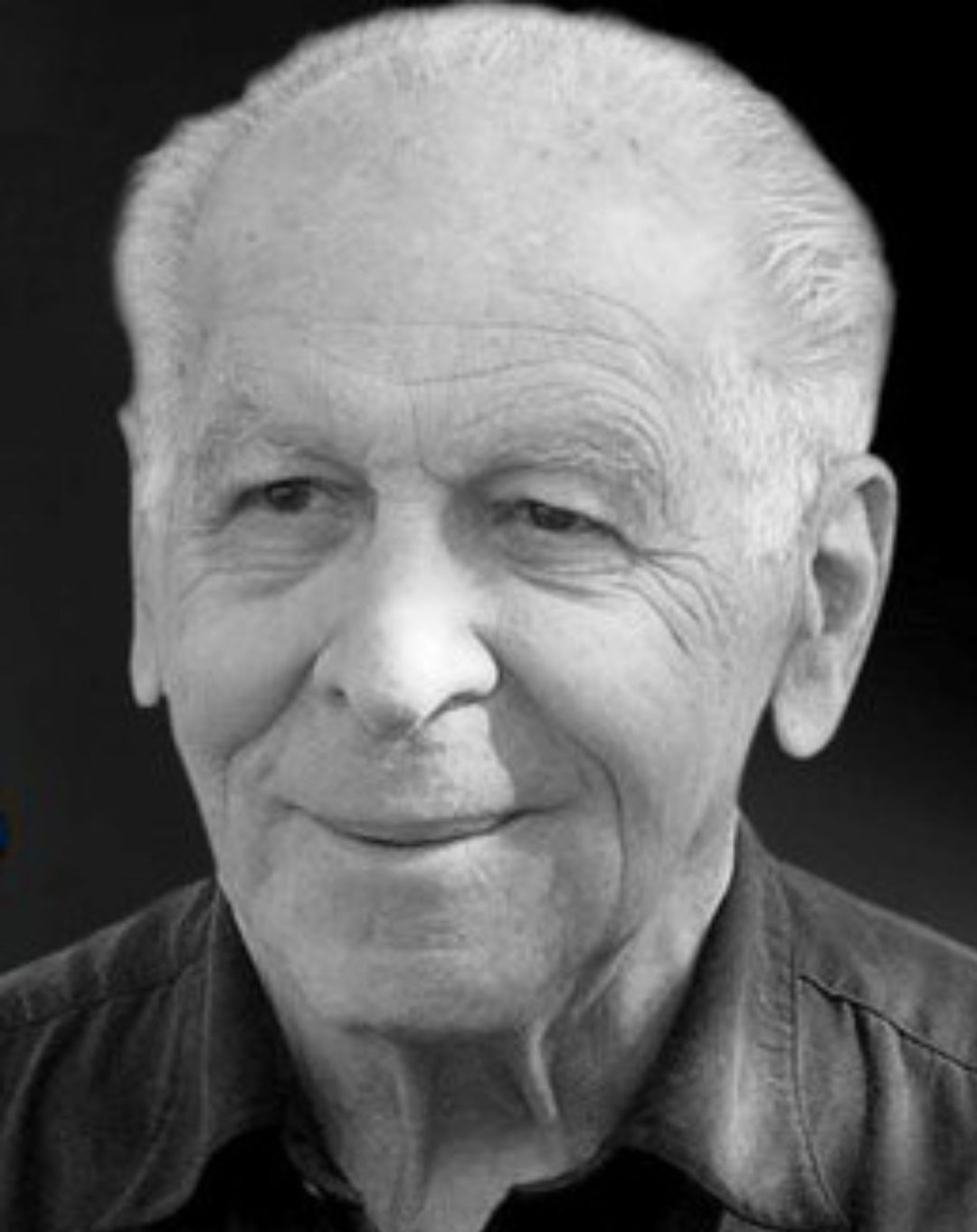
CCHR Co-founder Dr. Thomas Szasz Professor of Psychiatry Emeritus

About Thomas Szasz

Dr. Thomas Szasz is a Professor of Psychiatry Emeritus at the State University of New York, Adjunct Scholar at the Cato Institute and a Lifetime Fellow of the American Psychiatric Association. Considered by many scholars and academics to be psychiatry’s most authoritative critic, Szasz has authored more than 35 books on the subject, the first being The Myth of Mental Illness, a book which rocked the foundations of psychiatry upon its release more than 50 years ago.

Click here for a recent article on Thomas Szasz from The Journal of Critical Psychology, Counselling and Psychotherapy, August 2010.

More About Dr. Thomas Szasz

Accolades

  • “Arguably, Szasz has had more impact on the actual practice of psychiatry in this country than anyone since Freud.”

— The Journal of Psychiatry & Law

  • “No one attacks loose-thinking and folly with half the precision and zest of Thomas Szasz.”

— John Leo, social science editor for U.S. News & World Report

  • “Szasz is a brilliant debater…. He can turn a topic as somber as insanity and its social context into a book that is extraordinarily entertaining.”

— The New York Times Book Review

  • “Thomas S. Szasz has steadfastly defended the values of humanism and personal autonomy against all who would constrain human freedom with shackles formed out of conceptual confusion, error, and willful deception.”

— Dr. Richard E. Vatz, Professor, Towson State University,
Lee S. Weinberg, Professor, University of Pittsburgh

More Szasz Accolades

Szasz on Psychiatry

On Psychiatry as a Human Rights Abuse

  • “Psychiatry does not commit human rights abuse. It is a human rights abuse.”

  • “It’s not science. It’s politics and economics. That’s what psychiatry is: politics and economics. Behavior control, it is not science, it is not medicine.”
  • “It’s an epidemic of psychiatry that we are dealing with. We don’t have an epidemic of mental illness, we have an epidemic of psychiatry.”
  • “When will we recognize and publicly identify the medical criminals among us? Or is it the very possibility of perceiving many of our leading psychiatrists and psychiatric institutions in this way precluded by the fact that they represent the officially ‘correct’ views and practices. Is it precluded because they have the ears of our lawyers and legislators, journalists and judges? Or is it precluded because they control the vast funds, collected by the state through taxing the citizens, which finance an enterprise whose basic moral legitimacy we should call into question?”

More quotes on this topic

The Therapeutic State—Alliance Between Government & Psychiatry

  • “Although we may not know it, we have, in our day, witnessed the birth of the Therapeutic State. This is perhaps the major implication of psychiatry as an institution of social control.”
  • “When I use the term therapeutic state, I use it ironically, it’s therapeutic for the people who are doing the locking up, who are doing the therapy, it’s not therapeutic for the victims, for the patients.”
  • “In the therapeutic state, treatment is contingent on, and justified by, the diagnosis of the patient’s illness and the physician’s precription of the proper remedy for it…. Today, the therapeutic state exercises authority and uses force in the name of health.” The Founding Fathers “could not have anticipated…that an alliance between medicine and the state would then threaten personal liberty and responsibility exactly as they had been threatened by an alliance between church and state.”
  • “Inasmuch as we have words to describe medicine as a healing art, but have none to describe it as a method of social control or political rule, we must first give it a name. I propose that we call it pharmacracy, from the Greek roots pharmakon, for ‘medicine’ or ‘drug,’ and kratein, for ‘to rule’ or ‘to control.’”
  • “Formerly, people rushed to embrace totalitarian states. Now they rush to embrace the therapeutic state. When they discover that the therapeutic state is about tyranny, not therapy, it will be too late.”

More quotes on this topic

On the Diagnostic & Statistical Manual of Mental Disorders (DSM)

  • “The primary function and goal of the DSMs is to lend credibility to the claim that certain behaviors, or more correctly, misbehaviors, are mental disorders and that such disorders are, therefore, medical diseases. Thus, pathological gambling enjoys the same status as myocardial infarction (blood clot in heart artery). In effect, the APA maintains that betting is something the patient cannot control; and that, generally, all psychiatric ‘symptoms’ or ‘disorders’ are outside the patient’s control. I reject that claim as patently false.”
  • “The ostensible validity of the DSM is reinforced by psychiatry’s claim that mental illnesses are brain diseases—a claim supposedly based on recent discoveries in neuroscience, made possible by imaging techniques for diagnosis and pharmacological agents for treatment. This is not true. There are no objective diagnostic tests to confirm or disconfirm the diagnosis of depression; the diagnosis can and must be made solely on the basis of the patient’s appearance and behavior and the reports of others about his behavior.”
  • “The problem with psychiatric diagnoses is not that they are meaningless, but that they may be, and often are, swung as semantic blackjacks: cracking the subject’s dignity and respectability destroys him just as effectively as cracking his skull. The difference is that the man who wields a blackjack is recognized by everyone as a thug, but one who wields a psychiatric diagnosis is not.”

More quotes on this topic

On Psychiatry as a Pseudo-Science

  • “The discovery that all mental diseases are brain diseases would mean the disappearance of psychiatry into neurology.”
  • “No behavior or misbehavior is a disease or can be a disease. There is no mental disease. Period.”
  • “I don’t deny the existence of brain diseases; on the contrary, my point is that if mental illnesses are brain diseases, we ought to call them brain diseases and treat them as brain diseases—and not call them mental illnesses and treat them as such. In the 19th century, madhouses were full of people who were ‘crazy’; more than half of them, as it turned out, had brain diseases—mainly neurosyphilis, or brain injuries, intoxications, or infections. Once that was understood, neurosyphilis ceased to be a mental illness and became a brain disease. The same thing happened with epilepsy.”

More quotes on this topic

On Child Psychiatry

  • “Labeling a child as mentally ill is stigmatization, not diagnosis. Giving a child a psychiatric drug is poisoning, not treatment.”
  • “I have long maintained that the child psychiatrist is one of the most dangerous enemies not only of children, but also of adults who care for the two most precious and most vulnerable things in life—children and liberty.”
  • Child psychologists and psychiatrists “rob the child of his most important possession, himself….”
  • “How can parents protect their children from the therapeutic state, that is, from the alliance of government and psychiatry? They can do so only by disabusing themselves of the idea that what ails an unhappy or misbehaving child is a mental illness, and that so-called psychiatric treatment can help him.”

More quotes on this topic

On His Book, The Myth of Mental Illness

  • “My argument was limited to the proposition that mental illness is a myth, whose function it is to disguise and thus render more palatable the bitter pill of moral conflicts in human relations.”
  • “My great, unforgivable sin in The Myth of Mental Illness was calling public attention to the linguistic pretensions of psychiatry and its preemptive rhetoric. Who can be against ‘helping suffering patients’ or ‘treating treatable diseases’? Who can be for ‘ignoring sick people’ or, worse, ‘refusing patients life-saving treatment’? Rejecting that jargon, I insisted that mental hospitals are like prisons not hospitals, that involuntary mental hospitalization is a type of imprisonment not medical care, and that coercive psychiatrists function as judges and jailers not physicians and healers, and suggested that we view and understand ‘mental illnesses’ and psychiatric responses to them as matters of law and rhetoric, not matters of medicine or science.”

More quotes on this topic

On Schizophrenia as a Disease

  • “If you talk to God, you are praying; If God talks to you, you have schizophrenia.”
  • “Schizophrenia is defined so vaguely that, in actuality, it is a term often applied to almost any kind of behavior of which the speaker disapproves.”
  • “If schizophrenia…turns out to have a biochemical cause and cure, schizophrenia would no longer be one of the diseases for which a person would be involuntarily committed. In fact, it would then be treated by neurologists, and psychiatrists then have no more to do with it than they do with Glioblastoma [malignant tumor], Parkinsonism, and other diseases of the brain.”

More quotes on this topic

On Involuntary Commitment

  • “Involuntary mental hospitalization is like slavery. Refining the standards for commitment is like prettifying the slave plantations. The problem is not how to improve commitment, but how to abolish it.”
  • “In my view, involuntary hospitalization and the insanity defense ought to be abolished, exactly as slavery was abolished, or the disfranchisement of women was abolished, or the persecution of homosexuals was abolished. Only then could we begin to examine so-called ‘mental illnesses’ as forms of behavior, like other behaviors.”
  • “The most important deprivation of human and constitutional rights inflicted upon persons said to be mentally ill is involuntary mental hospitalization….”
  • “For centuries, involuntary psychiatric interventions were regarded as things done for the so-called patient rather than as things done to him…increasing numbers of persons, both in the mental-health professions and in public life, have come to acknowledge that involuntary psychiatric intervention are methods of social control. On both moral and practical grounds, I advocate the abolition of all involuntary psychiatry.”

More quotes on this topic

On Psychiatry in Our Justice System

  • “It is unlikely that toxicologists would be tolerated in courts of law if one would observe that he found a large quantity of arsenic in the body of a deceased person, and another stated that he found by the same operation none. Yet this sorry spectacle is commonplace in regard to psychiatric findings.”
  • “The introduction of psychiatric considerations into the administration of the criminal law—for example, the insanity plea and verdict, diagnoses of mental incompetence to stand trial, and so forth—corrupt the law and victimize the subject on whose behalf they are employed.”
  • “All criminal behavior should be controlled by means of the criminal law, from the administration of which psychiatrists ought to be excluded.”

More quotes on this topic

On Free Will & Personal Responsibility

  • “We have to restore the idea of responsibility, which is corrupted and confused by psychiatry, by the idea that something happened to you when you were a child and therefore you are not responsible thirty years later.”
  • “Modern psychiatry dehumanizes man by denying …the existence, or even the possibility, of personal; responsibility of man as a moral agent… (the psychiatric mandate) is precisely to obscure, and indeed deny, the ethical dilemmas of life, and to transform these into medicalized and technicalized problems susceptible to ‘professional solutions.’”
  • “Psychiatrists and other behavioral scientists continue to pour out an uninterrupted stream of articles and books allegedly demonstrating that man has no free will. By debunking free will and responsibility, professionals in the mental health discipline seek to legitimize themselves as bona fide scientists; at the same time, they also try to endear themselves to the politicians and the public by promising to control crime, which they call excessive violence….”

More quotes on this topic

On Mental Health Parity & Insurance

  • “We are talking about a situation where the government is mandating that an ostensibly private insurance company provide coverage for a disease which doesn’t exist.”
  • “NAMI represents the interests of mental patients the same way that the Ku Klux Klan represented the interests of black Americans.”
  • “Advocating ‘parity for mental illness’ is a hoax. The supporters of ‘mental health parity’ do not want parity for mental patients: They do not seek equal ‘legal treatment’ by legislators and courts for mental patients and medical patients. What they want is parity for psychiatrists: They seek equal ‘monetary treatment’ by health insurance companies for psychiatrists and other physicians.”

More quotes on this topic

On Abolishing Coercive Psychiatry

  • “Mental patients do not need mental hospitals; they need asylums—places of refuge where they would be protected from coercion by persecutors posing as protectors.”
  • “Deprived of the professional support of medicine and the social justification of treatment, behavior therapists would have to sell their services in the open market; there they could not coerce involuntary clients to do things they did not want to do, and they could not con the public and the state into supporting them at the taxpayer’s expense.”

More quotes on this topic

On CCHR

  • “We should honor CCHR because it is really the organization that for the first time in human history has organized a politically, socially, internationally significant voice to combat psychiatry. This has never happened in human history before.”

Share
You can leave a response, or trackback from your own site.

25 Responses to “CCHR Co-founder Dr. Thomas Szasz Professor of Psychiatry Emeritus”

  1. Lucas says:

    Respect is all I have for Dr. Szasz. He holds steadfast, as the beast that is psychiatry rears it’s grotesque face devouring all in opposition, with lies and deceit.

    I had heard of his achievements, bravery and courage to stand between
    us and “Them”. Until now I had believed him to be simply a figment of hope, but no, he is much more. He is a man of flesh and blood, a man that knows of the this evil that faces all of us and took it upon himself to bear it’s burden. I salute him and I’m glad that this man fights amongst our ranks.

    -Lucas

  2. Eileen Gambrill,PhD says:

    Great video-he is my hero.Eileen

  3. In this ‘Age of lies’ it is confusing to come across what is true!
    I read an article about Dr. Szasz in the old ‘Madness Network News’
    Like J. Krishnamurti’s books in college, reading Dr. Szasz’s books
    opened my mind! H

  4. Dr. Thomas Szasz is the best writer in human history, his books are excellent masterpieces and the great information he offers to the public is accurate and true. I agree entirely with his views.
    He is right with the myth of mental illness.

  5. Kevin Owen says:

    Well done Sir,[Dr Thomas Szasz] Society will be forever gratefull for your work and contribution to clean up psychiatry and knock them out of existence for ever.

    Psychiatry: No Cures No Science [4 mins]
    http://www.cchrint.org/videos/mostviewed/nsnc/
    Psychiatrists openly admitting at the 2006 APA convention that they have no scientific tests to prove mental illness and have no cures for these unproven mental illnesses.

    Kevin Owen
    Psychosomatic Healing
    http://www.psychosomatic-healing.co.nz
    Handling the stress related to all illness.
    With a reduction in Mental and Physical Stress comes an improvement in health.

  6. Anthony Bullock says:

    The principal means through which psychiatrists jerk their patients
    around is the patients’ addiction to psychiatric drugs. There should
    be more information about how to get off the drugs.

  7. Ron Savelo says:

    It’s so incredibly refreshing, albeit rarer than hen’s teeth, to hear a member of the psychiatric community speaking the truth about their own profession.

    Dr. Szasz has indeed proven to us that there is hope for the psychiatric “profession”, if they would only open their eyes and admit to their complete ignorance of, yet shameless pretended knowledge of the workings of the human mind.

    Of course, if they did that, there would be no “profession” of psychiatry left, would there?

  8. Very Well Done! The compilation is an eloquent, informative communication to the world. The power of clear thought is evident when it comes to how Dr. Szasz impinges the truth about psychiatry from the different areas affecting humankind. Thank you, Dr. Szasz and CCHR for being there.

  9. Dr. Szasz is the undisputed founder of 21st century psychology, using his influence and expertise to reform psychiatric pseudoscience to a practical, human, and morally just set of ideas for generations to come.

  10. Wouldn’t there be a different and effective healthcare system plus medical paradigm if there were men and women of science at the World Health Organization, U.S. HHS, CDC, FDA, and USDA who aspired to Dr. Szasz’s philosophy instead of those who now follow what is being ‘mandated’ by BIG pharma and chemical companies for profiteering from selling their toxic wares under the guise of ‘medicine’ and medical care? If they/we really want to have effective healthcare, we MUST get out from under toxic chemicals in food, water, air, the environment and as medicine.

  11. David says:

    I write from Sweden so I hope you can understand me.

    The promotion of neurological differences being diseses for mental illness are just talk as it is not even usefull in clinical practice when someones is about to be diagnosed. The diagnosis is usually based on behavior, thoughts and feeling. In Rosenhan experiment the psychiatrists and health care providers could not even differentiate false patients among patients who had mental “disease”. Then it could be people who are labeled mentally sick in closed psychiatry care now who should not be in psychiatric care.

    There are cases wich prove that healthy children or adults without mental disorders are sometimes labeled sick or dangerous because diagnosis in psychiatry are often only based on behavior, thoughts or feelings, so investigations have show that psychiatrist sometimes have diagnoses someone based on what other negative people regard someone who they might have had conflict with.

    There are also investigators who have found that psychiatrists diagnosis wrongly children or adult with mental disorder just because they do crime without regard to that children can learn bad behavior from other or for some other non-biological reasons do crime

    Many mental disorders are perceived by most people as disease, and research prove that some people who are labeled mentally sick are often inflicted by discrimation, social stigma or that some people who are labeled mentally sick are put in intensive control by psychiatry which restric there freedom (even healty investigator without mental disorder in Rosenhan exprimentent were put in intensive controll when they were labled mentally ill without almost no people noticing they are healthy)

    Mental disorder labels like psychotic are almost like witch labels since the judgement is based often only on behavior,thoughts or feeling, and not neurological and biochemical tests.

    *************

    I write from Sweden so I hope you can understand me. I did something in Sweden more persasive than Rosenhan experiment and in return become a fake patient label mentally sick. Now as I live as a dissenter who work against psychiatry some people have told me psychiatry has interpreted my work against psychiatry as symptoms.

    The diagnosis in psychiatry is usually based on behavior, thoughts and feeling. In Rosenhan experiment the psychiatrists and health care providers could not even differentiate false patients among patients who had mental “disease”. Then it could be people who are labeled mentally sick in closed psychiatry care now who should not be in psychiatric care.

    There are cases wich prove that healthy children or adults without mental disorders are sometimes labeled sick or dangerous because diagnosis in psychiatry are often only based on behavior, thoughts or feelings, so investigations have show that psychiatrist sometimes have diagnoses someone based on what other negative people regard someone who they might have had conflict with.

    There are also investigators who have found that psychiatrists diagnosis wrongly children or adult with mental disorder just because they do crime without regard to that children can learn bad behavior from other or for some other non-biological reasons do crime

    Many mental disorders are perceived by most people as disease, and research prove that some people who are labeled mentally sick are often inflicted by discrimation, social stigma or that some people who are labeled mentally sick are put in intensive control by psychiatry which restric there freedom (even healty investigator without mental disorder in Rosenhan exprimentent were put in intensive controll when they were labled mentally ill without almost no people noticing they are healthy)

    Mental disorder labels like psychotic are almost like witch labels since the judgement is based often only on behavior,thoughts or feeling, and not neurological and biochemical tests.

    I can continue live a calm life like now but restricted life (as lots of men say with psychiatry in your life, you will not have a normal life like other people but they think that psychiatrist care may try to even manipulate or mind controll someone who was fake patient from beginning like Rosenhan experiment in believing he or she is sick or let his or her social network think the person is mentally sick which investigations have proved can inflict someone with social stigma, discrimation etc). Could you help me handle psychiatrist since lots of people I met say I am helpless in a involuntary open psychiatric care trap?

    Dvdmhn@gmail.com
    David

  12. David says:

    47.

    So many prove that psychiatry fool people think they are sick or that psychiatry is even threat to freedom or democracy.

    According Hare fraud, lying or manipulation is symptoms (allthough this is also almost fraud or disinformation, as the term psychopathy is not even accepted as disease) Health care people label some people be sick psychopaths, but are not aware that their work is itself manipulation and fraud (as some doctors say here in the guise of science or sympathy).Psychiatrist and those in psychiatry who read this but still support fraud in psychiatry may be very cold or manipulative. But should they be charged by the victims of psychiatry for almost murdering, child abuse etc

    I have heard psychiatry have alliance with big pharma, but does psychiatry have alliance with media for media manipulation?

  13. David says:

    Psychiatry do justify their fraud that it saves life, but we can save lives WITHOUT psychiatry too. If someone is suicidal, I can be that more lives can be saved but treat them with other specialities than psychiatry and green mental health.

  14. David says:

    Psychiatry do justify their fraud that it saves life, but we can save lives WITHOUT psychiatry too. If someone is suicidal, I can bet that more lives can be save with other medical specialities and green mental health alternatives than psychiatry

  15. David says:

    Also there are people who are suicidal without being sick, allthough I think one human should always respect life and never harm itself or other. Yet we have to respect that suicide is not a diseases and help suicidial in more humanistic approach than abuse of psychiatry by chemical treatments and pseudoscientic diagnostic labels

  16. visitor says:

    There are reports that show that are in child abuse in psychiatry, as it is has been investigated and proved that psychiatrits diagnose often children or adults when other in their biased family or acquintance exaggerate or fabricate illnesses or symptoms for someone (child or a adult).
    You can prove yourselt that psychiatrits diagnose you even if you not suffer from mental illness, if several people induce or fabricate psychiatric symptoms for you or if you participate yourself in fabricate symptoms.
    http://www.mbpexpert.com/definition.html

    This a form of abuse in psychiatry which family or unfriendly acquaintance to someone fabricate and/or inducee psychiatric symptom illness in someone, is one of the least understood forms of abuse. There is information about this kind of abuse in psychiatry. Child abuse does occur in psychiatry (Dagnosis in psychiatry is sometimes very fake and unscientific). Please foward this message to your webiste or someone responsible for information to aware people of this kind of abuse in psychiatry.

  17. Ron says:

    Careful Doctor,
    You could easily find such “delusional” thinking as suggesting Psychiatry could be flawed described as a mental illness in the next DSM.
    But apart from that, Thank You!!!

  18. sheida says:

    finally a psychiatrist whos against coeercion. but dr. szasz as i read u dont like to get referred to as antipsychiatry!!!all hospitals i ve seen in different countries have locked doors….so why do u say u are only against forced psychiatry?even many voluntary admissions (which i find stupid, only they make hospitals exist further!) are changed to sections. being there voluntary out of naivity doesnt make it less ahrmless for the person and also supports the system!!
    2-point: why do u cooperate with scientology who are quite capitalist, and religious fundamental…
    although i saw that great documentary by cchr, called psychiatry nightmare.
    3-why have i not come across any political organized antipsychiatry (like anarchist)-are most communists backing off not to get labeled themselves, and lose their pol. credibility, or they couldnt defend gulags, and pol. psych. in communist states.
    i myself, im antipsychiatry and a political activist and was put in hospital for pol.reasons!!!(in middleeurope!)….but im up to organize one.[unfortunately i was taken from my commmunity and freedom recently again by reentring that country, and they want to send police after me again...]
    4-please email me evryone!!!
    i was tricked again into the country where i suffered from a police coup, and lost my passport and can be brought to hospital by a fake expertice+and a fake custody!!!!i need your support-#my life is in the biggest danger, ….
    they want to keep me from doing activism!!!

  19. Elena Jazin says:

    Dear Dr Thomas Szasz:

    I admire your work very deeply. Would you have some time to give me your expert opinion about one of the best (according to me) books I ever read?:

    “Sigmund Freud. Autobiography and other works that provide light about the development of psychoanalysis”.
    (I read this book in Swedish: I hope that my translation of the title is appropriate?)

    Additional information about the book: 1940-1950 by Imago Publishing Co., London By permission of S. Fischer Verlag GmbH, Frankfurt am Main (Swedish edition Bokförlaget Nature och Kultur, 1989) ISBN 91-27-1957-8.

    The first part of the book was written 1924. If I understood (and interpreted) the book correctly, Sigmund Freud during his young years was VERY interested in some of the Darwin’s ideas about personality traits, and he deeply believed that there is NO controversy between nature and nurture: both are important, and their contribution is very different (in proportion) for different behavioral traits, both “normal” and “abnormal” behaviors (I do not like the last two terms but I do not know any better ones. Do you?).

    Do you agree with these ideas?

    I hope to hear from you.
    Best regards,

    ELENA JAZIN
    Professor
    Behavioral Genetics
    elena.jazin@ebc.uu.se
    Dept Organismal Biology
    Organismal Biology, EBC           phone: 46-18-471 64 63
    Uppsala University fax: 46-18-471 64 25
    SE- 752 36 Uppsala, Sweden

    web site:

    http://www.fu.uu.se/devbiol/Jazin/jazin_index.html

  20. Elena Jazin says:

    By the way…I do not think we need to attack “big pharma” in the harsh and unpolite way that some people is using in this forum: A LOT (most?) of people in “Big pharma” is doing a FANTASTIC work to develop new drugs that really help a lot of people…THEY are the only ones that can do it (economical, human and infrastructure resources, time etc etc).

    The only important thing is that Pharmaceutical Companies need to follow national and international ethical regulations that are GOOD. These rules are some times very different in some countries of the world: THAT is the place where most of us should try to influence, I believe.

    We should be grateful for the developmental work done at pharmaceutial companies: the world would be much worse without them.
    Cheers,

    18.

    ELENA JAZIN
    Professor
    Behavioral Genetics
    elena.jazin@ebc.uu.se
    Dept Organismal Biology
    Organismal Biology, EBC phone: 46-18-471 64 63
    Uppsala University fax: 46-18-471 64 25
    SE- 752 36 Uppsala, Sweden

    web site:

    http://www.fu.uu.se/devbiol/Jazin/jazin_index.html

  21. Elena Jazin says:

    Final comment:
    As I said before, Pharmaceutical Companies need to follow national and international ethical regulations that are GOOD.

    But, at the same time, we all need to realize that there is need for a BALANCE between good regulations and the possibility for companies to survive AND grow. I think it is called Entrepreneurship?

    THAT is the way our world is constructed, isn’t it?

    ELENA JAZIN
    Professor                                                
    elena.jazin@ebc.uu.se
    Dept Organismal Biology
    Organismal Biology, EBC           phone: 46-18-471 64 63
    Uppsala University fax: 46-18-471 64 25
    SE- 752 36 Uppsala, Sweden

    web site:

    http://www.fu.uu.se/devbiol/Jazin/jazin_index.html

  22. Rytis Mikucionis says:

    I suffered a lot from the Hungarian drug ‘Haloperidol’ injections. I live in Lithuania, Vilnius (European union zone). This drug is the only one used in the psy Hospital in Vasaros street 5, Vilnius. All my compliements were refused by doctors, i suffered a real neurological hell many hours ( Haldol “comas”). I felt like in a prison, a Hell i never imagined can egsist today. In 2007 i spent a month in UNHCR camp as i asked a political shelter in another country, motivated on psychiatric abuse to me in Lithuania. Also i have a photo evidence and other.

  23. Peter-John Dyers says:

    Since exposure to the ideas of CCHR I am becoming more and more aware of the evidence in support of what CCHR is saying about lack of respect for human rights by “psychiatry”. I am a practising psychiatric male nurse in the Western Cape Province of the Republic of South Africa. It is not surprising that the average mental health care practitioner has never been exposed to alternative views to conventional psychiatric practice.

  24. Mario Been says:

    It is very good fellows like dr. Szasz are around, and can give psychiatry some lesson from the inside.
    Being hospitalized involuntary is something from the middle ages. And as I experienced, the drugs they use have the potention to kill, not to cure.

    As said on this site, to which I fully agree now: psychiatry doesn’t commit human rights violations, it IS a human rights violation.

    Be careful: they diagnose you with “illness” just because some distant family member has such a history. No physical examination is done before a diagnosis.

  25. Haseen Rahman says:

    I understand the concept of drugging someone who’s not victim to any brain disease is tyranny,but social treatment is the key to curing patients with misbehaviors (mental disorder,or mental illness).so if a psychiatrist socially treats his patients instead of drugging them does not harm,but will rather help to cure his misbehaviors.

    I also understand that psychiatric patients who are imprisoned in a mental hospital involuntarily is crucial,but if psychiatrist organize an environment for there patients.An environment where the patients wont be judged do to there misbehaviors.Where they can voluntarily take place in an healthy environment where they can fix there selves would help the psychiatrists treat and cure there patients.

Leave a Comment

Read our comment rules before posting your comment.