Posts Tagged ‘Irving Kirsch’

The Globe and Mail — “Is Depression a Disease? Big Pharma says yes, but others aren’t so sure”

Friday, June 18th, 2010

Big Pharma says yes, but others aren’t so sure

The Globe and Mail
By Leah McLaren
June 18, 2010

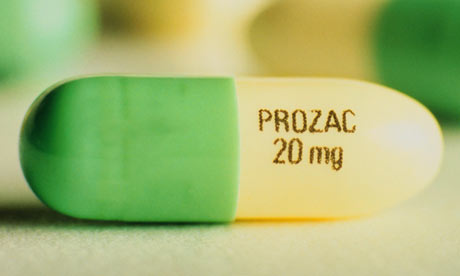
“It’s all in your head” isn’t something a chronically depressed person likes to hear. In the age of Prozac, when adjusting your serotonin level is as normal as checking the oil in your car, it seems unhelpful to suggest that someone might think their way into – or out of – a disease of the mind.

And yet depression is all in our heads. Where else would it be? The real question, still hotly debated in the scientific community, is whether its cause is chemical and ultimately curable (good news for Big Pharma) or something far more complex (good news for poets and pot-smoking students of existential philosophy).

There is no doubt that depression exists. Inexplicable sadness – or “melancholia,” as it was historically known – has been with us since Hippocrates conceived his famous oath. But a groundbreaking new study has found that not only is depression affected by the way we think about it, so too is its cure.

Last week Irving Kirsch, a professor at the University of Hull in the U.K., presented a study that found Prozac and its ilk are no more effective than placebos in treating depression. In his view, there is no substantial link between serotonin – the brain chemical that antidepressants are supposed to regulate – and chronic depression.

It’s a controversial study – one that many members of the psychiatric community reject out of hand – but it also raises a nagging question about depression: How did it come to be recognized as a disease in the first place?

Like Hirsch, psychologist and writer Gary Greenberg is part of a growing number of psychiatric professionals who have begun to publicly question the underpinnings of popular thinking on depression.

Read entire article:  http://www.theglobeandmail.com/life/style/is-depression-a-disease/article1609422/

« Return to news items


Share

The Emperor’s New Drugs: Exploding the Antidepressant Myth—Debunking the Chemical Imbalance Theory & Drug Efficacy

Wednesday, February 24th, 2010

PopMatters
By Chris Barsanti
February 24, 2010

What if antidepressants were not just too easily available and overly prescribed by doctors—as has been argued in many venues for years now, though to no discernible effect—but didn’t even work? That’s the takeaway premise of psychology professor Irving Kirsch, Ph.D., in his new book, The Emperor’s New Drugs: Exploding the Antidepressant Myth.

By examining a broad spectrum of research, using both the published drug studies and the deep well of unpublished research which many drug companies would prefer stay hidden, Kirsch presents the all-too-plausible theory that there is essentially no positive effect from taking antidepressants. In fact, comparing test results between patients taking antidepressants and those taking active placebos (a drug that isn’t an antidepressant but has other, noticeable side effects, so that the patient can tell something is working on them), Kirsch found no statistically significant difference. Actually, he found that it didn’t seem to matter what drug patients were taking, as long as they knew they had ingested some kind of active drug, they improved by about the same degree. So much for the last few decades’ great advances in pharmacology, it would seem.

If what Kirsch is saying is true, then not only are untold millions being wasted on essentially worthless drugs, but an entire school of psychological thought is utterly wrong. Kirsch spends an entire chapter of his tightly argued book tearing down the oft-recited belief that depression is frequently or always caused by a chemical imbalance in the brain. After relating several studies which purport to show that drugs which increase, decrease, or have no effect on the serotonin levels in patients brains (something long described as crucial to pharmacological therapy) all have about the same effect, Kirsch concludes very simply that “the data just do not fit the theory”.

Read entire article:  http://www.popmatters.com/pm/post/121266-the-emperors-new-drugs-exploding-the-antidepressant-myth/

« Return to news items


Share

Antidepressants: The Emperor’s New Drugs? “Depression is not a brain disease, and chemicals don’t cure it.”

Monday, February 1st, 2010

The Huffington Post
By Irving Kirsch, Ph.D.
January 29, 2010

Antidepressants are supposed to be the magic bullet for curing depression. But are they? I used to think so. As a clinical psychologist, I used to refer depressed clients to psychiatric colleagues to have them prescribed. But over the past decade, researchers have uncovered mounting evidence that they are not. It seems that we have been misled. Depression is not a brain disease, and chemicals don’t cure it.

My awareness that the chemical cure of depression is a myth began in 1998, when Guy Sapirstein and I set out to assess the placebo effect in the treatment of depression. Instead of doing a brand new study, we decided to pool the results of previous studies in which placebos had been used to treat depression and analyze them together. What we did is called a meta-analysis, and it is a common technique for making sense of the data when a large number of studies have been done to answer a particular question.

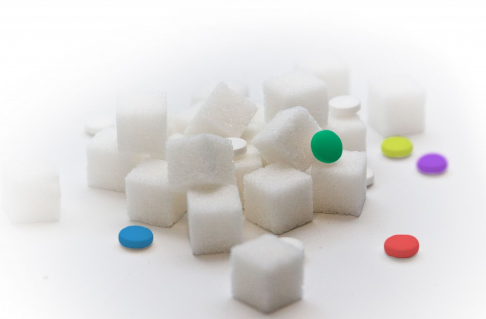
It is rare for a study to focus on the placebo effect–or on the effect of the simple passage of time, for that matter. So where were we to find our placebo data and no-treatment data? We found our placebo data in clinical studies of antidepressants. All told, we analyzed 38 published clinical trials involving more than 3,000 depressed patients. What we found came as a big surprise. It turned out that 75 percent of the antidepressant effect was also produced by placebos – sugar pills with no active ingredients that are used to control the effects of hope and expectation in clinical trials. In other words, most of the improvement seen in patients given antidepressants was a placebo effect.

Read entire article:  http://www.huffingtonpost.com/irving-kirsch-phd/antidepressants-the-emper_b_442205.html

« Return to news items


Share