








“How do I get off all the depression drugs?” We asked an expert

Phillip Sinaikin, MD, is a Florida psychiatrist who has been in practice for 25 years. Author of “Get Smart About Weight Control” and co-author of “Fat Madness: How to Stop the Diet Cycle and Achieve Permanent Well-Being,” his new book focuses on excesses and industry influence in the field of psychiatry.
Rosenberg: Your new book, Psychiatryland, traces how deception, conflicts of interest, medical enabling and direct-to-consumer advertising have resulted in millions being on psychiatric drugs they don’t need. One patient you describe has legitimate mourning and grief work to do after his wife leaves him for his own cousin. But his grief is pathologized into “bipolar disorder” by the system, including his own mother.

Bad Side-Effects Ahead For Pharma?

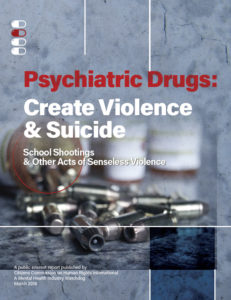
In 2006, The New York Review of Books reported that four-year-old Rebecca Riley died of the effects of two prescription drugs—Clonidine and Depakote.

These medications, along with Seroquel, were prescribed for Rebecca after she was diagnosed, at the age of two, with attention deficit hyperactivity disorder (ADHD) and bipolar disorder. The three drugs are not approved by the Food and Drug Administration (FDA) for treatment of ADHD or long-term treatment of bipolar disorder, nor are they approved for children as young as Rebecca.

The New York Review of Books‘ recent two-part article (1) by Marcia Angell on the treatment of mental illness with psychoactive drugs (those that affect the mental state) addresses an issue that may one day prove very important to investors in pharmaceutical stocks. (All statistics and quotations herein are drawn from Dr. Angell’s article.) It is not illegal for a doctor to prescribe a drug off-label, that is, for a non-FDA-approved use, but a drug marketer cannot lawfully encourage a doctor to do so. The profits in psychoactive drugs, however, make it tempting to flout the law. In the past four years, AstraZeneca (AZN), Pfizer (PFE), Eli Lilly (LLY), Bristol-Myers Squibb (BMY) and Forest Labs (FRX) have all settled federal charges of marketing psychoactive drugs off-label, at a cost running into hundreds of millions.

The problem with the DSM

Do you have a shopping addiction disorder? Perhaps an addiction to food? Maybe one of your kids has Internet addiction disorder, or video-game attachment syndrome. Well, not quite yet, because these kinds of new mental diagnoses are only proposed, not final, for the new revision of the Diagnostic and Statistical Manual of Mental Disorders (DSM), the bible of the American Psychiatric Association (APA).

And there is a terrible problem with this. The DSM was first created in the 1920s. Based on psychoanalytic theory, it enumerated fewer than 100 mental problems that a psychiatrist could diagnose, all of them attributable to environmental conditions, generally the role of parenting. We know now that this theoretical stance was limited and, in many cases, wrong. In 1980, the second revision of the DSM took place. Freud was discarded, and the revised bible now included several hundred disorders, all delineated by a list of observable symptoms and a framework for limiting and differentiating diagnoses.

Three versions later, the current DSM lists more than 1,000 disorders. No theories are espoused for their origins, though implicit in it is that there is a mix of genetic and environmental causes that shape neurological development. During this period of about three decades, the incidence of attention disorders in the general population has increased from 2 percent to 10 percent. In the 1980s, people diagnosed with bipolar disorder represented less than 1 percent of the population; now the number has increased to 5 percent. New diagnoses, like oppositional defiant disorder and conduct disorder, now cover as many as 5 percent of children.

Autism, which afflicted a tiny percentage of the population in the 1990s, now accounts for 1 out of every 100 children. What is wrong with this picture? Do we have an epidemic on our hands? Something in the water we drink, or the air we breathe?

Selling Depression—Adding New Spin and Urgency to Depression Drug Sales

The discovery that many people with life problem or occasional bad moods would willingly dose themselves with antidepressants sailed the drug industry through the 2000s. A good chunk of the $4.5 billion a year direct-to-consumer advertising has been devoted to convincing people they don’t have problems with their job, the economy and their family, they have depression. Especially because depression can’t be diagnosed from a blood test.

Unfortunately, three things dried up the depression gravy train for the drug industry. Blockbusters went off patent and generics took off, antidepressants were linked with gory and unpredictable violence, especially in young users and — they didn’t even work, according to medical articles!

Australia’s Outrageous Mental Health Agenda Under Attack from Leading U.S. Psychiatrist

While the United States unfortunately leads the world in labeling its children with mental ‘disorders’ which cannot be scientifically proven to exist as medical conditions, Australia seems determined to take over the [dishonorable] title. And they just might do it. For poised to carry them into the winners circle is none other than psychiatrist and former “Australian of the Year” Patrick McGorry. The scam is called “pre-psychosis risk syndrome” which simply translates as this: Despite the fact there is not one proven scientific or medical test to prove any child has a mental “disorder,” Patrick McGorry maintains he can determine who will develop one. That’s right. He can determine who will develop a mental disorder before they develop a mental disorder that cannot be medically proven to exist. If that sounds a little crazy to you, rest assured, you’re not alone. In fact, the logic is so backwards that McGorry’s plan has come under fire from U.S. psychiatrist Allen Frances, who chaired the committee that produced the psychiatric diagnostic bible of “mental disorders” used the world over, ‘The Diagnostic and Statistical Manual of Mental Disorders (DSM) IV. That is called being attacked from altitude. And from your own profession nonetheless.