

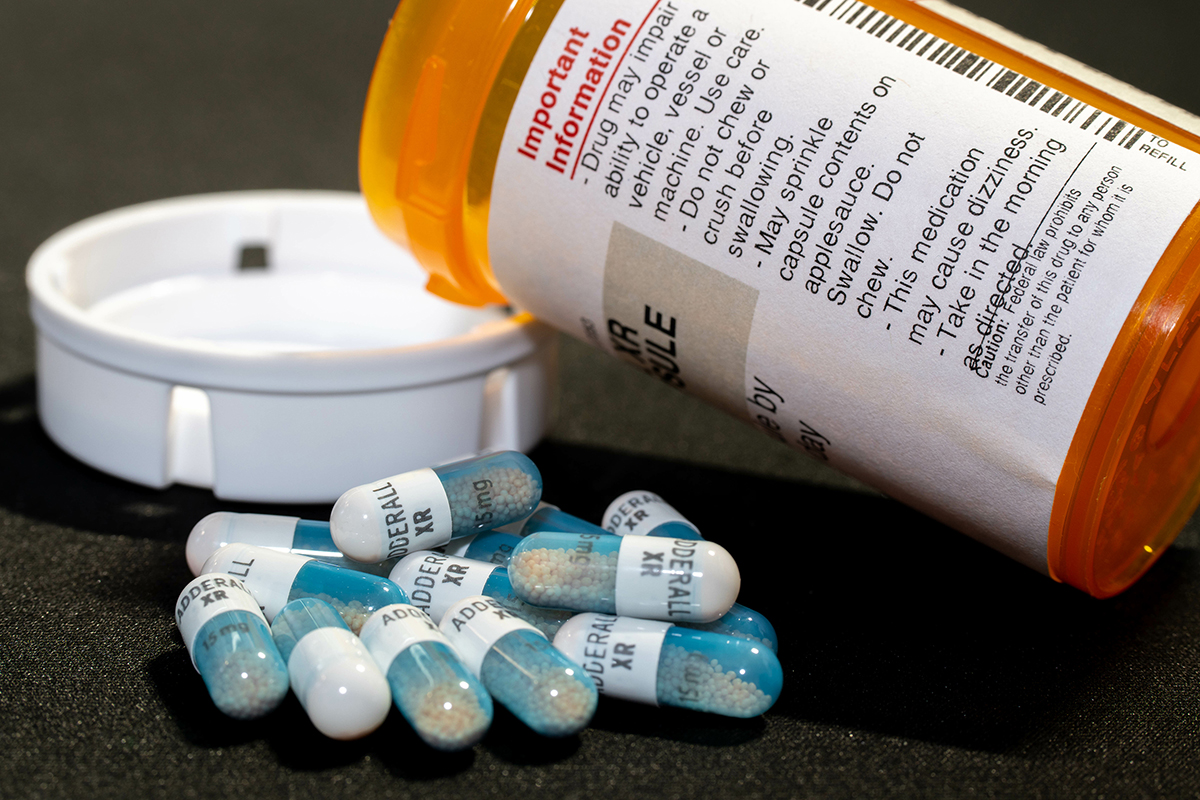
Parents need clear warnings that ADHD assessments lack objective tests and that prescribed stimulants carry documented risks of addiction, psychosis, and other harms.
By Jan Eastgate
President, CCHR International
October 30, 2026
Civil and criminal actions in the United States and Sweden have targeted entities involved in questionable Attention Deficit Hyperactivity Disorder (ADHD) assessments, diagnoses and the promotion of stimulant drugs, resulting in convictions, settlements, and business closures. These cases underscore the need for greater accountability for the fraudulent promotion of psychiatric assessments. Parents must also be warned that ADHD assessments lack any objective medical test to confirm a diagnosis and that the drugs routinely prescribed carry documented risks of addiction, psychosis, and other harms.
In October, a federal jury convicted Dr. Jonathan William Decker, 46, of Rockford, Michigan, of conspiracy and six counts of illegally distributing controlled substances through the Done Global ADHD telehealth platform. Prosecutors said Decker prescribed more than two million Adderall and other stimulant pills, including methamphetamine, without examining patients and earned more than $1 million from his prescribing.
Decker is the 11th defendant convicted in the broader Done Global case, which prosecutors say involved illegally distributing more than 37 million Adderall pills nationwide as part of a $100 million drug distribution and health care fraud scheme. Done Global CEO Ruthia He and Clinical President and psychiatrist David Brody were previously convicted and sentenced, and the company itself remains charged. Decker faces a maximum statutory penalty of 140 years in prison, with sentencing still to be scheduled.[1]
Separately, the Texas Attorney General secured a $7.5 million settlement with Tris Pharmaceuticals over allegations that the company misrepresented the effectiveness of Dyanavel XR, an extended-release amphetamine ADHD drug marketed for children. Texas sued Tris Pharma and CEO Ketan Mehta in 2023, alleging the company defrauded Texas Medicaid by overstating the drug’s benefits and directing sales representatives to tell doctors, including Medicaid providers, that Dyanavel XR worked significantly faster than competing drugs and offered other unproven benefits to pediatric patients. The Attorney General’s Office said the claims were made during thousands of sales calls.[2]
In Sweden, the Swedish Health and Social Care Inspectorate (IVO) banned an ADHD online diagnostic company, Psykiatrispecialisterna, from operating in February after finding “a clear and serious risk to patients’ health, safety and lives.”[3] An appellate court ordered the company closed. It was criticized for only having digital assessments and high-volume prescribing.[4] Psykiatrispecialisterna filed for bankruptcy.[5]
The company marketed a diagnosis or your money back policy: patients paid the full fee upfront and were guaranteed a refund only if they did not receive an ADHD diagnosis. The owner stated that refunds occurred in roughly 1 out of every 500 cases[6]—meaning the company kept the money in 499 out of 500 assessments. Revenue reached roughly $5.5 million in 2024.[7]
These cases in the U.S. and Sweden illustrate regulatory and law-enforcement responses to practices involving rapid or remote ADHD diagnoses and aggressive promotion of stimulant drugs.
Such practices are enabled by the subjective nature of the ADHD label itself. ADHD remains a subjective psychiatric construct with no objective medical test: no blood work, no scan, and no biomarker to confirm any malfunction of the brain. Diagnosis depends entirely on reported behaviors, many of which are indistinguishable from normal human tendencies.[8] Joanna Moncrieff, Professor of Critical and Social Psychiatry, along with others, has noted that decades of research have failed to identify a biological marker or neurological feature capable of reliably distinguishing people diagnosed with ADHD.[9]
Medical researcher Peter C. Gøtzsche, M.D., also challenges the scientific basis of ADHD, arguing that its diagnostic criteria are vague and contribute to widespread over-diagnosis and psychiatric drug prescribing. He, too, disputes claims that ADHD is an established neurodevelopmental brain disorder, arguing that there are no diagnostic biomarkers or demonstrated dopamine deficiencies that establish it as such. Gøtzsche points out that ADHD stimulants, including Adderall and methylphenidate, are Schedule II controlled substances with risks including abuse, psychosis and aggression. He challenges claims that the drugs improve long-term academic performance or prevent accidents and suicide.[10]
In 2002, CCHR successfully challenged the country’s Brain Foundation, which had promoted ADHD as a neurobiological condition or brain dysfunction. The Netherlands Advertisement Code Commission (NACC) ruled this was misleading and ordered the Brain Foundation to cease such false claims in its advertising. The same informed consent protections do not exist in the U.S.[11]
In January 2025, The Journal of the Royal Society of Medicine warned: “The real epidemic out there is the epidemic of ADHD diagnosing and prescribing… Lacking proven biological anchoring, syndromal categories are susceptible to cultural trends regarding over-medicalization and societal contagion… We are witnessing a spectacular rise from nothing in the societal profile of ‘adult ADHD’, in part fueled by self-administered checklists… Once something is declared real, it becomes real in its consequences.”[12]
According to the American Psychiatric Association’s Diagnostic and Statistical Manual of Mental Disorders (DSM-5), children 16 and under must meet six out of nine behaviors such as running around, climbing on furniture, missing assignments, disorganized bedrooms, not paying attention, interrupting teachers, or engaging in risky play. Adults 17 and older must meet only five out of nine behaviors such as restlessness, leg jiggling, staying constantly busy, missing work deadlines, struggling to balance chores and bills, losing focus, impulsive spending, interrupting conversations, or making hasty decisions. Sheri Few, Founder and President of United States Parents Involved in Education (USPIE), and Sheila Matthews, CEO and co-founder of AbleChild note that nearly every human being exhibits these behaviors at some point. Yet, millions are labeled with ADHD and placed on powerful, addictive stimulants.[13]
IQVIA Total Patient Tracker Database for the year 2020 reports 3,155,441 children and adolescents up to age 17 taking ADHD drugs, over 58,000 of them five or younger.[14]
The risks of the drugs prescribed under this framework are well-documented.
The U.S. Food and Drug Administration (FDA) acknowledges that ADHD stimulant drugs can cause addiction, even when taken exactly as prescribed, which prompted updates to the black box warning.[15] The U.S. Drug Enforcement Administration (DEA) classifies ADHD stimulants in the same category of highly addictive substances as OxyContin and fentanyl, warning that they can lead to “severe psychological dependence.”[16]
A September 2024 study published in the American Journal of Psychiatry found that patients taking higher doses of ADHD drugs were more than five times as likely to develop psychosis or mania. Lead researcher Dr. Lauren Moran emphasized that a clear warning label is needed to alert prescribers and patients to this risk.[17]
FDA Medication Guides indicate ADHD drugs can cause new or worsening behavior or thought problems, aggression, hostility, and psychotic symptoms in both children and adults.[18] In 2025, drug regulatory agency alerts from Australia and Germany warned that atomoxetine, a widely prescribed “non-stimulant” ADHD drug, patented as Strattera, can cause homicidal ideation—adding to its existing warnings about suicidal behavior in children and young adults.[19]
Any diagnosis that cannot be medically and scientifically proven should be dismissed. Parents and patients remain largely unaware that online and other rapid ADHD assessments rest on no objective scientific foundation—only checklists of ordinary behaviors, with no blood test, brain scan, or biomarker to confirm any underlying disease. The short-term risks of the stimulants routinely prescribed include addiction, psychosis, and behavioral worsening.
Far greater accountability is needed. CCHR calls on regulators, clinicians, and the public to demand full transparency about the lack of biological markers and the documented harms of the drugs before any assessment or prescription proceeds.
[1] “Doctor Convicted for Conspiring to Distribute Over 2 Million Stimulant Pills,” DOJ Office of Public Affairs, 2 Oct. 2026, https://www.justice.gov/opa/pr/doctor-convicted-conspiring-distribute-over-2-million-stimulant-pills
[2] Office of the Attorney General of Texas, “Attorney General Paxton Secures $7.5 Million Settlement from Tris Pharma for Misrepresenting the Efficacy of ADHD Drug for Kids,” press release, 1 Oct. 2026, https://www.texasattorneygeneral.gov/news/releases/attorney-general-paxton-secures-75-million-settlement-tris-pharma-misrepresenting-efficacy-adhd-drug
[3] Christian Zetterdahl, “IVO Bans the ADHD Company’s Operations,” SVT Nyheter Öst, 25 Feb. 2026,https://www.svt.se/nyheter/lokalt/ost/ivo-forbjuder-verksamheten-hos-adhd-foretaget
[4] https://www.svt.se/nyheter/lokalt/ost/adhd-kliniken-psykiatrispecialisterna-i-linkoping-stangs-ner; Linnea Burén, Julija Sidner, “Successful ADHD clinic earns millions of sloppy investigations,” SVT Nyheter Ost, 28 Nov. 2025, https://www.svt.se/nyheter/lokalt/ost/framgangsrik-adhd-klinik-tjanar-miljoner-pa-slarviga-utredningar
[5] Julie Wiberg, Christoffer Nielsen, “Psychiatry specialists go bankrupt: ‘With sadness in the heart’,” SVT Nyheter Ost, 23 Mar. 2026, https://www.svt.se/nyheter/lokalt/ost/psykiatrispecialisterna-gar-i-konkurs-med-sorg-i-hjartat
[6] Linnea Burén, Julija Sidner, “Successful ADHD clinic earns millions of sloppy investigations,” SVT Nyheter Ost, 28 Nov. 2025, https://www.svt.se/nyheter/lokalt/ost/framgangsrik-adhd-klinik-tjanar-miljoner-pa-slarviga-utredningar
[7] Psychiatry Specialists Sweden AB, Vainu, https://search.vainu.com/company/psykiatrispecialisterna-sverige-ab-omsattning-och-nyckeltal/SE5591738504/foretagsinfo
[8] Sheri Few, Sheila Matthews, “Legal Meth: How ADHD Stimulants Are Ruining Children,” Townhall, 11 Oct. 2026, https://townhall.com/columnists/sherifew/2026/10/11/legal-meth-how-adhd-stimulants-are-ruining-children-n2684301
[9] “The Great ADHD Myth: What you need to know about Channel 4’s “most controversial show of the year” BMJ, 21 Aug. 2026, https://www.bmj.com/content/394/bmj-2026-100637/rr-3
[10] Peter C. Gøtzsche, M.D., “ADHD, a Unicorn in the Psychiatric (Be)wilderness,” Mad in America, 27 Oct. 2026, https://www.madinamerica.com/2026/10/adhd-unicorn/
[11] https://www.cchrint.org/2025/02/21/the-adhd-epidemic-how-profit-not-science-drives-the-surge-in-diagnoses/; Kelly Patricia O’Meara & Zoli Simon, “Netherlands Panel Rejects ADHD Diagnosis as a Mental Illness,” Insight Magazine (Washington, D.C.), 9 Sept. 2002
[12] https://www.cchrint.org/2025/07/18/regulators-warn-adhd-drug-can-trigger-homicidal-thoughts-parents-and-consumers-need-to-be-informed/; Derek Summerfield, “‘Adult ADHD’ and ‘neurodevelopmental disorder’ – a critique of the latest socio-psychiatric ‘epidemic,’” Journal of the Royal Society of Medicine, 22 Jan. 2025, https://pmc.ncbi.nlm.nih.gov/articles/PMC11755421/
[13] Sheri Few, Sheila Matthews, “Legal Meth: How ADHD Stimulants Are Ruining Children,” Townhall, 11 Oct. 2026, https://townhall.com/columnists/sherifew/2026/10/11/legal-meth-how-adhd-stimulants-are-ruining-children-n2684301
[14] https://www.cchrint.org/psychiatric-drugs/children-on-psychiatric-drugs/; IQVIA Total Patient Tracker (TPT) Database, Year 2020, Extracted January 2021
[15] https://www.cchrint.org/2025/07/18/regulators-warn-adhd-drug-can-trigger-homicidal-thoughts-parents-and-consumers-need-to-be-informed/; FDA updating warnings to improve safe use of prescription stimulants used to treat ADHD and other conditions,” FDA, 11 May 2023, https://www.fda.gov/media/168066/download
[16] https://www.cchrint.org/2025/07/18/regulators-warn-adhd-drug-can-trigger-homicidal-thoughts-parents-and-consumers-need-to-be-informed/; “Methylphenidate (A Background Paper),” Drug Enforcement Administration, 1995, https://ptacts.uspto.gov/ptacts/public-informations/petitions/1463920/download-documents?artifactId=h7AqRr7LXyW32shayFrKB4jJ8hKoyyMFI7yE-Zcsz4zmoW1jskplTdg
[17] https://www.cchrint.org/2025/07/18/regulators-warn-adhd-drug-can-trigger-homicidal-thoughts-parents-and-consumers-need-to-be-informed/; Akshay Syal, M.D., “High doses of ADHD drugs linked to a greater risk of psychosis,” Yahoo! News, 12 Sept. 2024, https://www.yahoo.com/news/high-doses-adhd-drugs-linked-110000596.html; Matt Fortin, “A new warning about common ADHD meds from Boston-area psychiatrist,” NBC Boston, 12 Sept. 2024, https://www.nbcboston.com/news/local/adhd-medication-warning/3485513
[18] https://www.cchrint.org/2025/07/18/regulators-warn-adhd-drug-can-trigger-homicidal-thoughts-parents-and-consumers-need-to-be-informed/; Jim Rosack, “FDA Orders New Guides for ADHD Prescriptions,” Psychiatric Times, 16 Mar. 2007, https://psychiatryonline.org/doi/10.1176/pn.42.6.0001a
[19] https://www.cchrint.org/2025/07/18/regulators-warn-adhd-drug-can-trigger-homicidal-thoughts-parents-and-consumers-need-to-be-informed/; Australian Therapeutic Goods Administration “Product Information safety updates – May 2025, Product Information safety updates,” 26 June 2025, https://www.tga.gov.au/news/safety-updates/product-information-safety-updates-june-2025; Australian Therapeutic Goods Administration “Product Information safety updates – April 2025,” 22 May 2025, https://www.tga.gov.au/news/safety-updates/product-information-safety-updates-april-2025-0; “Atomoxetine: New warnings about serotonin syndrome and homicidal thoughts,” Federal Institute for Drugs and Medical Devices, 7 Feb. 2025, https://www.bfarm.de/SharedDocs/Risikoinformationen/Pharmakovigilanz/EN/RI/2025/RI-atomoxetin.html
SHARE YOUR STORY/COMMENT