

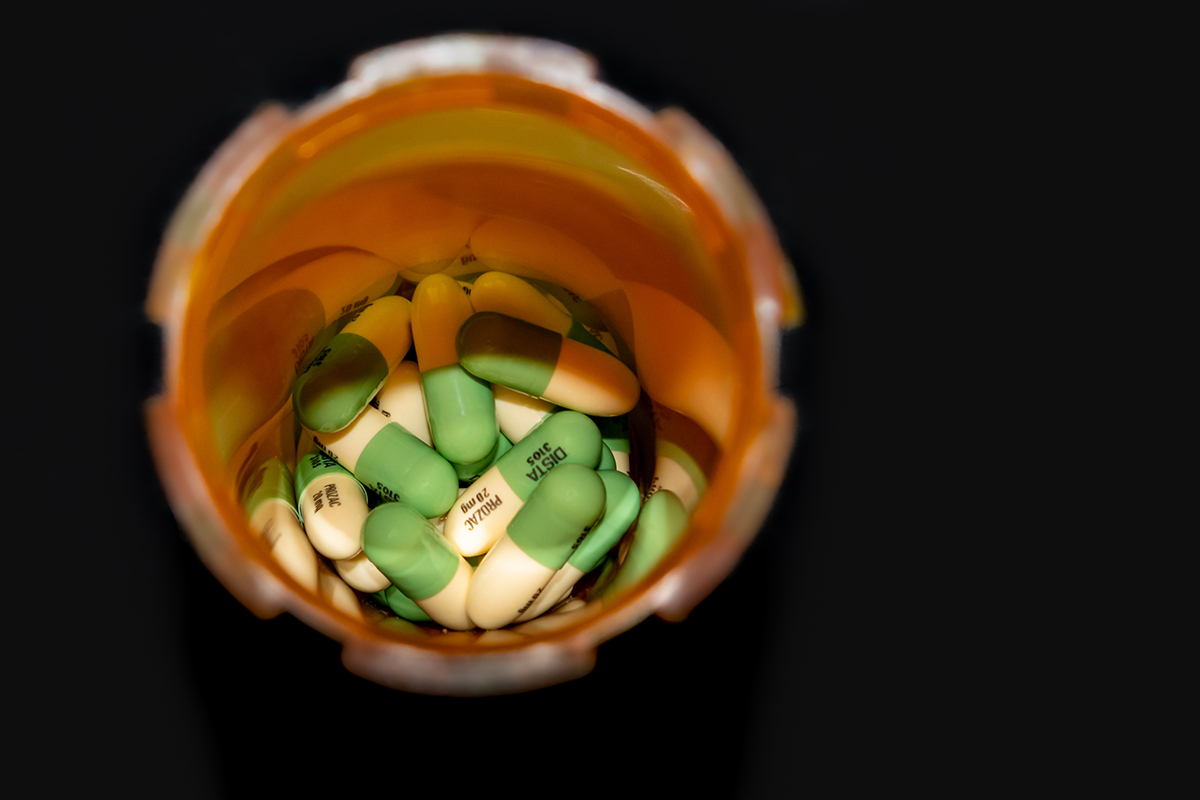
The UK’s drug regulatory agency has expanded suicide risk information to all ages and formally recognizes antidepressant-induced sexual dysfunction.
By Jan Eastgate
President, CCHR International
October 23, 2023
The United Kingdom’s Medicines and Healthcare products Regulatory Agency (MHRA) has announced new antidepressant safety measures for all patients. The changes follow a review prompted by concerns from patients and families and require clearer suicide risk information for patients of all ages—currently limited to children and young adults. For the first time, the measures also recognize that sexual dysfunction, known as Post-SSRI Sexual Dysfunction (PSSD), can occur from certain antidepressants and can continue even after the drugs are stopped.[1] Notably, the MHRA has again acted before the U.S. Food and Drug Administration (FDA). The FDA must issue the same warnings.
In December 2003, the MHRA was the first to issue warnings that SSRI antidepressants increased suicide and self-harm risk in young people, brought to their attention by Dr. David Healy, professor of psychiatry at Bangor University in the UK.[2] The FDA had relevant data for decades. A 1985 memo from the manufacturer of an SSRI antidepressant reported a suicide rate for the drug 5.6 times higher than for the older tricyclic antidepressants.[3] In 1990, FDA official Paul Leber told TIME magazine: “Even if we got several hundred reports involving suicide and Prozac, we wouldn’t be alarmed…”[4] In 1991, CCHR helped secure an FDA Psychopharmacologic Drugs Advisory Committee hearing into antidepressants causing suicidal ideation and violent behavior; the panel, many with conflicts of risks with pharmaceutical companies, negated the risks.[5]
In October 2004, almost a year after the MHRA’s warning, the FDA added a black-box warning for suicidal ideation in those 18 and younger, later extended to age 24. This left the implication that the risk ends on a person’s 25th birthday.[6]
Dr. Healy, also an expert psychopharmacologist, warned in 2009 that “antidepressants pose a risk of suicide in all age groups,” citing elevated relative risks for completed suicide in ages 18–64 based on FDA trial data.[7]
In 2018, Healy and colleagues also raised concerns about antidepressant-induced sexual dysfunction that can persist after stopping the drugs. Healy was among 22 international experts who petitioned the FDA to require prominent warnings that these drugs can reduce genital sensitivity—sometimes within 30 minutes of the first dose—with effects that may last for years or indefinitely after discontinuation.[8]
The FDA failed to act. It has not issued class-wide labeling to match the petition.
The MHRA is adding “Post SSRI Sexual Dysfunction” to patient information leaflets for the antidepressants citalopram, escitalopram, duloxetine, fluvoxamine, fluoxetine, paroxetine, sertraline, venlafaxine, amitriptyline, and nortriptyline. Reported symptoms can include genital numbness, loss of libido, erectile dysfunction, and difficulty reaching orgasm. [9]
In the U.S., psychiatrist Josef Witt-Doerring, a former FDA medical officer, reported that many taking antidepressants may experience emotional numbing, loss of sexual sensation, and detachment from pleasure—effects that can persist indefinitely.[10] Harvard’s Dr. Joseph Glenmullen warned in Prozac Backlash that SSRIs caused sexual dysfunction in up to 60% of users. He further cautioned that it could cause a “chemical lobotomy” by “destroying the nerve endings in the brain.”[11]
Other regulators have acted. In 2019, the European Medicines Agency adopted product information updates to warn that SSRIs and SNRIs may cause long-lasting sexual dysfunction that may continue despite discontinuation of treatment. In 2021, Health Canada completed a safety review and also announced updates to the labeling and product safety information to reflect the risk.[12]
In the UK, healthcare professionals must now discuss suicide risk and persistent sexual dysfunction when starting antidepressants, changing doses, or reviewing treatment.[13] UK Health chiefs announced that patient information leaflets will be updated to make the risks more prominent, through the use of boxed warnings. “Patients need clear and accessible information about the benefits and risks of medicines so they can make informed decisions,” Dr Alison Cave, chief safety officer at the MHRA said.[14]
The FDA has yet to issue the equivalent safeguards. IQVia Total Patient Tracker Database for 2020 revealed 45,204,771 Americans were taking antidepressants, including 2,154,118 in the 0-17 age group.[15]
The FDA must align U.S. labeling and patient information with the MHRA’s updated measures. Clear, prominent warnings on suicide risk for all ages and on persistent sexual dysfunction would give American patients and families the same information already being provided in the UK and Europe. Until the FDA acts, millions of people taking these drugs are at risk, without the full safety disclosures now required elsewhere.
[1] Antidepressants: new safety measures for all patients to improve communication of the risk of suicidal thoughts and behaviours and persistent sexual dysfunction,” Medicines and Healthcare products Regulatory Agency (MHRA), 15 Oct. 2026, https://www.gov.uk/drug-safety-update/antidepressants-new-safety-measures-for-all-patients-to-improve-communication-of-the-risk-of-suicidal-thoughts-and-behaviours-and-persistent-sexual-dysfunction
[2] Erica Goode, “British Warning on Antidepressant Use for Youth,” The New York Times, 11 Dec. 2003; Erica Goode, “British Ignite A Debate On Drugs And Suicide,” The New York Times, 16 Dec. 2003; Sara Bosely, “Seroxat warning over risk to young,” The Guardian, 9 June 2003, https://www.theguardian.com/society/2003/jun/10/1
[3] https://www.cchrint.org/cchrs-exposure-of-antidepressant-risks-false-marketing-of-the-chemical-imbalance-theory; Dr. Richard DeGrandpre, “Anti-depressants may be hazardous to your health,” Hartford Advocate, 20 Aug 2002; Jack Dolan, Dave Altimari, “Memos Display Drug Firms’ Optimism; Officials Were Confident FDA Would Back Them On Suicide, Violence Issues Involving Paxil, Prozac; The Documents Seem To Show That FDA Officials Were Reassuring Drug Companies While Reviews Went Forward,” Hartford Courant, 21 Sept. 2003
[4] https://www.cchrint.org/cchrs-exposure-of-antidepressant-risks-false-marketing-of-the-chemical-imbalance-theory; Anastasia Toufexis, “Medicine: Warnings About a Miracle Drug,” TIME, 29 July 1990, https://time.com/archive/6715538/medicine-warnings-about-a-miracle-drug/
[5] https://www.cchrint.org/cchrs-exposure-of-antidepressant-risks-false-marketing-of-the-chemical-imbalance-theory; FDA Talk Paper, 1. Aug. 1991
[6] Richard A. Friedman, Andrew Leon, “Expanding the Black Box – Depression, Antidepressants, and the Risk of Suicide,” New England Journal of Medicine, 7 June 2007, https://www.nejm.org/doi/full/10.1056/NEJMp078015
[7] David Healy, “Are Selective Serotonin Reuptake Inhibitors a Risk Factor for Adolescent Suicide? Canadian Journal of Psychiatry 2009, https://davidhealy.org/wp-content/uploads/2012/05/2009-Healy-Adolescent-suicide-Canadian-J-Psychiatry.pdf
[8] https://www.cchrint.org/2026/01/09/mounting-evidence-of-persistent-sexual-dysfunction-from-antidepressants-demands-fda-action/; David Healy, “Citizen petition: Sexual side effects of SSRIs and SNRIs,” Int J Risk Saf Med, 4 June 2018, https://pmc.ncbi.nlm.nih.gov/articles/PMC6004927/
[9] Antidepressants: new safety measures for all patients to improve communication of the risk of suicidal thoughts and behaviours and persistent sexual dysfunction,” MHRA, 15 Oct. 2026,
https://www.gov.uk/drug-safety-update/antidepressants-new-safety-measures-for-all-patients-to-improve-communication-of-the-risk-of-suicidal-thoughts-and-behaviours-and-persistent-sexual-dysfunction
[10] https://www.cchrint.org/2026/01/09/mounting-evidence-of-persistent-sexual-dysfunction-from-antidepressants-demands-fda-action/; Dr. Joseph Mercola, “Why Antidepressants Aren’t Fixing Depression — and How the System Keeps That Truth Buried,” Mercola.com, 4 Jan. 2026, https://articles.mercola.com/sites/articles/archive/2026/01/04/ssri-side-effects-long-term.aspx
[11] https://www.cchrint.org/2026/01/09/mounting-evidence-of-persistent-sexual-dysfunction-from-antidepressants-demands-fda-action/; Joseph Glenmullen, M.D., Prozac Backlash, (Simon & Schuster, NY, 2000), p. 8
[12] https://www.cchrint.org/2026/01/09/mounting-evidence-of-persistent-sexual-dysfunction-from-antidepressants-demands-fda-action/; David Healy, “Citizen petition: Sexual side effects of SSRIs and SNRIs,” Int J Risk Saf Med, 4 June 2018, https://pmc.ncbi.nlm.nih.gov/articles/PMC6004927/; https://www.citizen.org/wp-content/uploads/Doc.-1-Complaint-5.20.2024.pdf; https://www.citizen.org/news/fda-sued-over-inaction-on-citizen-petition/
[13] Antidepressants: new safety measures for all patients to improve communication of the risk of suicidal thoughts and behaviours and persistent sexual dysfunction,” MHRA, 15 Oct. 2026, https://www.gov.uk/drug-safety-update/antidepressants-new-safety-measures-for-all-patients-to-improve-communication-of-the-risk-of-suicidal-thoughts-and-behaviours-and-persistent-sexual-dysfunction
[14] Zoe Hardy, “Antidepressants can trigger sexual problems, drug watchdogs warn – pill boxes updated with new safety alert,” The Daily Mail, 15 Oct. 2026, https://www.dailymail.com/health/article-16211087/Antidepressants-warning-suicidal-thoughts-sexual-problems.html
[15] https://www.cchrint.org/psychiatric-drugs/people-taking-psychiatric-drugs/; https://www.cchrint.org/psychiatric-drugs/children-on-psychiatric-drugs/
SHARE YOUR STORY/COMMENT