

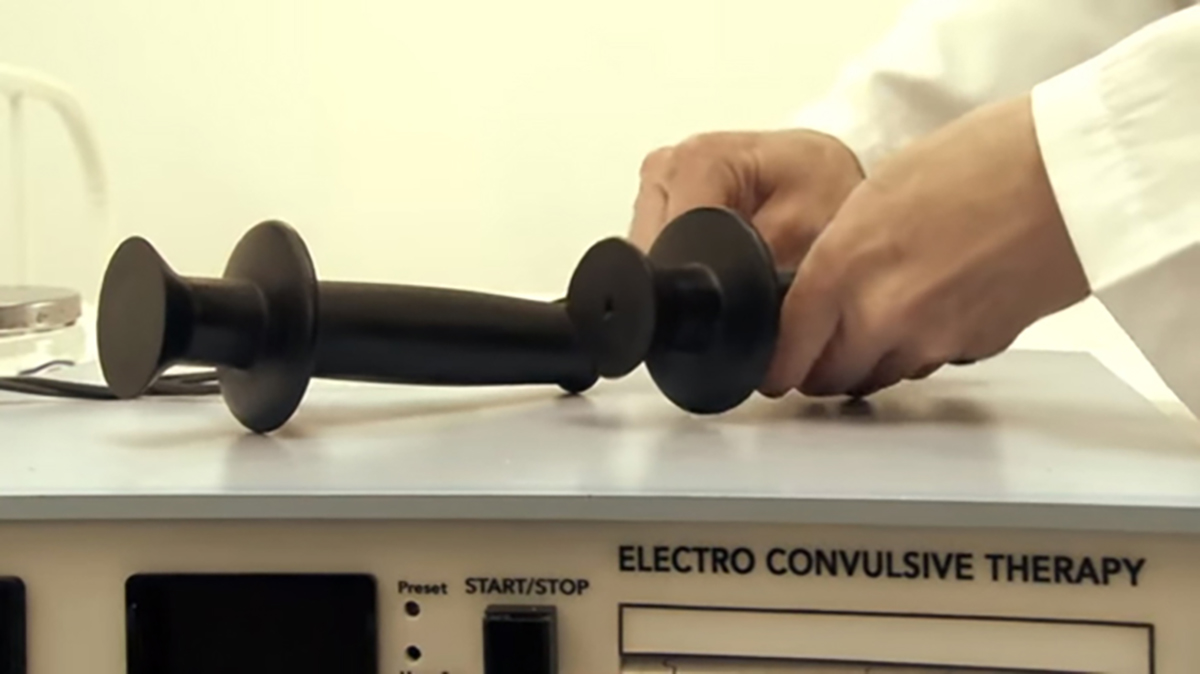
With electroshock now banned for minors in Ireland, several U.S. states, and Western Australia, the global response must be to eliminate its use for all ages.
By Jan Eastgate
President CCHR International
July 24, 2026
In May, Ireland banned the use of electroshock treatment on minors under its Mental Health Law.[1] This now safeguards those younger than 18 from the brutal practice that delivers up to 460 volts of electricity through the brain, causing severe memory loss and cognitive and brain damage.
In the U.S., the Food and Drug Administration (FDA) cleared the use of ECT devices for those 13 and older for three limited conditions. However, it is broadly administered off-label, a practice that needs to stop and which a total ban would achieve.
CCHR helped obtain the first law banning ECT use on minors under 12 in California in 1976, then again in Texas on minors under 16 in 1993. In Western Australia, it had the practice banned on those aged 14 and younger in 2014, with the Mental Health Act enacting criminal penalties for anyone administering it to a child.[2]
Ireland’s officials are praised for recognizing the need to prohibit ECT’s use on minors, increasing the age to 17. However, like thousands who called for ECT to be banned in the U.S. under the FDA’s Final Rule in 2018, the ban should be extended to all ages. It is an abhorrent practice.
The Human Rights Institute in Ireland reported, “The adoption of the Mental Health Act in Ireland can be regarded as one of the country’s significant developments in the advancement of human rights and in the reconsideration of the relationship between health, human dignity, and the public responsibilities of the state.”[3]
The Irish Mental Health Commission noted, “The most significant right potentially affected by this legislation is the right to liberty and personal security.”[4]
U.S. Push for Total Ban on Electroshock
The newly formed Stop ECT Coalition in the U.S., comprising a consortium of health and human rights organizations representing hundreds of thousands of individuals, is urging a review of how ECT devices remain on the market. ECT devices were “grandfathered” into FDA regulation in 1976 as a Class III high-risk device, which bypassed modern standards requiring a Premarket Approval (PMA), which includes clinical trials proving safety and efficacy (SE). In 2018, the FDA reduced the risk classification of ECT devices to moderate risk (Class II) without SE trials. The Coalition emphasizes: “This incorrect classification allowed ECT devices to be used on children as young as five, pregnant women, seniors, veterans, and other vulnerable persons…Involuntary application—still occurring in some U.S. facilities—has been condemned by the United Nations and World Health Organization as a human-rights abuse.”[5]
Expert Concerns on Brain Damage and Lack of Necessity
Dr. John Read, a Professor of Clinical Psychology at the University of East London in England, who has extensively reviewed ECT studies, says: “Several leading proponents [of ECT in earlier times] argued that ECT works because it reduces the intelligence or level of intellectual functioning of people. So, they were arguing that some mental patients have too much intelligence, too much going on in their brains, and it needs to be reduced, and they believed that that was the therapeutic process.”
“The other type of brain damage they said was helpful was that it erased traumatic memories. So, if people had upsetting memories from the past, it was a good idea to erase them with electricity. So, this idea was generally thought about as what they called brain-damaging therapeutics [a theory that included lobotomies]….”
He and colleagues have published a review of over a hundred studies demonstrating that “the effects on the brain [of] ECT is very similar to the effects of what’s called a closed-brain injury … there’s changes in the brain that are documented after ECT, very similar to traumatic brain injury.”[6]
Robert Rubinstein, a former psychiatry professor at the University of California in San Francisco, compared ECT to “kicking a Swiss watch… I can see very little if any reason to use it.” Psychiatrist Dr. Niall McLaren is unequivocal: “No psychiatrist needs to use ECT.”[7]
A mental health strategy plan drafted by the World Health Organization’s Department of Mental Health and Substance Use warned of ECT’s health risks, including brain damage, cardiovascular complications, memory impairment, and even death. The plan states that ECT should be banned for children and non-consenting use may constitute torture.[8]
Ireland’s ban on electroshock treatment for minors marks a significant step forward in protecting vulnerable young people from a damaging, torturous procedure. While this decision advances human rights and personal liberty in the mental health industry, CCHR globally will continue to demand a full ban. CCHR is committed to achieving this.
[1] “News Report: Ireland’s Mental Health Act 2026 and the Advancement of Human Rights Foundations,” University of Isfahan Human Rights Institute, 17 June 2026, https://www.hriui.com/en/news-report-irelands-mental-health-act-2026-and-the-advancement-of-human-rights-foundations/
[2] https://www.cchrint.org/2026/04/13/cchr-rejects-psychiatric-associations-push-to-expand-electroshock-on-children/
[3] “News Report: Ireland’s Mental Health Act 2026 and the Advancement of Human Rights Foundations,” University of Isfahan Human Rights Institute, 17 June 2026, https://www.hriui.com/en/news-report-irelands-mental-health-act-2026-and-the-advancement-of-human-rights-foundations/
[4] “News Report: Ireland’s Mental Health Act 2026 and the Advancement of Human Rights Foundations,” University of Isfahan Human Rights Institute, 17 June 2026, https://www.hriui.com/en/news-report-irelands-mental-health-act-2026-and-the-advancement-of-human-rights-foundations/
[5] https://www.cchrint.org/2025/12/08/coalition-and-cchr-call-on-fda-to-review-electroshock-device-and-the-need-for-a-ban/; https://stopect.com/coalition
[6] Bijan Esfandiari, “Electroshock Therapy (ECT) Trial – Jury Finds Somatics Failed to Warn of ECT Risks,” Wisner Baum, 16 Aug. 2023, https://www.wisnerbaum.com/blog/2023/august/electroshock-therapy-ect-trial-jury-finds-somati/
[7] https://www.cchrint.org/2025/12/08/coalition-and-cchr-call-on-fda-to-review-electroshock-device-and-the-need-for-a-ban/; Niall McLaren, “No Psychiatrist Needs to Use ECT,” 27 June 2017; https://www.cchrint.org/2019/07/02/psychiatrists-got-it-wrong-on-electroshock-wsj/; Jim Stratton, “Shock Therapy,” Daily Press, 13 Aug. 1995, https://www.dailypress.com/1995/08/13/shock-therapy/
[8] https://www.cchrint.org/2026/04/13/cchr-rejects-psychiatric-associations-push-to-expand-electroshock-on-children/; “Why Psychiatrists Defend Electroshock Therapy,” Süddeutsche Zeitung, 1-5 April 2026, https://www.sueddeutsche.de/gesundheit/therapie-stromschlaege-psychiater-wirksamkeit-who-kritik-li.3348002?reduced=true
SHARE YOUR STORY/COMMENT