

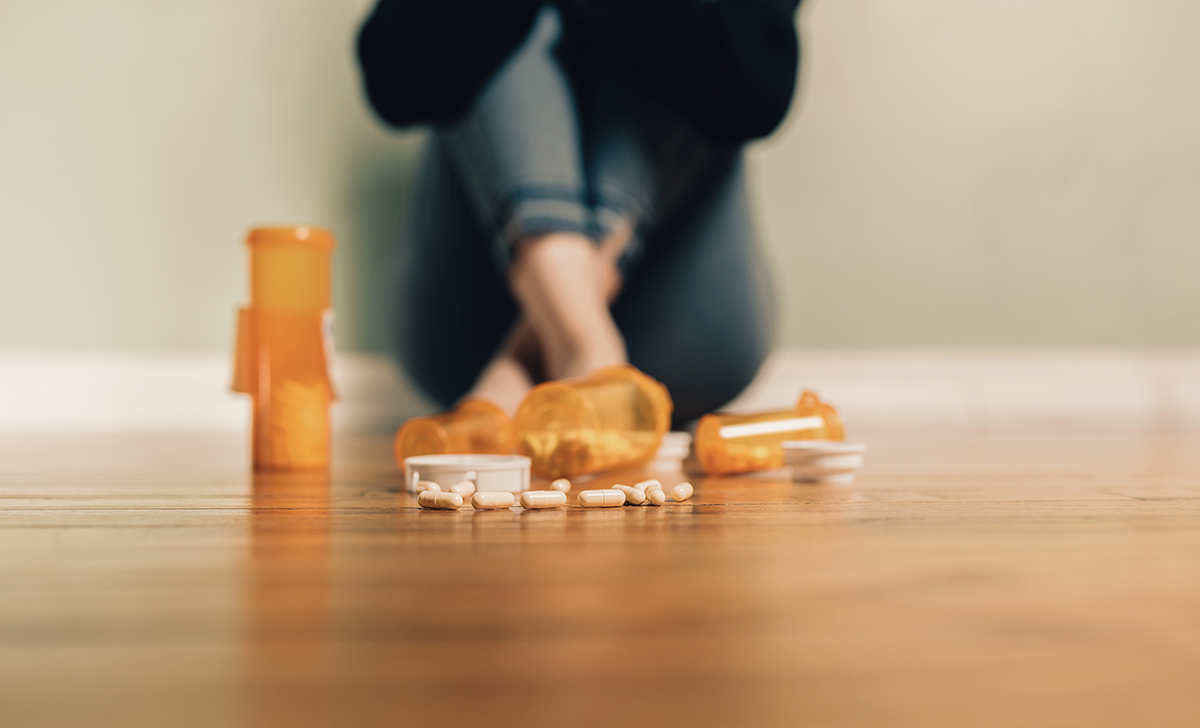
Psychiatrists have a long history of downplaying psychiatric drug risks and denying patients full informed consent. The APA says it “welcomes” antidepressant deprescribing, yet weakens safeguards and protects the status quo of widespread prescribing.
By CCHR International
June 5, 2026
The American Psychiatric Association (APA) has a long history of downplaying the risks of psychiatric drugs. That history, along with psychiatrists’ failure to fully disclose risks to patients, could thwart or weaken the safeguards in the U.S. Department of Health and Human Services’ (HHS) May 2026 plan to address excessive prescribing and support safe deprescribing and tapering of antidepressants. Federal officials should move forward with even stronger protections for informed consent and patient safety.
HHS announced a plan to address the excessive use of psychiatric drugs—especially among children—while supporting patient autonomy, informed consent, prevention, transparency, and holistic approaches.[1] It is particularly concerned about antidepressants, and with good reason.
This federal shift toward deprescribing marks a long-overdue health action. It follows international concerns, such as the 2024 UK All-Party Parliamentary Group report, which called for deprescribing antidepressants and withdrawal support services. The report, “Shifting the Balance Towards Social Interventions: A Call for an Overhaul of the Mental Health System,” recommended establishing drug deprescribing services and a national withdrawal support helpline.[2] The UK National Health Service has since established a National Psychiatric Drug Deprescribing Clinic.[3]
Yet U.S. psychiatrists with vested interests in the biomedical drug model have offered only qualified, self-serving support. While seeming to welcome “efforts to improve the quality, safety, and evidence base of mental health treatment,” they minimize legitimate concerns about antidepressants and, instead, cite workforce shortages and limited beds—a thinly veiled call for more funding. This stance persists despite skyrocketing mental health spending—up 241% from $40.9 billion in 2000 to $139.6 billion in 2021—while outcomes have worsened, with historic high depression rates and rising suicides, as revealed in an April 2026 U.S. House Subcommittee roundtable.[4]
Former APA president Steven Sharfstein exemplifies this resistance. He currently serves as secretary of the Committee to Protect Public Mental Health, a group formed in 2025 specifically to counter the HHS leader’s initiatives to better inform Americans about psychotropic drug risks.
Following HHS’s announcement of further consumer-protection reforms this year, Sharfstein’s committee conducted a highly selective survey at the APA Annual Meeting. Of the mere 229 psychiatrists who responded, including 82% who were APA members, 94% overall disagreed that the HHS reforms would help their field. This tiny, self-selected sample represents just 0.5% of the APA’s total membership of 40,400. Far from a legitimate consensus, this was a stacked, agenda-driven exercise designed to manufacture opposition to deprescribing in order to protect the status quo of unchecked antidepressant prescribing. Sharfstein is a psychiatrist who has justified forced psychiatric treatment—in contradiction to world health agency concerns—as “compassionate coercion.”[5]
Pharma Ties and Opposition to Safety Warnings
In 2002, as President and CEO of Sheppard Pratt psychiatric hospital, Sharfstein embraced clinical drug trials being conducted under contracts from Eli Lilly & Co. (for so-called “treatment-resistant depression”), Merck, and Janssen Research Foundation. He stated, “There is tremendous excitement and interest today in new pharmaceuticals and their application to psychiatry.” Harvard psychiatrist Scott T. Aaronson, who was hired to run the clinical trial program at Sheppard Pratt, noted that the hospital’s large patient volume (30,000 patients a year) made it a valuable asset to its pharmaceutical clients.[6]
In 2004, as APA president-elect, Sharfstein formally opposed warnings about SSRI antidepressants inducing suicide in children through a Food and Drug Administration (FDA) Black Box warning. Together with APA President Michelle Riba, he issued a joint statement: “We restate our continued deep concern that a ‘black-box’ warning on antidepressants may have a chilling effect on appropriate prescribing for patients.”[7] This position came at a time when at least 100 families had loved ones who committed suicide while taking antidepressants.[8]
In 2004, CCHR International assisted families who testified before an FDA hearing on antidepressants inducing suicide, leading to the Black Box suicide warning in October that year. APA’s Chief Communications Officer Jason Young, who helped shape the APA’s response, acknowledged CCHR as an opponent due to its well-publicized campaign. He noted: “We understood that we could not just select one person to testify and expect that person to carry the organization’s message.”[9] The APA, therefore, coordinated with pharmaceutical-funded groups such as NAMI and Mental Health America—groups that could be used indirectly to promote antidepressants.
Suicide warnings threatened a booming market. Between 1998 and 2002, some two million commercially insured U.S. children and adolescents were taking antidepressants, with the fastest-growing segment being preschoolers aged 0–5.[10] Total expenditures on antidepressants in the U.S. had increased from $159 million in 1991 to $2.26 billion in 2004.[11] Global sales had reached a whopping $11 billion in 2001.[12]
CCHR already had a 13-year history of exposing the suicide-inducing effects of SSRI antidepressants. In 1991, its actions prompted an FDA Psychopharmacological Drugs Advisory Committee (PDAC) hearing into antidepressants, suicide and violence.[13] CCHR assisted Prozac users and families of individuals who had committed suicide or who had killed others to testify at the hearing. Psychiatrists, protecting their own interests, warned that any changes to Prozac labeling that warned of suicide risk would undermine the public’s confidence in the drug.
The PDAC panel, top-heavy with pharmaceutical industry conflicts of interest, included prominent APA members such as David L. Dunner, Javier I. Escobar, Jeffrey Lieberman (APA President 2013–2014), Carol Tamminga, and panel chair Daniel Casey. The panel rejected the families’ concerns.
As later disclosed in litigation, Casey was so concerned about potential violence that he wore a bulletproof vest to the hearing—while simultaneously asserting that the evidence did not substantiate that Prozac could induce violent behavior.[14]
In 2007, 13-year-old David Katz was admitted to Sharfstein’s Sheppard Pratt hospital for 12 days and prescribed antidepressants. In 2018, at age 24, he carried out the Jacksonville Landing shooting in Florida, killing two people, wounding 10 others, and then taking his own life.[15] In September 2025, Sharfstein’s Committee to Protect Public Mental Health pushed back against claims that psychiatric drug use “can lead to violence.”
The Chemical Imbalance Lie
For years, psychiatrists touted the pharmaceutical industry’s mantra that depression was caused by a chemical imbalance—a narrative that CCHR challenged since the first SSRI antidepressant came on the market in 1988.
- February 2001: The APA’s patient materials stated that antidepressants “may be prescribed to correct imbalances in the levels of chemicals in the brain” and are not “habit-forming.”[16]
- May 2005: CCHR International organized a joint letter to the FDA signed by more than 100 doctors, stating that advertisements claiming antidepressants corrected a chemical imbalance were fraudulent and should be investigated.[17] The FDA failed to do this.
- June 27, 2005: Sharfstein appeared on NBC’s Today Show and called it “total nonsense” to say there was no evidence that drugs correct a chemical imbalance in the brain.[18]
- July 11, 2005: That claim unraveled when Sharfstein admitted to People magazine—following the question CCHR suggested to People—that there was no lab test to prove a chemical imbalance in the brain causing any “mental disorder.”[19] In the same month, Dr. Mark Graff, chair of Public Affairs of the APA, told CBS Studio that the theory was “probably drug industry derived.”[20]
In November 2005, a study published in PLoS Medicine reported that direct-to-consumer SSRI advertising largely revolved around the claim that these drugs corrected a chemical imbalance caused by a lack of serotonin. For example, Pfizer’s television advertisement for sertraline (Zoloft) stated that “depression is a serious medical condition that may be due to a chemical imbalance” and that “Zoloft works to correct this imbalance.” The advertising expanded the antidepressant market, making SSRIs among the best-selling drugs, despite no rigorous corroboration of the serotonin theory and significant contradictory evidence.[21]
Thousands of psychiatrists had been complicit in promoting this falsehood, and despite these admissions, the misleading narrative persisted.
APA psychiatrist Ronald Pies later tried to distance the profession from years of misleading patients. In a 2011 Psychiatric Times article, he blamed pharmaceutical companies and claimed the “chemical imbalance” notion was “always a kind of urban legend—never a theory seriously propounded by well-informed psychiatrists.”[22] Yet even as late as 2021, APA materials continued to suggest that “differences in certain chemicals in the brain may contribute to symptoms of depression,” presenting antidepressants as addressing this imbalance.[23]
On June 23, 2020, Awais Aftab, MD, interviewed Pies, posing the idea that the chemical imbalance theory “was likely an advertisement strategy by pharmaceutical companies that took on a life of its own.” Adding, “However, I am not sure I am ready to exonerate our profession. At best, it seems like we were silent spectators, watching as this misleading idea spread like wildfire in the society (including among our patients and patient advocacy groups), doing little to nothing to correct these public misperceptions.”[24]
That failure to correct the lie fueled $15.6 billion in annual global antidepressant sales.
In 2022, researchers from University College London published a major umbrella review in Molecular Psychiatry that delivered irrefutable evidence disproving the myth that a chemical abnormality causes depression.[25]
History of Resistance to Protect Profits
Psychiatrists in the U.S. have shown consistent resistance to acknowledging risks—from opposing suicide and violence warnings to minimizing withdrawal effects and industry ties. Patients experiencing withdrawal were often misdiagnosed as having a relapse, trapping them in long-term use. The term “antidepressant discontinuation syndrome” itself emerged from a 1996 pharmaceutical industry-funded meeting, after which experts who attended published papers branding the new terminology.[26] A systematic review later found that 56% of patients experience withdrawal symptoms.[27]
Unlike the APA, in 2014, the Council for Evidence-Based Psychiatry warned: “Withdrawal from psychiatric drugs can be disabling and can cause a range of severe physical and psychological effects which often last for months and sometimes years….”[28]
In 2026, Psychiatric Times admitted withdrawal risks have routinely been denied, minimized, or reframed. Patients reporting withdrawal symptoms were often told they were experiencing a relapse of their underlying “mental illness.” That relapse became a “common diagnostic error,” leading to reinstatement of medication and “trapping patients in a cycle of long-term use based on a misunderstanding of their symptoms.” They called this admission and reassessment of antidepressant withdrawal a “paradigm shift.”[29] A paradigm shift that came way too late for the millions, including infants and children, potentially damaged by these drugs.
The negligence in failing to tell patients of these risks is telling: Withdrawal effects include dizziness, vertigo, “brain zaps” (electric shock sensations), paresthesia (numbness, tingling, or burning), cognitive impairment, and akathisia (a distressing movement disorder characterized by an uncontrollable, intense urge to move and severe inner restlessness), new or worsening anxiety, irritability, emotional blunting, insomnia, fatigue, and impaired concentration.[30]
Given this decades-long pattern of downplaying risks, opposing warnings, promoting false chemical imbalance explanations, and maintaining pharmaceutical relationships, claims by the APA and affiliated groups such as the Committee to Protect Public Mental Health that they will genuinely support the current Administration’s deprescribing efforts lack any credibility. Their track record suggests they will continue to prioritize preserving unchecked prescribing patterns over patient safety for the more than 76 million Americans currently taking these drugs, including over 6 million children and adolescents.
[1] “HHS Launches MAHA Action Plan to Curb Psychiatric Overprescribing,” U.S. Department of Health and Human Services, 4 May 2026, https://www.hhs.gov/press-room/hhs-launches-maha-action-plan-curb-psychiatric-overprescribing.html
[2] High Antidepressant Use Calls for a “De-Prescribing” De-Escalation Policy,” CCHR International, 7 June 2024, https://www.cchrint.org/2024/06/07/high-antidepressant-use-calls-for-a-de-prescribing-de-escalation-policy/; Rachel Kelly, “Our mental health crisis won’t be solved by pills alone,” The New Statesman, 31 May 2024, https://www.newstatesman.com/comment/2024/05/our-mental-health-crisis-wont-be-solved-by-pills-alone
[3] “National Psychiatric Drug Deprescribing Clinic, ” NHS UK, https://www.nelft.nhs.uk/national-psychiatric-drug-deprescribing-clinic-pdc/
[4] Glenn Grothman, “Grothman Opens Roundtable on Examining Mental Health in the MAHA Age,” U.S. Committee on Oversight, Subcommittee on Health Care and Financial Services Chairman, 26 Mar. 2026, https://oversight.house.gov/release/grothman-opens-roundtable-on-examining-mental-health-in-the-maha-age/, citing Tami L. Mark, Lasanthi Fernando, Peter Shieh, and Abe Dunn, “US National Spending On Mental Health And Substance Use Disorder Treatment Driven By Case Growth, 2000–21,” Health Affairs, 18 Mar. 2026, https://www.healthaffairs.org/doi/10.1377/hlthaff.2025.01351
[5] https://www.psychiatrictimes.com/view/new-freedom-commissions-report-shape-mental-health-policy-years-ahead
[6] “Taking the step into clinical trials,” The Daily Record, 18 Apr. 2002, https://thedailyrecord.com/2002/04/18/taking-the-step-into-clinical-trials/
[7] Jim Rosak, “FDA Issues Controversial Black-Box Warning,” Psychiatric News, 5 Nov. 2004, https://psychiatryonline.org/doi/10.1176/pn.39.21.00390001
[8] “Drug Danger Cover-Up? Evidence of Suppressed Information,” Primetime Live, ABC, 9 Dec.2004
[9] Mark Moran, “FDA Actions on Antidepressants and Suicidality: 10 Years Later,” Psychiatric News, 20 Nov. 2014, https://www.psychiatryonline.org/doi/10.1176/appi.pn.2014.11b1B
[10] “Preschoolers lead growth of antidepressant use, study reveals,” Express Scripts Press Release, 2 Apr. 2004, https://www.eurekalert.org/pub_releases/2004-04/es-plg033104.php
[11] “Utilization, price, and spending trends for antidepressants in the US Medicaid program,” Research in Social and Administrative Pharmacy, Sept. 2008, https://www.sciencedirect.com/science/article/abs/pii/S1551741107000708
[12] “After the Boom, No Reason to Smile,” Barron’s, 20 May 2002, https://www.barrons.com/articles/SB1021686885462923040
[13] https://www.cchrint.org/cchrs-exposure-of-antidepressant-risks-false-marketing-of-the-chemical-imbalance-theory/
[14] Deposition of Dr. Daniel Casey, ” MARK MILLER and CHERYL MILLER VS Pfizer, 6 April 2006
[15] Curt Devine, et al., “What we know about Jacksonville shooting suspect David Katz,” CNN, 28 Aug. 2018, https://www.cnn.com/2018/08/27/us/jacksonville-madden-tournament-suspect; Jose Pagliery, Curt Devine, and Drew Griffin, “Jacksonville shooter had history of mental illness and police visits to family home,” CNN Investigates, 28 Aug. 2018, https://www.cnn.com/2018/08/28/us/jacksonville-madden-shooter-katz-mental-health-invs/index.html; Scott Broom, “Madden shooter’s Maryland background includes family, emotional health troubles,” WUSA9, 27 Aug 2018, https://www.wusa9.com/article/news/local/maryland/madden-shooters-maryland-background-includes-family-emotional-health-troubles/65-588068467; “Gunman in Jacksonville shooting had history of mental illness, records show,” CBS, 27 Aug. 2018, https://www.cbsnews.com/news/jacksonville-florida-shooting-suspect-madden-tournament-history-of-mental-illness-2018-08-27/; “The Madden tournament shooting in Jacksonville — an inside look at what happened,” ESPN, 19 Sept. 2018, https://www.espn.com.sg/gaming/story/_/id/24686074/the-madden-tournament-shooting-jacksonville-look-happened
[16] “Consumer & Family Information: Depression,” Psychiatry Online, 1 Feb. 2001, https://psychiatryonline.org/doi/full/10.1176/appi.ps.52.2.145
[17] https://www.cchrint.org/cchrs-exposure-of-antidepressant-risks-false-marketing-of-the-chemical-imbalance-theory/
[18] “Cruise Finds Himself at Sea After Antipsychiatry Tirade,” Today Show, 5 Aug. 2005, https://psychiatryonline.org/doi/10.1176/pn.40.15.00400007
[19] “ALL FIRED UP,” People Magazine, 11 July 2005, p. 84
[20] Interview of Dr. Mark Graff on CBS Studio 2, July 2005
[21] Jeffrey R Lacasse, Jonathan Leo, “Serotonin and Depression: A Disconnect between the Advertisements and the Scientific Literature,” PLoS, 8 Nov. 2005, https://pmc.ncbi.nlm.nih.gov/articles/PMC1277931/
[22] “Psychiatry’s New Brain-Mind and the Legend of the ‘Chemical Imbalance,’” Psychiatric Times, 11 July 2011, https://www.psychiatrictimes.com/view/psychiatrys-new-brain-mind-and-legend-chemical-imbalance
[23] Moncrieff, Horowitz, Ang, “Is the chemical imbalance an ‘urban legend’? An exploration of the status of the serotonin theory of depression in the scientific literature.” SSM – Mental Health, 2 Dec. 2022, https://www.sciencedirect.com/science/article/pii/S266656032200038X
[24] Phillip Hickey Ph.D., “Dr. Pies’ Non-Apology,” Mad in America, 5 Feb. 2021, https://www.madinamerica.com/2021/02/dr-pies-non-apology/
[25] Joanna Moncrieff, Ruth E. Cooper, Tom Stockmann, Simone Amendola, Michael P. Hengartner and Mark A. Horowitz, “The serotonin theory of depression: a systematic umbrella review of the evidence,” Molecular Psychiatry, 20 July 2022, https://www.nature.com/articles/s41380-022-01661-0
[26] “Drug Maker Withheld Paxil Study Data,” ABC News, 9 Dec. 2004, https://abcnews.com/Health/story?id=311956
[27] James Davies and John Read, “A systematic review into the incidence, severity and duration of antidepressant withdrawal effects: Are guidelines evidence-based?” Addictive Behaviors, 97 (2019), p. 111
[28] “Withdrawal from psychiatric drugs can be disabling and can cause a range of severe physical and psychological effects…,” Council for Evidence-Based Psychiatry, 15 Mar. 2014, https://ravimid.files.wordpress.com/2015/02/psychiatric-drug-withdrawal-can-be-disabling-010314-1.pdf
[29] Nicolas Badre, MD, et al., “Exiting Antidepressants: A Needed Spotlight on Withdrawal,” Psychiatric Times, 9 Feb. 2026
[30] Nicolas Badre, MD, et al., “Exiting Antidepressants: A Needed Spotlight on Withdrawal,” Psychiatric Times, 9 Feb. 2026
SHARE YOUR STORY/COMMENT