

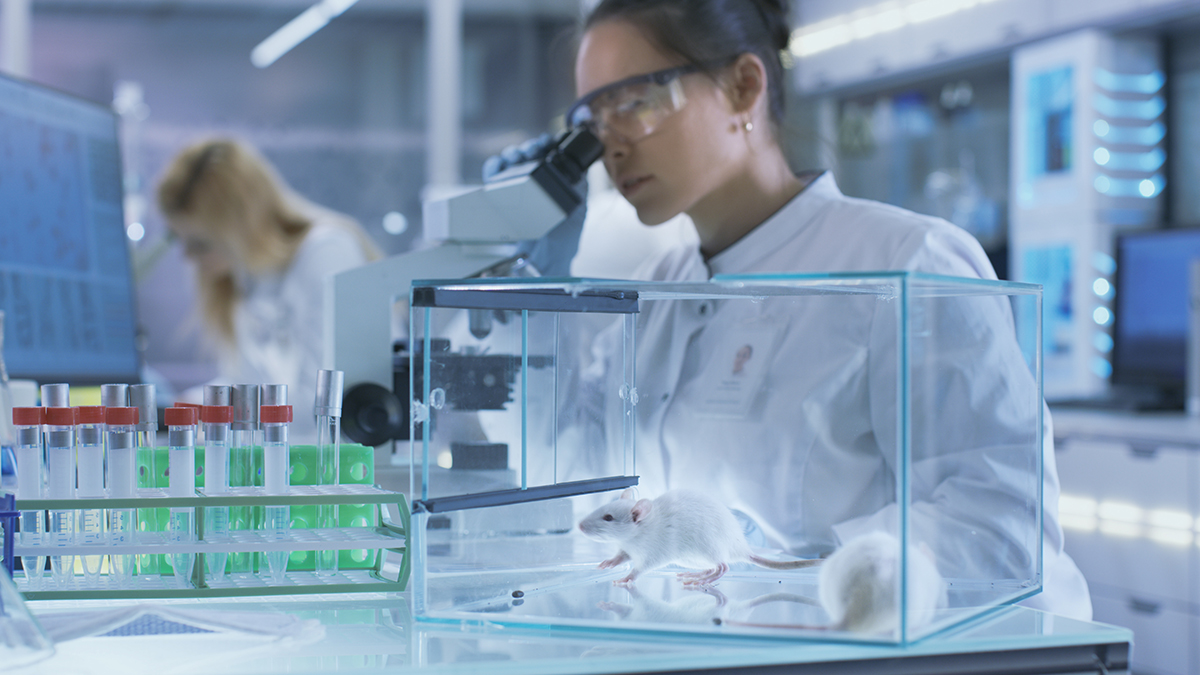
CCHR calls for a congressional audit of NIMH after decades of costly, brutal animal experiments, unpublished trials, and failed biomedical research, as U.S. suicide rates, disability, and psychiatric drug harm continue to rise.
By Jan Eastgate
President CCHR International
February 6, 2026
Research waste at the National Institutes of Health (NIH) is costing U.S. taxpayers well over $100 million annually, according to analyses of completed NIH-funded trials. A review of grants completed between 2017 and 2019 found 137 clinical trials involving 41,501 children that never made their results public, despite being funded with $362 million in taxpayer dollars.[1]
With an annual budget of $48 billion, the NIH is the largest public funder of health, including mental health research, in the world.[2] Transparency failures, poor translation to patient benefit and, indeed, worsening conditions, as well as mounting evidence of waste, raise serious concerns.
The National Institute of Mental Health (NIMH) is among the worst offenders. Critics note that NIMH-funded research has repeatedly shocked, brain-damaged, restrained, and dissected animals. Yet new drugs that reportedly tested “safe and effective” in animals fail in human clinical trials about 95% of the time. NIMH’s experiments on fruit fly behavior have netted nearly $25 million.[3]
Across at least a dozen major U.S. universities and federal laboratories, the NIMH has spent tens of millions of taxpayer dollars on invasive and often lethal animal experiments in a speculative attempt to explain human behavior. These studies have involved deliberately inducing severe psychological distress in animals; surgically implanting electrodes into the brains of monkeys, mice, bats, fish, ants, and insects; depriving animals of food or water to force compliance; simulating predator attacks through virtual reality; and ultimately killing and dissecting animals to examine their brains.
Mounting Congressional concern is reflected in Senator Rand Paul’s Festivus Report 2025, which exposed millions in federal spending on frivolous and cruel animal studies, including over $1 million spent on teaching teenage ferrets to binge drink alcohol, $14,643,280 to make monkeys play a “Price Is Right”-inspired video game, and so much more.[4]
With many individual projects costing $1–5 million each, despite decades of this funding and escalating cruelty, there is no evidence that these animal experiments have translated into meaningful improvements in mental-health outcomes for Americans. On the contrary, rates of depression, anxiety, suicide, disability, and psychiatric drug use have continued to rise, while serious adverse effects—including violence, self-harm, and chronic disability—are now widely documented. The result is a research paradigm that inflicts extensive harm on animals, consumes enormous public resources, and has failed to deliver measurable benefits to human mental health.
Former NIMH director, psychiatrist Thomas Insel, who led the institute from 2002 to 2015, acknowledged the failure after more than $20 billion in spending. Admitted: “I don’t think we moved the needle in reducing suicide, reducing hospitalizations, improving recovery for the tens of millions of people who have mental illness.” Further, “The United States, a country that leads the world in spending on medical research, also stands out for its dismal outcomes in people with mental illnesses. Indeed, over the last three decades, even as the government invested billions of dollars in better understanding the brain, by some measures, those outcomes have deteriorated.”[5]
Clinical psychologist Roger McFillin, Ph.D., adds that NIMH research focuses on the biomedical model in a futile quest to reduce human suffering to faulty genes and brain circuits, yet “suicide rates have soared” and “youth mental health collapsed.” The biological paradigm, he says, “hasn’t just failed, it has actively harmed by teaching people their suffering is a brain defect, pathologizing normal responses to life adversity.[6]
Meanwhile, the treatments derived from psychiatric research carry severe risks. New research shows that people who take anxiolytics, hypnotics and sedatives, and antidepressants are more likely to develop amyotrophic lateral sclerosis (ALS), a progressive neurological disease, causing muscular damage. At the moment, there’s no cure for the debilitation that ALS causes.[7]
Neuroleptic malignant syndrome (NMS) and serotonin syndrome (SS) are acute, drug-induced medical emergencies affecting the central nervous system. NMS carries an estimated mortality rate of 5.6% to 10% and is characterized by severe muscle rigidity, hyperthermia, and altered mental status, including delirium, agitation, mutism, somnolence, and coma. Serotonin syndrome is a pharmacologically induced condition caused by excessive serotonin activity in the brain and can be life-threatening. Symptoms include anxiety, agitation, confusion, delirium, hallucinations, muscle rigidity, seizures, and coma.[8]
Antidepressants are also linked to suicidality, violence, psychosis, cardiac arrhythmias, and drug-induced sexual dysfunction, including post-SSRI sexual dysfunction (PSSD), a recognized neurological injury. Josef Witt-Doering, a former Food and Drug Administration medical officer, warns that SSRI and SNRI antidepressants can leave individuals “essentially lobotomized,” causing cognitive impairment alongside profound and sometimes persistent sexual dysfunction.[9]
Electroconvulsive therapy (ECT), used on at least 100,000 Americans each year, has been associated with significant adverse effects, including memory loss, difficulty concentrating, emotional blunting, relationship impairment, and loss of vocabulary, according to a recently published international survey of ECT recipients. Respondents also reported brain and cognitive damage.[10]
In 2023, the University of South Carolina’s psychology department halted an experiment in which cocaine-addicted rats were subjected to electrical shocks; the study had received $824,000 in funding from the National Institutes of Health.[11] Internationally, similar practices persist. In South Korea, researchers employed what they described as an “unpredictable and inescapable electric shock–induced learned helplessness paradigm” to create an animal model of depression. Mice were subjected to repeated electric foot shocks over three consecutive days and then assessed for behaviors interpreted as depressive symptoms.[12]
NIMH has been urged to redirect resources away from ineffective experiments on animals.[13] More recently, the White House cancelled nearly $28 million in federal animal-testing grants as agencies begin shifting toward non-animal research alternatives.[14]
These steps are overdue but insufficient. Congress and federal oversight bodies are urged to also order a full financial and performance audit of NIMH mental health research spending.
Taxpayers deserve accountability. After decades of failed science, escalating harm, and worsening mental health outcomes, Congress must require those it funds to produce measurable, real-world results. These are demonstrated by clear improvements in mental health (reducing suicide rates, etc.), safety, and recovery, not theoretical models or unproven research claims.
Examples of Taxpayer-Funded Animal Experiments by the National Institute of Mental Health (NIMH)[15]
- University of California–Davis: Researchers induced “schizophrenia- and autism-like behaviors” in baby monkeys by injecting pregnant mothers with illness-causing agents. Infants were forcibly separated from their mothers, subjected to fear-based experiments, then killed and dissected by age three. NIMH funding in 2023 alone exceeded $1 million.
- University of California–Berkeley: Researchers surgically opened the skulls of Egyptian fruit bats and implanted electrodes to monitor brain activity during communication. NIMH provided over $1 million for these invasive experiments, with no demonstrated applicability to human “psychiatric” conditions.
- California Institute of Technology experimenters were given more than $3 million to study human autism in zebra fish.
- Rockefeller University: Experimenters genetically engineered ants to glow in response to neural activity, restrained their heads, inserted imaging devices into their brains, and exposed them to stress-inducing odors. NIMH spent more than $1 million on these experiments, despite no clear relevance to human mental illness.
- New York University Grossman School of Medicine: Mice had electrodes implanted into their brains and then observed while larger animals attacked smaller ones. NIMH funded this aggression-based research with more than $1 million.
- Yale University: Monkeys underwent brain surgery to implant electrodes so researchers could monitor neural activity while the animals look at other monkeys. This project has received nearly $4 million in NIMH funding. In another study, experimenters were paid more than $800,000 to inject monkeys with compounds that cause them to become stressed and agitated before forcing them to complete memory tests.
- Washington University: To study “risk-taking,” monkeys have holes drilled into their skulls, electrodes implanted, and are deprived of water until they perform tasks for a drop of juice. NIMH funding has exceeded $2 million.
- Northwestern University: Mice were forced to wear virtual-reality goggles simulating predator attacks, injected with brain-altering chemicals, restrained with skull implants, and made to run on treadmills. Some animals have their eyes removed for examination. NIMH funding totaled nearly $5 million.
- Brown University experimenters received more than $2 million to implant electrodes into monkeys’ brains and examine their brain cells.
[1] Till Bruckner, “NIH waste far over $100 million in medical research funding every year – new study,” Transparimed, 21 Feb. 2023, https://www.transparimed.org/single-post/nih-research-waste
[2] Simon Levien, “NIH grants are a sticking point in HHS funding bill talks,” Politico, 14 Jan. 2026, https://subscriber.politicopro.com/article/2026/01/nih-grants-sticking-point-hhs-funding-talks-00730465
[3] Amanda Hays, “10 Terrible NIMH-Funded Animal Experiments—and How You Can Help End Them,” PETA, 8 Jan. 2024, https://www.peta.org/news/10-terrible-nimh-funded-animal-experiments/
[4] Senator Rand Paul, “Festivus Report, 2025,” Dec. 2025, https://www.hsgac.senate.gov/media/reps/dr-paul-releases-2025-festivus-report-on-government-waste/; https://www.hsgac.senate.gov/wp-content/uploads/FESTIVUS-2025-FINAL.pdf
[5] https://www.cchrint.org/2024/11/27/investigate-mental-health-research-waste-bizarre-animal-studies/; citing https://psychiatryonline.org/doi/10.1176/appi.ps.202000739 and Dr. Stanton Peele, “How American Psychiatry Misled the World and Ruined Mental Health Worldwide,” Life Progress Plan, 2 Oct. 2023, https://lifeprocessprogram.com/american-psychiatry-misled-the-world/
[6] Jan Eastgate, “Time to Investigate Mental Health Research Waste on Bizarre Animal Studies,” CCHR International, 27 Nov. 2024, https://www.cchrint.org/2024/11/27/investigate-mental-health-research-waste-bizarre-animal-studies/, citing Fuller Torrey, et al., “The Continuing Decline of Clinical Research on Serious Mental Illnesses at NIMH,” Psychiatric Services, Volume 72, Number 11, 6 Apr. 2021, https://psychiatryonline.org/doi/10.1176/appi.ps.202000739; Dr. Stanton Peele, “How American Psychiatry Misled the World and Ruined Mental Health Worldwide,” Life Progress Plan, 14 June 2022, https://lifeprocessprogram.com/american-psychiatry-misled-the-world/
[7] David Nield, “Common Psychiatric Medications May Increase Risk of ALS,” Science Alert, 10 June 2025, https://www.sciencealert.com/common-psychiatric-medications-may-increase-risk-of-als
[8] Hannah Actor-Engel, PhD, “Neuroleptic Malignant Syndrome vs Serotonin Syndrome,” Neurology Advisor, 4 June 2025, https://www.neurologyadvisor.com/ddi/neuroleptic-malignant-syndrome-vs-serotonin-syndrome/
[9] “Mounting Evidence of Persistent Sexual Dysfunction from Antidepressants Demands FDA Action,” CCHR International, 9 Jan. 2026, https://www.cchrint.org/2026/01/09/mounting-evidence-of-persistent-sexual-dysfunction-from-antidepressants-demands-fda-action/; Dr. Joseph Mercola, “Why Antidepressants Aren’t Fixing Depression — and How the System Keeps That Truth Buried,” Mercola.com, 4 Jan. 2026, https://articles.mercola.com/sites/articles/archive/2026/01/04/ssri-side-effects-long-term.aspx
[10] John Read, Sue Cunliffe, et al., “The adverse effects of electroconvulsive therapy beyond memory loss: an international survey of recipients and relatives,” International Journal of Mental Health, 19 Nov. 2025, https://www.tandfonline.com/doi/full/10.1080/00207411.2025.2576946#d1e193
[11] Amanda Shaw, “Rats, cocaine and electroshock: USC halts animal experiment after complaint,” FOX Carolina, 18 May 2023, https://www.foxcarolina.com/2023/05/18/rats-cocaine-electroshock-usc-halts-animal-experiment-after-complaint/
[12] Jin Yong Kim, et al., “Mice subjected to uncontrollable electric shocks show depression-like behaviors irrespective of their state of helplessness,” Behavioural Brain Research, Volume 322, Part A, 30 March 2017, Pages 138-144, https://www.sciencedirect.com/science/article/abs/pii/S0166432817300098
[13] Amanda Hays, https://www.peta.org/news/10-terrible-nimh-funded-animal-experiments/
[14] Madeleine May, Jim Axelrod, Marilyn Thompson, “White House slashes medical research on monkeys and other animal testing, sparking fierce new debate,” CBS, 25 Sept. 2025, https://www.cbsnews.com/news/animal-medical-research-patients/
[15] Amanda Hays, https://www.peta.org/news/10-terrible-nimh-funded-animal-experiments/
SHARE YOUR STORY/COMMENT