

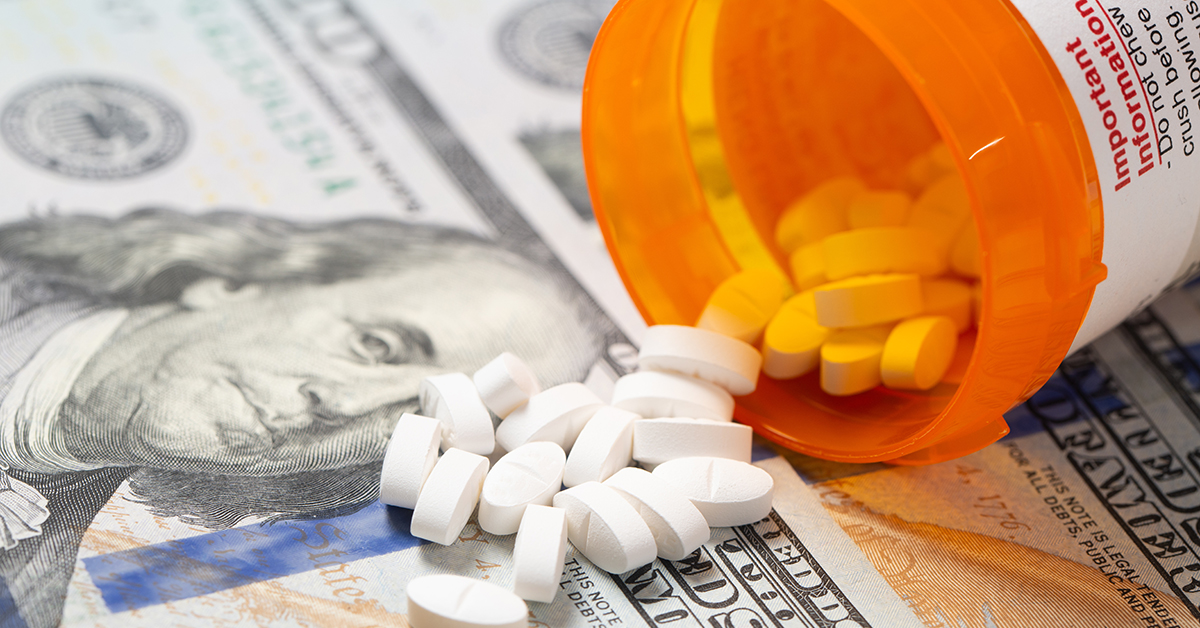
Prescriptions for teen girls soared 130% as psychiatrists with deep drug industry ties promoted suicide-linked antidepressants, earning millions while dismissing warnings and covering up harms.
By Jan Eastgate
President, CCHR International
October 17, 2025
Between 2020 and 2022, Pediatrics reported a 130% rise in antidepressant prescriptions for girls aged 12–17, while boys’ prescriptions dropped 7%. “What are the odds that one-third of American adolescents suddenly developed a disease requiring drugs that double their risk of suicide?” asked one psychologist.[1] The surge demands federal scrutiny—especially since leading U.S. psychiatrists are fighting to prevent an investigation into antidepressant-related suicides and violence.
Profiting from “Treatment”
Dr. Harold Koplewicz, founder of the Child Mind Institute (CMI) in New York, admits 40% of teens on antidepressants don’t “adequately respond,”[2] yet the CMI still promotes them as “first choice” treatments.[3] CMI treats children as young as one[4] and charges up to $9,000 for evaluations.[5] Despite being a nonprofit, Koplewicz earned nearly $13 million from his CMI entities between 2014 and 2023, with psychiatrists on staff making $700,000–$1.4 million annually.[6]
Koplewicz long claimed Attention Deficit Hyperactivity Disorder (ADHD) stimulants were “nonaddictive,” though the former deputy assistant administrator in the Office of Diversion Control in the Drug Enforcement Administration (DEA) warned they are “very potent, addictive, and abusable.”[7] The drugs come with risks, including heart problems, psychosis, and death. The Food and Drug Administration (FDA) added addiction to its Black Box warning for ADHD stimulants.[8]
The Paxil Scandal: “Science” for Sale
In 2001, Koplewicz co-authored the infamous Study 329, published in the Journal of the American Academy of Child & Adolescent Psychiatry (JAACAP), which falsely claimed Paxil (paroxetine) was safe and effective for adolescents.[9] Funded by SmithKline Beecham (now GlaxoSmithKline, or GSK), the study was later discredited for concealing suicide and self-harm risks. Almost 8% of children were hospitalized, yet the data were spun as “emotional lability.”[10]
Dr. Martin Keller, the lead author, later admitted he had not reviewed all the data. GSK used the study to promote off-label sales of Paxil, fueling billions in revenue.[11] Twenty authors who were psychiatrists were added as authors. Testimonies from depositions in other trials indicated that 10 of the authors didn’t even comment on the paper, and none of them had access to raw clinical trial data—although they all said they did. None of them disclosed conflicts of interest, and all of them signed off on the article as their work.[12]
In 2004, New York Attorney General Eliot Spitzer sued GSK for fraud; the company settled for $2.5 million.[13] That same year, the FDA issued its strongest black box warning about SSRI antidepressants like Paxil, inducing suicidal behavior in teens.[14]
GSK’s second study, number 377, also failed to show efficacy. The study showed four times the number of serious adverse events related to suicidality as the placebo study, according to court documents. The third study, 701, concluded in 2001, also failed to demonstrate efficacy six months before the Keller article was published—yet GSK and JAACAP went ahead with publication.
In 2012, GSK paid a record $3 billion fine to the U.S. Department of Justice—then the largest healthcare fraud settlement in history—for criminal and civil violations involving the unlawful promotion of Paxil and another antidepressant, Wellbutrin, for unapproved uses, and for failing to report safety data on the diabetes drug Avandia.[15]
Despite the exposure, the Study 329 co-authors defended the paper as “industry collaboration.”[16] Senator Charles Grassley later investigated Keller and co-author Dr. Karen Wagner for undisclosed drug-company payments.[17] Wagner received over $160,000 from GSK during federally funded studies while reporting only $600 to her university.[18]
The JAACAP only recentlyagreed to review the article, citing public concerns.[19]
Cover-Ups and Conflicts
Psychiatrists closely aligned with pharmaceutical interests are now mobilizing to block government scrutiny of the link between antidepressants, suicide, and violence. They formed the Committee to Protect Public Mental Health, writing a letter to Congress signed by psychiatrists, including former American Psychiatric Association (APA) presidents—calling for the removal of a U.S. health official pursuing such investigations.[20]
Among the signers is Dr. Steven Sharfstein, former president of the APA and former Chief Executive Officer of Sheppard Pratt Health System, where six pharmaceutical companies conducted clinical drug trials.[21] Under public pressure in 2005, Sharfstein conceded there is no laboratory test proving a “chemical imbalance” causing depression—a pharmaceutical-psychiatric invented marketing myth used for decades to justify antidepressant use and sales.[22]
In 2018, David Katz, then 24, was found to have been treated and drugged at Sheppard Pratt hospital in 2007 while Sharfstein was CEO, shot and killed two people, injured 10 others, and then took his own life at a video game competition in Jacksonville, Florida.[23] Since childhood, Katz had been prescribed a number of psychiatric drugs, including the antidepressants Prozac and Lexapro and the antipsychotic Risperdal, and saw “a succession of psychiatrists,” according to a letter from the father’s attorney.[24] Records show he continued receiving psychiatric treatment and was prescribed multiple antidepressants and antipsychotics, including through at least 2012[25]—by which time he would already have been damaged by these drugs, setting the stage for catastrophic outcomes with lethal consequences.
Katz was twice hospitalized in Maryland psychiatric facilities in his teens—he was admitted to the Sheppard Pratt Health System for 12 days, where he was treated with antidepressants. He spent 13 days at Potomac Ridge, a mental health facility in Rockville, around three months later.[26]
CCHR says psychiatrists like Sharfstein, Keller, and Koplewicz exemplify a system where financial self-interest outweighs child safety, and industry-funded “experts” are rewarded for promoting drugs tied to suicide, addiction, and violence.
CCHR urges the need for:
- A federal investigation—through the Department of Justice and the Department of Health and Human Services (HHS) Office of Inspector General—into conflicts of interest between psychiatric researchers, professional associations, and pharmaceutical companies, beginning with those involved in Study 329 and similar pediatric antidepressant trials.
- Create a national adverse-event reporting and transparency database specifically for psychiatric drugs, with mandatory reporting of suicides, violence, and severe withdrawal reactions associated with these drugs.
Key Figures in the Paxil Controversy—Conflicted Psychiatrists Behind the Adolescent Antidepressant Push
Psychiatrists Martin Keller, Karen Wagner, and Neal Ryan—who claimed to have co-authored the GSK-funded Study 329—all received money to promote Paxil as safe and effective in the years before its publication. Several held official positions with the American Academy of Child & Adolescent Psychiatry (AACAP — who publish the Journal of the American Academy of Child & Adolescent Psychiatry). Wagner was AACAP’s president in 2017-2019, despite the controversy over 329.
- Dr. Martin Keller — Brown University: From 1989 to 2009, Keller served as Chair of Psychiatry at Brown University in Rhode Island and became one of the most visible academic promoters of antidepressant use in youth. Between 1993 and 1999, he earned over $842,000 from Pfizer, Bristol-Myers Squibb, Wyeth-Ayerst, and Eli Lilly—all antidepressant manufacturers he publicly praised. In 1999, a state investigation forced Brown to return $300,000 in unperformed research billed under Keller’s department.[27] Keller was the lead author of Study 329 (published 2001)—the ghostwritten JAACAP paper that claimed Paxil was “safe and effective” for adolescents despite data showing the opposite.[28] During a 2006 deposition, Keller revealed he received consulting payments during the trial years.[29] Following mounting criticism and U.S. Senate scrutiny in 2009, Keller was quietly removed as department chair, marking a major academic fallout over undisclosed industry money.[30]
- Dr. Neal Ryan — University of Pittsburgh: A co-author of Study 329, Ryan was paid by GSK and helped promote SSRIs for children in the early 2000s.[31] He also served on the Child Mind Institute’s Scientific Research Council.[32] He held multiple consultant roles to drug firms. In 2008–2009, the U.S. Senate Finance Committee, led by Sen. Charles Grassley, investigated Ryan for failing to disclose pharma income while conducting National Institutes of Health (NIH)-funded pediatric drug research.[33]
- Dr. Graham Emslie — University of Texas Southwestern Medical Center: During the late 1990s and 2000s, Emslie became a leading advocate for drugging depressed children. He helped design CMAP, the children’s version of the Texas Medication Algorithm Project (TMAP)—a drug-based treatment protocol funded by Janssen (J&J) and others, promoting their antipsychotic Risperdal as first-line therapy.[34] Emslie’s financial ties spanned numerous pharmaceutical companies: consultant to GSK, Forest and Pfizer; research grants from Eli Lilly, Organon and Wyeth-Ayerst; paid speaker for McNeil (J&J).[35] In August 2017, the Texas Medical Board formally reprimanded him after an adult patient, prescribed controlled substances for 17 years without examination or records, died by suicide. The board found egregious breaches of medical standards.[36] Emslie served on the JAACAP Editorial Board.
- Dr. Karen Wagner — University of Texas Medical Branch, Galveston: Active in child-psychiatry research since the early 1990s, Wagner was a co-author of Study 329 on Paxil in 2000 and 2001, while receiving over $160,000 from GSK—yet she reported only $600 to her university. She also accepted payments from Eli Lilly (2002) and other firms while serving on her institution’s conflict-of-interest committee. In 2008, Senator Grassley’s Senate investigation revealed Wagner’s undisclosed industry ties during NIH-funded antidepressant studies on teens. Her professional disclosures list relationships with nearly every major pharmaceutical company, underscoring psychiatry’s entanglement with corporate influence.[37]
- Dr. Harold Koplewicz — Child Mind Institute (CMI), New York: Koplewicz emerged in the 1990s as a national advocate for drugging children, founding the NYU Child Study Center in 1997 and co-authoring the discredited Study 329 (2001). In 2009, he left NYU to launch the Child Mind Institute, which now treats children as young as one. Between 2014 and 2023, Koplewicz earned nearly $13 million from his affiliated nonprofits and practices, with CMI psychiatrists paid up to $1.4 million annually.
[1] Dr. Roger McFillin, “Antidepressants Increase 130% for Teen Girls, Drop 7% For Boys,” Brownstone Institute, 3 Oct. 2025, https://brownstone.org/articles/antidepressants-increase-130-for-teen-girls-drop-7-for-boys/
[2] https://childmind.org/article/antidepressants-and-teen-suicides/
[3] https://childmind.org/article/medication-for-kids-with-depression/
[4] https://childmind.org/care/faq/
[5] https://childmind.org/care/faq/
[6] Probublica 990s, https://projects.propublica.org/nonprofits/organizations/273037790
[7] https://www.cchrint.org/2012/09/20/why-are-5-milllion-kids-diagnosed-adhd-7-2-billion-a-year-in-adhd-drug-sales/, “Are ADHD Medications Overprescribed” The Wall Street Journal, updated 14 Feb. 2013, https://www.wsj.com/articles/SB10000872396390444301704577631591596516110; Karen Welsh, “Grave New World: Relying on Ritalin,” Carolina Journal, 3 Mar. 2003, https://www.carolinajournal.com/grave-new-world-relying-on-ritalin/
[8] https://www.cchrint.org/2025/07/18/regulators-warn-adhd-drug-can-trigger-homicidal-thoughts-parents-and-consumers-need-to-be-informed/; “FDA updating warnings to improve safe use of prescription stimulants used to treat ADHD and other conditions,” FDA, 11 May 2023, https://www.fda.gov/media/168066/download
[9] https://www.statnews.com/pharmalot/2025/08/25/antidepressant-paxil-gsk-medical-journal-children-adolescents-depression-ghostwriting-retraction/
[10] https://www.statnews.com/pharmalot/2025/08/25/antidepressant-paxil-gsk-medical-journal-children-adolescents-depression-ghostwriting-retraction/; David Stipp, “Trouble in Prozac Nation—Prozac Backlash,” Fortune Magazine, 28 Nov. 2005, https://psychrights.org/articles/FortuneTroubleinProzac.pdf; https://www.cchrint.org/issues/psycho-pharmaceutical-front-groups/dbsa-advisory-board/; https://seroxatsecrets.wordpress.com/2008/03/06/this-is-how-glaxo-hid-data-and-fooled-the-regulators/
[11] https://seroxatsecrets.wordpress.com/2008/03/06/this-is-how-glaxo-hid-data-and-fooled-the-regulators/
[12] Journal Faces Lawsuit Over Discredited Study Used by GSK to Market Dangerous Antidepressant to Teens • Children’s Health Defense
[13] “Keller’s findings on Paxil disputed by doctors, FDA Controversial study may have hid suicide links,” The Brown Daily Herald, 23 Sept. 2008, https://www.browndailyherald.com/article/2008/09/keller-s-findings-on-paxil-disputed-by-doctors-fda
[14] https://www.idealcareinsurance.com/news/health/medical-journal-reviews-discredited-24-year-old-paxil-study-amid-retraction-calls/
[15] “The Saga Of Study 329 – A Chronology – Restoring Study 329, https://study329.org/study-329/; “GlaxoSmithKline to Plead Guilty and Pay $3 Billion to Resolve Fraud Allegations and Failure to Report Safety Data,” Office of Public Affairs, U.S. Department of Justice, 2 July 2012, https://www.justice.gov/archives/opa/pr/glaxosmithkline-plead-guilty-and-pay-3-billion-resolve-fraud-allegations-and-failure-report
[16] https://study329.org/responses-keller-et-al/
[17] https://www.lawyersandsettlements.com/blog/another-shrink-bites-the-dust.html
[18] http://ahrp.org/texas-psychiatrist-karen-wagner-under-scrutiny/
[19] “Efficacy of Paroxetine in the Treatment of Adolescent Major Depression: A Randomized, Controlled Trial,” J Am Acad Child Adolesc Psychiatry, 40(7):762-772, https://www.sciencedirect.com/science/article/pii/S0890856725021070
[20] https://www.protectpublicmentalhealth.org/about; https://www.protectpublicmentalhealth.org/press
[21] https://www.cchrint.org/issues/the-corrupt-alliance-of-the-psychiatric-pharmaceutical-industry/; Karen Buckelew, “Sheppard Pratt Health launches clinical trials program for psychiatric disease,” The Daily Record, 19 Apr. 2002
[22] https://www.cchrint.org/2022/08/19/with-the-chemical-imbalance-myth-exposed-thats-not-all-psychiatry-got-wrong/
[23] https://www.cchrint.org/timeline-davidkatz/; https://apnews.com/article/df2ecf1da4fd42e8a695eb6794129887
[24] “Jacksonville shooter had history of mental illness and police visits to family home,” ABC 15 Arizona, 28 Aug. 2018,https://www.abc15.com/news/national/jacksonville-shooter-had-history-of-mental-illness-and-police-visits-to-family-home; https://www.dailymail.co.uk/news/article-6111661/Jacksonville-shooter-troubling-history-passed-background-check-buy-gun.html
[25] https://www.cchrint.org/timeline-davidkatz/
[26] https://apnews.com/article/df2ecf1da4fd42e8a695eb6794129887; https://www.dailymail.co.uk/news/article-6111661/Jacksonville-shooter-troubling-history-passed-background-check-buy-gun.html
[27] https://www.cchrint.org/issues/psycho-pharmaceutical-front-groups/dbsa-advisory-board/; Alison Bass, “Drug companies enrich Brown professor,” The Boston Globe, 4 Oct. 1999
[28] https://study329.org/study-329/; https://pmc.ncbi.nlm.nih.gov/articles/PMC4572084/
[29] https://www.cbsnews.com/news/senator-targets-brown-u-professors-ties-to-big-pharma/
[30] https://www.browndailyherald.com/article/2009/04/longtime-psychiatry-chair-resigns
[31] https://www.cchrint.org/issues/psycho-pharmaceutical-front-groups/dbsa-advisory-board/; http://seroxatsecrets.wordpress.com/2008/03/06/this-is-how-glaxo-hid-data-and-fooled-the-regulators/
[32] https://childmind.org/bio/neal-ryan-md/
[33] https://davidhealy.org/original-study-329-team/
[34] https://www.cchrint.org/issues/psycho-pharmaceutical-front-groups/tmap/
[35] https://www.cchrint.org/issues/psycho-pharmaceutical-front-groups/tmap/; http://hcrenewal.blogspot.com/2008/08/guidelines-in-whose-interest-withdrawal.html; http://psychrights.org/Drugs/AllenJonesTMAPJanuary20.pdf
[36] https://www.psychcrime.org/news/index.php?vd=2596; Agreed Order In the Matter of the License of Graham J. Emslie, Before the Texas Medical Board, August 25, 2017
[37] https://www.cchrint.org/issues/psycho-pharmaceutical-front-groups/tmap/; https://eliotshapleigh.com/news/2206-senator-questions-doctors-ties-to-drug-companies
SHARE YOUR STORY/COMMENT