

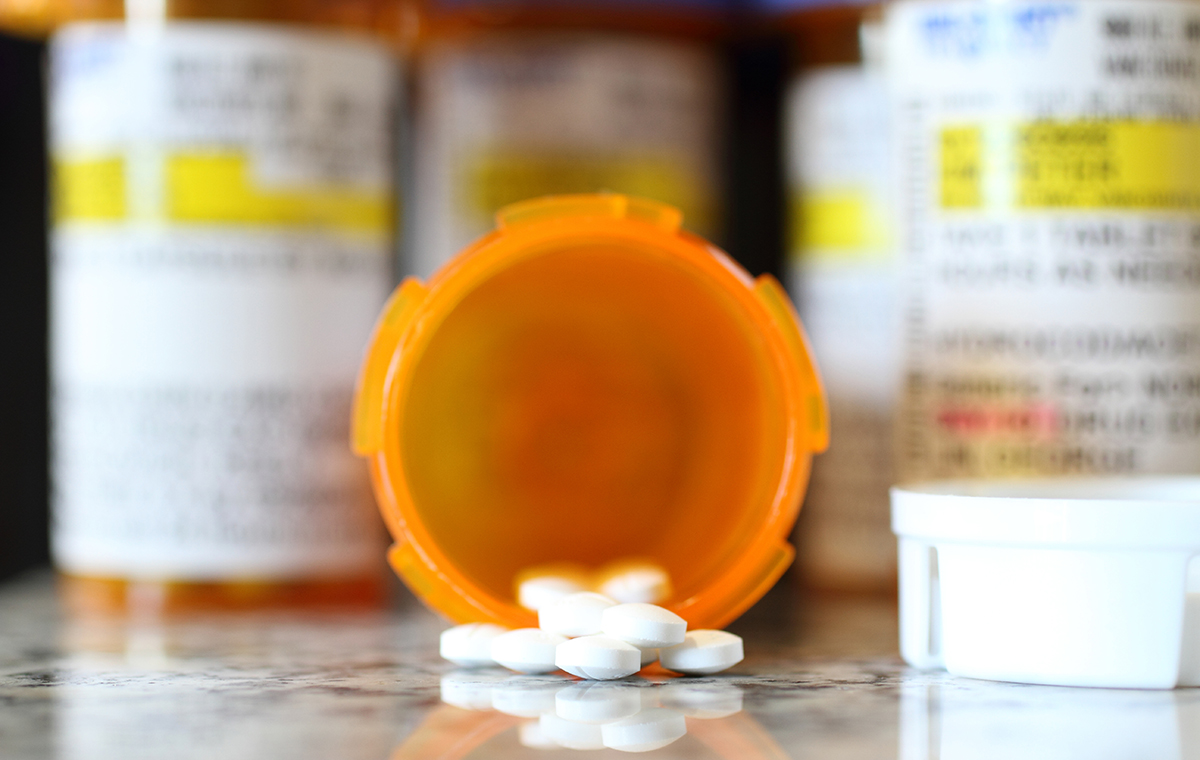
More than 79 million Americans take psychotropics—millions abuse them, risking overdose—yet the $26 billion psychiatric drug industry’s role in the failed war on drugs remains downplayed due to widespread misinformation.
By Jan Eastgate
President CCHR International
September 26, 2025
Key Facts:
- Prescription gateway to addiction: Sedatives, stimulants, and benzodiazepines are among the most misused prescriptions, with nearly 12% of users developing full-blown addiction; many first-time abusers begin with sedatives or tranquilizers.
- Stimulant surge: Adult stimulant prescriptions jumped 34% between 2019 and 2022, with one in four adults prescribed stimulants admitting abuse; misuse is especially high among adults 26 and older.
- Youth at risk: More than 3 million American minors are prescribed ADHD stimulants, while SSRI antidepressant use among children nearly doubled between 2006 and 2023, raising concerns of dependence, withdrawal, and toxic exposures.
- Industry incentives: Psychiatrists saw marketing payments for stimulants soar 250% between 2021 and 2023; overall, drug companies paid physicians more than $12 billion (2013–2022) amid psychiatric drug sales reaching $25.8 billion.
- Diagnosis inflation: DSM-driven diagnostic expansion, shaped by psychiatrists with pharmaceutical industry ties, inflates mental disorder rates and fuels prescribing, while aggressive telehealth and direct-to-consumer marketing further drive misuse and diversion.
The abuse of prescription psychotropic drugs has become a global public health issue[1] and is a major factor in the failure of America’s war on drugs. More than 79 million Americans are prescribed psychotropics—many of which can cause dependence, respiratory depression, seizures, and fatal outcomes when combined with other substances.[2] Since 1999, drug overdoses have killed more than one million people in the U.S. In 2021 alone, 32,537 overdose deaths involved stimulants such as cocaine or prescription psychostimulants—a staggering 5,848% increase from 547 deaths in 1999.[3]
Prescription Abuse Epidemic
The National Center for Drug Abuse Statistics reports that 5.9 million Americans abuse sedatives, 4.9 million abuse stimulants, and 4.8 million abuse benzodiazepines. Two million people—nearly 12% of misusers—are definitively addicted. First-time abusers often start with sedatives or tranquilizers, accounting for more than 32% of initial misuse.[4]
Among stimulant abusers, amphetamine/dextroamphetamine (Adderall) is the most frequently misused (75.8% usage rate), followed by methylphenidate (Ritalin) at 24.5%.[5] Both drugs are prescribed for Attention Deficit Hyperactivity Disorder (ADHD)—a behavioral construct, not a medically validated disease. More than 9.5 million Americans are prescribed ADHD stimulants, including 3.1 million minors.[6]
Adult stimulant prescriptions surged 34% between 2019 and 2022. A JAMA Psychiatry study of 84,000 adults (18–64) found that one in four prescribed stimulants abused them.[7] Today, more than half (51%) of stimulant abusers are aged 26 or older.[8] According to IQVIA data, adults aged 31–40, particularly women, and older adults (41–70) saw the steepest rise in stimulant prescribing between 2012 and 2023.[9]
Psychiatric Prescribing Trends
In 2022, psychiatrists, pediatricians, and nurse practitioners continued to be the most common prescribers of stimulants.[10] A Medical Expenditure Panel Survey (2016–2019) showed psychiatrists prescribed 33.5% of psychotropics, while general practitioners, nurse practitioners, and physician assistants combined wrote more than 60%.[11] From 2021 to 2023, stimulant marketing payments to physicians doubled—from $1.8 million to $3.6 million—driven largely by a 250% increase in payments to psychiatrists and a 300% increase to nurse practitioners. Overall, industry payment data show that more than $12 billion was paid to physicians between 2013 and 2022.[12] IQVIA reports U.S. psychiatric drug sales have reached $25.8 billion—underscoring how prescribing and marketing incentives drive a highly lucrative business.
The long-term effects of stimulant abuse include heart attack, stroke, seizures, liver and kidney damage, arrhythmia, coma, and death.[13] Sedatives and tranquilizers also carry high risks, including liver failure, amnesia, nightmares, vision loss, depression, and death.[14]
From 2006 to 2023, SSRI antidepressant use among children and adolescents (ages 3–17) rose from 1.5% to 3.6%. Adult prescribing has steadily increased across four major psychotropic classes.[15] The journal Pharmaceuticals warns of SSRI dependence and withdrawal, affecting 55–65% of users.[16] In 2023, SSRIs were implicated in 64,993 single-substance toxic exposures reported to U.S. poison centers, including 285 major outcomes and three fatalities. Rates of SSRI ingestion mirror rising prescription levels.[17]
It has been found that misinformation about addiction risks and the perception that prescription drugs are “safer than street drugs” drive abuse.[18] Sixty-two percent of teenagers admitted to abusing prescriptions because they were easily obtained from parents’ medicine cabinets, while 35% said they believed prescriptions were safer than illegal substances.[19] College initiates often misuse stimulants as “study aids,” while pre-college initiates abuse them recreationally.[20]
Psychiatric diagnostic expansion—driven by the Diagnostic and Statistical Manual of Mental Disorders (DSM)—inflates disorder rates and fuels prescription demand. It is a system in which psychiatrists with financial ties to the pharmaceutical industry vote on which disorders to include. As Professors Herb Kutchins and Stuart A. Kirk wrote in Making Us Crazy, “DSM is used to directly affect national health policy and priorities by inflating the proportion of the population that is defined as ‘mentally disordered.’”[21] These inflated figures drive mental health budgets and prescribing.[22]
The rise of telehealth and e-prescribing, direct-to-consumer (DTC) marketing strategies and subscription-based models—enabled by DSM-based diagnoses—have fueled a surge of direct-to-consumer platforms aggressively marketing adult ADHD treatment through subscription-based models. Both the Drug Enforcement Administration and the Food and Drug Administration have raised concerns over diversion and misuse from such services.[23]
Urgent action is needed to end the aggressive marketing of psychotropic drugs and the false perception that prescriptions guarantee safety. People need to be informed that no medical test can confirm a mental disorder, while recognizing that emotional distress is real and can be severe. Youth, in particular, must be alerted that these drugs carry grave risks of dependence, abuse, and overdose—even when obtained legally from a doctor or psychiatrist.
[1] World Health Organization, Drugs (psychoactive) https://www.who.int/health-topics/drugs-psychoactive#tab=tab_3
[2] “Prevalence and risk factors for misuse of prescription psychotropic drug in patients with severe mental illness: A systematic review,” Actas Esp Psiquiatr. 1 Sept. 2023, https://pmc.ncbi.nlm.nih.gov/articles/PMC10803847
[3] https://www.cchrint.org/2023/03/10/cchr-calls-for-more-oversight-after-recent-addiction-treatment-center-closures/
[4] https://drugabusestatistics.org/prescription-drug-abuse-statistics/
[5] https://drugabusestatistics.org/prescription-drug-abuse-statistics/
[6] https://www.cchrint.org/psychiatric-drugs/people-taking-psychiatric-drugs/; https://www.cchrint.org/psychiatric-drugs/children-on-psychiatric-drugs/
[7] “Stimulant Marketing Payments to Clinicians Surged in Recent Years,” MedPage Today, 25 Aug. 2025,https://www.webmd.com/add-adhd/news/20250409/america-may-have-a-new-rx-drug-crisis-are-you-part-of-it
[8] https://drugabusestatistics.org/prescription-drug-abuse-statistics/
[9] “Stimulant Prescription Trends in the United States From 2012-2023,” IQVIA Government Solutions, Inc., prepared for the DEA, 13 Nov 2023, pp. 4-5
[10] “Stimulant Prescription Trends in the United States From 2012-2023,” IQVIA Government Solutions, Inc., prepared for the DEA, 13 Nov 2023, p. 3
[11] “Psychotropic Medication Prescribing Across Medical Providers, 2016–2019,” Psychiatry OnLine, 20 Nov. 2023; https://www.psychiatryonline.org/doi/10.1176/appi.ps.20230156
[12] https://www.medpagetoday.com/pediatrics/adhd-add/117138
[13] https://drugabusestatistics.org/prescription-drug-abuse-statistics/
[14] https://drugabusestatistics.org/prescription-drug-abuse-statistics/
[15] Tim Creedon and Joel Dubenitz, “U.S. Population Prevalence of Prescription Psychiatric Medication Use Among Children and Adolescents, 2006-2023,” ASPE, Office of the Assistant Secretary for Planning and Evaluation, 4 Aug. 2025, https://aspe.hhs.gov/reports/psychotropic-medication-among-children-adolescents
[16] “A Focus on Abuse/Misuse and Withdrawal Issues with Selective Serotonin Reuptake Inhibitors (SSRIs): Analysis of Both the European EMA and the US FAERS Pharmacovigilance Databases,” Pharmaceuticals, May 2022, https://pmc.ncbi.nlm.nih.gov/articles/PMC9146999/
[17] “Selective serotonin reuptake inhibitor poisoning,” https://www.uptodate.com/contents/selective-serotonin-reuptake-inhibitor-poisoning
[18] https://www.ascendhc.com/teen-rehab-blog/prescription-pills-abuse/
[19] https://drugabusestatistics.org/prescription-drug-abuse-statistics/
[20] https://drugabusestatistics.org/prescription-drug-abuse-statistics/
[21] Herb Kutchins and Stuart A. Kirk, Making Us Crazy: The Psychiatric Bible and the Creation of Mental Disorders (The Free Press, New York, 1997), p. 243
[22] Herb Kutchins and Stuart A. Kirk, Making Us Crazy: The Psychiatric Bible and the Creation of Mental Disorders (The Free Press, New York, 1997), p. 243
[23] https://www.trillianthealth.com/market-research/studies/increases-in-adult-adhd-diagnosis-and-off-label-stimulant-prescribing
SHARE YOUR STORY/COMMENT