

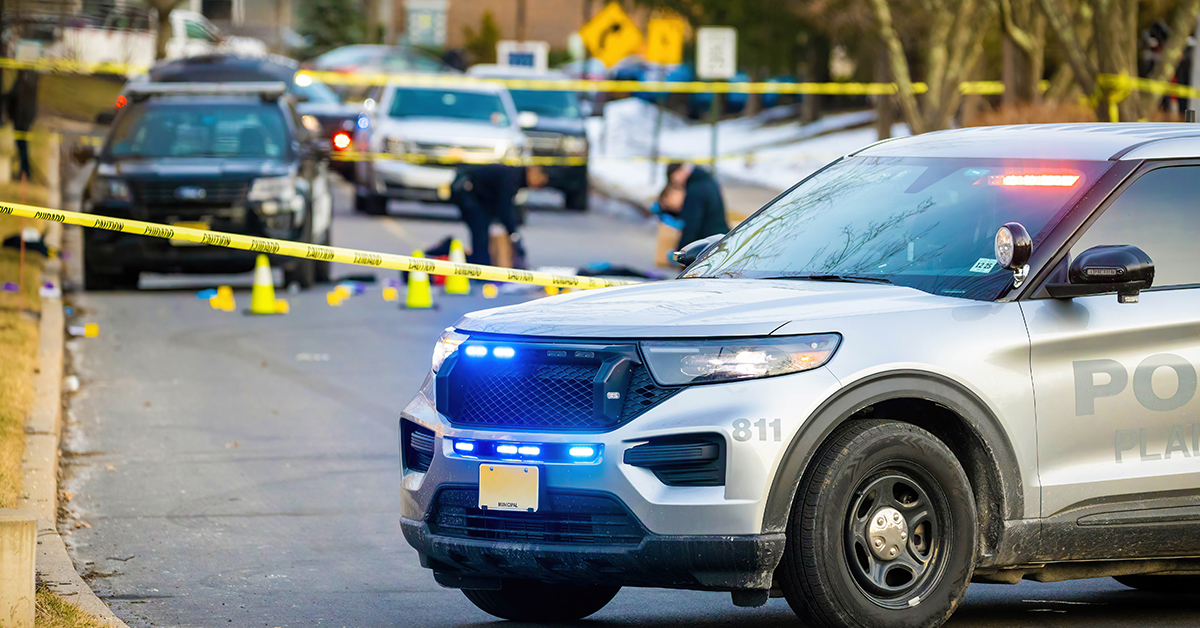
Psychiatrists claim violent tragedies occur because perpetrators miss evaluation or stop taking drugs. The reality: psychiatric intervention often precedes harm, psychiatrists cannot predict outcomes, and the public is misled into trusting a failed system.
By Jan Eastgate
President, CCHR International
September 19, 2025
Key Facts
- Psychiatric hospitalization and drugging often precede, not prevent, violence.
- Psychiatrists admit they cannot predict dangerousness.
- The “schizophrenia” = violence claim is a false stereotype.
- Psychiatric drugs can worsen aggression, psychosis, and suicidality, making it understandable why some taking them want to stop.
- Over 200 psychiatric “violence risk” assessment tools exist, entrenched in psychiatry and psychology, but they lack reliability.
- Billions in funding for psychiatric programs to prevent violence have failed to reduce tragedies.
When a violent tragedy occurs, headlines often claim the perpetrator was “schizophrenic” or “stopped taking his medication”—as though that explains the act. This narrative is misleading and dangerous. Psychiatrists themselves admit they cannot predict violent behavior, do not know the biological cause of any so-called “mental disorder,” and have no cures. Psychiatric hospitalization or forced treatment does not equate to violence prevention; on the contrary, research and case histories reveal it can induce it.
CCHR’s analysis of 132 acts of senseless violence between the 1980s and 2022 found 43 perpetrators had been hospitalized—often involuntarily—and at least 106 had been prescribed psychiatric drugs at some point prior to or at the time of the incident. The actual figure is likely higher, as treatment records and toxicology tests—even if conducted—are rarely disclosed. Far from preventing violence, treatment may have coincided with it. One long-term treated perpetrator, before shooting and wounding 10 people and injuring 19 others, admitted: “They made me worse. They made me more dangerous than anybody could f— imagine.”[1]
Recent Example: Charlotte, NC (Aug. 22, 2025)
Decarlos Brown, Jr., 34, brutally stabbed Ukrainian refugee Iryna Zarutska, 23, on a light rail train. Media and local authorities framed the tragedy as a “missed opportunity” for psychiatric evaluation and medication[2]—as though a pill could have prevented it. Yet Brown had already been involuntarily hospitalized and released with prescriptions.[3] His mother said he’d been prescribed drugs for “schizophrenia” but refused to take them, though there is no confirmation of this or how long he was on them. Meanwhile, he cycled through years of arrests, including five years in prison, which his family said made him worse.[4]
North Carolina prisons have become de facto psychiatric institutions.[5] In 2024 alone, the NC Department of Adult Correction recorded 40,000 psychiatric visits by prisoners.[6] Every prisoner is given a mental health screening when entering prison. In 2018, roughly 6,100 individuals in North Carolina prisons were included on the Department of Public Safety’s mental health caseload, of which about 5,100 (almost 84%) received psychotropic drugs such as quetiapine (Seroquel), clozapine (Clozaril), and bupropion Wellbutrin).[7] The legislature appropriated $99 million for behavioral health services for ex-prisoners in 2023.[8] If Decarlos Brown was among those treated, why did years of prison, drugging, or rehabilitation fail to prevent violence? Why is no one asking this?
The majority of state and federal prisons allow the involuntary use of psychotropic drugs in so-called emergency situations.[9] Violence persists.
The Myth of “Schizophrenia” = Violence
Every time a violent act is linked to so-called schizophrenia, “untreated mental disorder,” or missed medication, the false assumption is reinforced: that such individuals are inherently violent unless drugged. Studies disprove this stereotype.
- CATIE Trial (National Institute of Health-funded): In a two-year follow-up of 1,435 patients labeled with schizophrenia, 19 out of every 20 participants exhibited no violent behavior at all.[10]
- Victimization: People labeled “schizophrenic” are 14 times more likely to be victims of violence than perpetrators.[11]
While not discarding that people can be seriously disturbed, the very concept of schizophrenia is suspect. First labeled “dementia praecox” by German psychiatrist Emil Kraepelin in the late 1800s and renamed “schizophrenia” by Eugen Bleuler in 1908, it was applied to people later shown to have physical illness (encephalitis lethargica). Psychiatry never corrected this error, instead reducing the label to vague “mental symptoms.” The late Thomas Szasz, a professor and lecturer on psychiatry, noted that “schizophrenia is defined so vaguely that, in actuality, it is a term often applied to almost any kind of behavior of which the speaker disapproves.”
Assigning violence to mental disability shifts attention away from a deeper failure—that psychiatric intervention itself, whether in hospitals or prisons, is not a safeguard but often a compounding risk. The real risk arises not from an unproven “illness,” but from the toxic treatments imposed in its name.
Why People Stop Taking Psychiatric Drugs
When families or friends say, “He stopped taking his meds,” the implication is that this caused the violence. The real question is: why do so many want to stop?
Antipsychotics—literally “nerve-seizing” drugs—can cause agitation, aggression, excitability, paranoia, emotional blunting, diabetes, heart risks, and even brain shrinkage.[12] Stopping them is not irrational—it is a rational response to intolerable harm. Like cancer patients halting chemotherapy that is killing them faster than the disease, or people prescribed opioids stopping because the side effects become unbearable, many refuse antipsychotics to preserve basic functioning.
Clozapine, forced on some prisoners by overriding their right to refuse, can cause lethal blood disorders (low white blood cell count), seizures, gastrointestinal problems, heart rhythm disturbances, vomiting, stomach pain or swelling, unusual behavior, hallucinations, anxiety, irritability, confusion, weight gain, increasing dry mouth leading to dental disease, severe and continuing headache, slurred speech, sudden loss of consciousness, feeling sad or empty, loss of interest or pleasure, sexual disability, potentially fatal neuroleptic malignant syndrome, trouble with muscle, control or coordination; unusual excitement, nervousness or restlessness, and irreversible tardive dyskinesia (lip smacking or puckering, puffing of the cheeks, rapid or worm-like movements of the tongue, uncontrolled chewing movements, or uncontrolled movements of the arms and legs), and much more.[13]
A safety review of the six most widely used antipsychotics found that treatment failure or relapse was the most common outcome—up to 93%. Damage to multiple body systems was so widespread that researchers called for a regulatory reappraisal.[14]
Yet those who stop taking these are branded “noncompliant” instead of understood.
Withdrawal Risks
Withdrawal itself can trigger symptoms mistaken for relapse. Sudden dose cuts destabilize the brain’s chemistry—causing agitation, psychosis, or suicidality that never existed before. This is not illness returning, but drug effect.[15]
Psychiatrist Joanna Moncrieff emphasizes that those who wish to stop should not be stigmatized: “They should not be deemed irrational if they wish to try for a better quality of life free of the burdens of these drugs.”[16]
Psychiatry’s Failure to Predict Violence
Edmund Kemper, later infamous as a serial killer, was institutionalized at 15 after killing his grandparents. Psychiatrists at Atascadero State Hospital declared him “rehabilitated” after five years and released him. One evaluation even stated: “he has made a very excellent response to the years of treatment and rehabilitation, and I would see no psychiatric reason to consider him to be of any danger to himself or to any member of society.”[17] The late District Attorney Peter Chang summed up the tragedy: psychiatrists failed to recognize his continued danger. Kemper’s case is not an outlier but a warning. Psychiatrists cannot predict violent behavior, yet they are entrusted with decisions of confinement, release, and forced treatment.
Psychiatrists repeatedly judged him harmless—even midway through his killing spree. He went on to murder eight more.
The Tarasoff decision in 1976 entrenched psychiatry’s supposed duty to predict dangerousness. Tatiana Tarasoff was a student at the University of California. Another student, Prosenjit Poddar, had confided to his psychologist, Dr. Lawrence Moore, that he intended to kill her after she rejected his advances. The therapist notified campus police, who briefly detained and released him. Dr. Harvey Powelson, Moore’s superior, directed that no further action be taken to detain Poddar. No one warned plaintiffs of Tatiana’s peril. On October 27, 1969, Poddar murdered Tarasoff.[18] Yet, as psychiatrist Douglas Mossman observed, the court acted on two questionable suppositions: that mentally disordered people were especially violent in some way and that mental health professionals have some special ability to intervene and protect others against future violence.”[19] He stated: “Violence by an individual is almost impossible to predict… the Tarasoff ruling demands abilities well beyond the professional powers of any therapist….”[20]
Even the American Psychiatric Association concedes its Diagnostic and Statistical Manual of Mental Disorders (DSM) cannot establish mental disorder in relation to competency, criminal responsibility or disability.[21] DSM-5 admits its definitions were designed for clinicians and researchers, not courts.[22]
Case in point: A man shot at 9 people, killing 4, including a 16‐year‐old girl. During his trial, attorneys asked a psychiatrist how well he could predict future violent conduct. His reply: “Poorly. Psychiatry is a very inexact discipline. The long-term prediction of violence is more often wrong than right.”[23]
The Insanity Defense: Questionable “Science” After the Fact
Psychiatric evaluations are not only used to claim foresight over future dangerousness but also retroactively in the courtroom. The insanity defense narrows the issue to whether the accused has a “mental illness,” while ignoring whether treatment-induced behavior may have contributed to the crime.
Yet the foundation is also shaky. A 2015 Utah Law Review article on DSM-5 stated: “DSM diagnoses are based on a consensus about clusters of clinical symptoms, not any objective laboratory measure.” Courts themselves recognize this weakness: unlike other sciences, they often regard forensic mental health experts as “hired guns” or “professional elitists,” noting that differences in bias, focus, and technique can lead to inconsistent or contradictory diagnoses.
Despite this, DSM-based labels appear in 90% of insanity cases—even though the defense is raised in less than 1% of felony trials.[24]
In short, the same speculative framework that fails to predict violence is also used to explain it after the fact, giving psychiatry undue influence in the justice system without scientific validity.
Violence Risk Tools: Smoke and Mirrors
From DSM and psychiatry and psychology in general have sprung more than 200 violence risk assessment “tools.”[25] One, called STAMP, claims risk can be inferred from Staring, Tone of voice, Anxiety, Mumbling, and Pacing[26]—behaviors easily produced by drug side effects.
Despite a low reliability and flimsy basis, such tests are used to support involuntary psychiatric detention. A psychiatrist writing in BMJ questioned why liberty is restricted on such unequivocal criteria, which conflicts with the United Nations’ Convention on the Rights of People with Disability.[27] The CRPD states that no one can be deprived of liberty because of a disability, including psychosocial disability. Involuntary psychiatric treatment violates Articles 14 (liberty) and 15 (freedom from torture).
The system is best described as “smoke and mirrors”: elaborate checklists and scoring systems create the illusion of science and certainty where none exists. In short, psychiatry profits from “risk prediction,” while the violence it claims to prevent continues unabated.
Case Examples of Treatment Failure
Buffalo, NY (May 14, 2022): Payton Gendron, 18, killed 10 and injured 3 at a Buffalo grocery store.[28] He had been psychiatrically hospitalized for evaluation.[29]
Houston, TX (Feb 11, 2024): Genesse Ivonne Moreno, 36, shot and injured two, including a 7-year-old. Moreno had been involuntarily committed at least four times.[30]
Duxbury, MA (Jan 24, 2023): Midwife Lindsay Clancy, 32, strangled her three children while under a “cocktail” of 13 prescribed psychotropic drugs over eight months.[31] Her attorney said the drugs induced homicidal and suicidal ideation.[32] She was prescribed antidepressants and antipsychotic drugs.[33] And “She always took medications as prescribed.”[34]
East Glacier Park, MT (Jul 19, 2022): Derick Amos Madden, 37, rammed a vehicle into pedestrians, shot three, including an 18-month-old girl, and stabbed another.[35] He had been committed to a VA hospital and took his psychiatric medication daily.[36]
Monroe, LA (Jun 11, 2020): Brittany Tucker, 30, killed her four children, a neighbor, and herself while undergoing psychiatric treatment.[37]
Midland, TX (Aug 31, 2019): Seth Ator, 36, killed 7 and wounded 22. He had previously been committed to a psychiatric institution. Within a month of discharge, he had broken into a woman’s bedroom after threatening to kill her brother.[38]
Aurora, IL (Feb 15, 2019): Gary Martin, 45, killed five co-workers and wounded five officers after multiple court-ordered psychiatric evaluations.[39] A psychiatrist admitted: “Mental health professionals are not able accurately to predict…future dangerousness…I cannot say whether or not Mr. Martin will become violent again in the future.”[40]
These cases show the problem is not “early release” or “missed medication.” Those are red herrings. The real issue is that psychiatric treatment itself often fails—or makes people worse.
Funding Failure
Violence prevention funding has been a bottomless pit of taxpayer dollars with little to show for it.
- The U.S. Safe Schools Act of 1994 promised that schools would be violence-free by 2000.[41]
- A decade after the 1999 Columbine high school massacre, the Safe Schools/Healthy Students Initiative funneled more than $2.1 billion into partnerships among mental health, law enforcement, and juvenile justice agencies.[42]
- In 2022, the Bipartisan Safer Communities Act added another $2 billion, heavily weighted toward expanding mental health services in schools and school safety.[43] That year, the Department of Justice also distributed nearly $190 million in grants for school safety programs, including training staff and students, conducting “evidence-based” threat assessments, and funding more research into the causes of school violence.[44]
- A June 2024 White House Office report on the Act’s rollout, detailed how $1 billion was allocated to hire and train 14,000 school-based mental health professionals, including counselors, psychologists, and social workers; $240 million was targeted for mental health in schools; and $400 million went to expand community-based mental health services.[45]
Yet despite this massive investment, school shootings have reached record highs. Before COVID lockdowns, the highest annual total was 52 (2019). Since the Act’s passage in 2022, the numbers spiked: 80 in 2022, 82 in 2023, 83 in 2024—and 47 already logged by the 253rd day of 2025. That reflects a nearly 60% increase in shootings since the new funding began.[46]
These results demand accountability. A full financial audit is needed to determine how billions in “violence prevention” budgets and grants—channeled largely into mental health programs—have been spent, and whether any measurable reduction in violent or suicidal behavior has been directly achieved. Taxpayers and families deserve transparency, not empty promises.
Conclusion: A Dangerous Paradox
Far from protecting communities, involuntary commitment and psychiatric drugging can fuel volatility. Psychiatrists acknowledge they cannot predict violence, yet the public is told “treatment” is the answer. This is irrational and dangerous.
The unasked question remains: why is psychiatry still trusted with prevention when its record shows it cannot deliver safety? If society is serious about addressing violence, we must look beyond the false psychiatric narrative and confront all contributing factors—including psychiatric evaluation, hospitalization and treatment, including recognized mind-altering drugs. Only then can solutions begin to match the magnitude of the problem.
[1] https://www.cchrint.org/2022/04/20/frank-james-the-prophet-of-doom/, citing: Ben Chapman, Joseph De Avila, Omar Abdel-Baqui, “Brooklyn Subway Shooting Suspect Frank James Arrested, in Custody,” The Wall Street Journal, 13 Apr. 2022, https://www.wsj.com/us-news/brooklyn-shooting-latest-police-hunt-person-of-interest-as-busy-new-york-rush-hour-gets-under-way-11649844816; Miranda Devine, “Suspect Frank James was spewing racist hate years before Brooklyn subway shooting,” New York Post, 13 Apr. 2022, https://nypost.com/2022/04/13/suspect-frank-james-was-spewing-racist-hate-well-before-brooklyn-shooting/
[2] https://www.wral.com/story/previous-charges-delayed-mental-health-evaluation-were-missed-opportunities-in-charlotte-stabbing/22153924/
[3] https://sfg.media/en/a/who-is-decarlos-brown-jr-and-why-was-he-free-after-14-arrests/
[4] https://abcnews.go.com/US/mother-sister-charlotte-stabbing-suspect-describe-history-mental/story?id=125451590; https://sfg.media/en/a/who-is-decarlos-brown-jr-and-why-was-he-free-after-14-arrests/
[5] https://prisonjournalismproject.org/2025/03/13/prisons-are-missing-an-opportunity-to-fight-opioid-addiction/; https://www.dac.nc.gov/documents/files/breaking-cycle-mental-health-and-justice-system/open
[6] https://www.northcarolinahealthnews.org/2025/03/11/nc-prisons-face-growing-health-care-costs/
[7] Brian Sheitman, Joseph B. Williams, “Behavioral Health Services in North Carolina’s State Prison System: Challenges and Opportunities,” NCMJ vol. 80, no. 6 356, https://ncmedicaljournal.com/api/v1/articles/55077-behavioral-health-services-in-north-carolina-s-state-prison-system-challenges-and-opportunities.pdf
[8] https://www.wfae.org/health/2024-04-05/prison-reentry-services-more-crisis-care-beds-better-pay-for-health-care-workers-where-835-million-in-new-mental-health-money-is-being-spent
[9] https://pmc.ncbi.nlm.nih.gov/articles/PMC9938563/
[10] https://www.medpagetoday.com/resource-centers/mental-health-focus/predicting-violence-schizophrenia/2645
[11] Heidi J. Wehring and William T. Carpenter, “Violence and Schizophrenia,” Schizophr Bull, Sept. 2011, https://pmc.ncbi.nlm.nih.gov/articles/PMC3160236/
[12] https://www.mind.org.uk/information-support/drugs-and-treatments/antipsychotics/side-effects/
[13] https://www.drugs.com/sfx/clozapine-side-effects.html
[14] Thomas J. Moore, Curt. D. Furberg, “The Harms of Antipsychotic Drugs: Evidence from Key Studies,” Drug Safety, Jan. 2017, https://pubmed.ncbi.nlm.nih.gov/27864791/
[15] Akshaya Solanki, “Withdrawal, Side Effects and Exacerbation of Symptoms by Antipsychotic Use for the Treatment of Schizophrenia,” International Journal for Multidisciplinary Research, Volume 6, Issue 4, July-August 2024, https://www.ijfmr.com/papers/2024/4/25984.pdf
[16] Joanna Moncrieff et al., “Barriers to stopping neuroleptic (antipsychotic) treatment in people with schizophrenia, psychosis or bipolar disorder,” Ther Adv Psychopharmacol, 2020 Jul 6, https://pmc.ncbi.nlm.nih.gov/articles/PMC7338640/
[17] CCHR International, Psychiatric Drugs Create Violence and Suicide, Los Angeles, 2018, p. 18 citing Scott A. Bonn, Ph.D, “The Real Life Horror Tale of the Twisted ‘Co-ed Killer;” 17 Mar. 2014, https://www.psychologytoday.com/blog/wicked-deeds/201403/the-real-life-horror-tale-the-twisted-co-ed-killer; “Edmund Kemper-The Co-ed Killer; 21 Sept. 2017, https://murderersmaniacsandmayhem.blogspot.com/2017/09/edmund-kemper-co-ed-killer.html
[18] Tarasoff v. Regents of University of California, 17 Cal.3d 425, https://scocal.stanford.edu/opinion/tarasoff-v-regents-university-california-30278
[19] Douglas Mossman, M.D., “Psychiatrists Lack Crystal Balls to Predict Patient Violence,” Psychiatry Online, 28 June 2008, https://psychiatryonline.org/doi/full/10.1176/pn.43.12.0004
[20] Douglas Mossman, M.D., “Psychiatrists Lack Crystal Balls to Predict Patient Violence,” Psychiatry Online, 28 June 2008, https://psychiatryonline.org/doi/full/10.1176/pn.43.12.0004
[21] https://www.cchrint.org/2022/09/09/junk-science-in-our-courts-and-forced-drug-treatment-are-a-recipe-for-disaster/; Diagnostic and Statistical Manual of Mental Disorders Fourth Edition-TR, (American Psychiatric Association, 2000), p. xxxiii
[22] Nancy Haydt, “The DSM-5 and Criminal Defense: When Does a Diagnosis Make a Difference?” Utah Law Review, Vol. 2015, Article 13
[23] “Once A Killer; A Gunman Convicted of Shooting Nine People and Killing Four of Them is Trying To Be Released from a Mental Hospital,” CBS 48 Hours, July 12, 1999
[24] Nancy Haydt, “The DSM-5 and Criminal Defense: When Does a Diagnosis Make a Difference?” Utah Law Review, Vol. 2015, Article 13
[25] Gautam Gulati, M.D., et al., “Violence risk assessment in psychiatry: nobody can predict the future,” BMJ Opinion, 17 Nov. 2020, https://blogs.bmj.com/bmj/2020/11/17/violence-risk-assessment-in-psychiatry-nobody-can-predict-the-future/
[26] Indicator of Violent Behavior, National Institute for Occupational Safety and Health, https://wwwn.cdc.gov/WPVHC/Nurses/Course/Slide/Unit6_8
[27] Gautam Gulati, M.D., et al., “Violence risk assessment in psychiatry: nobody can predict the future,” BMJ Opinion, 17 Nov. 2020, https://blogs.bmj.com/bmj/2020/11/17/violence-risk-assessment-in-psychiatry-nobody-can-predict-the-future/
[28] https://www.wivb.com/news/local-news/poloncarz-police-on-scene-of-active-multiple-shooting/
[29] Bernard Condon and Michael Hill, “Buffalo suspect: Lonely, isolated — with a troubling sign,” AP News, 17 May 2022, https://apnews.com/article/buffalo-supermarket-shooting-government-and-politics-race-ethnicity-978bddfec22344fe73e30ca34f491784
[30] “Suspected Lakewood Church shooter Genesse Moreno had criminal history, mental health issues, documents say,” ABC News, 13 Feb. 2024, https://abcnews.go.com/US/suspected-lakewood-church-shooter-criminal-history-mental-health/story?id=107179259
[31] https://www.dailymail.co.uk/news/article-11728009/Lindsay-Clancy-psychiatrist-says-flat-board-wondering-whats-going-on.html
[32] “Midwife mother who ‘strangled her three children to death’ suffered homicidal and suicidal thoughts due to being overmedicated on a DOZEN prescription drugs, including Ambien, Valium and Prozac, her lawyer says,” Daily Mail, 3 Feb. 2023. https://www.dailymail.co.uk/news/article-11710075/Midwife-mother-strangled-three-children-death-overmedicated-prescription-drugs.html
[33] Liz Hardaway, “Attorney: Lindsay Clancy, a former CT resident, was ‘destroyed’ by medications leading up to children’s deaths,” CT Insider, 8 Feb. 2023,
https://www.ctinsider.com/news/article/lindsay-clancy-ct-children-deaths-medications-17772140.php; https://sports.yahoo.com/lindsay-clancy-strangled-her-three-201726407.html
[34] Liz Hardaway, “Attorney: Lindsay Clancy, a former CT resident, was ‘destroyed’ by medications leading up to children’s deaths,” CT Insider, 8 Feb. 2023, https://www.ctinsider.com/news/article/lindsay-clancy-ct-children-deaths-medications-17772140.php;
[35] “Victims and suspect identified in Glacier County shooting,” 3KRTV, 17 July 2022, https://www.krtv.com/news/crime-and-courts/three-victims-and-suspect-identified-in-glacier-county-shooting
[36] “Ex Who Unleashed Terror on Family in Montana Had Numerous ‘Red Flags,’” The Daily Beast, 20 July 2022, https://www.thedailybeast.com/derick-amos-madden-ex-who-unleashed-terror-on-siau-family-in-east-glacier-montana-had-red-flags?source=articles&via=rss
[37] Chris Harris, “Louisiana Mom Fatally Shoots 5-Month-Old Baby, Her 3 Other Children Before Turning Gun on Herself,” People, 16 June 2020, https://people.com/crime/louisiana-mom-murder-suicide-mental-illness/
[38] “Seth Ator: 5 Fast Facts You Need to Know,” Free Republic, https://freerepublic.com/focus/news/3775927/posts?page=5; Jake Bleiberg, Police: Texas Gunman Was Violent at Psychiatric Facility,” Associated Press, 12 Sept. 2019, https://www.ntd.com/police-texas-gunman-was-violent-at-psychiatric-facility_379359.html
[39] Gary Martin: 5 Fast Facts You Need to Know | Heavy.com; Annie Sweeney and Stacy St. Clair, “Aurora mass shooter in his own words: ‘I acted out of rage and fear’ in beating of ex-girlfriend with baseball bat,” Chicago Tribune, 19 Feb 2022, Aurora mass shooter in his own words: ‘I acted out of rage and fear’ in beating of ex-girlfriend with baseball bat – Chicago Tribune
[40] Annie Sweeney and Stacy St. Clair, “Aurora mass shooter in his own words: ‘I acted out of rage and fear’ in beating of ex-girlfriend with baseball bat,” Chicago Tribune, 19 Feb 2022, Aurora mass shooter in his own words: ‘I acted out of rage and fear’ in beating of ex-girlfriend with baseball bat – Chicago Tribune
[41] https://www.cchrint.org/2022/07/11/billions-spent-on-violence-prevention-ignores-how-psychotropic-drugs-cause-hostility/; “School Safety Policies and Programs Administered by the U.S. Federal Government: 1990–2016,” A Report Prepared by the Federal Research Division, Library of Congress under an Interagency Agreement with the National Institute of Justice, U.S. Department of Justice
[42] “2009 Safe Schools/Healthy Students Initiative Grants,” SAMHSA, 2009, http://www.sshs.samhsa.gov/Announcements/2009Announcement.aspx
[43] https://www.k12dive.com/news/4-ways-ed-leaders-can-prepare-for-funds-in-newly-enacted-gun-safety-bill/626125/
[44] https://www.ojp.gov/files/archives/pressreleases/2022/doj-awards-almost-190-million-grants-support-school-safety
[45] White House Office, “Report on the Implementation of the Bipartisan Safer Communities Act,” June 2024, p.3
[46] “School shootings in the US: Fast facts,” CNN, 10 Sept. 2025, https://www.cnn.com/us/school-shootings-fast-facts-dg
SHARE YOUR STORY/COMMENT