

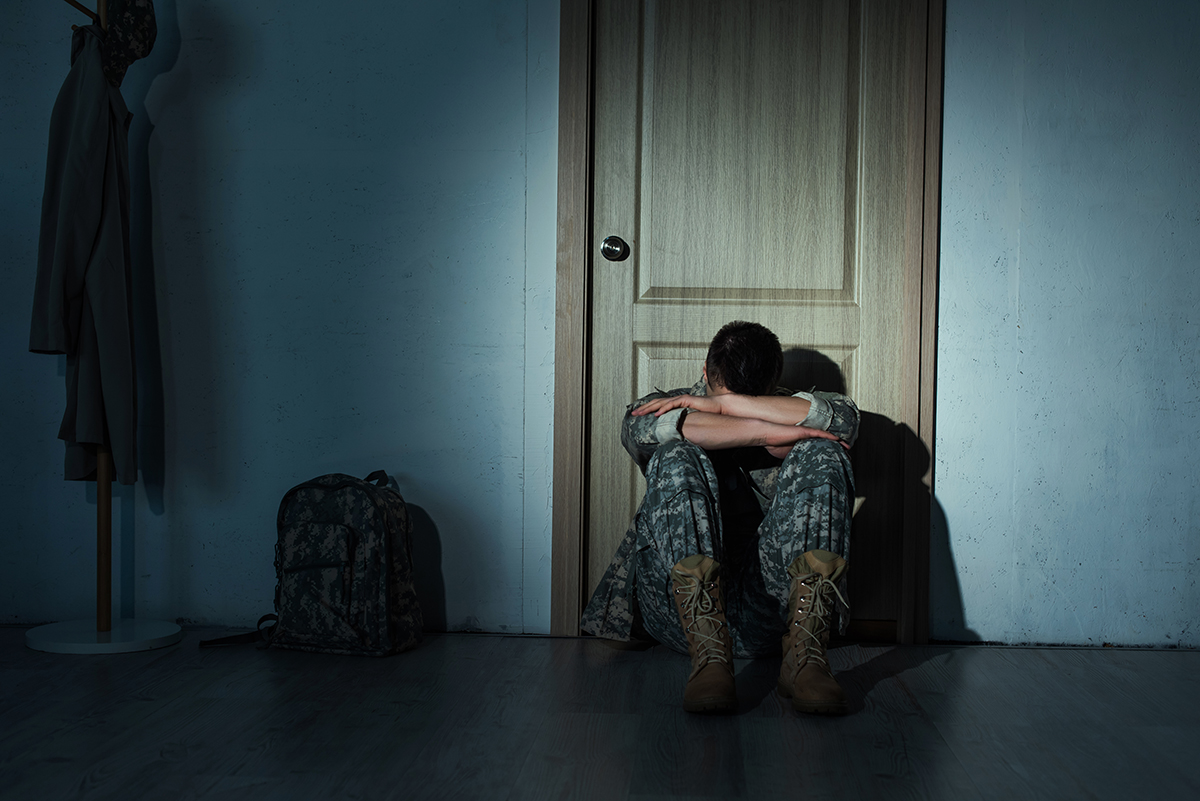
CCHR says fast-tracking psychedelics for veterans repeats decades of unethical psychiatric experiments, ignores root causes of trauma and suicide, and risks turning vets into test subjects for a projected $10 billion profit bonanza.
Real-world studies show psychedelics can do more harm than good:
- A 2023 PLOS One study found one-third of users experienced severe psychiatric symptoms, even in guided settings.
- About 40% of participants in a psilocybin study reported moderate to severe anxiety or panic.
- Nearly half of participants in another 2023 study described derealization symptoms like feeling disconnected from reality.
- Research shows “bad trips” can cause lasting fear, panic, or anxiety that may persist for weeks or even years.
- Combining psychedelics with MAOIs has led to overwhelming reactions and, in some cases, death.
By CCHR International
The Mental Health Industry Watchdog
July 11, 2025
The Citizens Commission on Human Rights International (CCHR) is warning Congress and the public that new legislation to legalize psychedelic drugs for U.S. veterans is a dangerous repeat of history, when defenders of the nation were used as test subjects in unethical psychiatric experiments.
The Innovative Therapies Centers of Excellence Act of 2025, backed by the Psychedelics Advancing Therapies (PATH) Caucus, would expand federal funding to fast-track psychedelic treatments for veterans diagnosed with depression, PTSD and substance abuse. Legislators say it’s needed because one veteran suicide is too many.[1] But CCHR says masking deep wounds with mind-altering drugs is a betrayal of those who served and that a review of the drugs show many can induce suicide that veterans may not be informed of.
“This is not real help—the psychiatric-pharmaceutical industry will exploit our veterans as guinea pigs to prop up a $10 billion psychedelics business,” the watchdog states.[2]
Decades of Abusive Experiments
Psychiatry and the U.S. military’s shameful history of drug experiments on troops is well-documented, yet often ignored. A December 2024 National Security Archive release revealed 1,200 once-secret records exposing the CIA’s mind-control programs in the 1950s and 1960s, which used unwitting subjects to test hallucinogens like LSD.[3] The Federal Practitioner noted the project was “rife with violations of research ethics and human rights.”[4]
Between 1955–1975, over 7,000 soldiers were exposed to more than 250 chemicals — including nerve agents like BZ and LSD[5]—in chemical warfare tests like Operation Delirium at Edgewood Arsenal, Maryland. Researchers even developed BZ, a hallucinogen 100 times more powerful than LSD, to incapacitate enemy minds, but used U.S. soldiers to test it.[6]
Many soldiers were told little or nothing about the dangers, and some survivors later sued for “recklessly endangering” their lives.[7]
Reports from that era documented terrifying effects: “psychotic experiences characterized by intense fear, paranoia, toxic confusion, and depersonalization.”[8] Psychiatrist Dr. Colin Ross described severe complications from LSD tests[9]—yet similar drugs are being pushed again, this time as “miracle cures.”
Old Myths, New Labels
Proponents claim ketamine may repair “damaged connections between cells involved in mood.”[10] But how they “work” remains mostly theoretical. There are no medical or scientific tests to substantiate any mental disorder. And scientists don’t actually understand how ketamine “works” on depression.[11]
The Conversation reported in April 2024: “The full range of mechanisms, safety risks, and long-term effects of psychedelics are not known. Conflicts of interest… can contribute to an overly optimistic opinion by researchers, the public, and policymakers. This may pose safety risks to the public if legislative changes that increase access are made prematurely, as witnessed with tobacco and opioid industries in the past.”[12]
History shows what happens when psychiatric “wonder drugs” are marketed. Prozac, the first SSRI antidepressant, was sold in the 1980s on the claim that it corrected a “chemical imbalance.” Pharmaceutical companies touted antidepressants as wonder drugs that could make the world a happier place. However, SSRIs can make patients agitated, and some become violent or suicidal.[13]
In 2022, Prof. Joanne Moncrieff and colleagues from the University of London’s landmark study found “no evidence of a connection between reduced serotonin and depression,” exposing the myth.[14]
Psychedelics like psilocybin, ketamine, and MDMA are now described as “serotonergic hallucinogens”[15]—rebranding the same discredited theory. Moncrieff likens them to a “powerful form of snake oil” that has “become popular through the potent mixture of financial interests and desperation.” Further, “The current craze for psychedelics also means the adverse effects are being minimized or overlooked. The ‘bad trip’ is a well-recognized phenomenon, and may not be that uncommon.”[16]
Evidence of Harm, Not Cure
Real-world studies show psychedelics can do more harm than good:
- A 2023 study in PLOS One found that one-third of users experienced severe anxiety, fear, social disconnection, depersonalization and derealization. Transient visual distortions experienced after taking a psychedelic substance were reported by 40–60% of users. While largely referring to illicit uses of the drugs, the authors stated that the “variety of profoundly challenging experiences that can occur following the use of psychedelics” can also occur following use in guided settings. [17]
- Another 2023 study discussed how ~40% of participants in an earlier study on psilocybin experienced moderate to severe anxiety, panic, or distress.[18]
- In another 2023 study, 7 out of 15 participants described challenging derealization experiences subsequent to taking psychedelic drugs as: “having daily out-of-body-experiences,” “reality felt thin or unstable,” “[being] completely disconnected from the universe,” and “…like, there was something wrong with my normal world.”[19]
- Studies provide decades of evidence indicating that a “bad trip” can cause intense fear and panic, which sometimes lasts for weeks or months after taking the psychedelic drug. Serious anxiety issues can develop even years later.[20]
- Ayahuasca, and some other psychedelics like 5-MeO-DMT, have been combined with other compounds, a potentially dangerous practice. Specifically, combining different psychedelics with compounds that are monoamine oxidase inhibitors (MAOIs) has led to people having very strong, overwhelming psychological reactions to the psychedelics. Sometimes this contributes to severe medical outcomes or even death.[21]
- FDA-approved nasal antidepressant esketamine (Spravato), chemically similar to the hallucinogen and anesthetic ketamine, comes with strong warnings about dissociation, hallucinations, impaired judgment, and suicide risk[22]—yet its mechanism remains unknown.[23] In February 2022, the FDA alerted healthcare professionals to safety reports involving Spravato, which may put patients at risk of serious adverse events and potential misuse and abuse.[24]
Psychedelics, Violence, and Veteran Risk: A Clear Warning
It is already documented that antidepressants can induce suicide and violence in all ages. The FDA warns that all patients being treated with antidepressants for any indication should be monitored and observed closely for clinical worsening, suicidality, and unusual changes in behavior. In 2017, BMJ published a report, “Antidepressants and murder: case not closed,” which states: “Such daily monitoring is, however, a fake fix. People cannot be monitored every minute and many have committed SSRI-induced suicide or homicide within a few hours after everyone thought they were perfectly okay.” In a systematic review of placebo-controlled trials in adult healthy volunteers, antidepressants doubled the occurrence of events that the FDA has defined as possible precursors to suicide and violence.[25]
Contrary to the image of psychedelics as benign “therapies,” decades of evidence show these hallucinogens can trigger severe disorientation, violent psychosis, and deadly actions—including among veterans and civilians alike.
The Korean Journal of Physiology & Pharmacology found ketamine linked to flashbacks, amnesia, delirium, and violence.[26]
Vice’s “Killer High” series revealed multiple cases in just three years where LSD use was linked to sudden, brutal killings. The article “Killer High: Exploring the Phenomenon of LSD-Fueled Murder” highlighted how even seemingly ordinary, stable people turned homicidal while under the influence. Ketamine was at the center of two lawsuits alleging that prescriptions of the drug made people carry out extreme acts of violence.[27]
Key incidents include:
- 2018: A 22-year-old man in Florida took acid with his girlfriend, then stabbed her father to death during a psychotic break.
- March 2019: In Australia, a teenager ingested LSD and killed an 82-year-old stranger by stomping on his head.[28]
- April 2019: A man in New York State, high on LSD, carried his eight-month-old daughter into a cemetery at night, believing a pond was “the fountain of youth.” He drowned her.[29]
- July 4th, 2022: Robert Crimo III, the Illinois parade shooter who killed seven people and injured dozens, reportedly began using psychedelic drugs illicitly before showing clear personality changes.[30]
This pattern extends to recent tragedies involving veterans. In June 2023, U.S. Army Specialist James Kelly, 26, fatally shot two people and wounded three more at the Beyond Wonderland electronic dance festival in Washington State after taking psilocybin mushrooms and experiencing violent hallucinations. Kelly admitted to police that psychedelic mushrooms may have made him act aggressively.[31]
Psilocybin primarily affects the brain by interacting with serotonin receptors, as do antidepressants like Prozac. A hair test shows psilocybin can last in the body as long as 90 days.[32]
Ketamine, now marketed in clinical form as Spravato, carries official warnings for hallucinations, dissociation, confusion, and “abnormal behavior.”[33] MDMA (Ecstasy) has also been linked to anxiety, paranoia, aggression, and sudden violent outbursts.[34]
The National Institute on Drug Abuse (NIDA) states: “The effects of hallucinogens like LSD can be described as drug-induced psychosis—a distortion or disorganization of a person’s capacity to recognize reality, think rationally, or communicate with others.”[35]
Psychedelic advocates downplay these risks, but the evidence shows hallucinogens can fuel disorganized thinking and sudden violence—precisely the last thing our veterans, many already struggling with trauma, should be exposed to.
Profit Over Protection
CCHR warns that once veterans are prescribed psychedelics, side effects can be repackaged as new “mental illnesses” for more drug sales. This is exactly what the Diagnostic and Statistical Manual of Mental Disorders (DSM) does: it creates a new billing code—“Hallucinogen Persisting Perception Disorder”—to fuel a profitable cycle.[36] One large survey of psychedelic users found that 4.2 percent experienced distressing, persisting visual experiences after psychedelic use.[37]
DARPA (Defense Advanced Research Projects Agency) has already invested $27 million into developing military psychedelics.[38] The VA has supported trials for MDMA (Ecstasy) and psilocybin (magic mushrooms).[39]
“Veterans need real help addressing trauma, injuries, and reintegrating into civilian life,” says CCHR. “They don’t need mind-bending chemicals that risk harming them further — all while lining drug company pockets.”
CCHR says the words of Winston Churchill in 1942 still ring true: “Restrict as much as possible the work of these gentlemen [psychiatrists], who are capable of doing an immense amount of harm with what may very easily degenerate into charlatanry.” Veterans who served their country with courage deserve solutions rooted in genuine care and respect for their human rights—not another round of dangerous chemical experiments disguised as therapy. The time to say “never again” is now.
CCHR provides a Fact Sheet on Psychotropic Drugs Create Suicide, Failing Service Members & Veterans[40]
[1] https://correa.house.gov/news/press-releases/correa-bergman-push-to-amend-military-veterans-funding-bill-prepare-va-for-administration-of-psychedelic-therapies;
[2] Sonari Glinton, “Big Pharma Is Betting on Psychedelics for Mental Health: Will it Pay Off,” Slate, 18 Aug 2022, https://slate.com/technology/2022/08/psychedelic-drugs-mental-health-compass-pathways.html
[3] National Security Archive, “CIA Mind Control Experiments Focus on New Scholarly Collection,” https://nsarchive.gwu.edu/briefing-book/dnsa-intelligence/2024-12-23/cia-behavior-control-experiments-focus-new-scholarly
[4] https://www.cchrint.org/issues/psychotropic-drugs-failing-service-members-veterans/Cynthia Geppert, “Psychedelics and the Military: What a Long, Strange Trip It’s Been,” Federal Practitioner, Oct. 2022, https://www.ncbi.nlm.nih.gov/pmc/articles/PMC9896363/
[5] https://www.cchrint.org/2024/01/12/cchr-calls-for-ceasing-psychedelic-drug-trials-on-military-and-veterans/; Ben Hall, “U.S. soldiers used as ‘human guinea pigs’ in top-secret chemical testing program,” News Channel 5, 11 Nov. 2021, https://www.newschannel5.com/news/newschannel-5-investigates/u-s-soldiers-used-as-human-guinea-pigs-in-top-secret-chemical-testing-program; David S. Martin, “Vets feel abandoned after secret drug experiments,” CNN, 1 Mar. 2012, https://www.cnn.com/2012/03/01/health/human-test-subjects/index.html
[6] https://www.ranker.com/list/edgewood-arsenal-human-experiments/melissa-sartore; https://www.cchrint.org/2021/03/02/cchr-warns-against-7-billion-psychedelic-drug-push-to-treat-mental-issues/ citing: “Dr. Harris Isbell’s experiments,” AHRP, 18 Jan. 2015, https://ahrp.org/dr-harris-isbells-experiments/; https://pages.uoregon.edu/munno/OregonCourses/REL253F12/REL253Notes/BZStory.htm
[7] “‘Operation Delirium:’ Psychochemicals And Cold War,” NPR, 10 Dec. 2012,
https://www.npr.org/2012/12/11/166891159/operation-delirium-psychochemicals-and-cold-war; https://www.newyorker.com/news/news-desk/primary-sources-operation-delirium
[8] Wayne O. Evans, Ph.D. and Nathan S. Kline, M.D., Psychotropic Drugs in The Year 2000: Use by Normal Humans (Springfield, Illinois: Charles C. Thomas Publisher, 1971), p. 89
[9] www.cchrint.org/issues/psychotropic-drugs-failing-service-members-veterans; Colin A. Ross, “LSD experiments by the United States Army,” History of Psychiatry, Dec. 2017, https://pubmed.ncbi.nlm.nih.gov/28686061/
[10] https://www.cchrint.org/2021/11/08/psychiatrists-and-the-hallucinogenic-drug-industry-are-seeking-to-replace-failed-antidepressants/ citing: “A world without antidepressants: the new alternatives to prescription pills,” The Telegraph, 18 Oct. 2021, https://www.telegraph.co.uk/health-fitness/mind/world-without-antidepressants-new-alternatives-prescription/
[11] https://www.cchrint.org/2021/11/08/psychiatrists-and-the-hallucinogenic-drug-industry-are-seeking-to-replace-failed-antidepressants/; https://dangerousmedicine.com/2018-06-08-psychedelic-drugs-found-to-be-therapeutic-big-pharma.html
[12] “How corporate involvement in psychedelic research could threaten public safety,” The Conversation, 22 Apr. 2024, https://theconversation.com/how-corporate-involvement-in-psychedelic-research-could-threaten-public-safety-226689
[13] James Kingsland, “The rise and fall of the wonder-drugs,” New Scientist, 3 July 2004, https://web.archive.org/web/20210211031717/https://www.newscientist.com/article/mg18324545-300-the-rise-and-fall-of-the-wonder-drugs/
[14] https://www.cchrint.org/2025/01/24/new-book-further-unravels-myth-of-chemical-imbalance/; “‘Chemically Imbalanced’: A Book Review…” Psychology Today, 16 Jan 2025
[15] https://www.ncbi.nlm.nih.gov/pmc/articles/PMC4813425/
[16] Joanna Moncrieff, MD, “Psychedelics: The New Psychiatric Craze,” Mad in America,” Mad in America, 2 Sept. 2021, https://www.madinamerica.com/2021/09/psychedelics-new-psychiatric-craze/
[17] Jules Evans, et al., “Extended difficulties following the use of psychedelic drugs: A mixed methods study,” PLOS One, 24 Oct. 2023, https://journals.plos.org/plosone/article?id=10.1371/journal.pone.0293349
[18] “Case analysis of long-term negative psychological responses to psychedelics,” Open Access, 25 Sept. 2023, Bremler, R., Katati, N., Shergill, P., et al., “Case analysis of long-term negative psychological responses to psychedelics,” Scientific Reports, 13, 15998 (2023), https://doi.org/10.1038/s41598-023-41145-x
[19] Bremler, R., Katati, N., Shergill, P. et al. Case analysis of long-term negative psychological responses to psychedelics. Sci Rep 13, 15998 (2023), https://www.nature.com/articles/s41598-023-41145-x
[20] “LSD Toxicity Treatment & Management: Approach Considerations, Prehospital and Emergency Department Care, Inpatient Care,” Background, Pathophysiology, Etiology, 3 May 2017; “Treatment with psychedelics is psychotherapy: beyond reductionism,” The Lancet Psychiatry, published online December 12, 2023, citing Calder, A.E. and Hasler, G., “Towards an understanding of psychedelic-induced neuroplasticity,” Neuropsychopharmacology 2023, 48: 104-12
[21] Brian Anderson, “Q&A: Long-Term Physical Effects,” UC Berkeley Center for the Science of Psychedelics, https://psychedelics.berkeley.edu/; https://psychedelics.berkeley.edu/qa/long-term-physical-effects/
[22] https://www.rxlist.com/spravato-drug.htm
[23] https://www.healthline.com/health/drugs/spravato#uses
[24] https://www.fda.gov/drugs/human-drug-compounding/fda-alerts-health-care-professionals-potential-risks-associated-compounded-ketamine-nasal-spray
[25]“Antidepressants and murder: case not closed: Antidepressants increase the risk of suicide, violence and homicide at all ages,” BMJ, 2 Aug. 2017, https://www.bmj.com/content/358/bmj.j3697/rr-4
[26] Sang Yep Shin, et al., “Chronic administration of ketamine ameliorates the anxiety- and aggressive-like behavior in adolescent mice induced by neonatal maternal separation,” Korean Journal of Physiology & Pharmacology, Jan 2019, https://www.ncbi.nlm.nih.gov/pmc/articles/PMC6315094/
[27] https://www.cchrint.org/2023/11/10/cchr-cautions-legislators-as-fda-weighs-approval-of-psychedelics-amid-rising-violence/#_edn6; Gavin Butler, “Killer High: Exploring the Phenomenon of LSD-Fueled Murder,” VICE, 25 Oct. 2020, https://www.vice.com/en/article/acid-lsd-fuelled-murder-homicide/; https://www.vice.com/en/article/prescribed-ketamine-turned-these-men-violent-allege-lawsuits/
[28] Gavin Butler, “Killer High: Exploring the Phenomenon of LSD-Fueled Murder,” VICE, 25 Oct. 2020, https://www.vice.com/en/article/acid-lsd-fuelled-murder-homicide/
[29] Gavin Butler, “Killer High: Exploring the Phenomenon of LSD-Fueled Murder,” VICE, 25 Oct. 2020, https://www.vice.com/en/article/acid-lsd-fuelled-murder-homicide/
[30] Safia Samee Ali, Natasha Korecki and Corky Siemaszko, “Highland Park shooting suspect’s past littered with ‘red flags,” NBC News, 5 July 2022, https://www.nbcnews.com/news/us-news/highland-park-shooting-suspects-littered-red-flags-rcna36766
[31] “Man Accused in Fatal Shooting Spree at Beyond Wonderland Festival Pleads Not Guilty,” Billboard, 7 Jun. 2023, https://www.billboard.com/business/legal/beyond-wonderland-festival-shooting-suspect-pleads-not-guilty-1235367752/
[32] https://www.cchrint.org/2023/11/10/cchr-cautions-legislators-as-fda-weighs-approval-of-psychedelics-amid-rising-violence/; https://www.addictioncenter.com/drugs/how-long-do-drugs-stay-in-your-system/
[33] https://www.mindbloom.com/2; https://www.drugs.com/sfx/ketamine-side-effects.html
[34] Michael G. Vaughn, “Crime and Violence among MDMA Users in the United States,” AIMS Public Health, 18 Mar. 2015, https://www.ncbi.nlm.nih.gov/pmc/articles/PMC5690370/
[35] “How Do Hallucinogens (LSD, Psilocybin, Peyote, DMT, and Ayahuasca) Affect the Brain and Body?” National Institute of Drug Abuse, https://nida.nih.gov/sites/default/files/rrhalluc.pdf
[36] https://www.cchrint.org/issues/psychotropic-drugs-failing-service-members-veterans/; Kevin Franciotti, “We’re Starting to Understand How Psychedelic Flashbacks Work,” VICE, 19 May 2017, https://www.vice.com/en/article/gvzkw9/were-starting-to-understand-how-psychedelic-flashbacks-work; Peter M. Miller (Editor), Principles of Addiction 1st Edition (Academic Press, Massachusetts, 2013), Chapter, “Hallucinogen Persisting Perception Disorder,” https://www.sciencedirect.com/topics/neuroscience/hallucinogen-persisting-perception-disorder
[37] https://psychedelics.berkeley.edu/qa/long-term-physical-effects/ citing “Abnormal visual experiences in individuals with histories of hallucinogen use: a Web-based questionnaire,” Drug and Alcohol Dependence, 1 Mar. 2011
[38] https://www.cchrint.org/issues/psychotropic-drugs-failing-service-members-veterans/#_edn2, citing: Cynthia Geppert, “Psychedelics and the Military: What a Long, Strange Trip It’s Been,” Federal Practitioner, Oct. 2022, https://www.ncbi.nlm.nih.gov/pmc/articles/PMC9896363/
[39] https://www.cchrint.org/issues/psychotropic-drugs-failing-service-members-veterans/; “VA funds first study on psychedelic-assisted therapy for Veterans,” VA News, 3 Dec. 2024, https://news.va.gov/press-room/va-funds-first-study-on-psychedelic-assisted-therapy-for-veterans/
[40] https://www.cchrint.org/issues/psychotropic-drugs-failing-service-members-veterans/
SHARE YOUR STORY/COMMENT