

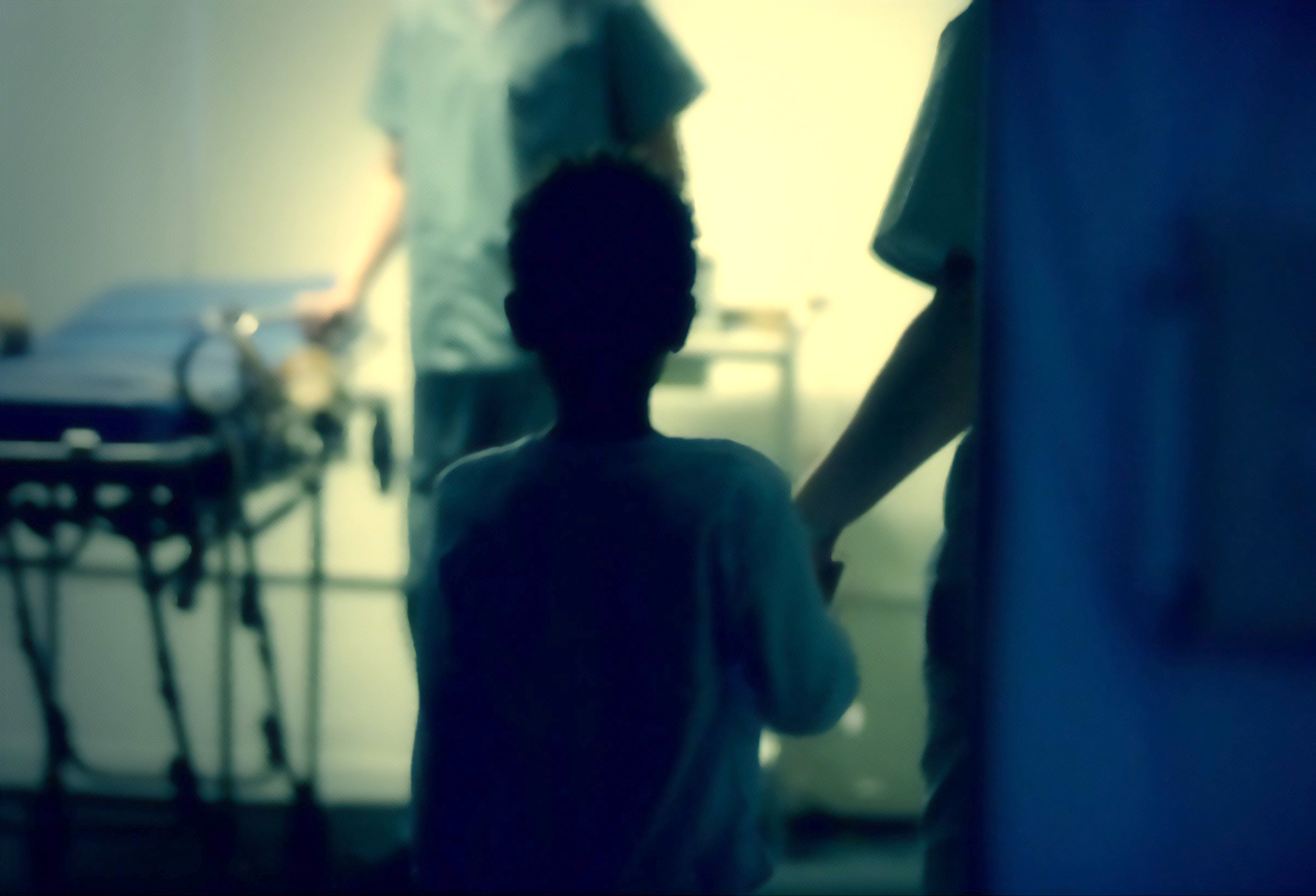
CCHR says giving electroshock to minors causes brain damage and violates global human rights standards, urging U.S. states to prohibit the practice under child abuse laws.
By Jan Eastgate
President, CCHR International
June 27, 2025
The American Academy of Child & Adolescent Psychiatry (AACAP) recently issued a policy statement urging broader access to electroconvulsive therapy (ECT) for children and adolescents—even those younger than 13—despite growing international condemnation of the practice on minors. Both the World Health Organization (WHO) and the United Nations Human Rights Office have called for an outright ban on ECT for children, explicitly stating: “ECT is not recommended for children, and this should be prohibited through legislation.”[1]
AACAP’s statement is medically reckless, legally dangerous, and morally indefensible. Federal and state lawmakers should move urgently to outlaw the electroshocking of children, classifying it as a form of child abuse.
ECT, also known as shock treatment, sends up to 460 volts of electricity through the brain to induce a grand mal seizure. This disruption of the brain’s electrical activity alters its structure and function, an especially serious risk to the developing brains of children. Yet AACAP not only calls for expanded use of ECT on minors but also opposes “any efforts—legal, legislative, and otherwise—to block access to ECT.”
Through Freedom of Information Act requests, CCHR established that children as young as five have been electroshocked in the U.S. The full scope remains hidden due to the lack of national transparency requirements on ECT usage.
Internationally, some countries have already banned ECT entirely (e.g., Slovenia and Luxembourg). In the U.S., several states have restricted it: California prohibits it under age 12, and Texas under age 16. In Western Australia, ECT on minors under 14 is illegal, with criminal penalties—including jail time—for violations. CCHR was instrumental in helping secure that law, along with state bans in the U.S.
Disturbingly, AACAP is not only advocating for expanded access but also for more research involving ECT on youth, potentially exposing children under age 13 to an unproven and highly invasive procedure.[2] Even the U.S. Food and Drug Administration (FDA), despite controversial decisions regarding ECT device classification, restricts its use to individuals aged 13 and older and for limited diagnoses.
Critically, AACAP’s position fails to disclose that brain damage is a known risk of ECT. The American Psychiatric Association concedes that “ECT can result in persistent or permanent memory loss.” The joint WHO/UN report adds: “People being offered ECT should also be made aware of all its risks and potential short- and long-term harmful effects, such as memory loss and brain damage.”[3]
In June 2024, the California Supreme Court ruled that ECT device manufacturer Somatics LLC must warn doctors of the risks of brain damage and permanent memory loss—facts the company did not dispute in earlier proceedings.[4] In a 2018 federal case, a U.S. District Court judge found there was sufficient evidence for a jury to conclude that Somatics’ ECT device could cause brain injury. Somatics settled out of court, then quietly updated its website to state that ECT may cause permanent brain damage.[5]
Neuropathologist Dr. Bennet Omalu—known for discovering chronic traumatic encephalopathy (brain diseases or damage) in football players—has publicly condemned ECT, stating: “The amounts of electrical energy introduced to the human brain by ECT machines can be nothing but harmful and dangerous…. The patient who receives ECT therapy will manifest permanent and cumulative brain injury, which can be progressive over time and result in chronic encephalopathies and brain degeneration.”[6]
Despite AACAP’s claim that ECT is “safe and effective,” the FDA has never required manufacturers to prove ECT’s safety or efficacy through clinical trials.[7] Internationally renowned researcher Prof. John Read reports that only 11 placebo-controlled trials of ECT have ever been conducted—all prior to 1985, and all deeply flawed. “None found any benefit beyond the end of treatment,” he stated. Further, he warns that children’s developing brains are “particularly susceptible to the memory loss caused by ECT.”[8]
Legal precedent exists for holding professionals and psychiatric facilities accountable for misleading parents about the safety and nature of treatment. In June 2024, an Arizona jury awarded $2.5 million in punitive damages and $50,000 in consequential damages to the family of a teen girl who suffered coercion and abuse at the troubled teen facility Spring Ridge Academy. The parents sued for fraud and negligent misrepresentation, successfully arguing that they were misled by marketing materials portraying the program as therapeutic and safe.[9]
This legal framework must apply to the psychiatric industry and its promotion of ECT to desperate parents. Misleading or failing to disclose the full risks of a procedure as invasive and potentially damaging as ECT—especially when used on a child—should be subject to the same scrutiny and liability as cases in the troubled teen treatment industry. Concealing known dangers such as brain damage and permanent memory loss amounts to medical deception and should constitute criminal conduct under child abuse statutes.
Electroshocking should not only be banned nationwide, but if administered to children, resulting in physical or psychological harm, it should be prosecuted under child abuse laws. These laws criminalize physical assaults or acts that result in harm to a child, often as felonies with multi-year prison terms. Legal systems presume that children lack the capacity to consent to life-altering interventions[10]—and parents misled into approving such procedures deserve the full protection of the law.
The electroshocking of children is without moral or scientific justification and should be indefensible under the law. As international bodies condemn it, and legal rulings establish precedent for holding programs accountable for misleading parents, the U.S. must act. CCHR urges lawmakers at all levels to ban ECT, especially on minors, and define it as a form of criminal child abuse, and protect vulnerable children from an outdated, dangerous, and degrading psychiatric assault.
We recommend parents watch its documentary, Therapy or Torture: The Truth About Electroshock, with expert opinions about how ECT damages minds.
[1] https://www.cchrint.org/2023/09/18/who-guideline-condemns-coercive-psychiatric-practices/; World Health Organization, OHCHR, “Guidance on Mental Health, Human Rights and Legislation,” pp. 58 & 59
[2] https://www.aacap.org/aacap/policy_statements/2025/ECT.aspx
[3] John Read, Ph.D., “Is It Time to Ban Electroconvulsive Therapy for Children? Research suggests that using electricity on developing brains is a bad idea,” Psychology Today, 17 Dec, 2023, https://www.psychologytoday.com/us/blog/psychiatry-through-the-looking-glass/202311/is-it-time-to-ban-electroconvulsive-therapy-for
[4] https://www.cchrint.org/2024/08/23/the-collapse-of-electroshock/ citing https://www.wisnerbaum.com/blog/2024/june/wisner-baum-prevails-in-landmark-win-for-patient/
[5] https://www.cchrint.org/2024/08/23/the-collapse-of-electroshock/; David Karen, “ECT Litigation Update: Are Patients Being Warned of Brain Damage Risk?” MAD, 13 June 2019, https://www.madinamerica.com/2019/06/ect-litigation-patients-not-warned-brain-damage-risk/; https://web.archive.org/web/20190712065142/http://www.thymatron.com/catalog_cautions.asp
[6] https://www.cchrint.org/2024/08/23/the-collapse-of-electroshock/; https://www.wisnerbaum.com/defective-medical-device-injuries/ect/
[7] https://www.cchrint.org/2023/06/23/consumers-unaware-that-brain-damaging-electroshock-devices-are-not-fda-approved/ citing “ECT – Electroconvulsive Therapy,” Wisner Baum, https://www.wisnerbaum.com/defective-medical-device-injuries/ect/; Sarah Mitroff, “FDA approved vs. FDA cleared: Why you need to know the Difference,” CNET, 5 Apr. 2020, https://www.cnet.com/health/fda-approved-vs-fda-cleared-whats-the-difference/
[8] John Read, Ph.D., “Is It Time to Ban Electroconvulsive Therapy for Children? Research suggests that using electricity on developing brains is a bad idea,” Psychology Today, 17 Dec, 2023, https://www.psychologytoday.com/us/blog/psychiatry-through-the-looking-glass/202311/is-it-time-to-ban-electroconvulsive-therapy-for
[9] Jenna Greene, “As ‘troubled teen’ industry scrutiny builds, litigation follows,” Reuters, 12 July 2024, https://www.reuters.com/legal/legalindustry/column-troubled-teen-industry-scrutiny-builds-litigation-follows-2024-07-12/; Hannah Dreyfus and Madeleine Parrish, “’They tried everything … to break me’: Boarding school students describe harsh treatment,” Arizona Republic, 19 July 2024, https://www.azcentral.com/story/news/local/arizona-education/2024/07/19/spring-ridge-academy-students-arizona-describe-harsh-treatment-after-lawsuit/74461275007/
[10] Mark Theoharis, J.D., “Child Abuse: Laws & Criminal Penalties,” Criminal Defense Lawyer, 29 Sep. 2022, https://www.criminaldefenselawyer.com/crime-penalties/federal/Child-Abuse.htm
SHARE YOUR STORY/COMMENT