Posts Tagged ‘psychiatry’

Daily Mail—Why it’s truly bonkers to believe in shrinks

Friday, May 24th, 2013

Mail Online
by Roger Lewis May 23, 2013

CRACKED: WHY PSYCHIATRY IS DOING MORE HARM THAN GOOD BY JAMES DAVIES

Who’s mad?: Jack Nicholson in One Flew Over The Cuckoo’s Nest

Psychiatrists – the shrinks, trick-cyclists, Viennese witch-doctors – have always been either figures of fun or feared.

If it wasn’t Freud getting you to talk dirty about your mother, or the men-in-white-coats in the Soviet Union locking people away for thinking the wrong thoughts, then it was Peter Sellers in a Richard III wig, more mad than any of his patients, in What’s New Pussycat? or Jack Nicholson being tortured in One Flew Over the Cuckoo’s Nest.

The traditional therapies on offer were barbaric – lobotomies, electro-convulsive seizures – and needless to say never did anyone any good. Nevertheless, psychiatry continues to be the great growth industry of our times – 450 million people worldwide ‘have a mental health problem’ – despite the fact that it has ‘the poorest curative success’.

The conclusion (and the argument of this essential book) is obvious: psychiatry is basically bogus – and damaging. There is no solid scientific justification for any of its activities – as the only ‘identifiable biological diseases’ involving an observable malfunction of the brain are epilepsy, Alzheimer’s, Huntington’s chorea, strokes and cerebral tumours.

The ‘chemical imbalance’ theories have been debunked, and as James Davies remarks, ‘no biological markers have been identified’ for the thousands of behavioural ‘disorders’ that now prevail.

Wonder drug: But placebos have been found to be just as effective

This hasn’t stopped the psychiatric experts from cooking up ailments, however. Their bible, the Diagnostic and Statistical Manual of Mental Disorders, gets thicker with each new edition. Despite there being ‘no scientific evidence’ for any of this, people are led to believe they have ‘a problem in their brain’ if they drink too much coffee (‘caffeine-related disorders’), stutter or swear (‘language disorders’), are shy or reserved (‘social phobias’), suffer period pains, are too fat or too thin, feel irritable, sexy, unsexy, sleepless, tired, or experience grief for more than two weeks after the death of a loved one. By these means, 26.2  per cent of all American adults suffer from a disorder of some sort, requiring that it be ‘pharmacologically treated’.

Though psychiatric research is by all accounts ‘a hodgepodge, scattered, inconsistent and ambiguous’, one thing has definitely emerged – that anti-depressants don’t work.

Extensive trials have shown that placebos induce as much of a degree of uplift as Prozac, Seroxet or any of the other wonder drugs, which simply make patients feel numb, glassy and emotionally disengaged.

As Davies says: ‘Numbing things isn’t curing things or even, in the long run, helping things.’ The drugs are essentially sedatives, and people are plunged into such a fog ‘they can no longer feel depressed or anything else’.

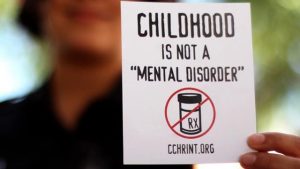
The biggest horror is the dosing of children with Ritalin, ‘which is as powerful as cocaine’. These days, any child who’s a bit naughty, inattentive, cheeky, quick or slow,  (i.e. any child who is childish) is diagnosed as suffering from Attention Deficit Hyperactivity Disorder (ADHD), or is autistic or has Asperger’s Syndrome. If paediatricians and psychiatrists are to be believed, autism has increased 20 times in 15 years, and as a consequence 5.29 per cent of the global child population is on tablets.

Few children actually warrant the diagnosis – as Davies says, there is now an ‘out-of-control medicalisation of normality’. So who are the ultimate villains of the piece? Answer: the pharmaceutical companies, which make over £12.5 billion each year from the sale of happy pills. Sane people are told they are insane because it is big business.

On the psychiatrist’s couch: But just how much scientific evidence is there behind it?

The drug companies pay eminent professors, university officials and teaching hospital chairmen millions ‘in personal income’ to concoct more and more abnormalities so that more and more pills can be dished out by GPs and specialists. 

They pocket consultancy fees to attend conferences, give marketing lectures and endorse useless tablets. They are bribed, in essence, not to openly criticise the pharmaceutical industry. Davies (courageously) names names.

What this adds up to is a scandal that is bigger and more widespread than thalidomide. If people are ‘not getting any clinically meaningful benefit’ from the pills, then it is because depression, for instance, is simply to be sad or disappointed, unlucky in love, bored or bereaved, full of remorse, jealousy and low morale.

It is not a condition or a deviation – it is normal. Feeling rotten and anxious, being up and down, or even despairing, are all part of the ordinary problems of living – of being human and not a robot or a zombie.

When Davies confronted Professor Sue Bailey, head of the Royal College of Psychiatrists, she was frighteningly honest and virtually chucked in the towel: ‘When you go into a profession where you want to help people, and you don’t have the tools to help them, the temptation is to medicalise them.’

Psychiatry is based upon and feeds the delusion that we have a fundamental in-built right to be continuously happy. Grasp this, stop fretting that you are not full of beans, start enjoying being grumpy, laugh at life, admit that everyone is ill-adjusted to something or other, and, well, you may very well soon end up being me. Twenty stone of sardonic Welsh idiot.

There – hasn’t the mental image of that made you feel better already?

« Return to news items


Share

Psychiatry’s hour of crisis: new diagnostic manual triggers infighting, boycotts, resignations

Monday, May 20th, 2013

Ottawa Citizen – May 17, 2013
By Sharon Kirkey, Postmedia News

200 years after psychiatry was recognized as a medical discipline, a stark question persists: Is psychiatry credible?

“Even at its best psychiatric diagnosis is fiction sold to the public as fact,” Gary Greenberg, author of The Book of Woe; The DSM and the Unmaking of Psychiatry

In the early 1970s, psychologist David Rosenhan set out to answer a simple question: Can psychiatrists tell the sane from the insane?

Rosenhan and seven other perfectly rational “pseudopatients” went to a dozen U.S. hospitals complaining that they were hearing voices. All but one were diagnosed with schizophrenia and sent to a psychiatric ward. Each had been warned by Rosenhan that, to get out, they would have to convince the psychiatric staff they weren’t insane. So, immediately after they were admitted, they stopped mimicking symptoms of “abnormality” and behaved as they normally would.

Still, they were kept in the hospital for periods ranging from seven to 52 days, each finally discharged with a diagnosis of schizophrenia, “in remission.”

The Rosenhan experiment sparked a crisis of confidence in psychiatric diagnosis, a crisis that appears to be playing out again today.

This time the catalyst is the newest and fifth edition of the official guidebook of psychiatry: the Diagnostic and Statistical Manual of Mental Disorders, or DSM-5. The encyclopedic tome has undergone its first major revision in nearly two decades and makes its official debut Saturday at the annual meeting of its publisher, the American Psychiatric Association.

The rewrite has been rocked by boycotts and the resignations of some of the very experts tapped to give advice, including the former head of the department of psychiatry at the University of British Columbia, John Livesley, who says he quit the DSM-5’s personality disorders work group over a “disregard for evidence.”

Thomas Insel, director of the U.S. Institute of Mental Health — essentially the country’s top psychiatrist — has announced that his agency is “re-orienting” its research away from the DSM over the book’s “lack of validity” while it pursues its own alternative diagnostic system, which Insel promises will be more firmly anchored in brain science.

The leaders of the DSM-5, such as Dr. David Kupfer, saying the book reflects the strongest means available today for cataloguing mental illness, and insisting that while genetic and other biological tests would be the ultimate holy grail of diagnosis, there’s no sign that such foolproof methods will be available anytime soon.

The public clash is making psychiatry look like “nonsense,” says Allen Frances, the man who led the task force that created the fourth edition of the DSM in 1994. “It’s bad for patients. This will discourage people who desperately need help from getting it.”

Frances has been the DSM-5’s most dogged and unapologetic critic. He says the book contains untested diagnoses on the “fuzzy boundary of normality” and that it recklessly lowers the thresholds for existing ones.

“I’m a strong believer in the value of psychiatric diagnosis and treatment when done well,” Frances says. “But it’s silly and harmful to be over-treating people who don’t need it, and tragic to be neglecting the needs of those who do.”

Psychotherapist Gary Greenberg is more blunt. “Even at its best … psychiatric diagnosis is fiction sold to the public as fact,” Greenberg writes in his new book, The Book of Woe: The DSM and the Unmasking of Psychiatry. “There is a huge disconnect between what psychiatry claims for itself, and what it can actually do.”

Canadian psychiatrist Joel Paris says that “no one really knows what a mental disorder is,” or how to clearly separate normal from abnormal. “It’s all very fuzzy.”

In other words, 200 years after psychiatry was recognized as a medical discipline, a stark question persists: Is psychiatry credible?

There is no doubt about the validity of psychological suffering. Mental illness, in its extreme, is undeniable. “With psychotic people, there’s very little argument,” says Paris, past chair of the psychiatry department at McGill University.

But our mental reactions to the smaller pieces of daily tragedy are more complex, Paris says. When does the sadness from a breakup become depression? When does normal human experience become somehow “sick”?

“You can diagnose almost anybody with the DSM, and unfortunately this is happening, with a lot of over-diagnosis going on clinically,” Paris says. “A lot of people are being given stimulants because they don’t pay attention, and mood stabilizers because they’re moody and antipsychotics for almost everything these days.”

In fact, there are no valid definitions for many of the conditions so neatly laid out in the DSM, Paris and others argue, and no laboratory test exists that can confirm a diagnosis in psychiatry. Despite growing research into the convolutions and folds of the human brain, the science is revealing more about normal brain functioning than any kind of “psychopathology,” or sickness, Frances says.

Still, psychiatry keeps creating new illness categories, new ways the brain and mind can become “disordered.”

Read the rest of the article here

« Return to news items


Share

The New Yorker: Does Psychiatry Need Science? (Answer—Yes, because they have none)

Thursday, April 25th, 2013

The New Yorker - April 23, 2013

by Gary Greenberg

Watch Video: Dr. Niall McLaren, practicing psychiatrist,
22 years

In 1886, Pliny Earle, then the superintendent of the state hospital for the insane in Northampton, Massachusetts, complained to his fellow psychiatrists that “in the present state of our knowledge, no classification of insanity can be erected upon a pathological basis.” Doctors in other specialties were using microscopes and chemical assays to discern the material causes of illness and to classify diseases accordingly. But psychiatrists, confronted with the impenetrable complexities of the brain, were “forced to fall back upon the symptomatology of the disease—the apparent mental condition, as judged from the outward manifestations.”

The rest of medicine may have been galloping into modernity on the back of science, but Earle and his colleagues were being left in the dust.

Thirty years later, they had not caught up.

In 1917, Thomas Salmon, another leading psychiatrist, echoed Earle’s worry in an address to his colleagues, drawing their attention to the way that their reliance on appearances had resulted in a “chaotic” diagnostic system, which, he said, “discredits the science of psychiatry and reflects unfavorably upon our association.” Psychiatry, Salmon continued, needed a nosology that would “meet the scientific demands of the day” if it was to command public trust.

In the century that has passed since Salmon’s lament, doctors in most medical specialties have only gotten better at sorting our suffering according to its biochemical causes. They have learned how to turn symptom into clues, and, like Sherlock Holmes stalking a criminal, to follow the evidence to the culprit. With a blood test or tissue culture, they can determine whether a skin rash is poison ivy or syphilis, or whether a cough is a symptom of a cold or of lung cancer. Sure-footed diagnosis is what we have come to expect from our physicians. It gives us some comfort, and the confidence to submit to their treatments.

But psychiatrists still cannot meet this demand. A detailed understanding of the brain, with its hundred billion neurons and trillions of synapses, remains elusive, leaving psychiatry dependent on outward manifestations for its taxonomy of mental illnesses.

Quote from “DSM: Diagnosing for Money and Power” by Ofer Zur, Ph.D., and Nola Nordmarken, MFT

Indeed, it has been doubling down on appearances since 1980, which is when the American Psychiatric Association created a Diagnostic and Statistical Manual of Mental Disorders (D.S.M.) that intentionally did not strive to go beyond the symptom. In place of biochemistry, the D.S.M. offers expert consensus about which clusters of symptoms constitute particular mental illnesses, and about which mental illnesses are real, or at least real enough to warrant a name and a place in the medical lexicon. But this approach hasn’t really worked to establish the profession’s credibility.

In the four revisions of the D.S.M. since 1980, diagnoses have appeared and disappeared, and symptom lists have been tweaked and rejiggered with troubling regularity, generally after debate that seems more suited to the floors of Congress than the halls of science. The inevitable and public chaos—diagnostic epidemics, prescription-drug fads, patients labelled and relabelled—has only deepened psychiatry’s inferiority complex.

But it’s not entirely clear that psychiatrists want a solution to the problem, at least not to judge from what happened when the experts conducting the most recent revision of the manual, the D.S.M.-5, were offered one… Read the rest of the article here

« Return to news items


Share

American Free Press — Psychiatric Profession Has Lost Its Mind

Thursday, April 18th, 2013

American Free Press – April 18 2013

Nearly every expression of normal emotion can now be classified as a syndrome in need of medication

By Pete Papaherakles

The entire industry of psychiatry has become such a laughing stock that even many supporters of the industry are turning their backs in disgust.

In May 2013, the American Psychiatric Association (APA) is scheduled to release its fifth Diagnostic Manual of Mental Disorders (DSM-5) superseding the DSM-IV published in 1994 and revised in 2000. The new “psychiatry bible” has been criticized by many as a testament to the insanity of the industry itself. Virtually every emotion experienced by a human being—sadness, grief, anxiety, frustration, impatience, excitement—is now being classified as a “mental disorder” demanding chemical treatment with—you guessed it—pharmaceutical drugs.

Ironically, one of its harshest critics is Allen Frances M.D., professor emeritus from the Department of Psychiatry at Duke University who was chair of the DSM-IV Task Force.

“DSM-5 opens up the possibility that millions and millions of people currently considered normal will be diagnosed as having a mental disorder and will receive medication and stigma that they don’t need,” said Frances. “This is the saddest moment in my 45-year career of studying, practicing, and teaching psychiatry. [The] approval makes it likely that DSM-5 will start a . . . dozen or more new fads which will be detrimental to the misdiagnosed individuals and costly to our society.”

The DSM is now larger than ever, and it includes Orwellian disorders such as “obedience defiance disorder” (ODD), defined as refusing to follow authority. Rapists who feel sexual arousal during their raping activities are given the excuse that they have “paraphilic coercive disorder” (PCD) and therefore are not responsible for their actions. You can also get diagnosed with “hoarding disorder” if you happen to stockpile food, water and ammunition, among other things. Being prepared for possible natural disasters now makes you a mental patient in the eyes of modern psychiatry.

The entire industry of psychiatry has become such a laughing stock that even many supporters of the industry are turning their backs in disgust. To many scientists today, psychiatry is no more “scientific” than astrology or palm reading, yet its practitioners call themselves “doctors” of psychiatry in order to sound credible.

The authenticity of already established “disorders” such as attention deficit hyper-active disorder (ADHD) and social anxiety disorder (SAD) have been called into question.

Frances admits that even the 1994 DSM-IV was a huge mistake that has resulted in the mass over-diagnosis of people who are actually normal.

The major victor in this is the pharmaceutical industry, which is having a field day with sales of billions of dollars of psychotropic drugs such as Prozac, Ritalin, Zoloft, Paxil and others.

Since the introduction of Prozac in 1987 there has been an explosion in the number of people using psychiatric drugs. One in five Americans, or 65M people, is now taking at least one psychiatric drug such as anti-depressants, anti-psychotics and anti-anxiety medications, according to an analysis of pharmacy claims data released on November 2011. In 2010, Americans spent $16.1B on anti-psychotics to treat depression, bipolar disorder and schizophrenia, $11.6B on anti-depressants and $7.2B on treatment for ADHD, according to IMS Health, which tracks prescription drug sales. The report showed that, between 2010 and 2011, the use of psychiatric drugs had increased a staggering 21%.

The adverse effects from these drugs are devastating. Over 200K people a year in the United States enter a hospital with anti-depressant-associated mania or psychosis. There have been 66 school shootings and over 1,300 murders and suicides by psych-drug users since 2000. The Columbine, Virginia Tech, Red Lake Reservation and Northern Illinois University shootings were all committed by individuals on psych drugs, as were many other mass shootings. At least 5K other news stories, including school shootings, link psychiatric drugs to violent crime, according to the website “SSRI Stories,” which tracks these cases.

« Return to news items


Share

NaturalNews—Five lies psychiatry tells for power and profit

Monday, April 15th, 2013

Natural News -  April 15, 2013 by Mike Bundrant

The field of psychiatry has succeeded in branding some whoppers into the minds of millions, to the tune of billions, with no accountability.

You’d think the Federal Trade Commission would hold psychiatry accountable for blatantly misleading the public, but there is zero accountability.

You’d think people would take a second to think before putting their mental health into the hands of a psychiatrist – someone who has zero training in mental health.

You’d think people would ask for evidence that their poor moods are caused by these mysterious chemical imbalances, but there is zero logic.

Here are the five lies psychiatry tells for power and profit

1. Poor moods are caused by chemical imbalances

These chemical imbalances are profitable for doctors who tell you they have the antidote, the pill that will put your brain back in balance. The problem is, there is no such thing as a chemical imbalance that creates a poor mood. At least there is not one shred of evidence to back this idea.

Put it this way: You lose your job. You feel discouraged. Is the discouragement caused by a chemical imbalance or by your response to this unfortunate event and the perception of an uncertain future? Is the remedy a pill or a new job?

You get into a car wreck. You feel anxious while driving after that. Is the anxiety caused by a chemical imbalance? Is the remedy a pill, or to learn to reconcile the trauma that rests in your mind?

Where is the evidence that chemical imbalances cause poor moods?

2. Psychiatrists are trained in mental health

Mental health is a vast field, filled with models of human relations and subjective experience. In mental health, we create models of thinking and relating in order to improve the prospect of happiness.

Psychiatry is based on the medical model. The assumption is NOT that people need to learn skills, but take pills. There is no mental health in this. Psychiatrists have ZERO training in mental health.

3. Normal feelings are disorders

Psychiatry is succeeding on a large scale in convincing people that there normal human feelings are wrong – disorders. When you feel down, especially for more than two weeks, you must have major depressive disorder. If you child is super active and creative, he must be ADHD.

In fact, I challenge you to find any normal human emotional challenge that is not labeled as a disorder in the Diagnostic and Statistical Manual, the psychiatric bible.

4. Pills are the solution

If you listen to average people talk these days, you’ll hear it. When poor moods or misbehaved children are discussed, doctors and pills are discussed.

“I’ve been feeling down lately. I wonder if I have some sort of chemical imbalance. I should see if my doctor can give me something for it.”

5. Doctors are the ‘go to’ people for emotional angst

Family doctors and psychiatrists are branding themselves as the “go to” people for mental health concerns. A shocking number of non-psychiatric family doctors prescribe for mental health concerns – 59% of anti-depressants prescribed in the US are prescribed by family doctors, 75% with no formal diagnosis.

Want a pill? Here’s a pill. Make your co-pay on the way out. This is how we treat mental illness today.

Where psychiatry lacks in honesty, it makes up for in marketing. You’ve got to give that to them. They are succeeding in convincing the world that psychiatry is the solution to mental anguish.

I wonder what a psychiatric society would look like? If psychiatry ultimately gets what it wants – total domination over emotional life – what would that look like?

« Return to news items


Share

Normal behaviour, or mental illness?

Tuesday, March 19th, 2013

Macleans – March 19, 2013
by Anne Kingston

A look at the new psychiatric guidelines that are pitting doctors against doctors

Jonathan Kirn/Getty Images

Every parent of a preteen has been there: on the receiving end of sullen responses, bursts of frustration or anger, even public tantrums that summon the fear that Children’s Aid is on its way. Come late May, with the publication of the fifth edition of the Diagnostic and Statistical Manual of Mental Disorders (DSM-5), however, such sustained cranky behaviour could put your child at risk of a diagnosis of “disruptive mood dysregulation disorder.” This newly minted condition will afflict children between 6 and 12 who exhibit persistent irritability and “frequent” outbursts, defined as three or more times a week for more than a year. Its original name, “temper dysregulation disorder with dysphoria,” was nixed after it garnered criticism it pathologized “temper tantrums,” a normal childhood occurrence. Others argue that even with the name change the new definition and diagnosis could do just that.

“Disruptive mood dysregulation disorder” isn’t the only new condition under scrutiny in the reference manual owned and produced by the American Psychiatric Association (APA)—and lauded as psychiatry’s bible. Even though the final version of DSM-5 remains under embargo, its message is being decried in some quarters as blasphemous. Its various public drafts, the third published last year, have stoked international outrage—and a flurry of op-ed columns, studies, blogs and petitions. In October 2011, for instance, the Society for Humanistic Psychology drafted an open letter to the DSM task force that morphed into an online petition signed by more than 14,000 mental health professionals and 50 organizations, including the American Counseling Association and the British Psychology Society.

Of fundamental concern is a loosening and broadening of categories to the point that everyone potentially stands on the brink of some mental-disorder diagnosis, or sits on some spectrum—a phenomenon the American psychologist Frank Farley has called “the sickening of society.” One change summoning criticism is DSM-5’s reframing of grief, that inescapable fact of life, by removing the “bereavement exclusion” for people who’ve experienced loss. Previously, anyone despairing the death of a loved one wasn’t considered a candidate for “major depression” unless their despondency persisted for more than two months or was accompanied by severe functional impairment, thoughts of suicide or psychotic symptoms. No longer.

Other updates to DSM-5, the first full revision in nearly two decades, have raised red flags. Forgetting where you put your keys or other memory lapses, a fact of aging formerly shrugged off as “a senior moment,” could portend “minor neurocognitive disorder,” a shift destined to also stoke anxiety. Anyone who overeats once a week for three weeks could have a “binge-eating disorder.” Women not turned on sexually by their partners or particularly interested in sex are candidates for “female sexual interest/arousal disorder.” Nail-biters join the ranks of the obsessive-compulsive, alongside those with other “pathological grooming habits” such as “hair-pulling” and “skin-picking.”

The fuzzy boundary between “generalized anxiety disorder” (GAD) and everyday worries has also been blurred. As Allan V. Horowitz, a sociology professor at Rutgers University, points out, changes in this category are potentially the most important because they affect the largest number of people. Under the new “somatic symptom disorder” (SSD), for instance, people who express any anxiety about physical symptoms could also be saddled with a mental illness diagnosis, which could thwart their attempts to have their physical issues taken seriously. To meet the definition one only needs to report a single bodily symptom that’s distressing and/or disruptive to daily life and have just one of the following three reactions for at least six months: “ ‘disproportionate’ thoughts about the seriousness of their symptom(s); a high level of anxiety about their health; devoting excessive time and energy to symptoms or health concerns.”

DSM-5 represents a step back in mental health care, says psychologist Peter Kinderman, head of the Institute of Psychology, Health and Society at the University of Liverpool. Kinderman, who is organizing an international letter of objection to DSM-5 to be posted on dsm5response.org, which launches March 20, believes many new DSM classifications, among them “female orgasmic disorder,” defy common sense. “If you’re not enjoying sex, it’s a problem, but it’s crazy to say it’s a mental illness,” he says. He also questions the new criteria for alcohol and drug “substance-use disorders.” “According to it, 40 to 50 per cent of college students should be considered mentally ill.” Such diagnoses interfere with the human helping response, says Kinderman. “When women get raped, it’s traumatic; when soldiers go to war, they come back emotionally affected. We don’t need the new label, ‘post-traumatic stress disorder,’ ” he says.

Read the rest of the article here

« Return to news items


Share

World Net Daily News: The Giant, Gaping hole in Sandy Hook Reporting—what psychiatric medications shooter may have been taking

Monday, January 7th, 2013

World Net Daily News
By David Kupelian, an award-winning journalist, managing editor of WND, editor of Whistleblower magazine

“But where, I’d like to ask my colleagues in the media, is the reporting about the psychiatric medications the perpetrator – who had been under treatment for mental-health problems – may have been taking?”

Since last month’s horrifying and heartbreaking school massacre in Newtown, Conn., politicians and the press have, as everyone knows, been totally obsessed with firearms.

Indeed, President Obama has vowed to impose strong new gun-control measures on the nation – very soon, with or without Congress.

Other possible factors – from violent video games to the “failure of our mental-health system” to the unintended consequences of making schools “gun-free zones” – have taken a back seat to guns. Within hours of the gruesome mega-crime, the media had provided extensive, round-the-clock coverage of precisely which firearms, manufacturers and calibers the perpetrator had used, how he had obtained them from his mother, where they were originally purchased, and so on.

But where, I’d like to ask my colleagues in the media, is the reporting about the psychiatric medications the perpetrator – who had been under treatment for mental-health problems – may have been taking? After all, Mark and Louise Tambascio, family friends of the shooter and his mother, were interviewed on CBS’ “60 Minutes,” during which Louise Tambascio told correspondent Scott Pelley: “I know he was on medication and everything, but she homeschooled him at home cause he couldn’t deal with the school classes sometimes, so she just homeschooled Adam at home. And that was her life.” And here, Tambascio tells ABC News, “I knew he was on medication, but that’s all I know.”

It has been more than three weeks since the shooting. We know all about the guns he used, but what “medication” may he have used? (One brief mini-hoax emerged when the New York Daily News published a story claiming the shooter, according to his uncle, had been on the controversial antipsychotic drug Fanapt. That story was quickly withdrawn after the “uncle” turned out to be a fraudster with no relation to the murderer.)

So, what is the truth? Where is the journalistic curiosity? Where is the follow-up? Where is the police report, the medical examiner’s report, the interviews with his doctor and others?

Get autographed copies of both of David Kupelian’s classics: “The Marketing of Evil” and “How Evil Works.”

But let me back up. Perhaps you’re wondering why this issue of psychiatric medications should be so important.

As I documented in “How Evil Works,” it is simply indisputable that most perpetrators of school shootings and similar mass murders in our modern era were either on – or just recently coming off of – psychiatric medications:

  • Columbine mass-killer Eric Harris was taking Luvox – like Prozac, Paxil, Zoloft, Effexor and many others, a modern and widely prescribed type of antidepressant drug called selective serotonin reuptake inhibitors, or SSRIs. Harris and fellow student Dylan Klebold went on a hellish school shooting rampage in 1999 during which they killed 12 students and a teacher and wounded 24 others before turning their guns on themselves.Luvox manufacturer Solvay Pharmaceuticals concedes that during short-term controlled clinical trials, 4 percent of children and youth taking Luvox – that’s 1 in 25 – developed mania, a dangerous and violence-prone mental derangement characterized by extreme excitement and delusion.
  • Patrick Purdy went on a schoolyard shooting rampage in Stockton, Calif., in 1989, which became the catalyst for the original legislative frenzy to ban “semiautomatic assault weapons” in California and the nation. The 25-year-old Purdy, who murdered five children and wounded 30, had been on Amitriptyline, an antidepressant, as well as the antipsychotic drug Thorazine.
  • Kip Kinkel, 15, murdered his parents in 1998 and the next day went to his school, Thurston High in Springfield, Ore., and opened fire on his classmates, killing two and wounding 22 others. He had been prescribed both Prozac and Ritalin.
  • In 1988, 31-year-old Laurie Dann went on a shooting rampage in a second-grade classroom in Winnetka, Ill., killing one child and wounding six. She had been taking the antidepressant Anafranil as well as Lithium, long used to treat mania.
  • In Paducah, Ky., in late 1997, 14-year-old Michael Carneal, son of a prominent attorney, traveled to Heath High School and started shooting students in a prayer meeting taking place in the school’s lobby, killing three and leaving another paralyzed. Carneal reportedly was on Ritalin.
  • In 2005, 16-year-old Native American Jeff Weise, living on Minnesota’s Red Lake Indian Reservation, shot and killed nine people and wounded five others before killing himself. Weise had been taking Prozac.
  • In another famous case, 47-year-old Joseph T. Wesbecker, just a month after he began taking Prozac in 1989, shot 20 workers at Standard Gravure Corp. in Louisville, Ky., killing nine. Prozac-maker Eli Lilly later settled a lawsuit brought by survivors.
  • Kurt Danysh, 18, shot his own father to death in 1996, a little more than two weeks after starting on Prozac. Danysh’s description of own his mental-emotional state at the time of the murder is chilling: “I didn’t realize I did it until after it was done,” Danysh said. “This might sound weird, but it felt like I had no control of what I was doing, like I was left there just holding a gun.”
  • John Hinckley, age 25, took four Valium two hours before shooting and almost killing President Ronald Reagan in 1981. In the assassination attempt, Hinckley also wounded press secretary James Brady, Secret Service agent Timothy McCarthy and policeman Thomas Delahanty.
  • Andrea Yates, in one of the most heartrending crimes in modern history, drowned all five of her children – aged 7 years down to 6 months – in a bathtub. Insisting inner voices commanded her to kill her children, she had become increasingly psychotic over the course of several years. At her 2006 murder re-trial (after a 2002 guilty verdict was overturned on appeal), Yates’ longtime friend Debbie Holmes testified: “She asked me if I thought Satan could read her mind and if I believed in demon possession.” And Dr. George Ringholz, after evaluating Yates for two days, recounted an experience she had after the birth of her first child: “What she described was feeling a presence … Satan … telling her to take a knife and stab her son Noah,” Ringholz said, adding that Yates’ delusion at the time of the bathtub murders was not only that she had to kill her children to save them, but that Satan had entered her and that she had to be executed in order to kill Satan.Yates had been taking the antidepressant Effexor. In November 2005, more than four years after Yates drowned her children, Effexor manufacturer Wyeth Pharmaceuticals quietly added “homicidal ideation” to the drug’s list of “rare adverse events.” The Medical Accountability Network, a private nonprofit focused on medical ethics issues, publicly criticized Wyeth, saying Effexor’s “homicidal ideation” risk wasn’t well-publicized and that Wyeth failed to send letters to doctors or issue warning labels announcing the change.And what exactly does “rare” mean in the phrase “rare adverse events”? The FDA defines it as occurring in less than one in 1,000 people. But since that same year 19.2 million prescriptions for Effexor were filled in the U.S., statistically that means thousands of Americans might experience “homicidal ideation” – murderous thoughts – as a result of taking just this one brand of antidepressant drug.Effexor is Wyeth’s best-selling drug, by the way, which in one recent year brought in over $3 billion in sales, accounting for almost a fifth of the company’s annual revenues.
  • One more case is instructive, that of 12-year-old Christopher Pittman, who struggled in court to explain why he murdered his grandparents, who had provided the only love and stability he’d ever known in his turbulent life. “When I was lying in my bed that night,” he testified, “I couldn’t sleep because my voice in my head kept echoing through my mind telling me to kill them.” Christopher had been angry with his grandfather, who had disciplined him earlier that day for hurting another student during a fight on the school bus. So later that night, he shot both of his grandparents in the head with a .410 shotgun as they slept and then burned down their South Carolina home, where he had lived with them.”I got up, got the gun, and I went upstairs and I pulled the trigger,” he recalled. “Through the whole thing, it was like watching your favorite TV show. You know what is going to happen, but you can’t do anything to stop it.”Pittman’s lawyers would later argue that the boy had been a victim of “involuntary intoxication,” since his doctors had him taking the antidepressants Paxil and Zoloft just prior to the murders.Paxil’s known “adverse drug reactions” – according to the drug’s FDA-approved label – include “mania,” “insomnia,” “anxiety,” “agitation,” “confusion,” “amnesia,” “depression,” “paranoid reaction,” “psychosis,” “hostility,” “delirium,” “hallucinations,” “abnormal thinking,” “depersonalization” and “lack of emotion,” among others.The preceding examples are only a few of the best-known offenders who had been taking prescribed psychiatric drugs before committing their violent crimes – there are many others.Whether we like to admit it or not, it is undeniable that when certain people living on the edge of sanity take psychiatric medications, those drugs can – and occasionally do – push them over the edge into violent madness. Remember, every single SSRI antidepressant sold in the United States of America today, no matter what brand or manufacturer, bears a “black box” FDA warning label – the government’s most serious drug warning – of “increased risks of suicidal thinking and behavior, known as suicidality, in young adults ages 18 to 24.” Common sense tells us that where there are suicidal thoughts – especially in a very, very angry person – homicidal thoughts may not be far behind. Indeed, the mass shooters we are describing often take their own lives when the police show up, having planned their suicide ahead of time.

So, what ‘medication’ was Lanza on?

The Sandy Hook school massacre, we are constantly reminded, was the “second-worst school shooting in U.S. history.” Let’s briefly revisit the worst, Virginia Tech, because it provides an important lesson for us. One would think, in light of the stunning correlation between psych meds and mass murders, that it would be considered critical to establish definitively whether the Virginia Tech murderer of 32 people, student Cho Seung-Hui, had been taking psychiatric drugs.

Yet, more than five years later, the answer to that question remains a mystery.

Even though initially the New York Times reported, “officials said prescription medications related to the treatment of psychological problems had been found among Mr. Cho’s effects,” and the killer’s roommate, Joseph Aust, had told the Richmond Times-Dispatch that Cho’s routine each morning had included taking prescription drugs, the state’s toxicology report released two months later said “no prescription drugs or toxic substances were found in Cho Seung-Hui.”

Perhaps so, but one of the most notoriously unstable and unpredictable times for users of SSRI antidepressants is the period shortly after they’ve stopped taking them, during which time the substance may not be detectable in the body.

What kind of meds might Cho have been taking – or recently have stopped taking? Curiously, despite an exhaustive investigation by the Commonwealth of Virginia which disclosed that Cho had taken Paxil for a year in 1999, specifics on what meds he was taking prior to the Virginia Tech massacre have remained elusive. The final 20,000-word report manages to omit any conclusive information about the all-important issue of Cho’s medications during the period of the mass shooting.

To add to the drama, it wasn’t until two years after the state’s in-depth report was issued that, as disclosed in an Aug. 19, 2009, ABC News report, some of Cho’s long-missing mental health records were located:

The records released today were discovered to be missing during a Virginia panel’s August 2007 investigation four-and-a-half months after the massacre.

The notes were recovered last month from the home of Dr. Robert Miller, the former director of the counseling center, who says he inadvertently packed Cho’s file into boxes of personal belongings when he left the center in February 2006. Until the July 2009 discovery of the documents, Miller said he had no idea he had the records.

Miller has since been let go from the university.

Although Cho’s newly discovered mental-health files reportedly revealed nothing further about his medications, the issues raised by the initial accounts – including the “officials” cited by the New York Times and the Richmond paper’s eyewitness account of daily meds-taking – remain unaddressed to this day.

Some critics suggest these official omissions are motivated by a desire to protect the drug companies from ruinous product liability claims. Indeed, pharmaceutical manufacturers are nervous about lawsuits over the “rare adverse effects” of their mood-altering medications. To avoid costly settlements and public relations catastrophes – such as when GlaxoSmithKline was ordered to pay $6.4 million to the family of 60-year-old Donald Schnell who murdered his wife, daughter and granddaughter in a fit of rage shortly after starting on Paxil – drug companies’ legal teams have quietly and skillfully settled hundreds of cases out-of-court, shelling out hundreds of millions of dollars to plaintiffs. Pharmaceutical giant Eli Lilly fought scores of legal claims against Prozac in this way, settling for cash before the complaint could go to court while stipulating that the settlement remain secret – and then claiming it had never lost a Prozac lawsuit.

All of which is, once again, to respectfully but urgently ask the question: When on earth are we going to find out if the perpetrator of the Sandy Hook school massacre, like so many other mass shooters, had been taking psychiatric drugs?

In the end, it may well turn out that knowing what kinds of guns he used isn’t nearly as important as what kind of drugs he used.

That is, assuming we ever find out.

Read more at http://www.wnd.com/2013/01/the-giant-gaping-hole-in-sandy-hook-reporting/#Sx8Ax0KP67vs9sjM.99

« Return to news items


Share

Don’t let your child see a psychiatrist. Ever

Friday, December 14th, 2012

NaturalNews.com—Dec 14, 2012

by John Rappaport

If you have a child, don’t let him/her see a psychiatrist. Ever.

Read Mike Adams new article about psychiatry.  It’s one of the best I’ve ever read, and I’ve been researching this pseudoscience for 20 years.

Then read this one, too. It’s also excellent. I wrote it.

Yes, I know, I’m bragging, which is a sign of a mental disorder: Self-Inflation at the Expense of Sacred Psychiatry Disorder. The preferred treatment is electroshock therapy and MKULTRA re-programming. I’m opting for a walk in the park coupled with two doses of outrage at these fake doctors who poison brains and believe they’re healers.

Here is a clue. The government gives psychiatry its fake legitimacy. That’s how the game works. The government blesses the medical licensing boards that award psychiatrists permission to drug your children, alter their brains, poison them, and of course make all the fake diagnoses in the first place.

Without the government, these fakes would sink into the waves and be gone forever. Nobody in his right mind or wrong mind would ever step into a psychiatrist’s office. It would be like volunteering to stumble out on to a mine field seeded with explosives.

Media, naturally, go along with the psychiatric hoax. Thousands of articles keep coming out of the hopper to support the authoritative pronouncements of these deranged monsters with medical degrees and “training” in diagnosing mental illnesses.

There are no mental illnesses or disorders. There never have been.

There are people with problems, there are people who suffer, there are people who are in desperate circumstances, there are people who have severe nutritional deficiencies, there are people who have been poisoned by various chemicals, there are people who have been abused and ignored, there are people who have been told there is something wrong with them, there are people who are different and can’t deal with the conforming androids in their midst, but there are no mental disorders.

None.

It’s fiction. It’s a billion-dollar fiction. It’s a gigantic steaming pile of bullshit. Always has been.

There is not a single diagnostic test for any so-called mental disorder. Never has been. No blood test, no urine test, no saliva test, no brain scan, no genetic test. No science.

So why hasn’t psychiatry been destroyed and outlawed? Because there is money in it. Big money. Pharmaceutical money. And because the public is in a trance. Mothers and fathers are quite willing to take their children to these brain poisoners…lambs to the slaughter.

The silence of the lambs.

People are entranced by so-called professionals with fancy degrees who speak technical babble. It all seems real. Because if it weren’t real, then…what? People would be forced to admit they are living in a fantasy. And people don’t want to admit that. They would rather die than admit that.

But that’s what psychiatry is. An elaborate fantasy. If every psychiatrist in the world vanished tomorrow, the world would immediately become a far healthier place.

If every celebrity who outrageously whores for psychiatry would stop on a dime, the world would be a far healthier place right away.

You think Dr. Phil is a fake? He’s nothing compared to psychiatrists with their prescription pads. He’s a saint by comparison. The drugs are brain poisons. If you really want to know the truth about the drugs, go to breggin.com and read everything Dr. Peter Breggin has ever written about the drugs. He covers the whole slimy waterfront.

There is some horrendous handwriting on wall. Believe me. You can see it all around you if you look. The shrinks are treating younger and younger children with the brain poisons, every day. They’re diagnosing children who are practically toddlers and they’re drugging them. They’re ripping their brains. It’s happening. You may not want to know about it, but it’s there. It’s a crime on the order of murder.

And the bastards at the FDA and the bastards who train doctors in medical schools are going along with it. They’re accomplices to the ongoing crime. They have blood on their hands.

Here is a story Dr. Breggin told in his classic book, Toxic Psychiatry. It says it all:

“Roberta was a college student, getting good grades, mostly A’s, when she first became depressed and sought psychiatric help at the recommendation of her university health service. She was eighteen at the time, bright and well motivated, and a very good candidate for psychotherapy. She was going through a sophomore-year identity crisis about dating men, succeeding in school, and planning a future. She could have thrived with a sensitive therapist who had an awareness of women’s issues.

“Instead of moral support and insight, her doctor gave her Haldol. Over the next four years, six different physicians watched her deteriorate neurologically without warning her or her family about tardive dyskinesia [motor brain damage] and without making the [tardive dyskinesia] diagnosis, even when she was overtly twitching in her arms and legs. Instead they switched her from one neuroleptic to another, including Navane, Stelazine, and Thorazine. Eventually a rehabilitation therapist became concerned enough to send her to a general physician, who made the diagnosis [of medical drug damage]. By then she was permanently physically disabled, with a loss of 30 percent of her IQ.

“…my medical evaluation described her condition: Roberta is a grossly disfigured and severely disabled human being who can no longer control her body. She suffers from extreme writhing movements and spasms involving the face, head, neck, shoulders, limbs, extremities, torso, and back-nearly the entire body. She had difficulty standing, sitting, or lying down, and the difficulties worsen as she attempts to carry out voluntary actions. At one point she could not prevent her head from banging against nearby furniture. She could hold a cup to her lip only with great difficulty. Even her respiratory movements are seriously afflicted so that her speech comes out in grunts and gasps amid spasms of her respiratory muscles…Roberta may improve somewhat after several months off the neuroleptic drugs, but she will never again have anything remotely resembling a normal life.”

If the smug scum who run the NY Times put THAT story on the front page right under a huge headline, we might see something good happen in this country.

Chronic whiners want to claim the government has to protect everybody all the time, as if that were possible, as if that were really the government’s aim. These whiners are busy-bodies, meddlers, and self-made victims. They sometimes pose as scientists. They love psychiatry. They equate psychiatry with government. You know, “share and care.”

They assert that government knows best. At bottom, they’re vicious little idiots.

But they’re very useful idiots, because the government welcomes their help in keeping the populace in line.

And psychiatry is a cardinal strategy in that regard.

Chemical straitjackets for the lambs.

The silence of the lambs.

Jon Rappoport
The author of an explosive collection, The Matrix Revealed,  Jon was a candidate for a US Congressional seat in the 29th District of California. Nominated for a Pulitzer Prize, he has worked as an investigative reporter for 30 years, writing articles on politics, medicine, and health for CBS Healthwatch, LA Weekly, Spin Magazine, Stern, and other newspapers and magazines in the US and Europe.  Jon has delivered lectures and seminars on global politics, health, logic, and creative power to audiences around the world. You can sign up for his free emails at www.nomorefakenews.com


« Return to news items


Share

The DSM—New psychiatry manual adds to the oversupply of invented victims

Wednesday, December 12th, 2012

“What the gradual embrace of all human suffering into the DSM does is to create co-dependency and undermine individual resourcefulness, not to mention the arrogant appropriation of the role family and friends should play in each other’s lives in difficult times”

The National Post – Dec 10, 2012
by Barbara Kay

In 1952, the Diagnostic and Statistical Manual of Mental Disorders– the DSM – psychiatrist’s bible for diagnosis of mental problems, was a 132-page booklet. Today, in its fourth incarnation, it is a 886-page doorstop. Controversy is now swirling over the fifth instalment, slated for publication in May 2013.

It seems that every DSM upgrade contains more and more “disorders” that are open to question for their vagueness and open-endedness. In the upcoming edition, for example, the threshold for “generalized anxiety disorder” (GAD) is expected to broaden out to become the most commonly diagnosed mental problem. Originally the disorder was meant to identify anxiety for which there was no apparent source. The new definition would home in on domestic, financial or school problems for which anxiety is perfectly normal and justified.

Such a move would have manifold ramifications for employers, insurance companies, the pharmaceutical industry, the educational system and our already overburdened healthcare matrix.

According to the U.S. chairman of the task force for the DSM currently in use, the coming manual is bound to further obscure the “already fuzzy boundaries” between GAD and the normal life concerns of average people. Canadian medical historian Edward Shorter also expressed unease with the DSM tendency to therapeutize life, describing the DSM process as a kind of “horse-trading” amongst professionals (“I’ll give you your diagnosis if you’ll give me mine”). Shorter concludes: “The current DSM series is, in my view, a scientific disaster and should be discarded.”

Psychiatrists – like jurists and other revered high priests of our culture – are human beings like the rest of us. They are not mere conduits of law and science. They are, like us, a hodge podge of beliefs, ideals, prejudices, personal vanity and susceptibility to their era’s zeitgeist.

Psychiatry is also an industry like any other, creating stakeholders and turf defenders. For an in-depth appreciation of just how untrustworthy psychiatry is in general as a guide to what ails and what can fix the human condition, I recommend Dr. Tana Dineen’s 1996 book, Manufacturing Victims: What the Psychology Industry is Doing to People.

In this revelatory, evidence-based indictment of the profession, Dineen describes her sojourn from believer to critic. Early in her career in psychology (the 1960s) she was engaged to establish a system for monitoring and assessing the diagnostic treatment services in the Psychiatric Department of the Toronto General Hospital. Burgeoning disquiet with the personal, “patriarchal” beliefs of the mental health “experts” who were contaminating their work with patients prompted a career-long inquiry into the faults of the profession.

Her conclusions are damning.

Dineen was horrified at the flow of “beliefs disguised as findings” and the consistent tendency of psychologists to “translate all of life into a myriad of abuses, addictions and traumas.” Psychology “has become a big business,” Dineen writes. “It is simply no longer accurate to speak of it as a science and it is unscrupulously misleading to call it a profession.” It is rather, in Dineen’s view, “an industry focused on self-interest and propelled by financial incentives.”

Worse, she says, many psychiatrists are making “social action” part of their mandate. Not surprising, since almost all practising psychiatrists today are products of universities whose mission since the 1960s has been to program students with politically correct thought and inculcate the concept of politically correct proselytism as a noble mission for intellectuals.

Since this book was issued in the 1990s, much of it focuses on that decade’s highly controversial concept of “recovered memory syndrome,” which ruined the lives of so many individuals who were falsely accused of sexual abuse or satanic rituals by (largely) patients whose “recovered” memories were fabrications invented by their therapists. In convicting these hapless innocents, judges abetted the completely unscientific process. As noted, psychiatrists and judges are people, not gods.

Dineen’s final chapter, “Taking back our private lives,” makes for poignant reading. For Dineen knows what a real victim is and expresses compassion for them: victims of war, earthquakes, car accidents, toxic gas leaks and famines. Just as there are real victims, there are Fabricated Victims: and if she were writing today, the “victims” of GAD would be amongst them.

What the gradual embrace of all human suffering into the DSM does is to create co-dependency and undermine individual resourcefulness, not to mention the arrogant appropriation of the role family and friends should play in each other’s lives in difficult times. It inculcates the absurd idea that one can only recover one’s emotional equilibrium and achieve happiness through therapy. Once psychiatry was described as “the purchase of friendship.” Today it is the purchase of (the illusion of) insulation from unhappiness of any kind. In the creation of the DSM-V, we must ask, since it affects everyone eventually: Cui bono (to whose advantage?), not to mention Quis custodiet…(Who is monitoring the stakeholders)?

http://fullcomment.nationalpost.com/2012/12/10/barbara-kay-new-psychiatry-manual-adds-to-the-oversupply-of-invented-victims/

« Return to news items


Share

The Huffington Post—Drug Companies Drive the Psychiatric Drugging of Children

Tuesday, July 24th, 2012
The Huffington Post—July 24, 2012
by Dr. Peter Breggin, Reform Psychiatrist

(click image to visit the psychiatric drug database) “The health professions would do far more good stopping the drugging of children than continuing or increasing it. Ethical professionals need to work toward removing children from psychiatric drugs.” – Dr. Peter Breggin

July 24, 2012 – Johnson & Johnson, the company that makes the antipsychotic drug Risperdal, has tentatively agreed to a settlement of $2.2 billion to resolve a federal investigation into the company’s marketing practices. Although details are not fully finalized, this includes “a roughly $400 million criminal fine for the illegal promotion of the antipsychotic Risperdal,” according to the Wall Street Journal. It’s been well documented that Johnson & Johnson confidentially paid psychiatrists such as Harvard’s Joseph Biederman to promote adult drugs such as the powerful antipsychotic drug Risperdal for children. The company has even ghost-written at least one of the Harvard professor’s “scientific” articles.

Another recent DOJ settlement with drug company GlaxoSmithKline resulted in Glaxo’s agreement to pay $3 billion in criminal and civil fines. As I wrote in an earlier Huffington Post blog:

In one of the most egregious examples of fraudulent marketing, “In the case of Paxil, prosecutors claim GlaxoSmithKline employed several tactics aimed at promoting the use of the drug in children, including helping to publish a medical journal article that misreported data from a clinical trial,” [according to the New York Times].

Glaxo manipulated and rewrote this study, which was rejected by the FDA for failing to show efficacy. The Glaxo rewrite made it appear as though the drug was useful for adolescent depression even though the FDA had not approved Paxil for adolescents. The company then got almost two dozen well-known researchers and “experts” to put their names on the article as if they had written it.

GlaxoSmithKline also secretly paid about $500,000 to psychiatrist Charles Nemeroff, while he was a professor at Emory University, to promote Paxil

GlaxoSmithKline also secretly paid about $500,000 to psychiatrist Charles Nemeroff, while he was a professor at Emory University, to promote Paxil. Glaxo even ghostwrote a psychopharmacology textbook for family doctors, who write many prescriptions for children, which was “coauthored” by Nemeroff and psychiatrist Alan Schatzberg. Nemeroff was sanctioned for failing to report the Glaxo payments he received while at Emory. But he’s landed on his feet running, now chairing the psychiatry department at the Miller School of Medicine at the University of Miami.

None of these drug-company-bought psychiatrists has suffered serious consequences. Biederman remains a star at Harvard and Nemeroff recently received a new $2 million federal grant from the National Institute of Mental Health. These influential psychiatrists are just two out of many doctors who have been investigated for extensive financial relationships with drug companies.

Meanwhile, the DOJ has now enforced a total of $8.9 billion in criminal and civil fines against GlaxoSmithKline, Pfizer, Eli Lilly, and Johnson & Johnson.

Drug-company marketing has bought rich rewards, as reflected in the increasing numbers of children and youth diagnosed with attention deficit hyperactivity disorder and other psychiatric problems. According to the Centers for Disease Control (CDC), 12.3 percent of boys and 5.5 percent of girls age 5-17 were diagnosed with the disorder in 2009. With the rates growing especially rapidly in the older children, considerably more than 12.3 percent of older boys are given this diagnosis, which almost inevitably leads to treatment with stimulant drugs such as Ritalin, Concerta, Focalin, Dexedrine and Adderall. Given estimates of 2.8 million children taking stimulants for ADHD in 2008, the number is now well over three million and rising.

“Drug-company marketing has bought rich rewards, as reflected in the increasing numbers of children and youth diagnosed with attention deficit hyperactivity disorder and other psychiatric problems.” – Dr. Peter Breggin

Last year, the American Academy of Pediatrics overrode FDA drug guidelines and advised that children as young as 4 could be diagnosed with ADHD and treated with stimulants. This will surely increase the numbers of younger children psychiatrically diagnosed and medicated with other drugs as well. In our professional experience, children given stimulants may become the targets of additional drugs as their conditions worsen due to the stimulants. Stimulants have been the entering wedge into the widespread psychiatric drugging of America’s children. Once the door was opened, nearly all the other psychiatric drugs came rushing in.

Keep in mind that the more than three million children on psychiatric drugs are for only one class of medication — stimulants for ADHD. Large numbers of other children are being put on highly dangerous adult antipsychotic drugs, antidepressants, and mood stabilizers, often to treat so-called “childhood bipolar disorder.” Psychiatrist Biederman’s work “helped to fuel a controversial 40-fold increase from 1994 to 2003 in the diagnosis of pediatric bipolar disorder … and a rapid rise in the use of antipsychotic medicines in children,” according to the New York Times. Bipolar disorder, like most other psychiatric diagnoses for children, is linked to the greater use of various psychiatric drugs. No surprise that this is so, since as in the case of Joseph Biederman, the “top” researchers in child psychiatry are heavily funded by pharmaceutical companies.

It is our personal and professional opinion that most childhood psychiatric diagnoses have no scientific validity. ADHD, for example, is described and diagnosed by a collection of behaviors – inattention, impulsivity, and hyperactivity — that can be caused by innumerable factors including too high expectations for a child, confused parenting, family disintegration, racism and poverty, inadequate teaching, poor nutrition, bullying, and head injury. The diagnosis literally shuts down the search for the real causes, undermines effective parenting and teaching approaches, and guarantees that the child will be medicated.

As another example, oppositional defiant disorder (ODD) merely describes a child who displays anger. In the words of the Diagnostic and Statistical Manual of Mental Disorders, Fourth Edition, ODD involves “A pattern of negativistic, hostile, and defiant behavior lasting at least six months.” The top three “symptoms” are “(1) often loses temper, (2) often argues with adults, and (3) often actively defies or refuses to comply with adults’ requests or rules.” That’s not a disease in a child, it’s a sign that something has gone haywire in the child’s life and is not being remedied.

My most recent review of the scientific literature in Psychiatric Drug Withdrawal concludes that stimulants, antidepressants and antipsychotic drugs are very harmful to the brain. With increasing millions of children being placed on drugs that can harm normal development of the child’s brain and mind, and substitute for proper teaching and parenting, it’s time to change emphasis. As a society, we need to resist the quick fix that does more harm than good, and to stand up against the massive drugging of children.

The health professions would do far more good stopping the drugging of children than continuing or increasing it. Ethical professionals need to work toward removing children from psychiatric drugs.

The health professions would make a major contribution to the wide-scale health of children not only by curtailing psychiatric drugging, but also by offering the opportunity for parents to withdraw their children from these psychoactive substances.

Peter R. Breggin, MD is a psychiatrist in private practice in Ithaca, New York, and the cofounder with his wife Ginger Breggin of the Center for the Study of Empathic Therapy. He is the author of dozens of scientific articles and more than twenty books. His latest book is Psychiatric Drug Withdrawal: A Guide for Prescribers, Therapists, Patients and Their Families. It is based on a Person-Centered Collaborative Approach to psychiatric treatment with the focus on psychiatric drug withdrawal. It also describes many of the most severe adverse effects of psychiatric drugs that require drug withdrawal.

Ginger Breggin, in addition to cofounding and managing the Center for the Study of Empathic Therapy, has coauthored books with her husband, contributes to their mutual research projects, and blogs independently on The Huffington Post.

Disclosure: Peter Breggin, M.D. has been a plaintiffs’ medical expert in product liability suits against the mentioned drug companies including Eli Lilly, Pfizer, GlaxoSmithKline, and Johnson & Johnson.

http://www.huffingtonpost.com/dr-peter-breggin/psychiatric-drugs_b_1693649.html

« Return to news items


Share