Posts Tagged ‘National Alliance of Mental Illness’

Stop the Stigma of Mental Illness? Try Stopping the Pharma Funded Campaigns & Groups Behind the “Stigmatizing”

Friday, September 17th, 2010

(Image taken from: http://herinst.org/sbeder/corppower/pharm-agenda.html)

by CCHR Int

A new study, the result of a joint collaboration between Indiana University and Columbia University, and published  by the American Journal of Psychiatry, reports that prejudice and discrimination still exists among people with serious mental illness.  Headlines include “Mental Illness Stigma Hard to Shake, Survey Finds” and “Despite Deeper Understanding of Mental Illness, Stigma Lingers.”

So what exactly is behind this study? Taking aside the fact that Columbia University is well known for its collaboration with pharmaceutical companies, its medical center having collaborated with AstraZeneca, GlaxoSmithKline, Janssen Pharmaceutica, Merck, Novartis and Pfizer. Or the fact that Indiana University received a $1 million grant from Eli Lilly.

With a seemingly altruistic agenda, the fact is the campaign to end the “stigma” of mental illness is one driven and funded by those who benefit from more and more people being labeled mentally ill—pharma, psychiatry and pharmaceutical front groups such as  NAMI and CHADD to name but a few.   For example, take NAMI’s campaign to stop the “stigma” and “end discrimination” against the mentally ill—the “Founding Sponsors” were Abbott Labs, Bristol-Myers Squibb, Eli Lilly, Janssen, Pfizer, Novartis, SmithKline Beecham and Wyeth-Ayerst Labs. (For an in-depth look at what else Pharma funds and how this funding not only helps set mental health policies but campaigns such as this, read Pharmaceutical Industry Agenda Setting in Mental Health Policies at the bottom of this post)
The fact is that the  “stigmatization ” is coming from those that benefit from people being labeled/stigmatized with mental disorders that have no medical/biological evidence. Case in point, if you are rebellious, you are “stigmatized” with the label “oppositional defiant disorder.” If your kid acts like a kid he is “stigmatized” with the label “ADHD.” If you are sad, unhappy (even temporarily) you are “stigmatized” with the label “depressive” or “bi-polar disorder.” If you are shy you are “stigmatized” with the label “social anxiety disorder.” Moreover, you or your child are now stigmatized for life as this label, which is based solely on opinion, is now part of your medical record, despite the fact there is no medical evidence to prove you are “mentally ill”.

This is also true of people diagnosed “schizophrenic.” There is no medical test to verify someone has a brain abnormality or medical condition of schizophrenia. And while no one claims  people can’t become psychotic, the fact remains there is no biological evidence to support schizophrenia as a brain disease or chemical abnormality.  And consider this, if people do become psychotic, or irrational,  is it in fact caused by some  underlying medical (not psychiatric) problem?   And why did a 15-year multiple follow up study find that there was a 40% recovery rate for those diagnosed schizophrenic who did not take antipsychotics, versus a 5% rate for those who did?  What happened to their supposed “brain disease?” Did it simply vanish?  Moreover, if they could recover from such a mental state, do they deserve the “stigma” of “schizophrenia” still being part of their permanent medical record?  For life?   Think about it.  Imagine you were extremely overweight—obese.  You lose all the weight so you are no longer obese.  Yet your medical records continue to say that you are.

And if schizophrenia is in fact a “disease” despite the fact there is no medical or biological evidence (note we did not say speculation, or theories, but evidence) then why is it that psychiatrist Loren Mosher, the former Chief of Schizophrenia Research for the National Institute of Mental Health (NIMH) openly state that there is no biological condition of schizophrenia as a disease or brain malfunction? And why didn’t the mental health industry take advantage of his 2-year-outcome studies proving that those diagnosed schizophrenic could recover without the use of drugs? Is it because this proved that recovery was possible and thereby disproved the theory that something was wrong with their brain? Or was it the fact that they recovered without the use of drugs, thereby threatening a multi-billion dollar pharmaceutical industry?  Maybe this explains why Mosher was fired from his position at NIMH (http://www.moshersoteria.com/)

As a final note regarding “stigmatization,” keep in mind that psychiatrists admit there is no recovery from “mental illness.” They admit no cures. So once you are labeled—game over.

The new “study” also reports, ” more people now believe that illnesses like schizophrenia and depression are caused by chemical imbalances in the brain.”  This is marketing at its best—say people believe in a chemical imbalance so you don’t have to bother pointing out the fact that there is no chemical imbalance .  How can the layperson be sure of this? It’s simple. Find one person who has a lab test showing their chemical imbalance.  Not one of the millions of people taking drugs to cure their “chemical imbalance” has a lab test showing they have an imbalance.  Now it really doesn’t take a rocket scientist to figure that out… does it?

For more information  about pharmaceutical front groups see this:  http://www.cchrint.org/psycho-pharmaceutical-front-groups/

For an in-depth look at this topic, read Pharmaceutical Industry Agenda Setting in Mental Health Policies


Abstract: The development of political agenda-setting through the use of sophisticated public relations techniques is threatening to undermine the delicate balance of representative democracy. This has important ramifications for policies aimed at providing mental health services and the implementation of mental health laws. The principal agenda setters in this area are pharmaceutical companies with commercial reasons to promote public policies that expand the sales of their products. They have manufactured highly effective advocacy coalitions that incorporate front groups in order to set the policy agenda for mental health. However, policies tailored to their commercial purpose are not necessarily beneficial either for patients or the society at large.


« Return to news items


Share

Think They Don’t Electroshock People Anymore? Think Again–Even toddlers and pregnant women are being shocked

Sunday, January 24th, 2010

By Dr. John Breeding, author of The Wildest Colts Make the Best Horses

child close-upAsk the average person about the use of electroshock treatment in today’s society and 9 out of 10 will respond, “They still shock people?”

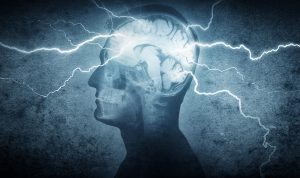
They do. It’s estimated that more than 100,000 Americans are electroshocked each year; half are 60 and older, and two-thirds are women. In Australia, it was recently revealed that psychiatrists had electroshocked 55 toddlers age four and younger. In the UK, three year olds have been brutalized with it. And one of the country’s leading mental health “patients’ rights” groups—the National Alliance of Mental Illness (NAMI)—recently endorsed the use of electroshock on pregnant women. One would wonder why a patients’ rights group would endorse such an obviously harmful procedure if not for the fact that the group has recently been exposed as a major front for the psycho/pharmaceutical industry.

The FDA reports pregnant women miscarrying following ECT, while studies show that in addition to the risk of death, the fetus can suffer malnutrition, dehydration and violent injury. Electroshocking children, pregnant women and the unborn is tantamount to torture and should not only be banned but those administering it prosecuted.

Given the factual truths of sending up to 360 volts of electricity searing through the brain – the obvious question is why the “treatment” has not gone by the wayside like its psychiatric sister treatments during the 1940s and 1950s, insulin coma shock and lobotomy.

Electroshock was indeed challenged, and its low point pretty much coincided with the release in 1975 of the Academy Award-winning film version of Ken Kesey’s One Flew Over the Cuckoo’s Nest and Jack Nicholson’s portrayal of the feisty Randle Patrick McMurphy. The horrible scene of his undergoing “unmodified” shock treatment, i.e., without anesthetic and muscle-paralyzing drugs, along with his reduction to a vegetative state was seared in the public’s mind. This, together with public exposure of the shameful state of psychiatric institutions, certainly gave electroshock treatment a bad name—so much so that the treatment was renamed Electroconvulsive Therapy (ECT). The bad publicity caused its use in public institutions to fall sharply, and its overall use was also considerably diminished. It would be naïve, however, to think that this curtailment was strictly due to increased public awareness about the brutalities of the procedure. The advent of neuroleptics (nerve-seizing drugs) was perhaps the major factor in this development. The indiscriminate use of these drugs replaced the indiscriminate use of ECT as the primary means of subduing and pacifying inmates who resisted incarceration and wouldn’t cooperate.

In the last two decades, however, electroshock has made a comeback.

Most electroshock is insurance-covered. ECT specialists on average have incomes twice that of other psychiatrists. The cost for inpatient ECT ranges from $50,000 to $75,000 per series (usually 8 to 12 individual sessions). Electroshock is a multibillion-dollar-a-year industry—yet its damaging effects are well known to those who endorse it.

Max Fink, a professor of psychiatry and the “Grandfather of American ECT” believed the “therapeutic” effect from ECT is produced by brain dysfunction and damage. “Effects on memory, common in ECT, come in two flavors,” wrote Fink in Psychiatric Times in 2006. “Delirium is common with each seizure and is well documented by immediate measurable changes in brain chemistry and physiology” and “the second complaint is of a persistent loss of personal memories…They do not recall the names of their children, family holidays, or personal events….Their complaints cast a public shadow on ECT practice.”

The Procedure

Electroshock is a psychiatric procedure that involves the production of a grand mal convulsion, similar to an epileptic seizure, by passing from 70 to upwards of 600 volts of electric current through the brain for one-half second to four seconds. Before application, ECT subjects are typically given anesthetic, tranquilizing and muscle-paralyzing drugs to reduce fear, pain, and the risk (from violent muscle spasms) of fractured bones (particularly of the spine, a common occurrence in the early history of ECT before the introduction, in the mid-1950s, of the muscle-paralyzing drug succinylcholine [Anectine]). The ECT-induced convulsion usually lasts from thirty to sixty seconds and may immediately produce disorienting, painful, and even life-threatening complications, such as apnea (temporary suspension of breathing) and cardiac arrest. The convulsion is followed by a period of unconsciousness of several minutes’ duration. Electroshock is usually administered in hospitals because they are equipped to handle emergency situations that often develop during or soon after an ECT session.

Brain Damage

The brain naturally operates in millivolts of electricity, and ECT administers on average between 150 and 400 volts of electricity to the brain, a force sufficient to induce a grand mal seizure, rupture the protective blood-brain barrier and incite glutamate toxicity (glutamate is a powerful neurotransmitter released by nerve cells in the brain and is responsible for sending signals between nerve cells. In glutamate toxicity there is too much glutamate that leads to over-excitation of the receiving nerve cell, which can cause cell damage and/or death). It is prima-facie, common sense obvious fact that ECT causes brain damage. After all, the rest of medicine, as well as the building trades, do their best to prevent people from being hurt or killed by electrical shock. People with epilepsy are given anticonvulsant drugs to prevent seizures because they are known to damage the brain. The Electroshock Quotationary, a collection of quotations, excerpts, and essays about the history and nature of electroshock, by shock survivor Leonard Roy Frank, includes the testimony of Peter Sterling, a University of Pennsylvania neuroscience professor, describing the nature of ECT-caused brain damage, dated May 31, 2001, to the New York Assembly Standing Committee on Mental Health at a public hearing on ECT.

Sterling affirms the obvious: that massive amounts of electricity directly into the brain cause profound damage.

Lack of Efficacy

Not only does electroshock directly violate the Hippocratic oath to do no harm, the practice has never been proven effective. There are no lasting beneficial effects of electroshock; sham-electroshock (anesthesia but no electroshock) has the same short-term outcomes as electroshock (Ross, 2006). Even leading shock researcher and advocate Harold Sackeim now provides a proof. In an article from 2001, he and his colleagues conclude, “Our study indicates that without active treatment, virtually all remitted patients relapse within 6 months of stopping ECT.” (Italics mine)

The FDA

The battle against electroshock has been ongoing since its advent. The two recent chronicles by electroshock survivor activist leaders, Leonard Roy Frank (The Electroshock Quotationary) and Linda Andre (Doctors of Deception), tell the story best. Just now, the fight has centered on the FDA review of the “efficacy and safety” of ECT machines.

Many activists, including myself, have submitted testimony urging the FDA NOT to reclassify these devices from Class III (high risk) to Class II (low risk). I have worked with scores of electroshock survivors, and I can tell you the damage is consistent and terrible. I can also tell you as a psychologist that there are methods so much gentler, safer and more effective to help people with depression.

A Repackaged Product

The reason for electroshock’s endurance and resurgence is best described by Linda Andre, shock survivor and leader of the Committee for Truth in Psychiatry, in her masterful new work, Doctors of Deception: What They Don’t Want You to Know About Shock Treatment—it is simply the triumph of public relations over science. A concerted PR campaign has allowed electroshock to continue despite clear scientific evidence of its dismal and tragic record on safety and efficacy.

The industry repackaged the product to keep it selling. They touted a “newer and safer ECT,” bragging about improved equipment and the introduction of anesthesia and muscle paralysants, which actually came on the market in the 1950s. While the muscle paralysants greatly reduced the risk of broken bones from unrestrained convulsions, there was no lessening of permanent damage to the brain caused by the electroshocks. The drugs made the procedure appear much more benign because they suppressed the body’s natural, violent reaction to a grand mal convulsion. However, as Doug Cameron (1994) and other researchers have shown, the new machines, because they are more powerful than ever are capable of releasing greater amounts of electricity into the brain thus causing more damage than the older devices.

With the newer technique modifications there is also an added risk. The drugs used to prevent bone complications raise the seizure threshold so that more electrical current is required to induce the convulsion, which in turn increases brain damage. Moreover, whereas ECT specialists formerly tried to induce seizures with minimal current, they commonly use suprathreshold amounts in the belief that they are more effective. Again, the more current, the more brain damage. Proponents, and the public, have missed the point that the supposed “effectiveness” of ECT is in direct ratio to the amount of brain damage it causes.

In addition to the propaganda effect and the financial incentives, there is a less well-considered reason for ECT’s popularity among psychiatrists. Although electroshock is often described as psychiatry’s “treatment of last resort,” it is actually psychiatry’s “treatment of next resort.” Next resort after psychiatric drugs, which are the main “treatment”—a treatment whose lack of effectiveness and lack of safety are well documented. Like ECT, these drugs can damage and disable the brain. Like ECT, they can cause a fully justified resentment that goes with the experience of having been betrayed by one’s supposed helpers.

Activist and electroshock survivor Leonard Roy Frank’s recent letter to the FDA in regards to their review of ECT devices is one of the best. I end this blog article with his conclusion:

As a destroyer of memories and thoughts, electroshock is a direct, violent assault on these hallmarks of American liberty: freedom of conscience, freedom of belief, freedom of thought, freedom of religion, freedom of speech, freedom from assault, and freedom from cruel and unusual punishment. Tens of thousands of people every year in the United States are deceived or coerced into undergoing electroshock. The FDA should do everything in its power to discourage the use of electroshock by:

  • keeping ECT’s Class III, high-risk rating;
  • insisting that electroshock psychiatrists, manufacturers of ECT devices, and executives and administrators in hospitals where ECT is administered, substantiate with scientific proof their claims that the procedure is “safe and effective”;
  • and calling upon the Congress and the Department of Justice to investigate the fraudulent and coercive use of this cruel and inhuman procedure.

Despite the evidence of grievous harm and failure to help, electroshock’s proponents rave on; as an example, an electroshock psychiatrist told Washington Post reporter Sandra Boodman in 1996, that, “ECT is one of God’s gifts to mankind. There is nothing like it, nothing equal to it in efficacy or safety in all of psychiatry.”

Given that ECT causes brain damage, memory loss, and other serious cognitive impairment, electroshock serves to cover up and impede any potential malpractice or personal injury litigation. It generally takes years for a shock survivor to recover enough to figure out what has happened to them, and most states have a statute of limitations (usually one or two years) on medical malpractice and personal injury suits. As a result, electroshock survivors are effectively prevented from pursuing litigation against those who harmed them, making electroshock psychiatrists almost malpractice-proof.


John Breeding, Ph.D. has been a counseling psychologist in Austin, Texas for 25 years.
He is an outspoken critic of electroshock treatment and has testified against its use before legislative bodies on numerous occasions. Dr. Breeding is also the director of Texans For Safe Education, a citizens group dedicated to challenging the ever-increasing role of psychiatric drugs in schools. He is the author of numerous articles and four books including:
The Wildest Colts Make the Best Horses and True Nature and Great Misunderstandings.

For more information on the damage caused by ECT, visit www.endofshock.com

References

Ayd Jr., F.T. (November-December 1963). “Guest editorial: Ugo Cerletti, M.D. (1877-1963),” Psychosomatics, Vol. 4, pp. A-6 – A-7.

Boodman, S.G. (September 24, 1996). “Shock therapy: It’s back,” Washington Post (Health Section), pp. 14-20.

Frank, Leonard Roy, The Electroshock Quotationary, June 2006, www.endofshock.com/102C_ECT.PDF.

Andre, Linda, Doctors of Deception, www.doctorsofdeception.com.

Kalinowsky, L.B. (1988). Quoted in R. Abrams, “Interview with Lothar Kalinowsky, M.D.,” Convulsive Therapy, Vol. 4.

Ross, C.A. (Spring 2006). “The sham ECT literature: Implications for consent to ECT,” Ethical Human Psychology and Psychiatry, Vol. 8.

Sackeim, H.A. et al. (March 14, 2001). “Continuation pharmacotherapy in the prevention of relapse following electroconvulsive therapy,” Journal of the American Medical Association.

Sackeim, H.A. (2001). “Memory loss: From polarization to reconciliation,” Journal of ECT, vol. 17, no. 3, p. 229. Sackeim, H.A., Prudic, J. et al. (January 2007). “The cognitive effects of electroconvulsive therapy in community settings,” Neuropsychopharmacology, Vol. 32, pp. 244-254.

RETURN TO BLOGS PAGE


Share