Posts Tagged ‘joseph biederman’

7 Reasons America’s Mental Health Industry Is a Threat to Our Sanity

Friday, January 6th, 2012

Drug industry corruption, scientifically unreliable diagnoses and pseudoscientific research have compromised the values of the psychiatric profession.

Alternet
By Bruce E. Levine
January 6, 2012

Why do some of us become dissident mental health professionals?

The majority of psychiatrists, psychologists and other mental health professionals “go along to get along” and maintain a status quo that includes drug company corruption, pseudoscientific research and a “standard of care” that is routinely damaging and occasionally kills young children. If that sounds hyperbolic, then you probably have not heard of Rebecca Riley, and how the highest levels of psychiatry described her treatment as “appropriate and within responsible professional standards.”

When Rebecca Riley was 28 months old, based primarily on the complaints of her mother that she was “hyper” and had difficulty sleeping, psychiatrist Kayoko Kifuji, at the Tufts-New England Medical Center in Boston, Massachusetts, diagnosed Rebecca with attention deficit hyperactivity disorder (ADHD). Kifuji prescribed clonidine, a hypertensive drug with significant sedating properties, a drug Kifuji also prescribed to Rebecca’s older sister and brother. The goal of the Riley parents—obvious to many in their community and later to juries—was to attain psychiatric diagnoses for their children that would qualify them for disability payments and to sedate their children making them easy to manage.

By the time Rebecca was three years old, again based mainly on parental complaints, Kifuji had given Rebecca an additional diagnosis of bipolar disorder and prescribed two additional heavily sedating drugs, the antipsychotic Seroquel and the anticonvulsant Depakote.

At the age of four, Rebecca was dead.

At the time of her death, Rebecca had a life-threatening amount of clonidine—enough to kill her—in her body, according to the former director of the Massachusetts toxicology lab and the medical director of a regional poison control center. The medical examiner who performed the autopsy concluded that Rebecca died from intoxication of clonidine, Depakote and two over-the-counter cold and cough medicines that led to heart failure, lungs filled with bloody fluid, coma, and then death. Rebecca’s abusive parents went to prison for the over-drugging that led to their daughter’s death.

Kifuji’s fate? The psychiatric establishment rallied around Kifuji, enabling her to return to Tufts Medical Center practicing child psychiatry without any restrictions, penalties or supervision. After Rebecca’s death, Tufts-New England Medical Center defended Kifuji. A Tufts spokesperson told “60 Minutes” in 2009, “The care we provided was appropriate and within responsible professional standards.”

Apparently, psychiatric care that is considered appropriate and within responsible professional standards includes diagnoses of ADHD for a two-year-old and bipolar disorder for a three-year-old when the symptoms of those disorders are normal behaviors for those ages; prescribing three heavily sedating drugs that have not been approved by the FDA for child psychiatric treatment; ignoring the warnings from a school nurse about over-dosages for Rebecca; and making diagnoses based almost entirely on the reports of Rebecca’s mother, who herself was diagnosed with mental illness and heavily medicated to the point of falling asleep in Kifuji’s office.

Long before the Rebecca Riley tragedy hit the headlines, I was embarrassed by the mental health profession for seven major reasons:

1. Corruption by Big Pharma

How did it become within responsible professional standards for a two-year-old to get an ADHD diagnosis, for a three-year-old to get a bipolar diagnosis, and for toddlers to be prescribed multiple heavily sedating drugs? The short answer is drug company corruption of the mental health profession.

Congressional hearings in 2008 revealed that psychiatry’s “thought leaders” and major institutions are on the take from drug companies.

On June 8, 2008, the New York Times reported about psychiatrist Joseph Biederman: “A world-renowned Harvard child psychiatrist whose work has helped fuel an explosion in the use of powerful antipsychotic medicines in children earned at least $1.6 million in consulting fees from drug makers from 2000 to 2007.”

Due in large part to Biederman’s influence, the number of American children and adolescents treated for bipolar disorder increased 40-fold from 1994 to 2003. Pediatrician and author Lawrence Diller notes about Biederman, “He single-handedly put pediatric bipolar disorder on the map.” In addition to his popularization of bipolar disorder for children, Biederman is one of the most significant forces behind the expanding numbers diagnosed with ADHD; and congressional investigators also discovered that Biederman conducted studies of Eli Lilly’s ADHD drug Strattera that were funded by National Institute of Health at the same time he was receiving money from Lilly.

Not only does the drug industry have influential psychiatrists such as Biederman in their pocket, virtually every major mental health institution is financially interconnected with Big Pharma. Congressional hearings also exposed the American Psychiatric Association psychiatry’s premier professional organization, as being on the take from drug companies. In 2006, the drug industry accounted for about 30 percent of the APA’s $62.5 million in financing. Most relevant here, the APA is the publisher of the psychiatric diagnostic bible, the Diagnostic and Statistical Manual of Mental Disorders (DSM), and thus the APA is the institution responsible for creating mental illnesses and disorders.

2. Invalid Illnesses and Disorders

Psychiatry’s first DSM (1952) and its DSM-II (1968) listed homosexuality as a mental illness. Only because of a fierce political fight waged in the 1970s by gay activists did the APA abolish homosexuality as an illness and eliminate it from its DSM-III (1980). Gay activists’ fight was not only a victory for themselves but a service for everyone else, as it made public the important scientific problem of psychiatric disorder invalidity. Specifically, are psychiatric disorders scientifically valid illnesses, or are they simply behaviors that create discomfort for some authorities at a given moment in time?

While psychiatry lost homosexuality as a mental illness in the 1980 DSM-III, the APA found other groups it could pathologize, groups that could not mobilize and resist, most notably children, who are now routinely given psychiatric diagnoses for behaviors that many of us view as normal for their ages.

Psychiatry sees it as within responsible professional standards to diagnose three-year-olds such as Rebecca Riley with bipolar disorder. The symptoms of bipolar disorder include irritable and rapidly changing moods, severe temper tantrums, defiance of authority, agitation and distractibility, sleeping too little or too much, poor judgment, impulsivity and grandiose beliefs.

Psychiatry also sees it as within responsible professional standards for Rebecca Riley to have been diagnosed at 28 months old with ADHD. The symptoms of ADHD are inattention (easily distracted and bored, difficulty organizing and completing tasks, losing things, not seeming to listen, not following instructions); hyperactivity (fidgeting, talking nonstop, having trouble sitting still, difficulty with quiet tasks), and impulsivity (impatience, blurting out inappropriate comments, interrupting conversations).

Today, children and teens are also diagnosed with oppositional defiant disorder (ODD), the symptoms of which include “often actively defies or refuses to comply with adult requests or rules,” and “often argues with adults.”

The standard for a medical disorder should not be whether or not an individual causes friction.

3. Scientifically Unreliable Diagnoses

Even if you believe that bipolar disorder for three-year-olds, ADHD for two-year-olds, ODD for teenagers, and all the other DSM diagnoses are valid disorders, there is still the scientific issue of diagnostic unreliability—the lack of diagnostic agreement among professionals examining the same person.

A generation ago, psychiatrists admitted that their diagnoses were unreliable and agreed that this was a major scientific problem. So in 1980, in an attempt to eliminate this embarrassment, they created the DSM-III with concrete behavioral checklists and formal decision-making rules, but they failed to correct the problem. Psychiatric diagnoses remain unreliable, but now psychiatry no longer talks about the unreliability problem.

If a measurement is a reliable one, then clinicians trained with it should be in high agreement on the diagnosis. A major 1992 study, conducted at six sites with 600 prospective patients, was done to examine the reliability of psychiatric diagnoses. Experienced mental health professionals were given extensive training in how to make accurate DSM diagnoses. Because of the extensive training, one would expect that diagnostic agreement would be much higher than in typical clinical settings. Herb Kutchins and Stuart Kirk summarize the study in Making Us Crazy (1997):

What this study demonstrated was that even when experienced clinicians with special training and supervision are asked to use DSM and make a diagnosis, they frequently disagree, even though the standards for defining agreement are very generous. . . . [For example,] if one of the two therapists made a diagnosis of Schizoid Personality Disorder and the other therapist selected Avoidant Personality Disorder, the therapists were judged to be in complete agreement of the diagnosis because they both found a personality disorder—even though they disagreed completely on which one! So even with this liberal definition of agreement, reliability using DSM is not very good.

Kutchins and Kirk conclude: “Mental health clinicians independently interviewing the same person in the community are as likely to agree as disagree that the person has a mental disorder and are as likely to agree as disagree on which of the over 300 DSM disorders is present.”

4. Biochemical Imbalance Mumbo Jumbo

Just as nothing was more important in selling the Iraq war in 2003 than the Bush administration’s certainty that Iraq possessed weapons of mass destruction, nothing has been more important in selling psychiatric drugs than psychiatry’s certainty of biochemical brain imbalances as the cause for mental illnesses.

Prior to psychiatry’s proclamation that depression was caused by too little of the neurotransmitter serotonin, few Americans were taking antidepressants. But by declaring that depression was caused by a serotonin imbalance analogous to diabetes and an insulin imbalance, depressed Americans became far more receptive to serotonin-enhancing drugs such as the “selective-serotonin-reuptake inhibitors” (SSRIs) Prozac, Paxil, and Zoloft.

SSRIs can make some depressed people feel better; however, alcohol makes some shy people less shy, but that’s not enough evidence to say that shyness is caused by an alcohol imbalance. The truth is—and scientists have known this for quite some time—that serotonin levels are not associated with depression.

Researchers have used a variety of methods to test the serotonin imbalance theory of depression, including comparing serotonin metabolites in depressed and nondepressed people, and depleting serotonin levels through a variety of means and then observing whether this resulted in depression. Elliot Valenstein, professor emeritus of psychology and neuroscience at the University of Michigan, reviewed the research in his book Blaming the Brain (1998) and reported that it is just as likely for people with normal serotonin levels to feel depressed as it is for people with abnormal serotonin levels, and that it is just as likely for people with abnormally high serotonin levels to feel depressed as it is for people with abnormally low serotonin levels. Valenstein concluded, “Furthermore, there is no convincing evidence that depressed people have a serotonin or norepinephrine deficiency.”

In 2002, the New York Times reported: “Researchers knew that antidepressants seemed to raise the brain’s levels of messenger chemicals called neurotransmitters, so they theorized that depression must result from a deficiency of these chemicals. Yet a multitude of studies failed to prove this precept.”

Yet even now, many psychiatrists and other mental health professionals continue to promulgate the serotonin imbalance theory of depression, and polls show that the majority of Americans continue to believe it.

5. Pseudoscientific Drug Effectiveness Research

There are multiple tricks that psychiatric drug manufacturers and their researcher psychiatrists and psychologists use to make their drugs look more effective than they really are. One of the most common depression measurements used by researchers paid by drug companies is the Hamilton Rating Scale for Depression. In the HRSD, researchers rate subjects, and the higher the point total, the more one is deemed to be suffering from depression. On the HRSD, there are three separate items about insomnia (early, middle and late) and one can receive up to six points for difficulty either falling or remaining asleep; however, there is only one suicide item, in which one is awarded only two points for wishing to be dead. The HRSD is heavily loaded with items that are most affected by drugs, and it is therefore especially damning for antidepressants that even with such measurement dice-loading, these drugs routinely fail to outperform placebos—even dice-loaded placebos.

Proper drug research requires that neither subject nor experimenter knows who is getting the drug and who is getting the placebo (a true double-blind control). Drug company antidepressant researchers use inactive placebos such as sugar pills (which don’t create side effects). Independent research on inactive placebos show that many subjects in antidepressant and other studies can guess if they are getting the actual drug or not, which changes their expectations and subverts the double-blind control. In order to make it more difficult to guess correctly, an active placebo (which creates side effects) should be used. In 2000, a Psychiatric Times article concluded: “In fact, when antidepressants are compared with active placebos, there appear to be no differences in clinical effectiveness.”

Dice-loading depression measurements and placebos are just two of many techniques drug company researchers use to make antidepressants look more effective than they really are. But even with such dice-loading, antidepressants have not fared well, at least when one examines all the studies.

Drug companies try to ensure that those studies showing antidepressants to be no more effective than placebos are not published; however, all studies must be submitted to the FDA. So independent researcher Irving Kirsch and his research team at the University of Connecticut used the Freedom of Information Act to gain access to all data, and analyzed 47 studies that had been sponsored by drug companies on Prozac, Paxil, Zoloft, Effexor, Celexa, and Serzone. Kirsch discovered that in the majority of the trials, the antidepressant failed to outperform a sugar pill placebo (and in the trials where the antidepressant did outperform the placebo, the advantage was slight).

6. Psychotropic Drug Hypocrisy

Chemists consider psychiatric prescription drugs and illegal mood-altering drugs all to be psychotropic or psychoactive drugs. Cocaine and ADHD drugs such as Adderall and other amphetamines affect the neurotransmitters dopamine, serotonin, and norepinephrine; and antidepressants used in combination also affect the same neurotransmitters. Not only are prescription psychotropics and illegal psychotropics chemically similar, they are used by people for similar reasons, including taking the edge off their discomfort so they can function. The hypocrisy surrounding illegal and prescription psychotropic drugs is harmful to society in at least two ways.

At one level, because people are being misinformed about the realities of prescription psychotropic drugs, they are more likely to gulp them down and to give them to their children. This has helped create a tragic phenomenon detailed by investigative reporter Robert Whitaker in his book Anatomy of an Epidemic (2010). Psychiatric drug use turning mild and episodic conditions into severe and chronic ones has helped create a huge increase of Americans with severe mental illness, especially among children.

At a second level, this psychiatric-illegal psychotropic drug hypocrisy allows for unfair criminalizing and incarceration of people using illegal psychotropics.

7. Diversion from Societal, Cultural and Political Sources of Misery

When we hear the words disorder, disease or illness, we think of an individual in need of treatment, not of a troubled society in need of transformation. Mental illness expansionism diverts us from examining a dehumanizing society.

In addition to pathologizing normal behavior, the mental health profession also diverts us from examining a society that creates the ingredients—helplessness, hopelessness, passivity, boredom, fear, and isolation—that cause emotional difficulties. We are diverted from the reality that many emotional problems are natural human reactions to loss in our society of autonomy and community. Thus, the mental health profession not only has financial value for drug companies but it has political value for those at the top of societal hierarchies who want to retain the status quo.

Today, a handful of dissident mental health professionals do challenge and resist their profession’s dehumanizing standard practices. I know several of these dissidents, and they are the only psychiatrists, psychologists and mental health professionals that I have any respect for.

Read article here:  http://www.alternet.org/story/153634/7_reasons_america%27s_mental_health_industry_is_a_threat_to_our_sanity/

« Return to news items


Share

Would Tom Sawyer and Huck Finn be diagnosed mentally ill and drugged?

Thursday, September 1st, 2011

Natural News – September 1, 2011

by Monica G. Young

Imagine if the beloved young characters in Mark Twain’s classic, “The Adventures of Tom Sawyer,” lived today. Based on current psychiatric criteria, Tom and Huck could be designated mentally ill and prescribed mind-altering drugs. Quiet, listless and numb, their legendary adventures would be over.

Describing a day in school, Twain wrote: “The harder Tom tried to fasten his mind on his book, the more his ideas wandered.” His “heart ached to be free, or else to have something of interest to do to pass the dreary time.” That’s a text book so-called symptom of ADHD (attention deficit hyperactivity disorder). A teacher today could refer him to a psychiatrist who would dope him with stimulants. Yet like any typical boy, Tom had no trouble focusing attention on something he found interesting – like finding a hidden treasure.

Tom’s friend Huckleberry might fare worse. An avowed non-conformist, a psychiatric checklist could tag him with ODD – oppositional defiant disorder. And having run away from an abusive father, Huck would land in the hands of Child Protective Services who would sedate him on psychoactive drugs subsidized by government funds.

Although no brain scan, blood test or x-ray had been done, the psych doctors would claim the boys’ mental illness stemmed from a neurobiological disorder involving chemical imbalances in the brain, probably hereditary.

Tom and Huck would likely experience insomnia, stomach aches, high blood pressure, stunted growth or some other “side” effects, and more drugs would be added to treat these. They would start feeling despondent and have mood swings, leading to probable depression or bipolar disorder diagnoses and more drug cocktails. The once spirited youths might end up as life-long pharmaceutical junkies.

Psychiatry revealed as an industry of fakers

Recently Harvard-trained psychiatrist Daniel Carlat exposed psychiatry as essentially a field of imposters. His book, “Unhinged; the Trouble with Psychiatry – a Doctor’s Revelations about a Profession in Crisis,” reads much like a confession – and rightly so.

Despite all their years in medical school, psychiatrists do not use any medical tests in diagnosing. Instead their labels are entirely subjective, opinionated and based upon a manual of disorders voted into existence by a psychiatric committee.

Yet these “experts” have transformed boyhood into “ADHD,” shyness into “social anxiety disorder” and menstrual discomfort into “premenstrual dysphoric disorder.” Some toddlers are labeled before given a chance to learn to talk.

Carlat states, “Psychiatrists have cordoned off the most painful versions of normal life, defined them as syndromes, and have given them medical-sounding names.” Yes, there are people who suffer from severe mental disturbances, but he says it’s “an illusion that we understand our patients when all we are doing is assigning them labels.”

Where is the science in all this? He writes, “While the scientific literature contains thousands of papers proposing neurobiological theories to explain PTSD [post traumatic stress disorder], depression, bipolar disorder, schizophrenia, and other psychiatric disorders, these theories remain unproven…” And he confides, “the shocking truth is that psychiatry has yet to develop a convincing explanation for the pathophysiology of any illness at all.”

In regards the chemical imbalance rant, Carlat says this is nothing more than a “convenient myth” so psychiatrists can appear authoritative and avoid looking ignorant with their patients.

This is an industry riveted to drugs, drugs and more drugs. Forget really listening to and understanding a patient’s troubles in life. Now it’s all about lucrative fifteen-minute monthly med checks – about as personal as Wendy’s drive-through.

Pharmaceutical industry influence has vast bearing on what medications psychiatrists use and how often. Carlat admits, “We have been seduced by the constant encouragement from drug companies to prescribe more medications…” Such seduction ranges from a drug rep bringing a doctor his favorite drink from Starbucks, to companies paying him up to a million or more to be their marketing mouthpiece.

Psycho-Pharma’s drug obsession diverts society’s attention off non-harmful solutions like teaching life skills, improving education, better nutrition and exercise, and addressing environmental factors.

In short, for all their diplomas, chic offices, puffed-up terminology and high fees, this is a field where greed and deception replace ethics and scientific methodology. Fortunately some like Daniel Carlat are blowing the whistle.

Most unforgivable is the dispensing of labels and drugs to millions of children. The leading gurus of this campaign have been psychiatrists deep in the pockets of Big Pharma, such as the exalted Dr. Joseph Biederman – flanked by an army of Pharma-paid “advocacy” groups.

Perhaps we should ourselves vote on labels to categorize such mentally-depraved individuals, such as conscience deficit hyper-lying disorder (CDHD) or better yet, false representation and underhandedness disorder (FRAUD).

Sources for this article include:

“The book, “Unhinged; the Trouble with Psychiatry – a Doctor’s Revelations about a Profession in Crisis,” by Daniel J. Carlat, M.D.

http://speedupsitstill.com/dangerou…

http://www.thefix.com/content/jj-su…

« Return to news items


Share

US health agency revises conflict of interest rules

Tuesday, August 23rd, 2011

From Project on Government Oversight:

In recent years, Senator Grassley exposed several academic physicians for taking large amounts of money from companies with a direct financial interest in their research, some of it funded by the NIH. The list reads like a who’s who in academic research:

    • Dr. Charlie Nemeroff, former Chair of the Psychiatry Department at Emory University, who failed to report hundreds of thousands of dollars in payments from GlaxoSmithKline while researching that same company’s drugs with an NIH grant.  Dr. Nemeroff was bounced from Emory and has now taken over the Chair of Psychiatry at the University of Miami.
    • Dr. Alan Schatzberg, former Chair of the Psychiatry Department at Stanford University received an NIH grant to study a drug while partially owning a company that was seeking FDA approval of said drug. An NIH oversight group recommended that Stanford’s clinical trial on mifepristone be “terminated immediately and permanently.”  The recommendation was made because of concerns over conflicts of interest, patient safety and other issues.
    • Dr. Joseph Biederman and two other researchers at Harvard University failed to report almost a million dollars each in outside income while heading up several NIH grants. Harvard later disciplined the three physicians.

US health agency revises conflict of interest rules

From Reuters – August 23 – 2011

by  Alina Selyukh

WASHINGTON,  – The U.S. National Institutes of Health revised on Tuesday its 16-year-old conflict of interest rules for medical researchers, lowering the amount of money that constitutes a financial conflict and expanding the required disclosures.

The 1995 regulations effectively put responsibility for tracking scientists’ financial conflicts of interest on their universities. The rule required researchers to disclose conflicts to their institutions, which then had to assure the NIH the conflict had been managed, reduced or eliminated.

The new rule extends that requirement so researchers report not only the fact of a conflict of interest, but also its details such as value, specific nature, why it is a conflict and the impact it might have on research.

It lowers the amount a researcher must disclose if received from an industry or held in company stock to $5,000 from about $10,000.

Research institutions, in turn, are now required to report that information to the federal grant-awarding agency alongside details of how the conflicts are managed. Also, before spending any grant money, the institution has to post information about the financial conflicts on a public website.

The new rules will affect about 2,000 organizations that are awarded public health science funding every year and some 38,000 scientists who participate in research funded by these grants and have a “significant financial interest,” NIH said.

Concern about the integrity of research in the United States has grown since 2008, when Iowa Republican Sen. Charles Grassley criticized prominent Harvard University psychiatrist Dr. Joseph Biederman and others for failing to fully disclose payments from drug companies.

In a more recent example, medical device maker Medtronic Inc (MDT.N) came under fire over accusations that doctors paid by the company had failed to disclose major side effects from a bone growth drug in clinical trials.

A 2009 report by the Institute of Medicine, one of the National Academies of Sciences that advises U.S. policymakers, called on doctors to strictly disclose research funding to strengthen protection against conflicts of interest. The report called for virtually anyone involved in medicine — academic medical centers, journals, professional societies, researchers and doctors — to set up or strengthen conflict of interest guidelines.

From 1996 to 2007, relationships between individual academic researchers and industry nearly doubled, according to a study cited by NIH in its final rule. From 1994 to 2003, the amount of financial support for biomedical research almost tripled to $94.3 billion, with 57 percent of that funding coming from industry sources, according to analysis cited by NIH. (Additional reporting by Anna Yukhananov; editing by Andre Grenon)

http://www.reuters.com/article/2011/08/23/health-science-conflicts-idUSN1E77M1PB20110823


« Return to news items


Share

Claim: J&J Wrongly Marketed Antipsychotic Drug Risperdal to Kids

Wednesday, August 3rd, 2011

BNET – August 3, 2011
by Jim Edwards
The FDA told Johnson & Johnson (JNJ) in 1997 that its request to market the antipsychotic drug Risperdal for children was “without any justification.” In the following years, J&J’s army of pharmaceutical sales reps made 100,000 sales calls on child and adolescent psychiatrists, justifying this by “qualifying” the docs if they had as few as one adult patient exhibiting signs of schizophrenia, according to a lawsuit.

It was a distinction only a lawyer can love, and now the Massachusetts attorney general is using it against J&J and its Janssen unit, alleging that J&J’s promotion of Risperdal for children was misleading.

J&J had initially asked the FDA to approve the drug for use in children, and the FDA eventually allowed limited use in the over-10s in the 2006 and 2007. But in 1997, without clinical evidence to back its request, the FDA frowned on use of the drug for children. In a latter the J&J, the FDA wrote:

To permit the inclusion of the proposed vague references to the safety and effectiveness in pediatric patients and the nonspecific cautionary advice about how to prescribe Risperdal for the unspecified target indications would serve only to promote the use of this drug in pediatric patients without any justification.

“Promote use of this drug in pediatric patients” is exactly what J&J then did, according to the suit:

From January 1994 through September 2006, Janssen sales representatives directly promoted Risperdal to thousands of child and adolescent psychiatrists and pediatricians even though Risperdal was not approved to treat any pediatric conditions until October 2006.

Doctors were paid $1,000 to attend J&J’s pediatric “advisory board” meetings held at posh resorts, and eventually Risperdal reached a 50 percent share of pediatric antispychotic category, the suit alleges.

Kids grew breasts, docs went to the Four Seasons

This success came at some price to the children receiving the drug, as Risperdal’s side effects include weight gain, diabetes and “galactarhea,” the premature production of breast milk in both boys and girls. One of J&J’s sales reps made this internal sales call note on that issue:

An August 2, 2001 call note (000000244279 ) reports on a sales call with a Braintree doctor: “. . . . She is using Risperdal with great success in kids ala Biederman. She did mention galactarhea so I told her how Biederman is using Dostinex. She is going to get more info on this dopamine agonist. She is going to attend the 4 Seasons event.”

“4 Seasons” is likely a reference to the posh Four Seasons hotel in Boston (its indoor pool is pictured). The Biederman

name is familiar to anyone following the Risperdal saga, of course. Joseph Biederman was the Harvard medical school doctor who was paid by J&J to churn out reams of studies promoting Risperdal in kids. He became infamous when he suggested in a deposition that he was one pay-scale below God.

http://www.bnet.com/blog/drug-business/claim-j-j-wrongly-marketed-antipsychotic-drug-risperdal-to-kids/9344

For more information on Joseph Biederman – http://www.cchrint.org/2011/07/22/pharma-funded-psychiatrists-behind-bogus-child-bi-polar-epidemic-disciplined-for-conflicts-of-interest/

« Return to news items


Share

Pharma-Funded Psychiatrists Behind Bogus Child ‘Bi-Polar’ Epidemic- Disciplined for Conflicts of Interest

Friday, July 22nd, 2011

Harvard Psychiatrists Disciplined for Conflicts of Interest

Alliance for Human Research Protection – July 21, 2011

by Vera Sherav

Psychiatrist Joseph Biederman was funded millions by Pharma while promoting child "bipolar" disorder

The primary promoters–inventors, one might say– of diagnosing children with “bipolar” disorder, who for over a decade, aggressively promoted the biopolar diagnosis and use of antipsychotics in children, were disciplined by Harvard University and its affiliated Massachusetts General Hospital.

An investigation, prompted by Sen. Charles Grassely, was conducted by Harvard University-affiliated Massachusetts General Hospital. It concluded (earlier this month) that psychiatrist Joseph Biederman and two of his proteges, Thomas Spencer and Timothy Wilens -each of who failed to disclose millions of dollars they had each received from the makers of antipsychotics, the drugs they promoted for the treatment of bipolar in children–had indeed violated the University’s/ and hospital’s conflict of interest reporting  standards.

The three wrote a mea culpa letter stating “we want to offer our sincere apologies…” acknowledging “our mistakes…”

However, no mention was made anywhere about the profound consequences of these psychiatritsts’ commercially-driven clinical recommendations. No mention about the corruption of the scientific literature, about clinical practice that deviated from the Hippocratic Oath, “First, do no harm,” nor was any mention made about the harm suffered by children whose doctors were misled about the safety and efficacy of highly toxic drugs.

Child psychiatrists and pediatricians throughout the US were guided by these exceedingly influential Harvard psychiatrists.

As Sen. Chuck Grassley noted in 2008 in the Congressional Record, “they are some of the top psychiatrists in the country, and their research is some of the most important in the field. {But] They have also taken millions of dollars from the drug companies.”

The companies that paid them millions include: Eli Lilly, Johnson & Johnson, Pfizer, GlaxoSmithKline and Bristol-Myers Squibb.

The Senator brought public attention–and to Harvard University administrators’ attention–the financial conflicts of interest, “Out of concern about the relationship between this money and their research.”

Indeed, documents uncovered during litigation confirmed that the research was scientifically corrupt and commercially-driven. The New York Times reported that Dr. Biederman promised Johnson a& Johnson that a study (yet to be conducted) in preschool children who would be given the company’s antipsychotic, Risperdal (risperidone) “will support the safety and effectiveness of Risperdal in this age group.”

“The psychiatrist, Dr. Joseph Biederman, outlined plans to test Johnson & Johnson’s drugs in presentations to company executives. One slide referred to a proposed trial in preschool children of risperidone, an antipsychotic drug made by the drug company. The trial, the slide stated, “will support the safety and effectiveness of risperidone in this age group.”

Dr. Biederman was the lead author of a trial published last year concluding that treatment with risperidone improved symptoms of attention deficit and hyperactivity disorder in bipolar children.”

Another of Biederman’s Harvard ignoble disciples was Jeff Bostic, who is also at Massachusetts General Hospital. He was named in a 2009 lawsuit joined by the US Department of Justice alleging Forest Laboratories promoted its antidepressants for pediatric use without FDA approval and paid kickbacks to docs to encourage prescriptions. He received $750,000 in payments for giving talks on using these drugs in children.

Strangely, the National Institute for Mental Health, which had awarded thse psychiatrists millions of dollars at taxpayers expense. It appears that NIMH officials did not see fit to even conduct an investigation into the corruption of science and violation of federal regulations. This demonstrates a lack of professional and moral integrity at the NIMH whose administrators think nothing about the misappropriation of public money for commercially-driven, junk research.

http://www.ahrp.org/cms/content/view/828/9/

Backstory from Pharmalot:

Pharmalot

Harvard Docs Disciplined For Conflicts Of Interest

By Ed Silverman // July 2nd, 2011 // 9:03 am

Three years after they were fingered in a US Senate probe into the interplay between academics who receive grant money from both pharma and the National Institutes of Health, three prominent psychiatrists from Harvard Medical School and Massachusetts General Hospital have been sanctioned for violating conflict of interest rules and failing to report the extent of their payments.

In a mea culpa addressed to their colleagues, Joseph Biederman, Thomas Spencer and Timothy Wilens wrote that “we want to offer our sincere apologies to HMS and MGH communities…We always believed we were complying in good faith with the institutional polices and our mistakes were honest ones. We now recognize that we should have devoted more time and attention to the detailed requirements of these policies and to their underlying objectives.”

And what is their punishment? They must refrain from “all industry-sponsored outside activities” for one year; for two years after the ban ends, they must obtain permission from the med school and the hospital before engaging in any of these activities and they must report back afterward; they must undergo certain training and they face delays before being considered for promotion or advancement (you can read their letter here).

The hospital had this to say: “A committee at Massachusetts General Hospital that has been looking into conflict-of-interest questions involving three MGH child psychiatrists has completed its review. Appropriate remedial actions have been taken by the hospital to address specific issues (read the statement). And a Harvard Med School spokesman sent us this: “We confirm that the review of their compliance with the Harvard Medical School Policy on Conflicts of Interest and Commitment has concluded, and appropriate actions have been taken.” He added that the conflicts policy was revised last year.

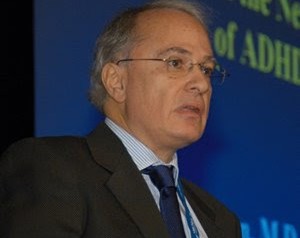
The sanctions result from a long-standing controversy over the explosive use of antipsychotics in children. Biederman, in particular (see photo), had been one of the most influential researchers in child psychiatry. Although his studies were small and often financed by drugmakers, his work helped fuel a 40-fold increase from 1994 to 2003 in the diagnosis of pediatric bipolar disorder.

For more than a decade, Biederman and his colleagues aggressively promoted the diagnosis and use of antipsychotics to treat childhood bipolar disorder, a problem that once was largely believed to be confined to adults. But the docs maintained this was underdiagnosed in kids and the meds could be used for treatment, even though they had not been approved for most pediatric use at the time. Meanwhile, the relationships with drugmakers were never properly disclosed (back story).

And for years, payments they received from drugmakers were not thoroughly reported to university officials. Yet, millions of dollars in NIH grants, which were administered by the hospital, were awarded to the docs at the same time they were receiving money from various drugmakers that make and sell antipsychotics and antidepressants. Which ones? Eli Lilly, Johnson & Johnson, Pfizer, GlaxoSmithKline and Bristol-Myers Squibb.

At one point, Biederman pushed J&J to fund a research center at MassGen that would focus on the use of its Risperdal antipsychotic in children, well before the med was approved for pediatric use. He was then placed in charge of the institute and began a study of 40 children between 4 and 6 years old who were given Risperdal and Lilly’s Zyprexa, another antipsychotic. At the time, Harvard and MGH rules forbid researchers from running trials with drugmakers if they receive more than $10,000 from a company that makes the drug (back story).

But in June 2008, US Senator Chuck Grassley made a far-reaching statement before Congress that pulled the curtain back on the money involved. The statement is memorialized in the Congressional Record. Referring to the three docs, he said “they are some of the top psychiatrists in the country, and their research is some of the most important in the field. They have also taken millions of dollars from the drug companies.”

“Out of concern about the relationship between this money and their research, I asked Harvard and Mass General Hospital last October to send me the conflict of interest forms that these doctors had submitted to their institutions. Universities often require faculty to fill these forms out so that we can know if the doctors have a conflict of interest. The forms I received were from the year 2000 to the present. Basically, these forms were a mess. My staff had a hard time figuring out which companies the doctors were consulting for and how much money they were making.”

How much were they making? At first, maybe a couple of hundred thousand dollars combined. But at his behest, the med school and hospital asked the docs to take a second look. “And this is when things got interesting. Dr. Biederman suddenly admitted to over $1.6 million dollars from the drug companies. And Dr. Spencer also admitted to over $1 million. Meanwhile, Dr. Wilens also reported over $1.6 million in payments from the drug companies.

“The question you might ask is: Why weren’t Harvard and Mass General watching over these doctors? The answer is simple: They trusted these physicians to honestly report this money.” And as Grassley then noted, there was still more money that went unreported (to read the Congressional record, click here and then check the box for 2008 and type in the name ‘Biederman’ in the search box. Then click on ‘payments to physicians’ to read the complete statement and the chart showing payments to each doc).

« Return to news items


Share

Attention deficit disorder gurus in conflict of interest

Friday, July 15th, 2011

The Australian – July 14, 2011

by Sue Dunlevy

TWO of the seven experts advising the government on national guidelines for Attention Deficit Hyperactivity Disorder have links to ADHD drug companies, new conflict-of-interest declarations show.

Westmead adolescent health expert Michael Kohn, who has been appointed to the National Health and Medical Research Council working group, was paid by Eli Lilly, the maker of the ADHD drug Strattera, to develop educational material.

And Janssen-Cilag, which makes the ADHD drug Concerta, gave funds for Professor Kohn to go to a Beijing conference on mental health and to produce teaching material.

Claims have been made that some experts advising the government on ADHD have links to drug companies. Source: The Daily Telegraph

The consumer representative on the committee, Margaret Vikingur, the president of Learning and Attentional Disorders, says her organisation received $5000 from three drug companies to develop educational materials.

More than 400,000 ADHD prescriptions a year are written, and their use has soared by 300 per cent over the past seven years, sparking debate about use and conflicts of interest.

Drug firms told Medicines Australia they spent more than $40 million wining and dining and “educating” doctors in the six months to March last year.

The conflict-of-interest declarations will be made public today by Mental Health and Ageing Minister Mark Butler, and follow the controversy over the 2009 draft ADHD guidelines, which were never adopted by the NHMRC because of concerns US research heavily cited in them was compromised by drug firm funding.

US psychiatrist Joseph Biederman, whose work is cited over 80 times in the draft guidelines, and two colleagues were sanctioned by Harvard University after allegedly failing to report more than $1.6m they received from drug firms.

The 2009 ADHD guidelines will be redeveloped.

“I am committed to ensuring the clinical practice points developed by this group will not be influenced by undeclared or inappropriate conflicts of interest,” Mr Butler said yesterday.

West Australian Labor MP Martin Whitely said the conflicts of interests declared by Professor Kohn and Ms Vikingur should have had them excluded from the panel.

http://www.theaustralian.com.au/national-affairs/health/attention-deficit-disorder-gurus-in-conflict-of-interest/story-fn59nokw-1226093390142

« Return to news items


Share

ADHD review as US expert faces inquiry

Tuesday, July 5th, 2011

The Australian – July 5, 2011

AUSTRALIA’S ADHD guidelines are being redeveloped as a US psychiatrist whose work is heavily cited in existing draft guidelines has been sanctioned by Harvard University for violating conflict-of-interest rules.

Professor Joseph Biederman and two colleagues, Thomas Spencer and Timothy Wilens, were investigated by Harvard after allegedly failing to report to the university millions of dollars they received from drug firms.

Australia’s National Health and Medical Council held off approving the draft guidelines for Attention Deficit Hyperactivity Disorder issued in 2009 as it awaited the outcome of the US conflict-of-interest investigation.

The Boston Globe reported that, in a letter to their colleagues, Professor Biederman, Dr Spencer and Dr Wilens apologised for their “honest” mistakes and said they had been sanctioned.

The National Health and Medical Research Council said yesterday it could not yet assess the impact of the outcome of the Harvard investigation on the scientific literature and said the draft guidelines citing Professor Biederman would remain on its website.

Independently of the Harvard review, the council had appointed a multi-disciplinary panel to develop new clinical practice points to provide clear advice to clinicians and health professionals for the diagnosis and treatment of ADHD, the council said.

The review will be completed in September, but the council was last night unable to provide The Australian with names of the experts involved.

In 2007, Daryl Effron, who chaired the committee that drew up Australia’s draft ADHD guidelines, resigned as chairperson after his ties with pharmaceutical companies that produce ADHD drugs were exposed. He remains on the committee.

About 350,000 Australian children and adolescents are estimated to have ADHD and controversy has been raging about the use of medications such as Ritalin.

Child psychiatrist Professor Jon Jureidini, who argues against the long-term use of stimulant drugs in treating behavioural problems tagged as ADHD, says that the current guidelines rely heavily on Professor Biederman’s work.

http://www.theaustralian.com.au/news/nation/adhd-review-as-us-expert-faces-inquiry/story-e6frg6nf-1226087514583

« Return to news items


Share

America’s Most Dangerous Pill? Klonopin.

Thursday, June 2nd, 2011

No "benzo" has been more lethal to millions of Americans than a popular prescription drug called Klonopin

It’s not Adderall or Oxy. It’s Klonopin. And doctors are doling it out like candy, causing a surge of hellish withdrawals, overdoses and deaths.

AlternetJune 1, 2011

by Christopher Byron

You could argue that the deadliest “drug” in the world is the venom from a jellyfish known as the Sea Wasp, whose sting can kill a human being in four minutes—up to 100 humans at a time. Potassium chloride, which is used to trigger cardiac arrest and death in the 38 states of the U.S. that enforce the death penalty is also pretty deadly . But when it comes to prescription drugs that are not only able to kill you but can drag out the final reckoning for years on end, with worsening misery at every step of the way, it is hard to top the benzodiazepines. And no “benzo” has been more lethal to millions of Americans than a popular prescription drug called Klonopin.

Klonopin is the brand name for the pill known as clonazepam, which was originally brought to market in 1975 as a medication for epileptic seizures. Since then, Klonopin, along with the other drugs in this class, has become a prescription of choice for drug abusers from Hollywood to Wall Street. In the process, these Schedule III and IV substances have also earned the dubious distinction of being second only to opioid painkillers like OxyContin as our nation’s most widely abused class of drug.

Photo Credit: Kristin Burns

Seventies-era rock star Stevie Nicks is the poster girl for the perils of Klonopin addiction. In almost every interview, the former lead singer of Fleetwood Mac makes a point of mentioning the toll her abuse of the drug has taken on her life. This month, while promoting her new solo album, In Your Dreams, she told Fox that she blamed Klonopin for the fact that she never had children. “The only thing I’d change [in my life] is walking into the office of that psychiatrist who prescribed me Klonopin. That ruined my life for eight years,” she said. “God knows, maybe I would have met someone, maybe I would have had a baby.”

Nicks checked herself into the Betty Ford Clinic in 1986 to overcome a cocaine addiction. After her release, the psychiatrist in question prescribed a series of benzos—first Valium, then Xanax, and finally Klonopin—supposedly to support her sobriety. “[Klonopin] turned me into a zombie,” she told US Weekly in 2001, according to the website Benzo.org, one of many patient-run sites on the Internet offering information about benzodiazepine addiction, withdrawal and recovery. Nicks has described the drug as a “horrible, dangerous drug,” and said that her eventual 45-day hospital detox and rehab from the drug felt like “somebody opened up a door and pushed me into hell.” Others have described Klonopin’s effects as beginning with an energized sense of euphoria but ending up with horrifying sense of anxiety and paralysis, akin to  sticking your tongue into an electric outlet, or suddenly feeling that your brain is on fire.

When benzodiazepines first came to market in the 1950s and 1960s, they were prescribed for a range of neurological disorders such as epilepsy as well as anxiety related disorders such as insomnia. But over time, a loophole in federal drug-control laws known as the “practice of medicine exception” has permitted psychiatrists and other physicians to prescribe the drugs for any perceived disorder or symptom imaginable, from panic attacks to weight control problems. Much in the same way, Valium became infamous as “mother’s little helper,” a sedative used to pacify a generation of bored and frustrated suburban housewives.

Alcoholics and drug addicts are most likely to run into Klonopin during detox, when it is used to prevent seizures and control the symptoms of acute withdrawal. Klonopin takes longer to metabolize and passes through your system more slowly than other benzos, so in theory you don’t need to take it so frequently. But if you like the high it gives you, and  keep increasing your dosage, the addictive effects of the drug accumulate quickly and can often be devastating. The drug’s label clearly specifies that it is “recommended” only for short-term use—say, seven to 10 days—but once exposed to the pill’s seductive side-effects, many patients come back for more. And not surprisingly, many doctors are happy to refill prescriptions to meet this consumer demand. In the process, countless numbers of people swap one addiction for another, often worse than the initial addiction they were trying to treat. Although benzodiazepines are rarely reported to be the cause of single-drug overdoses, they show up with great frequency in deaths from so-called combined drug intoxication, or CDI. In recent years there have been thousands of deaths caused by this lethal combination. The drug has also help hasten the death of a wide list of otherwise healthy celebrities. :

In 1996, Actress Margaux Hemingway committed suicide by overdosing on a barbiturate-benzodiazepine cocktail. Weeks later, Hollywood movie producer Don Simpson (Beverly Hills Cop) also died from an unintentional benzo-based overdose. Klonopin was one of 11 different prescription drugs—all written by the same doctor—found in the body of Playboy centerfold model Anna Nicole Smith, who OD’d in 2007. Thereafter, the well-known Los Angeles author, David Foster Wallace, who was suffering from a profound depression when a doctor prescribed him Klonopin, went into his backyard on a September evening and hanged himself with a leather belt he had nailed to an overhead beam on his patio. Klonopin has been striking down more than just troubled celebrities, however. In 2008, reports began to surface of soldiers returning from Iraq with post-traumatic stress disorder who were dying in their sleep, the victims of a psych-med cocktail of Klonopin, Paxil (an antidepressant), and Seroquel, an antipsychotic that is routinely prescribed by VA hospitals.

Hospital emergency room visits for benzodiazepine abuse now dwarf those for illegal street drugs by a more than a three-to-one margin. This trend has been increasing for at least the last five years. In 2006, the U.S. government’s Substance Abuse and Mental Health Services Administration published data showing that prescription drugs that year were the number two reason for ER admissions to hospitals for drug abuse, slightly behind illicit substances like heroin and cocaine. But a survey released by the agency earlier this year claims that benzos, opioids and other prescriptions meds are now responsible for the majority of drug-related hospital visits.

Scientists can’t say for sure what Klonopin does when ingested, except that it dramatically affects the functioning of the brain. This much we know: If your brain is on fire with electrical signals—like, say, you’re having an epileptic seizure—a dose of clonazepam will help put out the flames.  It does so by lowering the electrical activity of the brain,  specifically which electrical activities it suppresses is something that no one really seems to know for sure. And therein lies the reason why clonazepam, like nearly the entire class of benzos, causes such unpredictable reactions in people. Put simply, the brain is just too complex a structure for its owners to understand—and when you start monkeying around with the way it functions, it’s anybody’s guess what is going to happen next.

Here’s how the respected neurosurgeon Frank Vertosick, Jr., describes the brain in his book When The Air Hits Your Brain: Parables of Neurosurgery: “The human brain: a trillion nerve cells storing electrical patterns more numerous than the water molecules of the world’s oceans.” So, if clonazepam is given to a patient with a history of epileptic seizures, it is likely to bring the symptoms under control. But give the same drug to a person suffering from a completely different problem (an eating or sleeping disorder, for example), and it might actually cause an epileptic seizure.

Clonazepam has wreaked such havoc on people partly because it is so highly addictive; anyone who takes it for more than a few weeks may well develop a dependence on it. As a result, you can be prescribed Klonopin as a short-term treatment for, say, insomnia, and wind up so hooked on it that you’ll begin frantically “doctor shopping” for new prescriptions if the first physician who gave it for you refuses to renew the prescription. As with all benzos, use of Klonopin for more than a month can lead to a dangerous condition known as “benzodiazepine withdrawal syndrome,” featuring elevation of a user’s heart rate and blood pressure along with insomnia, nightmares, hallucinations, anxiety, panic, weight loss, muscular spasms or cramps, and seizures.

Along with Klonopin, here are the three other benzos that, by general agreement, have made it into the top ranks of the world’s worst and most widely abused drugs: temazepam, alprazolam, and lorazepam.

Temazepam: Sold in the U.S. under the brand name Restoril, this benzo was developed and approved in the 1960s as a short-term treatment for insomnia. It is basically what is commonly called a “knockout drop.” Taken even in relatively modest dosages, temazepam can produce a powerfully hypnotic effect that numbs users and makes them extremely compliant and susceptible to control. But thanks to the “practice of medicine exception” physicians can prescribe it for anything they want.

During the Cold War, the Soviet Union reportedly used temazepam extensively to keep political dissidents in a drugged-out state in government-run psychiatric hospitals. Both the CIA and the KGB are also said to have also used the sleeping pill in prisoner interrogations and in research into mind-control, brainwashing and social engineering.

Temazepam is sometimes referred to as a “date rape” drug, and it figures frequently in drug-related crimes of violence. In the drug world underground, where it is often sold as an alternative to heroin and crack cocaine, it goes by such street names as “tams,” “Vitamin T,” “terminators,” “big T,” “mind eraser” and “Mommy’s Big Helper.” Common side-effects include confusion, clumsiness, chronic drowsiness, impaired learning, memory and motor functions, as well as extreme euphoria, dizziness and amnesia.

Alprazolam: Brand name Xanax, this benzo now accounts for as many as 60% of all hospital admissions for drug addiction, according to some research. What’s more, violent and psychotic responses to Xanax are not limited to humans. In May 2009, a 200-lb chimpanzee being kept as a house pet by a Stamford, Conn., woman went on a rampage after being dosed with Xanax, escaping into the neighborhood and ripping off the face of a friend of its owner.

Lorazepam: Brand name Ativan, this drug has figured in an array of well-publicized homicides and suicides by those using it. Ativan surfaced in the 2000 divorce case between Washington, D.C., socialite Patricia Duff and her husband, Wall Street billionaire Ronald Perelman. In deposition testimony, Perelman acknowledged taking Ativan as an anti-anxiety drug during his separation from Duff and the commencement of divorce proceedings. The period was marked by numerous outbursts by Perelman and at least two physical assaults on Duff. In 2008, news reports revealed that Ativan was being used by the U.S. Customs Service to keep suspected terrorists sedated while deporting them to detention facilities abroad.

You can buy any of these “feel-good” drugs without a doctor’s signature by simply typing the name into any Internet search engine. Instantly, you’ll be presented with dozens of websites, both foreign and domestic, where you can make your purchase, no prescription required. (Most of the websites accept all major credit cards.)

Why has all this happened? In large measure you can thank the 47,000 members of the American psychiatric profession for this dreadful state of affairs. Neither the pharmaceutical industry nor the psychiatric profession would be anywhere near as lucrative as they are today without their mutual support system. Together they have created a marketing juggernaut that over the last 20 years has spawned a seemingly nonstop gusher of profits that is only now beginning to slow—and probably only temporarily.

The scholarly journals of the psychiatric profession were filled with early warnings, beginning almost 50 years ago, from those who could see where the encroaching influence of the drug companies was destined to lead the profession. Now, even the medical journals themselves have been corrupted by the hidden hand of Big Pharma. In 2008, the New York Times reported that a survey of the six top medical journals showed that on average almost 8% of the bylined articles published in their pages were ghostwritten by freelance writers, then published under the names of cooperating doctors and researchers to give the pro-drug messages contained in the articles the appearance of impartiality. The scheme is bankrolled, of course, by the company that makes the drug.

Consider Dr. Joseph Biederman, the world-renowned Harvard University psychiatrist and father of modern psychopharmacology for children, who, it now turns out, has been taking secret “consulting fees” from drug companies for years. Biederman is widely credited with legitimizing the concept of “bipolar disorder” as a chemical imbalance in the brain that can be corrected with psychiatric drugs. But documents uncovered by Senate investigators probing ties between the psychiatric profession and the drug industry, which have resulted in an explosion in medically approved uses for psychiatric drugs for children, show that Biederman received more than $1.6 million in undisclosed payments since 2000 from the pharmaceutical companies manufacturing the drugs he was encouraging parents to give to their children if they appeared to be “bipolar.”

No surveys that I am aware of have ever been conducted regarding the public’s impression of what psychiatrists actually do. But from pop culture media characters such as the fictional female psychiatrist Dr. Jennifer Melfi in the HBO series The Sopranos, the general belief seems to be that psychiatrists are learned and humane professionals who counsel their patients through hour-long “talk therapy” sessions in their offices once a week, and more frequently than that if necessary to help them resolve their conflicts.

In fact, many do nothing of the sort. It may be only a patient’s first session with a psychiatrist that lasts any meaningful amount of time. In this initial consultation the psychiatrist relies on the DSM manual as the diagnostic tool to decide precisely what the patient suffers from. Once that is established, the psychiatrist can begin prescribing psych meds as therapy, free of fear about the danger of a medical malpractice suit lurking down the road.

The follow-up sessions (weekly, monthly, etc.) that come after the initial consultations—that is, the sessions that are portrayed on The Sopranos as the occasions when Mafia killer Tony Soprano sits down in Dr. Melfi’s darkened office and pours out his guts about his troubled childhood—usually last as little as 15 minutes. During these so-called “med checks,” a psychiatrist typically charges $100 or more for asking the patient little more than how he or she is responding to the prescribed medication—a question that can usually be answered by a quick glance at the patient’s demeanor.

At the end of such a med-check, the psychiatrist may decide to renew the patient’s current prescription, substitute or add a new one—or even offer the patient a free sample of some new psych-med, courtesy of a sales rep from a pharmaceutical company. At four med-checks per hour, a psychiatrist with enough patients to fill up his workdays can easily make $120,000 annually from his med-check practice alone and still take a month-long summer vacation.

It’s obvious that this system incentivizes doctors financially to keep prescribing drugs in order to keep patients returning for med-checks. But Big Pharma offers a whole host of additional income opportunities. Last year, ProPublica, the Pulitzer Prize–winning public-interest investigative website, did an extensive report on the financial compensation drug companies shower on physicians. Well-titled “Dollars for Docs,” this series included a database of more than 17,000 doctors who accepted “speaker fees” and other money from eight drug companies in 2009 and 2010 totaling $320 million.

That accounting is only the tip of the iceberg, however, as most pharmaceutical companies have refused to disclose their physician payments. Not surprisingly, most doctors interviewed by ProPublica denied that their medical decisions and prescribing habits were influenced by drug company payments. The new healthcare reform bill calls for greater transparency, requiring all drug-makers to disclose all fees paid to all doctors by 2014. Until then, you can type your doctor’s name into the database to find out if he or she is on the pharma take, and for how much.

http://www.alternet.org/health/151166/america%27s_most_dangerous_pill?page=entire

Christopher Byron is a prize-winning investigative journalist and New York Times best-selling author. His columns and articles have appeared in a dozens of major publications, including New York Magazine, Fortune, The New York Times and The New York Post. He has also been a regular guest commentator on CNN. Fox, and CNBC. This article is exclusively excerpted from his forthcoming book, Mind Drugs, Inc.: How Big Pharma and Modern Psychiatry Have Corrupted Washington and Destroyed Mental Health in America.

« Return to news items


Share

The business of ADHD

Wednesday, May 25th, 2011

SFGate.com City Brights Blog
By Winston Chung, Child Psychiatrist
May 24, 2011

Psychiatrists convened in sunny Honolulu for the 164th Annual Meeting of the American Psychiatric Association (APA) last week, discussing, among other things, moving forward with plans to make the diagnostic criteria for ADHD less stringent: proposed changes include reducing the number of required symptoms from 6 to 4, for adults and teens, and increasing the age-of-onset criteria from 7 to 12.

Russell Barkley, Ph.D., and Joseph Biederman, M.D., have written about abandoning or generously broadening age-of-onset criteria, arguing that the current, precise age-of-onset criteria poses “unwarranted practical problems for the study of older adolescents and adults.” These two men are considered ADHD experts and contributed to the American Academy of Child and Adolescent Psychiatry (AACAP) Practice Parameters for ADHD, which serve as guidelines by which most child psychiatrists practice.

According to a story from the New York Times, Joseph Biederman did not tell university officials about more than a million dollars received from drugmakers from 2000 to 2007, and he promised Johnson & Johnson research results that would benefit the drug company. On the list of AACAP Conflicts of Interests for Practice Parameters not listed in the Practice Parameters, Russell Barkley receives or has received research support, acted as a consultant and/or served on a speaker’s bureau for Eli Lilly and Company and Shire Pharmaceuticals Group.

Shire Pharmaceuticals Group has a substantial focus on ADHD meds, and they have been pulling out all the stops to try and turn a profit in the face of competition from generic drugs.

Earlier this month, Reuter’s Health described how drugmakers, including Shire, have raised prices to make up for lack of new products and loss of patent protection.

“Prices were just shoved up every year to make more money and meet earnings, to be blunt,” Shire (SHP.L) Chief Executive Angus Russell said.

Shire’s CEO also indicated that the FDA is supporting their plan to study the use of their ADHD drug, Vyvanse, for use in depression and schizophrenia, hoping for billions of dollars in extra sales through expansion of potential indications. Amphetamines for schizophrenia? Hmmmm…..

Jim Edwards of BNET wrote about Shire increasing the price of one of their own ADHD drugs, Adderall XR, to encourage users to switch to their branded, cheaper and newer ADHD drug, Vyvanse, leading to increased sales.

Shire somehow sold more ADHD drugs during a recent, national shortage of ADHD medications – their sales of Adderall XR increased 21 percent in the first quarter of 2011 – a time when many of the patients in San Francisco’s public mental health system were unable to receive their regular ADHD medications.

BNET posted excerpts of separate lawsuits filed by Impax and Teva, manufacturers of generic forms of Adderall XR. They claim that Shire did not honor their contracts and hoarded product for themselves during this recent shortage. In the Wall Street Journal, the associate director of FDA’s drug shortages program reported that this national ADHD drug shortage mostly affected generic forms of ADHD meds. Coincidence?

Other ways of getting around stagnant drug development and generic competition include taking an old drug or active ingredient, and changing the delivery system or duration of action and presenting it as a new, patent-protected product. Here are a few examples that have been associated with Shire:

- Vyvanse: Also known as lisdexamfetamine, Vyvanse is a prodrug of dextroamphetamine. Dextroamphetamine has been used since 1937 to treat hyperactivity in children, so it is hardly new. Vyvanse was marketed as having lower abuse potential – specifically, preventing abuse from snorting, since the prodrug requires digestion to release the active form. In my clinical experience, most abuse of stimulants is due to people taking it without a prescription or shaping their symptoms to get a prescription, and a prodrug likely does little to curb college students from seeking stimulants to study for exams.

- Daytrana: The transdermal methylphenidate (methylphenidate is the active ingredient in Ritalin) patch is worn on the skin and was developed as a way of bypassing the digestive tract, and my experience prescribing this drug was met with equivocal reports from patients and families. I guess there is a reason I can’t remember anyone saying it worked – Shire gave up on the ADHD patch after 9 product recalls and a federal probe.

- Intuniv: An extended release form of guanfacine, Intuniv is touted as a new, non-stimulant treatment for ADHD. But child psychiatrists have been using guanfacine in ADHD for years, and this ‘extended-release’ form has a half-life of about 18 hours, while generic guanfacine has a half-life of about 17 hours – not a robust difference, in my opinion.

I liken these approaches to gimmicks utilized in the mass-produced, beer market: color changing labels to let you know if your beer is cold, wide-mouth beer cans, or vortex bottles. Do any of these ‘innovations’ really change the fact that you’re drinking cheap beer?

As the DSM-V looms closer to becoming a reality, I can’t help but think of words from the man who chaired the committee for the DSM-IV. Allen Frances, M.D., wrote in the in the LA Times:

As chairman of the task force that created the current Diagnostic and Statistical Manual of Mental Disorders (DSM-IV), which came out in 1994, I learned from painful experience how small changes in the definition of mental disorders can create huge, unintended consequences.

Our panel tried hard to be conservative and careful but inadvertently contributed to three false ‘epidemics’ – attention deficit disorder, autism and childhood bipolar disorder. Clearly, our net was cast too wide and captured many ‘patients’ who might have been far better off never entering the mental health system.

The DSM-IV was and the DSM-V will be published by the APA. The same APA that, in 2010, rejected internal recommendations – led by an APA past-president – to regulate or curtail individual psychiatrists’ relationships with the pharmaceutical industry.

Loosening the diagnostic criteria for ADHD, as proposed, will no doubt lead to more people being diagnosed and, inevitably, taking more ADHD drugs. I like to think that the APA and their doctors pushing for the changes are motivated by helping patients and not drug company profits.

After all, if anyone can identify and address unconscious conflicts or psychologically-defended, aggressive drives, it’s a psychiatrist, right?

Read article here:  http://www.sfgate.com/cgi-bin/blogs/wchung/detail?entry_id=89494

« Return to news items


Share

Children Exploited for Profit Using Fictitious Mental Disorders

Thursday, April 7th, 2011

"For over two decades drug and psychiatric industries have bombarded schools, parents, doctors, the media and government with propaganda that ADHD is a medical condition that must be managed with drugs."

NaturalNews.com— April 7, 2011

By Monica G. Young

We’re ashamed that exploitation of children for profit was once tolerated in America: such as children as young as five shackled to machines while working 16-hour days in factories, or black children auctioned and sold as slaves. Yet future generations will look back on our era too with shame: a time when labeling kids with fictitious mental disorders and hooking them on drugs was a multi-billion dollar business.

About 10 percent of U.S children – over five million – are said to have Attention Deficit Hyperactivity Disorder, a mental illness treated with drugs. A recent study blows a wide hole in that myth.

A team of Dutch researchers took 100 unmedicated children diagnosed with ADHD and fed half of them a diet free of processed foods and allergens. The other half served as a control group. Within five weeks, 64 percent of those in the test group saw remarkable changes. “After the diet, they were just normal children with normal behavior,” lead researcher Dr. Lidy Pelsser tells NPR. “They were no longer more easily distracted, they were no more forgetful, there were no more temper-tantrums.”

Dr. Pelsser explains, “ADHD, it’s just a couple of symptoms — it’s not a disease. There is a paradigm shift needed. If a child is diagnosed ADHD, we should say, ‘OK, we have got those symptoms, now let’s start looking for a cause.’… With all children, we should start with diet research. But now we are giving them all drugs, and I think that’s a huge mistake.”

Most ADHD-diagnosed kids are prescribed powerful stimulants which can cause nausea, insomnia, liver damage, heart failure, hallucinations, convulsions, violent behavior, suicidal thoughts and sudden death. The U.S. Drug Enforcement Administration categorizes these as Schedule II drugs – the same class as cocaine and opium.

For over two decades drug and psychiatric industries have bombarded schools, parents, doctors, the media and government with propaganda that ADHD is a medical condition that must be managed with drugs. But let’s dissect this:

* Pharmaceutical and psychiatric literature, ads and advocates typically claim ADHD kids have brain dysfunctions or brain chemical imbalances and that it’s genetically based, while also stating the cause is unknown and no lab tests can detect it.

Huh? As no lab tests can detect it and its cause is unknown, how can they scientifically link it to brain malfunction, chemical imbalances or genetic influence? They can’t.

* They say a doctor’s diagnosis relies on the child’s response to questions, the family’s description of behavior problems and a school assessment.

Hello? Can you imagine a doctor diagnosing cancer without lab tests? Or diagnosing diabetes and prescribing insulin injections based on a family member’s report? Or putting a boy’s leg in a cast due to a teacher’s assessment? We would call such a doctor a fraud.

* They say symptoms include impulsivity, dashing around, difficulty focusing on one thing, avoiding activities that are boring, squirming and bouncing a lot, talking excessively and finding it difficult to play quietly. And these symptoms must have been present before the age of seven.

Wait a second. When are kids generally the most spontaneous, energetic, rambunctious and have the lowest attention span? Before the age of seven!

* They say that in a child with ADHD, the above symptoms are more pronounced than in other kids the same age. In other words, this isn’t medical science – it’s OPINION. Plus they omit or enormously downplay the factor of diet.

*And here’s the clincher. They say ADHD cannot be cured but its symptoms can be managed with medication.

So there you have it – it’s clearly a marketing scheme to target children and create lifelong customers for the psychiatric drug industry.

Dr. Fred Baughman, neurologist and author who has testified before Congress, says it like this, “They made a list of the most common symptoms of emotional discomfiture of children; those which bother teachers and parents most, and in a stroke that could not be more devoid of science or Hippocratic motive — termed them a ‘disease.’ Twenty five years of research, not deserving of the term ‘research,’ has failed to validate ADD/ADHD as a disease. Tragically – the ‘epidemic’ having grown from 500 thousand in 1985 to between five and seven million today – this remains the state of the ‘science’ of ADHD.”

One of the world’s most influential child psychiatrists and “expert” proponents of ADHD for years has been Harvard’s Dr. Joseph Biederman. He has published hundreds of papers on ADHD and ADHD drug treatment, and is one of the most-cited researchers on the subject. In 2009 a Congressional inquiry revealed that between 2000-2007, Biederman earned at least $1.6 million in consulting fees from drug makers. It appears Dr. Biederman has an acute case of Greed Disorder.

Just as our country has defeated and outlawed child exploitation in the past, psychiatric labeling and drugging of children must too be abolished.

« Return to news items


Share