Posts Tagged ‘Johnson and Johnson’

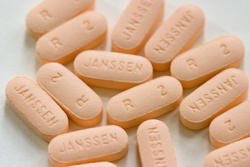
J&J to Agree to $1B Accord in Risperdal Probe

Thursday, January 5th, 2012

Bloomberg News – January 5, 2012

By Margaret Cronin Fisk, Jef Feeley and David Voreacos

 Johnson & Johnson will pay more than $1 billion to the U.S. and most states to resolve a civil investigation into marketing of the antipsychotic Risperdal, according to people familiar with the matter.

J&J, the world’s largest health products company, reached an accord last week with the U.S. attorney in Philadelphia, according to the people, who weren’t authorized to speak about the matter. It doesn’t resolve negotiations over a possible criminal plea, they said.

The U.S. government has been investigating Risperdal sales practices since 2004, including allegations the company marketed the drug for unapproved uses, J&J has said in Securities and Exchange Commission filings. The company said it has been in negotiations with the U.S. to settle this investigation.

J&J, based in New Brunswick, New Jersey, disclosed in August that it reached an agreement to settle a misdemeanor criminal charge related to Risperdal marketing. The company is in negotiations to pay about $400 million more to settle this portion of the investigation, one of the people said.

“We’re not going to comment on rumor or speculation,” Teresa Mueller, a J&J spokeswoman, said in a phone interview.

Company officials said in an SEC filing in May that they had reserved funds to resolve the government’s claims over Risperdal marketing. The company didn’t say how much had been set aside. The drugmaker said in an August filing it added an unspecified amount to the reserve to cover criminal penalties.

Accord Announcement

When the final settlement will be announced isn’t clear. The Justice Department typically announces civil and criminal resolutions at the same time in corporate cases.

A majority of U.S. states will join the settlement, the people said. Which ones will accept the final agreement hasn’t been determined, they said. Each state can decide whether to join the federal government’s settlement or pursue its own case.

Typically, states with cases in court continue to pursue their own. Texas alone is asking for more than $1 billion in a case that goes to trial next week.

J&J and its Janssen unit have been sued by 12 states, including Texas, South Carolina and Louisiana, over Risperdal marketing. The attorneys general of the other states “have indicated a potential interest in pursuing similar litigation against” Janssen, J&J said in its quarterly SEC filing in November.

A jury in Louisiana, weighing only the claim that the company downplayed the drug’s risks, awarded that state $257.7 million in 2010. A South Carolina judge last year ordered J&J to pay $327 million over Risperdal sold in the state.

Texas Suit

The Texas lawsuit, which involves additional allegations including off-label marketing, goes to trial next week.

“Discussions have been ongoing in an effort to resolve criminal penalties under the Food Drug and Cosmetic Act related to the promotion of Risperdal,” J&J said in its August SEC filing. “Certain issues remain open before a settlement can be finalized.”

“The ultimate resolution of the above criminal and these civil matters is not expected to have a material adverse effect on the company’s financial position,” J&J officials said in the filing.

The agreement in principle on the criminal charge is “pursuant to a single misdemeanor violation of the Food, Drug and Cosmetic Act,” the company said.

Risperdal is a member of a class of drugs, known as atypical antipsychotics, that includes Indianapolis-based Eli Lilly & Co.’s Zyprexa and London-based AstraZeneca Plc’s Seroquel.

Lilly, AstraZeneca and two other J&J competitors making these drugs have paid $2.7 billion to resolve government marketing claims, particularly that the companies pushed the drugs for unapproved uses.

Lilly paid more than $1.7 billion to resolve state and federal investigations over Zyprexa and AstraZeneca Plc has paid almost $590 million. Pfizer paid $301 million for its drug Geodon.

–With assistance from Alex Nussbaum in New York. Editors: Charles Carter, John Pickering

http://www.bloomberg.com/news/2012-01-05/j-j-to-agree-to-1b-accord-in-risperdal-probe.html


« Return to news items


Share

Profiting from mental ill-health

Tuesday, March 15th, 2011

There’s a reason psychiatrists prescribe drugs rather than talking therapy: the latter makes no money for pharmaceutical firms

The Guardian
By Harriet Fraad
March 15, 2011

More than one in ten Americans takes Prozac; the US comprises 5% of the world's population, yet consumes two thirds of psychological medications. Photograph: Stone/Jonathan Nourok/Getty

The New York Times recently led with a front-page splash about psychiatry’s propensity to prescribe pills, “Talk Doesn’t Pay, So Psychiatry Turns Instead to Drug Therapy”. That news is already widely known in the mental health field, but it has vast ramifications for Americans trying to maintain their sanity in our market-driven and medical system for delivering mental healthcare.

What does the turn to drug therapy mean for the mass of Americans?

Mental illness has not decreased with the change from talk therapy to drugs. In fact, as Robert Whitaker’s book diagnoses, mental illness in America has become an established epidemic. So-called miracle drugs like Prozac are taken by 11% of the population – and Prozac is only one of the 30 available antidepressants on the market. Antidepressants are accompanied by anti-anxiety and anti-psychotic drugs. Xanax, America’s leading anti-anxiety medication, is so ubiquitous that Xanax generates more revenue than Tide detergent, reports Charles Barber in his Comfortably Numb.

Anti-psychotics drugs alone net the pharmaceutical industry at least $14.6bn dollars a year. Psycho-pharmaceuticals are the most profitable sector of the industry, which makes it one of the most profitable business sectors in the world. Americans are less than 5% of the world’s population, yet they consume 66% of the world’s psychological medications.

Do these psycho pharmaceuticals work to restore mental health? Actually, the evidence is overwhelming that they fail. Antidepressants, the most popular psycho-pharmaceuticals, work no better than placebos. They work 25% of the time and stop working when the user stops taking them. In addition, they may actually harm patients in the long run. They disrupt brain neurotransmitters and may usurp the brain’s organic soothing functions.

Psycho-pharmaceuticals are less effective in the long run than talk therapy. Talk therapy, like drugs, does change brain and body chemistry; unlike drugs, though, talk therapy has no side-effects. Instead, talk therapy gives a patient tools that usually help to solve future problems. The latest research is most clearly expressed in both Irving Kirsch’s Antidepressants: The Emperors New Drugs and Gary Greenberg’s, Manufacturing Depression, both published last year. Kirsch is one of the world’s leading psychiatrists; Greenberg is one of the world’s most prestigious psychologists. Their views are echoed by many voices in the field of mental health. Why is prestigious and extensive research so widely ignored by doctors and patients alike? Our market-driven healthcare system gives us clues.

All 30 of the available antidepressants have suffered lawsuits within five years of their appearance on the market. These suits are often settled with large payments and gag clauses. The new generation of anti-psychotics are the latest case in point. Anti-psychotics were the single biggest targets of the False Claims Act. Every major company selling anti-psychotics – Bristol Meyers Squibb, Eli Lilly, Pfizer, Johnson and Johnson and AstraZeneca – has either settled investigations for healthcare fraud or is currently being investigated for it. Two recent settlements involving charges of illegal marketing set records for the largest criminal fines ever imposed on corporations. Their corporate logic is expressed in the words of Dr Jerome Avorn, a medical professor and researcher at Harvard: “When you are selling a billion a year or more of a drug, it’s very tempting for a company to just ignore the traffic ticket and keep speeding.”

There is also the widespread practice of paying physicians and psychiatrists heavy subsidies to recommend psycho-pharmaceuticals to their colleagues in small meetings at which a drug company representative is present. If doubt or criticism of the discussed drug is expressed, the doctor’s stipend stops. Another legally acceptable tool is to publish praise of a company’s drug in a scholarly article, which is often written by drug company personnel and simply tweaked by the physician whose name appears on the article. The physician is paid handsomely for such a service.

Under the pressure of legal settlements and embarrassing disclosures, eight pharmaceutical companies began posting doctors’ names and compensation on the web. ProPublica compiled these disclosures, totaling $320m, into a single database that allows patients to search for their doctor. Receiving payments for publishing articles written by drug companies is not illegal.

Two doctors, Dr Joseph Biederman and Dr Timothy Wilens of Harvard University Medical School, illustrate the close and cozy relationship between medical “scholarship” and drug companies. Drs Biederman and Wilens netted $1.6m each from drug companies for their work in recommending powerful anti-psychotic drugs for children. Biederman, Wilens and other extremely well-rewarded child psychiatrists are in part responsible for giving children the diagnosis of paediatric bipolar disorder for which anti-psychotic drugs like Risperidal and Zyprexa are used.

Experts agree that there is no long-term improvement in children’s lives from taking anti-psychotic drugs. In fact, these drugs have a substantiated pattern of metabolic problems and rapid weight gain that often leads to diabetes. The use of bipolar diagnoses and bipolar medications is one small example of how market-driven mental healthcare works in the United States. It illustrates the transformation of US healthcare into a system dominated by some of the richest corporations in the world.

Caring about profit is first, and that is why psychiatry has turned to drug therapy.

Read article here:  http://www.guardian.co.uk/commentisfree/cifamerica/2011/mar/15/psychology-healthcare

« Return to news items


Share

Pharma’s Drug Ads: From Million Dollar TV Ads to $1.7 Billion Internet Marketing Campaign

Monday, November 16th, 2009

November 16, 2009

On November 13th, 2009, Pharmaceutical companies flocked to a two-day FDA hearing into online drug advertising, which could influence their use of social media on the net. 1 Already, the explosive growth in online advertising has intensified public concerns: the pharmaceutical industry spent more than $1 billion on Internet ads last year and is projected to spend $1.7 billion on such marketing efforts in 2012, according to the Direct Marketing Association.2

Both Eli Lilly and Merck have received warning letters this year from the FDA accusing them of misleading online advertisements.3 But while the FDA scrambles to monitor online ads, who monitors the psychiatric-pharmaceutical industry’s use of front groups to indirectly market their products?

A Washington Post article of June 16, 2009 reported that an increasing number of pharmaceutical firms are turning to social media tools, such as Facebook, YouTube, Twitter and MySpace, to market their products.  It cites how a community site sponsored by drugmaker McNeil called “ADHD Allies”—aimed at adults with ADHD—was established and offered an online podcast on financial advice and an “ADHD self-assessment tool.”4

British psychiatrist Joanne Moncrieff explains how this ultimately increases drug sales because only a biomedical approach is promoted: “Drug companies…provide funds for pro drug patient and carer groups and address advertising or disease promotion campaigns to the general public…This influence has helped to create and reinforce a narrow biological approach to the explanation and treatment of mental disorders and has led to the exclusion of alternative” treatments.5

Such websites do not mention company’s product but rather market the “disease.” In advertising, it can be accomplished through a strategy known as “condition branding,” where “mental illness” can be pitched just like cars, beer or laundry detergent.  Witness the brand name “bipolar” and “social anxiety disorder” that drug companies marketed at a fever pitch.

John Read, PhD, Psychology Department, University of Auckland did an analysis of 54 random “advocacy” groups for Post Traumatic Stress Disorder (PTSD) through the Internet. The results, published in the Journal of Trauma & Dissociation this year, found 42% of the websites received drug company funding. The researchers found:

  • “Patients tend to trust these organizations to act in an unbiased manner” but as earlier researchers argued in some cases “patient organizations have become a mouthpiece for the pharmaceutical industry in influencing regulatory authorities.”
  • “Drug company influence within the area of mental health is prevalent and now extends to the Internet. This influence is not always transparent. This study suggests that drug company sponsorship of websites leads to a greater emphasis on pharmacology in the treatment of PTSD,” Dr. Read’s report concludes.6

ADHD Allies/ADHD Moms

In June 2008 Concerta was given an expanded indication by FDA and is now indicated for patients aged 6 to 65.7 In July 2008, McNeill Pediatrics—a subsidiary of Ortho-McNeill Pharmaceuticals—launched what they called an “unbranded group” called “ADHD Moms.” ADHD Moms markets the trademarked name “Mom-bassadors” to get mothers into the Facebook page. 8

  • McNeill spuriously claims “the group is not product-specific, nor are there any advertisements for the company’s ADHD drug Concerta (methylphenidate).” Well not directly, but providing material for the site is a Dr. Quinn, a paid consultant and speaker for McNeil Pediatrics. 9 April White, who also provides content is a paid spokesperson for McNeil Pediatrics.10
  • On April 22 2009, McNeill launched a second ADHD-focused Facebook page called “ADHD Allies,” this time targeting adults.  The “Allies” are board members of another front group Attention Deficit Disorder Association (ADDA), funded by McNeill.11
  • The pharmaceutical company has trademarked “ADHD Allies” and “ADHD Moms.”  ADHD Allies was responsible for a “2008 Harris Interactive survey of 1,000 adults with ADHD.” Not surprisingly, the survey found the condition significantly affects them. 12

Log onto The Bipolar Journey: Living With Bipolar Depression website and while it does show AstraZeneca on the home page, there’s no mention of its blockbuster antipsychotic drug Seroquel, approved by the FDA in 2006 for “bipolar.”  The site looks like a patient information site providing facts about the “disease” and misleadingly saying that it may be caused by a chemical imbalance—for which there is no evidence.

It refers people to the National Alliance for the Mentally Ill (NAMI) that has received $23 million recently from at least 18 drug companies. The site shows that of 17 cites for the exhibit’s showing in 2009, 12 are conferences or events put on by NAMI.

It also links to The Depression and Bipolar Support Alliance, a group that received close to $1 million in pharmaceutical company funding in 2007.

According to an August 27 2009 press announcement, AstraZeneca launched its interactive exhibit, endorsed by New York psychiatrist Janet Taylor. The press release does not mention that Dr. Taylor has financial ties to the company.13

In 2005, global sales for Seroquel reached $2.8 billion.  October 20, 2006, company announced Seroquel was FDA approved for bipolar.14 Within a year, sales reached $3 billion and then soared again in 2008 to $4.66 billion.15

By funding social media front groups that talk only about the “disorder,” drug companies can overcome fears of running afoul of FDA regulations that govern drug advertising and “are embracing social networks to help brand and position their companies in a positive light with consumers and practitioners.”  The top 10 drug companies using social media are: Pfizer, Johnson and Johnson, Novartis, Boehringer Ingelheim, AstraZeneca US, Bayer, GlaxoSmithKline, Sanofi-Aventis, Roche, and Merck.16

This post was written by CCHR International.
Coming next from CCHR Int: Psycho Pharma Front Groups

1 “FDA Addresses Drug Ads in Online Social Media,” Red Orbit, 13 Nov. 2009.

3 “FDA Addresses Drug Ads in Online Social Media,” Red Orbit, 13 Nov. 2009.

5 Joanne Moncrief, in a “Study of the Influence of the Pharmaceutical Industry on Academic and Practical Psychiatry,” http://www.critpsynet.freeuk.com/pharmaceuticalindustry.htm

6 http://www.isst-d.org/jtd/mansell_&_read_ptsd_drug_cos_&_internet%20.pdf; Journal of Trauma & Dissociation, 10:9–23, 2009

12 “Adults ‘Facing’ ADHD: ADHD Allies™ Offers Unique Online Community for Adults with ADHD on New Facebook® Page,” http://multivu.prnewswire.com/mnr/concerta/36533/

RETURN TO BLOGS PAGE


Share