Posts Tagged ‘J&J’

J&J Paid Texas Official to Speak Around the U.S., Jury Told

Wednesday, January 11th, 2012

Johnson & Johnson’s Janssen unit paid a Texas mental health official to speak around the U.S. about state guidelines on prescribing antipsychotic drugs that gave preference to medicines like the company’s Risperdal, the official said.

Steven Shon accepted honorariums to fly to Arizona, Florida and New Jersey to discuss Texas guidelines developed in 1999 advising doctors that a newer class of drugs like Risperdal were a “first choice or option” for schizophrenia, he testified today in state court in Austin. Texas is suing J&J, saying the company fraudulently promoted Risperdal and overbilled Medicaid by at least $579 million.

State lawyers say Janssen’s payments to Shon were part of a scheme to influence development of the guidelines, known as the Texas Medication Algorithm Project, or TMAP, and tout them as a model for other states trying to advise doctors on prescribing drugs. Shon was asked how often he went around the U.S. to talk to other states about the TMAP.

“I would say once or twice a month for a period of several years,” Shon said in a video deposition shown to jurors on the trial’s second day of testimony. “I knew that Janssen paid for a substantial number of those trips.”

Texas also claims that New Brunswick, New Jersey-based J&J, the world’s largest health-care products company, defrauded the state Medicaid program by promoting Risperdal for uses not approved by U.S. regulators, including for children with psychiatric disorders. The state joined a lawsuit filed by a whistle-blower, Allen Jones, a former investigator for the Pennsylvania Office of Inspector General.

Medical Director

Attorneys for Jones questioned Shon, who served as medical director of the Texas Department of Mental Health and Mental Retardation until he involuntarily retired in 2006.

Shon testified that he served on Janssen advisory boards, was a board member of a Janssen publication called “Mental Health Issues Today” and was a continuing medical education speaker in programs sponsored by the company.

Shon was asked about six trips in which he got honorariums of $3,000 from Janssen to discuss the TMAP project. In several cases, he kept those payments, he said.

In testimony yesterday, a Texas Medicaid investigator said Shon signed several consulting agreements with Janssen, and the company paid him $47,587 over several years.

Jones’s attorney Thomas Melsheimer asked Shon about Texas regulations that bar a public official from “soliciting, accepting or agreeing to accept any honorarium for doing services” that he wouldn’t be asked to provide “but for that person’s official position or duties.”

Outside of Texas

Shon said his TMAP talks outside of Texas didn’t conflict with his official duties, and he gave them during compensatory time. When asked about a 2000 trip to Scottsdale, Arizona, when his timesheet showed he was at work, he said: “It appears that things were not recorded correctly.”

On cross-examination, Shon said Janssen had no influence over the development of the TMAP guidelines.

He said a state attorney, Cathy Campbell, told him that his appearances in other states were proper. He said he usually gave his honorariums to the state, based on Campbell’s advice.

In those cases when he kept the payments, Shon said, the lawyer advised him that his actions were proper.

‘Something Wrong’

“Did anybody ever tell you that you were doing something wrong in conjunction with your work with TMAP?” a J&J attorney asked Shon.

“No,” he answered.

Shon said he left his state job when he was told “it was time to move on,” he testified.

“Did anybody ever tell you that you had done something wrong, and that’s why it was time to move on?” he was asked.

“No,” he said.

In his opening statement yesterday, Melsheimer said J&J made $34 billion in Risperdal sales after its launch in 1994.

J&J denies wrongdoing and never acted illegally, attorney Stephen McConnico told jurors yesterday in his opening statement.

The case is State of Texas ex rel. Jones v. Janssen LP, D- 1GV-04-001288, District Court, Travis County, Texas (Austin).

Read article here:  http://www.bloomberg.com/news/2012-01-11/johnson-johnson-paid-texas-official-to-speak-around-the-u-s-jury-told.html


« Return to news items


Share

J&J to Agree to $1B Accord in Risperdal Probe

Thursday, January 5th, 2012

Bloomberg News – January 5, 2012

By Margaret Cronin Fisk, Jef Feeley and David Voreacos

 Johnson & Johnson will pay more than $1 billion to the U.S. and most states to resolve a civil investigation into marketing of the antipsychotic Risperdal, according to people familiar with the matter.

J&J, the world’s largest health products company, reached an accord last week with the U.S. attorney in Philadelphia, according to the people, who weren’t authorized to speak about the matter. It doesn’t resolve negotiations over a possible criminal plea, they said.

The U.S. government has been investigating Risperdal sales practices since 2004, including allegations the company marketed the drug for unapproved uses, J&J has said in Securities and Exchange Commission filings. The company said it has been in negotiations with the U.S. to settle this investigation.

J&J, based in New Brunswick, New Jersey, disclosed in August that it reached an agreement to settle a misdemeanor criminal charge related to Risperdal marketing. The company is in negotiations to pay about $400 million more to settle this portion of the investigation, one of the people said.

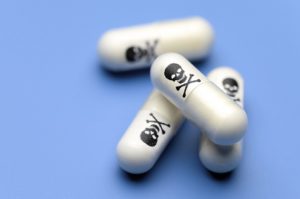
“We’re not going to comment on rumor or speculation,” Teresa Mueller, a J&J spokeswoman, said in a phone interview.

Company officials said in an SEC filing in May that they had reserved funds to resolve the government’s claims over Risperdal marketing. The company didn’t say how much had been set aside. The drugmaker said in an August filing it added an unspecified amount to the reserve to cover criminal penalties.

Accord Announcement

When the final settlement will be announced isn’t clear. The Justice Department typically announces civil and criminal resolutions at the same time in corporate cases.

A majority of U.S. states will join the settlement, the people said. Which ones will accept the final agreement hasn’t been determined, they said. Each state can decide whether to join the federal government’s settlement or pursue its own case.

Typically, states with cases in court continue to pursue their own. Texas alone is asking for more than $1 billion in a case that goes to trial next week.

J&J and its Janssen unit have been sued by 12 states, including Texas, South Carolina and Louisiana, over Risperdal marketing. The attorneys general of the other states “have indicated a potential interest in pursuing similar litigation against” Janssen, J&J said in its quarterly SEC filing in November.

A jury in Louisiana, weighing only the claim that the company downplayed the drug’s risks, awarded that state $257.7 million in 2010. A South Carolina judge last year ordered J&J to pay $327 million over Risperdal sold in the state.

Texas Suit

The Texas lawsuit, which involves additional allegations including off-label marketing, goes to trial next week.

“Discussions have been ongoing in an effort to resolve criminal penalties under the Food Drug and Cosmetic Act related to the promotion of Risperdal,” J&J said in its August SEC filing. “Certain issues remain open before a settlement can be finalized.”

“The ultimate resolution of the above criminal and these civil matters is not expected to have a material adverse effect on the company’s financial position,” J&J officials said in the filing.

The agreement in principle on the criminal charge is “pursuant to a single misdemeanor violation of the Food, Drug and Cosmetic Act,” the company said.

Risperdal is a member of a class of drugs, known as atypical antipsychotics, that includes Indianapolis-based Eli Lilly & Co.’s Zyprexa and London-based AstraZeneca Plc’s Seroquel.

Lilly, AstraZeneca and two other J&J competitors making these drugs have paid $2.7 billion to resolve government marketing claims, particularly that the companies pushed the drugs for unapproved uses.

Lilly paid more than $1.7 billion to resolve state and federal investigations over Zyprexa and AstraZeneca Plc has paid almost $590 million. Pfizer paid $301 million for its drug Geodon.

–With assistance from Alex Nussbaum in New York. Editors: Charles Carter, John Pickering

http://www.bloomberg.com/news/2012-01-05/j-j-to-agree-to-1b-accord-in-risperdal-probe.html


« Return to news items


Share

J&J drug protocols cost taxpayers millions—Lawsuit claims Investigator fired after going public on J&J’s anti-psychotic drug campaign

Tuesday, November 22nd, 2011

The Daily Record, by Michael L. Diamond
November 22, 2011

Allen Jones was curious.

Why did Pennsylvania use a computer program that often pointed to a Johnson & Johnson drug over other, cheaper medicine to treat certain mental illnesses, the investigator for the Keystone State’s Office of Inspector General wanted to know (article continued below video)

Video: Whistleblower Allen Jones on pharmaceutical ties to nation wide efforts to screen children for ‘mental disorders’

(Cont…) While the computer program mandated doctors use a new line of anti-psychotic drugs, including Risperdal, sold by J&J’s subsidiary Janssen companies, Jones said he couldn’t find government-funded medical studies showing that these new drugs were any more effective than their generic predecessors.

Jones’ 2002 inquiry into the drug added to a chain of events that ultimately led Texas to sue New Jersey-based health care giant Johnson & Johnson on claims it orchestrated a multimillion-dollar violation of the Texas Medicaid Fraud Prevention Act.

Jones said in an interview that it was his belief that the company “substituted opinion for science.”

Johnson & Johnson’s sales strategy turned Risperdal, a drug approved by the FDA to treat only schizophrenia and bipolar disease, into a blockbuster that the company sold for those illnesses and, unlawfully, many more, according to the Texas lawsuit.

Risperdal cost substantially more than older, generic drugs and generated more than $25 billion for the company before its patent expired in 2007, according to court records. But the drug often was no more effective at treating mental disorders than older drugs, the National Institute of Mental Health found. Because Medicare and Medicaid paid many of the bills, it cost taxpayers millions, according to federal and state lawsuits.

Twelve states, including Pennsylvania and Texas, have sued Janssen to recover some of the money they spent on Risperdal. South Carolina and Louisiana each were awarded more than $250 million last year. The case brought by Pennsylvania, where Jones first made his discovery, was dismissed in June 2010 after a state judge ruled prosecutors didn’t provide enough evidence. West Virginia lost its case on appeal. The cases in Louisiana and Pennsylvania have been appealed. The company said it intends to appeal the case in South Carolina. Texas and the seven remaining cases are awaiting trial.

The U.S. Justice Department also is investigating the marketing of Risperdal. J&J said in an August filing with the U.S. Securities and Exchange Commission that it is negotiating a settlement and has agreed, “in principal,” to plead guilty to a misdemeanor for violating the Food, Drug and Cosmetic Act. No plea has been made yet.

New Jersey hasn’t filed a lawsuit. It isn’t clear how much the state spent on Risperdal in the last 10 years. New Jersey’s Division of Medical Assistance and Health Services refused to provide the information unless the Asbury Park Press paid a $5,071 processing fee. The Press declined to pay the fee.

The Risperdal legal dispute is an example of a problem that is endemic in the pharmaceutical industry, some doctors say. Government-funded studies about the drug’s effectiveness weren’t published until more than a decade after the drug was first approved.

In the case of Risperdal, “we’re spending money on a drug that isn’t superior and might be inferior to other drugs that cost a fraction as much,” said Dr. John David Abramson, a health care policy expert at Harvard University and author of “Overdosed America,” who investigated the drug for Louisiana’s lawsuit.

“It ought to make honest citizens 
 want to throw up to see that this money is being extracted from society for no gain, when our country is headed toward financial ruin,” Abramson said.

Whistle-blower fired

Allen Jones, the Pennsylvania investigator, was fired in 2004 after going public with his claims, but he continued to investigate, eventually becoming a plaintiff and whistle-blower in a Texas state lawsuit against Janssen. That trial is scheduled to start Jan. 9.

Risperdal was approved by the FDA in 1993 to treat patients with schizophrenia and, a decade later, patients with bipolar disorder. Janssen, on its website, also says the drug can help treat some symptoms of autism in children and adolescents.

With it came the chance for Janssen to replace Haldol, an anti-psychotic drug that Belgian scientist Paul Janssen himself helped develop in the 1950s, just before Johnson & Johnson bought his company in 1961.

Older anti-psychotic drugs had been available in generic form for decades. Risperdal and a new generation of anti-psychotics came to market in the 1990s at a cost that far exceeded the older drugs, according to the Texas lawsuit.

J&J said Risperdal not only would be safer and more effective than the first generation of anti-psychotic drugs, but also could treat mental disorders other than schizophrenia and bipolar disorder, according to the Texas lawsuit.

Janssen’s medical studies weren’t conclusive enough for the FDA to claim Risperdal was more effective than either Haldol and its generic versions or the new anti-psychotic medicine on the market, the Texas lawsuit said.

Unable to tout Risperdal’s superiority, Janssen got the message to doctors anyway, according to legal documents and interviews. The methods included:

Middlemen. Johnson & Johnson teamed with Omnicare, the nation’s largest pharmacy manager for long-term care facilities, to ensure Omnicare’s pharmacists would recommend Johnson & Johnson’s drugs, according to a lawsuit against J&J filed in Massachusetts in 2010 by the U.S. Justice Department.

Omnicare cared for 1.4 million clients in 47 states. Its annual purchases of Johnson & Johnson drugs climbed from $100 million in 1999 to $280 million in 2004. And its purchases of Risperdal alone exceeded $100 million a year, according to the lawsuit.

The lawsuit claims J&J paid Omnicare tens of millions of dollars in grants, rebates, sponsorships and educational funding — payments that the federal government considered kickbacks.

A substantial portion of the prescriptions were paid by taxpayers through Medicaid, the government said. (Omnicare in 2009 agreed to pay $98 million and settle separate charges by the U.S. that it took kickbacks from J&J. The company didn’t admit wrongdoing).

Read the rest of the article here

« Return to news items


Share

Risperdal drug maker faces $1B in lawsuits, yet mother charged for refusing use on child

Tuesday, August 16th, 2011

NaturalNews – August 16, 2011

by Monica G. Young

Click image to visit CCHRInt's Psychiatric Drug Side Effects Search Engine

What irony. Detroit mother, Maryanne Godboldo, was just charged with child neglect for refusing to obey a Child Protective Services order to give her daughter Risperdal, a powerful psychoactive drug. Meanwhile federal and multiple state prosecutors are suing Johnson & Johnson for deceptively marketing the drug – including mismarketing its use on children – and hiding dangerous adverse effects. J&J now faces a potential $1 billion in damages.

Having earlier observed the drug’s dreadful effects on her child, Maryanne was correctly pursuing holistic treatment for the child instead when the legal battle began. The jury’s ruling, now handed down against the mother, is not only a travesty of justice, but a reflection of psychopharma’s vast propaganda machine. (http://www.naturalnews.com/033295_p…)

Fortunately not everyone is fooled. The US Department of Justice (DOJ) has been investigating J&J for years in regards Risperdal – its sales practices, pay-offs to doctors to promote the drug, and failures to disclose harmful effects. The pharma giant has now tentatively agreed to settle a misdemeanor criminal charge, however the DOJ and US attorney’s office are pursuing additional criminal actions.

The government plans to join civil lawsuits filed by company whistleblowers, aiming to recover millions of dollars paid for prescriptions via government health programs like Medicare and Medicaid.

Already multimillions in fines have been levied against J&J for this powerful antipsychotic which is widely prescribed not only for schizophrenia but mood and anxiety disorders, dementia and other unapproved uses.

In June, a South Carolina judge demanded the company pay $327 million to the state for deceptively marketing Risperdal and concealing its dangers. The judge called J&J’s practices “detestable.” Last October, a Louisiana jury ordered the company to ante up $257.7 million for misleading claims about the drug’s safety.

Recently, Massachusetts Attorney General joined the fight, filing a lawsuit against J&J for illegal marketing and failing to disclose “an increased risk of death” connected with the drug.

In Texas the Attorney General Office has joined forces with whistleblowers, with a jury trial scheduled for this fall. This lawsuit alleges that Janssen, J&J’s pharmaceutical division, intentionally marketed Risperdal for use on children even though it was only approved for adult schizophrenia. The suit also involves a company scheme to boost prescriptions by paying hundreds of thousands of dollars to “experts” to evaluate and recommend the drug state-wide and nationally. Awarded damages are anticipated to be much larger than in South Carolina or Louisiana. Texas has paid more than $500 million for the drug since it was first brought to the market.

Attorneys general in about 40 other states have shown interest in suing the company.

Users speak out – beware of this drug!

(Note from CCHRInt –search Risperdal or antipsychotic drug side effects in CCHR’s Psychiatric Drug Database here http://www.cchrint.org/psychdrugdangers/drug_warnings.php – simply type in Risperdal  in the Red Search box or choose it from the drop down menu)

Risperdal’s documented “side effects” include huge weight gain, diabetes, lethargy, muscular tics, breast development in males, and many more.

Below are just a few sample statements made online by individuals from their experience with this so-called “medication” (the root word of medicate means “to heal”):

“Basically I lost the drive for everything. Total shut down to my outgoing personality. Massive weight gain.”

“Tardive dyskinesia [involuntary movement disorder], diabetes, gained 100 pounds in the first year, was a zombie… I was put on this nightmare drug when I was six. I was forced to take it against my will, and it ruined my life… This is a horrible, HORRIBLE drug, and should be banned.”

“Apathy, not talking, just staring, sleeping constantly, tongue movements, loss of sexual function. This is a very BAD DRUG…a mental straight jacket. DO NOT put children on this drug!!! It’s poison.”

“I gained weight, became very tired, and of course that just led them to put me on antidepressant medications…. I have been on it since fifth grade and hardly knew what was happening to me.”

“My son has gained over 100 pounds… He was an excellent student, received a doctorate and now cannot even remember what he studied. He sleeps all day and cannot work a job. His quality of life is nil. His mouth twitches and he has no control over it… It is like taking a dose of legalized poison every day. This is a LIFE WASTED AND RUINED, a brilliant mind destroyed and tortured. As a mother, it rips out my heart every day.”

Yet per Johnson & Johnson annual reports, global Risperdal sales from 1994-2010 totaled nearly $29 billion.

http://www.naturalnews.com/033336_Risperdal_child_neglect.html

Sources for this article include:

http://www.google.com/hostednews/ap…

http://www.thefix.com/content/jj-su…

http://www.reuters.com/article/2011…

http://www.kxan.com/dpp/news/invest…

« Return to news items


Share

Claim: J&J Wrongly Marketed Antipsychotic Drug Risperdal to Kids

Wednesday, August 3rd, 2011

BNET – August 3, 2011
by Jim Edwards
The FDA told Johnson & Johnson (JNJ) in 1997 that its request to market the antipsychotic drug Risperdal for children was “without any justification.” In the following years, J&J’s army of pharmaceutical sales reps made 100,000 sales calls on child and adolescent psychiatrists, justifying this by “qualifying” the docs if they had as few as one adult patient exhibiting signs of schizophrenia, according to a lawsuit.

It was a distinction only a lawyer can love, and now the Massachusetts attorney general is using it against J&J and its Janssen unit, alleging that J&J’s promotion of Risperdal for children was misleading.

J&J had initially asked the FDA to approve the drug for use in children, and the FDA eventually allowed limited use in the over-10s in the 2006 and 2007. But in 1997, without clinical evidence to back its request, the FDA frowned on use of the drug for children. In a latter the J&J, the FDA wrote:

To permit the inclusion of the proposed vague references to the safety and effectiveness in pediatric patients and the nonspecific cautionary advice about how to prescribe Risperdal for the unspecified target indications would serve only to promote the use of this drug in pediatric patients without any justification.

“Promote use of this drug in pediatric patients” is exactly what J&J then did, according to the suit:

From January 1994 through September 2006, Janssen sales representatives directly promoted Risperdal to thousands of child and adolescent psychiatrists and pediatricians even though Risperdal was not approved to treat any pediatric conditions until October 2006.

Doctors were paid $1,000 to attend J&J’s pediatric “advisory board” meetings held at posh resorts, and eventually Risperdal reached a 50 percent share of pediatric antispychotic category, the suit alleges.

Kids grew breasts, docs went to the Four Seasons

This success came at some price to the children receiving the drug, as Risperdal’s side effects include weight gain, diabetes and “galactarhea,” the premature production of breast milk in both boys and girls. One of J&J’s sales reps made this internal sales call note on that issue:

An August 2, 2001 call note (000000244279 ) reports on a sales call with a Braintree doctor: “. . . . She is using Risperdal with great success in kids ala Biederman. She did mention galactarhea so I told her how Biederman is using Dostinex. She is going to get more info on this dopamine agonist. She is going to attend the 4 Seasons event.”

“4 Seasons” is likely a reference to the posh Four Seasons hotel in Boston (its indoor pool is pictured). The Biederman

name is familiar to anyone following the Risperdal saga, of course. Joseph Biederman was the Harvard medical school doctor who was paid by J&J to churn out reams of studies promoting Risperdal in kids. He became infamous when he suggested in a deposition that he was one pay-scale below God.

http://www.bnet.com/blog/drug-business/claim-j-j-wrongly-marketed-antipsychotic-drug-risperdal-to-kids/9344

For more information on Joseph Biederman – http://www.cchrint.org/2011/07/22/pharma-funded-psychiatrists-behind-bogus-child-bi-polar-epidemic-disciplined-for-conflicts-of-interest/

« Return to news items


Share

WSJ: Feds want $1B settlement in J&J Risperdal probe

Friday, May 13th, 2011

FiercePharma
By Tracy Staton
May 13, 2011

Johnson & Johnson could be on the hook for about $1 billion to settle the government probe into its Risperdal marketing. Prosecutors are looking for a settlement about that size, the Wall Street Journal reports, citing sources. That would be the third-largest marketing settlement between a Big Pharma company and the U.S. government; only Pfizer and Eli Lilly have made larger deals with the feds.

Earlier this week, J&J disclosed to the SEC that it had set aside an unspecified amount to cover a potential Risperdal settlement. The company had already taken a $1.4 billion charge against first-quarter earnings to cover legal costs.

The WSJ says J&J officials were surprised that prosecutors were pressing for such a large settlement. Prosecutors are trying to put a settlement of Risperdal marketing claims into context, using as a benchmark Lilly’s $1.4 billion deal to resolve a Zyprexa marketing probe. The difference between the two was that Lilly’s alleged violations extended over a longer period of time, the WSJ source said. The particular allegations against J&J haven’t been disclosed.

The Justice Department has settled a number of marketing cases against Big Pharma over the last several years, and the pace of those deals increased last year. Drugmakers together have paid more than $10 billion to settle government probes; in 2010, the industry’s whistleblower settlements topped the Justice Department charts.

Read article here:  http://www.fiercepharma.com/story/wsj-feds-want-1b-settlement-jj-risperdal-probe/2011-05-13

« Return to news items


Share

Internal J&J Emails Detail “Ugly” Chapter in Mismarketing of Antipsychotics

Friday, March 25th, 2011

BNET
By Jim Edwards
March 25, 2011

One of the reasons Johnson & Johnson (JNJ) lost a recent trial verdict over its misleading marketing of Risperdal was because jurors saw the company’s internal emails in which senior staff described their own actions as “ugly” and not “competent.”

Although the emails don’t reveal anything we don’t already know about Risperdal — J&J marketed the atypical antipsychotic for years by playing down the risk of weight gain and diabetes associated with the drug — the communications do give us a rare glimpse into the backbiting that happens inside drug companies when they fall afoul of the FDA. Pharmaceutical companies almost never discuss this kind of thing in public. (The documents can be downloaded at CourtroomView Network.)

In 2003, the FDA became increasingly concerned that use of drugs such as Risperdal and Eli Lilly (LLY)’s Zyprexa led to weight gain, diabetes and, in some patients, an early death. So it wrote to all antipsychotic drug companies to require them to send a “dear health care provider” letter to all U.S. doctors advising them of this risk:

But J&J began trying to figure out whether the “dear doctor letter” could actually be used to promote Risperdal, which executives believed was not as risky as similar drugs. SVP/R&D Scott Reines had seen a previous “dear doctor letter” from Eli Lilly that had used the same sleight of hand, and he asked a colleague, “how much commercial liability would we incur if we sent a similar letter about Risperdal”?:

When J&J’s letter went out, instead of heightening doctors’ awareness of the risk of diabetes it said the opposite: “Risperdal is not associated with an increased risk of diabetes”:

The FDA — unsurprisingly — hit the roof, and sent J&J a warning letter, blasting the company for being “false and misleading.”

Inside J&J, Reines was furious: “The whole management team almost got canned,” he wrote to chief medical officer Joanne Waldstreicher. “The warning letter is ugly 
 it’s really a black mark for J&J 
  [and] no competent person would have let [the 'dear doctor letter'] go out”:

J&J faces up to $36 million in fines as a result.

Read article here:  http://www.bnet.com/blog/drug-business/internal-j-j-emails-detail-8220ugly-8221-chapter-in-mismarketing-of-antipsychotics/7743

« Return to news items


Share

J&J Duped South Carolina Doctors Over Risperdal, Lawyer Says

Wednesday, March 23rd, 2011

Bloomberg Business Week – March 23, 2011

By Jef Feeley and Gary Henderson

Johnson & Johnson executives deceived South Carolina doctors about the safety of the antipsychotic drug Risperdal, and the drugmaker should be held liable for that deception, a lawyer said.

J&J made misleading claims about Risperdal’s health risks and effectiveness in a letter to more than 7,000 South Carolina doctors and that violated consumer protection laws, John Simmons, a lawyer for the state, said in closing arguments of the trial of a lawsuit seeking at least $360 million in penalties.

The drugmaker, based in New Brunswick, New Jersey, used “unfair and deceptive acts” in a marketing campaign designed to dupe doctors into signing off on Risperdal for mental-health patients, Simmons told jurors today.

The state’s case centers on drug-safety claims that J&J and its Ortho-McNeil-Janssen Pharmaceuticals unit made in November 2003 correspondence to 700,000 doctors across the U.S., including 7,200 in South Carolina. The U.S. Food and Drug Administration responded with a warning letter saying J&J made false and misleading claims that minimized the potentially fatal risks of diabetes and overstated the drug’s superiority to those from competitors.

J&J contends the state hasn’t proved the company set out to mislead doctors about Risperdal or started a “spin campaign” to bolster sales of the drug, Steven J. Pugh, one of the drugmaker’s lawyers, said in his closing statement.

Fall in Sales

South Carolinians with mental-health issues “have benefited from Risperdal,” Pugh said. “You haven’t heard that anyone in South Carolina has been harmed by Risperdal.”

Risperdal’s global sales peaked at $4.5 billion in 2007 and declined after the company lost patent protection. It generated $3.4 billion in sales in 2008, or 5.4 percent of J&J’s total sales, according to company filings. Sales of the drug fell to $527 million last year, according to a January earnings report.

Risperdal Consta, the long-acting version of the antipsychotic drug, generated $1.5 billion in sales last year for Johnson & Johnson, officials said this month.

Under South Carolina’s unfair trade practices law, if jurors decide Johnson & Johnson deceived doctors about Risperdal in the 2003 letter, the company can be fined as much as $5,000 for each letter. Judge Roger Couch will decide the financial- penalty issue after jurors hand down their decision.

Third Jury Trial

The case is the third of about 10 state lawsuits to be considered by jurors over J&J’s Risperdal marketing campaigns. In June, J&J won dismissal of Pennsylvania’s suit alleging the company hid the drug’s diabetes risk and tricked regulators into paying millions more than they should have for the medicine.

A Louisiana jury ordered the drugmaker in October to pay $257.7 million in damages to that state for making misleading claims about Risperdal’s safety. A judge later added $73 million in legal fees to the award.

A West Virginia judge in a 2009 non-jury trial awarded $3.95 million, finding the company misled doctors about the risks and benefits of Risperdal. The state dropped its Risperdal claim after J&J won an appeal, company officials said in February.

J&J’s Risperdal letter to doctors was part of a campaign to protect billions of dollars in sales of the antipsychotic drug and showed a lack of concern for the safety of South Carolina patients who took the drug, Simmons said.

The drugmaker set up a “spin machine” to deceive doctors about the drug and hid studies casting doubt on the medication’s safety and effectiveness, the lawyer said. “It was all about the money,” he added.

‘Send a Message’

“You have the power to send a message to these companies that you can’t hide stuff,” Simmons said. “Tell them, no unethical, immoral conduct in South Carolina.”

The Risperdal letter in the state’s crosshairs isn’t a proper basis for the attorney general’s claims that the drugmaker violated consumer-protection laws, Pugh countered.

The FDA warned J&J in 2004 to correct some things in the letter, but never formally sanctioned the drugmaker for sending it out, the lawyer added.

“The November 2003 letter was true then and it’s true now,” Pugh said. Risperdal is different from other antipsychotic medicines and “doctors needed to know that,” he added.

Jurors will begin deliberating the case tomorrow.

Read the rest of the article here: http://www.businessweek.com/news/2011-03-21/j-j-duped-south-carolina-doctors-over-risperdal-lawyer-says.html

« Return to news items


Share

Psychiatric drug industry driven by wealth and stealth, not mental health

Tuesday, March 22nd, 2011

Natural News
By Monica Young
March 22, 2011

Drug company corporate websites tell us of their integrity and utmost commitment to people’s health and well-being. The American Psychiatric Association’s website begins with “Healthy Minds. Healthy Lives” and asserts the “highest ethical standards of professional conduct.” Yet a mountain of evidence points to an entirely different picture.

Most recently, thirty-eight state attorneys won a $68.5 million settlement with pharmaceutical titan AstraZeneca for unlawful marketing of antipsychotic Seroquel for unapproved use. These states also charged this company with failing to disclose the drug’s harmful side effects and concealing negative information about its safety and efficacy. “The company’s illegal practices put our most vulnerable populations at risk, including children and older patients with dementia and other debilitating diseases,” states Illinois Attorney General. U.S. sales of Seroquel brought in $5.3 billion for AstraZeneca last year.

Looking further, it’s evident that the pharmaceutical industry is fraught with fraud. For instance, the new generation of antipsychotics is the single biggest target of the False Claims Act. Every major drug company selling the drugs has either settled recent government cases for hundreds of millions of dollars or is under investigation for health care fraud.

Psychiatric drugs are notoriously high-priced. A year’s supply of one top antipsychotic is $7,000. A recent Biosocieties (scientific journal) article, entitled, “Demythologizing the high costs of pharmaceutical research,” exposes that drug companies widely exaggerate research costs to justify these prices. These companies typically cite a 2003 industry-funded study to claim a tag of over $1 billion to research and bring a drug to market. A new independent analysis indicates the figure is closer to $55 million.

Meanwhile drug company CEOs are some of the most excessively paid CEOs on Wall Street. Johnson & Johnson CEO’s publicly reported total compensation for 2009 (the last report available) was $25.6 million, including salary, bonus, stock options and other perks. This is three times the average for CEOs of S&P 500 companies and over 500 times the median American household income. His base salary was raised this year, despite an ongoing lawsuit, backed by the Department of Justice, accusing J&J of involvement in a kickback scheme to push their antipsychotic on elderly nursing home residents.

Drug manufactures spend billions yearly on marketing and advertising, far beyond what they spend on research. Billions go into direct to consumer advertising which drums a mantra to the masses: “ask your doctor if (___ medication) is right for you.” Billions are poured into marketing to doctors, including via drug sales reps – one of the most lucrative sales jobs in the U.S.

One ex-drug sales rep, Shahram Ahari, told a Senate Aging Committee that on top of a base salary for starting reps of $50,000, “there were four quarterly bonuses, an annual bonus, stock options, a car, 401k, great health benefits, and a $60,000 expense account.” He said his job involved “rewarding physicians with gifts and attention for their allegiance to your product and company despite what may be ethically appropriate.”

Another former drug sales rep and author of Confessions of an RX Drug Pusher, Gwen Olsen, says it’s all about the money. She described her hiring process. When asked why she wanted to become a pharmaceutical sales rep, she said she wanted to help people. The regional manager replied, “If that’s the case, you might want to join the Peace Corps…But if money is what motivates you, young lady, let me tell you how you can retire a millionaire.” Gwen reports that every manager she worked for said children are their biggest and most profitable expansion market.

Psychiatrists cash in big time as drug-pushers. The faster they shuffle people in and out for 15-minute medication management visits, the more they fill their deep pockets.

A recent New York Times article “Talk Therapy Doesn’t Pay, So Psychiatry Turns Instead to Drug Therapy,” gives an example of a practicing psychiatrist since 1972. He likens his office now to a bus station. In the old days of 45-minute talk sessions, “he knew his patients’ inner lives better than he knew his wife’s; now, he often cannot remember their names,” states the author. The doctor admits, “I had to train myself not to get too interested in their problems.”

And how much does the average psychiatrist make a year peddling drugs? $191,000.

Worldwide sales of antidepressants, stimulants, antianxiety and antipsychotic drugs exceed $82 billion a year. Yet for all the wealth this has brought these industries, are people truly getting better?

Psychiatric drugs have repeatedly proven to not only be extremely hazardous to one’s health but can be life-threatening and even fatal. Now the Archives of General Psychiatry has released scientific proof that antipsychotic drugs shrink brain tissue. (No wonder psychiatrists are called “shrinks”!)

Science journalist and author, Robert Whitaker, reports that long-term use of psychiatric medications is actually causing more mental illness – not less. He states “what you find with them when you look at long term outcomes, you see more people having chronic symptoms long term than you do in the unmedicated.”

Whitaker also points to disability statistics. Since the boom of psychiatric prescriptions began in 1987, adults on disability for mental illness more than tripled to 4 million. Amongst those on disability, the percentage of children has risen from about 5% in 1987 to over 50% today.

Of course the pill-pushers and their hordes of paid lobbyists, advocacy groups and spokesmen want us to believe that this means more mentally ill are finally getting the drug treatment they really need.

But who wants to believe a bunch of liars anyway?

« Return to news items


Share

Justice to Pharma: “Do the Perp Walk!”

Wednesday, November 17th, 2010

PharmaExec.com – November 17, 2010

by Walter Armstrong

Former GSK counsel is the first target in government’s executive-liability crackdown. Could J&J be next?

The US Department of Justice filed criminal charges last week against Lauren Stevens, a former VP and assistant general counsel at GlaxoSmithKline. Going after pharma execs marks a seismic shift in the government’s efforts to stem the tide of fraud and other illegal pharma marketing practices, which a raft of billion-dollar settlements have so far failed to end. Stevens is charged with obstruction of an investigation, concealment and falsification of documents, and making false statements to the FDA in its 2002 investigation of off-label promotion of the antidepressant Wellbutrin for weight loss, an indication for which it has never been approved but has shown some clinical benefit. The DoJ says that it has evidence, in the vast paper and electronic documentation turned over by GSK, showing that Stevens hid and otherwise misled the agency about some 1,000 instances of GSK-paid doctors promoting Wellbutrin for weight loss to other doctors.

Officials had warned that they would target “repeat offenders,” and GSK certainly qualifies for that dubious distinction. The British firm has racked up some of the biggest settlements of the past decade, including $750 million in October to put to rest civil and criminal charges arising in part from a whistleblower suit filed by a quality-control cop who was fired after she advised temporarily shutting down one of its major manufacturing plants because it was routinely producing adulterated drugs (and selling some of them on the black market) between 2001 and 2005. GSK execs chose instead to look the other way. The former compliance advisor’s cut of the settlement was a record-setting $96 million.

In fact, GSK has been making headlines for all the wrong reasons this year: Prior to the whistleblower suit settlement news came the denouement of the Avandia side effects case revealing that the company had failed to disclose damaging data and otherwise misled the FDA about the diabetes drug’s heart-attack risks.

But the new charges against a former VP in its legal department and all the bad press are almost certainly coincidental, says Daniel Carpenter, a professor of political science at Harvard and leading expert on the FDA. “I am not inclined to read anything political into the fact that it is a Glaxo employee,” he says. “The real symbolic feature of this action is the general message that any criminal proceeding sends to the pharmaceutical industry, namely that the FDA general counsel is now willing to use criminal proceedings—something it has had the power to do for seven decades.” Lauren Stevens, who was said by a GSK spokesperson to be “retired,” has hired a high-profile team of defense attorneys who told the media that their client was innocent and looking forward to her day in court. Be that as it may, if convicted, Stevens could spend at least some of her retirement years in the slammer because the charges are felonies carrying lengthy prison sentences.

BNet’s Jim Edwards has raised the possibility on his Placebo Effect blog that the DoJ may offer Stevens immunity for spilling the beans on other misdeeds at GSK, especially those committed by top management. That lineup include, of course, several of the industry’s most powerful players: former GSK CEO Jean-Pierre Garnier; his successor in 2008, Andrew Witty; Chris Veihbacher, who was GSK’s head of US pharmaceuticals from 2003 to 2008, when he became the CEO of Sanofi-Aventis; and David Stout, the head of global pharma operations from 2003 to 2008.

But the most probable scenario, according to Pharm Exec’s legal sources, is that the DoJ has picked a first case that it is confident it can win a conviction in. And Stevens is likely merely the first shoe to drop. It is widely assumed that the coming months will offer other executives at other firms the opportunity to do a perp walk, with some insiders betting that J&J is next on deck following recent congressional hearings into the company’s recent series of OTC product recalls, including a “phantom” recall of defective Motrin during which consultants posing as consumers attempted to buy out the product.

Slammed for failing to announce an official recall in a speedy fashion, FDA deputy commissioner Josh Sharfstein told Congress last June that J&J had misled the agency about the scope of the retrieval, not to mention its bizarre counterfeit style. But when J&J CEO William Weldon took the hot seat, he countered that his firm had informed the agency of its plans.

One of the two men is lying to Congress, so this line of speculation goes, and if it’s Weldon, the FDA may be expected to pounce—calling its no. 2 a liar only adds insult to injury.

http://blog.pharmexec.com/2010/11/17/lauren-stevens-charged-with-obstruction/

« Return to news items


Share