Antidepressants are not only no more effective than placebo (sugar pills) but are documented to cause mania, psychosis, worsening depression, abnormal thinking, suicide, violence and homicidal ideation.
The anti-depressant fraud toothpaste is out of the tube, at least partly. A Harvard Medical School psychologist, Irving Kirsch, who has been studying placebo effects for three decades, recently came up with the documented conclusion that pharmaceutical anti-depressants don’t work.
This is big news for many Natural News readers and writers. But this conclusion had the prescription-pad psychiatrists and FDA crying foul, loudly. Why? Kirsch’s conclusion was featured in a national CBS 60 Minutes television report.
Even more importantly, Kirsch’s conclusion was evidence based on documents from obtained using the Freedom of Information Act (FOIA). Those documents were trial results from drug companies that were not published and presented to the FDA.
Drug companies pay the FDA for approving their drugs. But the FDA doesn’t do the trials or reports. They simply take them from the drug companies who all do their own trials and decide which reports to publish and submit.
Kirsch discovered that most anti-depressant trials showed no proof of efficacy. Those results were simply hidden from view. So if 12 tests were done, and only two showed any efficacy at all, those two would be submitted to the FDA, and the FDA would essentially say “pay your fee and go to market.”
After analyzing the results of all the tests he was able to procure via FOIA, Kirsch concluded that anti-depressant drugs had only a placebo effect on patients with mild to moderate depression. In other words, a sugar pill would suffice. He went public with this conclusion.
CBS did a limited hangout
A limited hangout is intelligence spook speak for letting out just enough information to appease investigations or grass roots suspicions. But only part of the picture is revealed, not the whole big picture.
CBS did not reveal the horrible side effects from anti-depressants and psychotropic drugs. They did interview a British medical official who was part of a UK commission that banned anti-depressant use on mild to moderately depressed patients.
He reasoned that since most moderately depressed patients can be handled by talk therapy and physical exercise, why expose them to the risk of adverse effects. Sixty Minutes didn’t follow up on that angle.
Here in the States, where pharmaceuticals are advertised in newspapers and magazines, radio, and especially TV, anyone seeing happy actors proclaiming how and an anti-depressant changed their lives can almost demand that drug from even a primary care physician, and usually get it.
Even Medscape lists these side effects from SSRI and SNRI anti-depressants: Abnormal bleeding, hepatitis, headache, hyponatrenia (potentially deadly low sodium), toxic epidermal necrolysis (potentially deadly skin death), impotence, abnormal sensations, mania and suicide.
These are not your normal mild nausea or mild rash side effects. While some quit those drugs in time, the last few side effects especially have led to a very high rate of suicides and homicides among anti-depressant pill poppers (http://www.naturalnews.com/022743.html).
As Heidi Stevenson of Gaia-Blog said, “Can we finally put to rest any claims from psychiatry that what they do is based on evidence, especially the so-called gold standard of placebo-controlled double blind studies … Please?”
“These are the studies that showed no benefit of the antidepressant over the placebo. What they did is they took the more successful studies, they published most of them. They took their unsuccessful studies and they didn’t publish them.” – Irving Kirsch
“This is a multibillion dollar industry. I doubt that they are spending $10 million per trial to come up with a poor methodology. What characterizes the unpublished is that they’re negative. Now I don’t think it’s that their method is somehow wrong; it’s that their outcome is not suitable from the company’s point of view.” —Dr. Tim Kendall
Pharmalot
By Ed Silverman
February 21, 2012
We all know about the placebo effect. But a Harvard Medical School professor has applied the same theory to antidepressants and his findings are likely to rile drugmakers. Why? He filed Freedom of Information Act requests to obtain unpublished clinical trial data and found that, when combining results with published data, the various antidepressants were no better than dummy pills.
“These are the studies that show no benefit of the antidepressant over the placebo. What they did was they took more successful studies – they published most of them – and they took their unsuccessful studies, and they didn’t publish that…. If they were mildly or moderately depressed, you don’t see a difference at all. The only place where you get a clinically meaningful difference is at these very extreme levels of depression,” Irving Kirsch tells 60 Minutes. “…The reason they get better is not the chemical in the drug. The difference between drug and placebo is very, very small, and in half of the studies, non-existent… You can get the same benefit without drugs.”
As 60 Minutes notes, Kirsch is “dropping a bomb” on a big business – some $11 billion in annual sales. PhMRA and Eli Lilly, the only drugmaker to respond to the news program, disputed his findings.
60 Minutes
“Treating Depression. Is There a Placebo Effect?”
19 February 2012
The medical community is at war – battling over the scientific research and writings of a psychologist named Irving Kirsch. The fight is about antidepressants, and Kirsch’s questioning of whether they work.
Kirsch’s views are of vital interest to the 17 million Americans who take the drugs, including children as young as six and to the pharmaceutical industry that brings in $11.3 billion a year selling them.
Irving Kirsch is the associate director of the Placebo Studies Program at Harvard Medical School, and he says that his research challenges the very effectiveness of antidepressants.
Irving Kirsch: The difference between the effect of a placebo and the effect of an antidepressant is minimal for most people.
Lesley Stahl: So you’re saying if they took a sugar pill, they’d have the same effect?
Irving Kirsch: They’d have almost as large an effect and whatever difference there would be would be clinically insignificant.
Stahl: But people are getting better taking antidepressants. I know them.
Kirsch: Oh, yes.
Stahl: We all know them.
Kirsch: People get better when they take the drug. But it’s not the chemical ingredients of the drug that are making them better. It’s largely the placebo effect.
Irving Kirsch’s specialty has been the study of the placebo effect: the taking of a dummy pill without any medication in it that creates an expectation of healing that is so powerful, symptoms are actually alleviated.
Kirsch, who’s been studying placebos for 36 years, says “sugar pills” can work miracles.
Professor Walter Brown questions the widely held theory that depression is caused by a deficiency in the brain chemical called serotonin, which most of these pills target. "The experts in the field now believe that that theory is a gross oversimplification and probably is not correct.
Kirsch: Placebos are great for treating a number of disorders: irritable bowel syndrome, repetitive strain injuries, ulcers, Parkinson’s disease.
Even traumatic knee pain. In this clinical trial some patients with osteoarthritis underwent knee surgery. While others had their knees merely opened and then sewn right back up.
Kirsch: And here’s what happened. In terms of walking and climbing, the people who got the placebo actually did better–
Stahl: Come on.
Kirsch: –than the people who got the real surgery.
Stahl: No.
Kirsch: And that lasted for a year. At two years after surgery, there was no difference at all between the real surgery and the sham surgery.
Stahl: Is it all in your head or–
Kirsch: Well, it’s not all in your head because the placebos can also affect your body. So if you take a placebo tranquilizer, you’re likely to have a lowering of blood pressure and pulse rate. Placebos can decrease pain. And we know that’s not all in the mind also because we can track that using neuro-imaging in the brain as well.
He says the doctors who prescribe the pills become part of the placebo effect.
Kirsch: A clinician who cares, who takes the time, who listens to you, who asks questions about your condition and pays attention to what you say, that’s the kind of care that can help facilitate a placebo effect.
He says he got into researching the effect of antidepressants by accident.
Kirsch: I was interested in evaluating the size of the placebo effect. I really didn’t even care about the drug effect because everybody, including me, knew it worked. I used to refer patients to get prescriptions. I didn’t change the focus of my work onto looking at the drug effect until I saw the data from our first analysis.
What he saw was that it almost didn’t matter what kind of pill doctors gave patients.
Kirsch: We even looked at drugs that are not considered antidepressants: tranquilizers, barbiturates. And do you know what? They had the same effect as the antidepressants.
Stahl: Come on.
Kirsch: Really.
Kirsch was so surprised by his initial findings, he decided to do a second study – using data not only from the drug companies’ clinical trials that had been published in medical journals.
This time he got data that weren’t published but had been submitted to the FDA, which he got through the Freedom of Information Act.
Kirsch: These are the studies that showed no benefit of the antidepressant over the placebo. What they did is they took the more successful studies, they published most of them. They took their unsuccessful studies and they didn’t publish them.
Stahl: So when you did your study, you put all the trials together?
Kirsch: That’s right.
Stahl: You’re looking at patients who took the real drug and patients who took the placebo.
Kirsch: Yes.
Stahl: Did they get equally better, or did the ones who took the pills get even a little better?
Kirsch: If they were mildly or moderately depressed, you don’t see any real difference at all. The only place where you get a clinically meaningful difference is at these very extreme levels of depression.
Stahl: Now look, psychiatrists say the drug works.
Kirsch: Right.
Stahl: The drug companies and their scientists say the drug works. Maybe you’re wrong.
Kirsch: Maybe. I’d add to that, by the way, patients say the drugs–
Stahl: Patients say the drug works.
Kirsch: –work. And, for the patients and the psychiatrists, it’s clear why they would say the drug works. They take the drug; they get better. Our data show that as well.
Stahl: You’re just saying why they get better.
Kirsch: That’s right. And the reason they get better is not because of the chemicals in the drug. The difference between drug and placebo is very, very small; and in half the studies non-existent.
Kirsch and his studies have triggered a furious counterattack – mainly from psychiatrists, who are lining up to defend the use of antidepressants like Dr. Michael Thase, a professor of psychiatry at the University of Pennsylvania School of Medicine, who has been a consultant to many of the drug companies.
Stahl: Irving Kirsch says that depressants are no better than placebo for the vast majority of people with depression, the vast majority. Do you agree with that?
Michael Thase: No, no. I don’t agree. I think you’re confusing, or he’s confusing, the results of studies versus what goes on in practice.
He says that Kirsch’s statistical analysis overlooks the benefits to individual patients.
And while he agrees there’s a substantial placebo effect -
Especially for the mildly depressed, using a different methodology, he finds that the drugs help 14 percent of those moderately depressed, and even more for those severely depressed.
Thase: Our own work indicates pretty convincingly that this is a large and meaningful effect for a subset of the patients in these studies.
Stahl: But even by your own numbers more people, maybe twice as many people, are having a placebo effect than are actually being helped by the drug.
Thase: That’s correct.
Stahl: In the moderate range?
Thase: That’s correct.
Stahl: And this isn’t troubling to you?
Thase: I wish our antidepressants were stronger. I hope we have better ones in the future. But that 14 percent advantage over and above the placebo is for a condition that afflicts millions of people, that represents hundreds of thousands of people who are better parents, who are better workers, who are happier and who are less likely to take their life.
Since the introduction of Prozac in the 1980s, prescriptions for these drugs have soared 400 percent -
[Commercial: I used to be happy, I remember being happy...]
– with the drug companies having spent billions over the years advertising them.
Stahl: I don’t know about you, but I’m seeing more women running through daisy fields after looking morose than ever before.
Dr. Walter Brown: Absolutely. There’s a lot of hype out there.
Dr. Walter Brown is a clinical professor of psychiatry at Brown University’s Medical School. He has co-authored two studies that largely corroborate Kirsch’s findings.
Brown: The number of antidepressant prescriptions over the last decade has increased and most troublesome, the biggest increase is in the mildly depressed, who are the ones who are least likely to benefit from them.
He says they’re getting virtually no benefit from the chemical in the pill. Like most experts, he says these drugs do work for the severely depressed, but he questions the widely held theory that depression is caused by a deficiency in the brain chemical called serotonin, which most of these pills target.
Brown: The experts in the field now believe that that theory is a gross oversimplification and probably is not correct.
Stahl: And the whole idea of antidepressants is built around this theory?
Brown: Yes, it is.
To approve any drug, the Food and Drug Administration merely requires that companies show their pill is more effective than a placebo in two clinical trials – even if many other drug trials failed.
Brown: The FDA for antidepressants has a fairly low bar. A new drug can be no better than placebo in 10 trials, but if two trials show it to be better, it gets approved.
Stahl: Does that make sense to you?
Brown: That’s not the way I would do it if I were the king. But I’m not.
Dr. Tom Laughren, director of the FDA’s division of psychiatry products, defends the approval process.
Stahl: We’re told you discard the negatives. Is that not right?
Tom Laughren: We consider everything that we have. We look at those trials individually–
Stahl: But how are you knowing that the two positives deserve bigger strength in the decision?
Laughren: Getting that finding of a positive study by chance, if there isn’t really an effect, is very low. I mean, that’s basic statistics and that’s the way clinical trials are interpreted. A separate question is whether or not the effect that you’re seeing is clinically relevant.
Stahl: Okay. Is it clinically relevant?
Laughren: The data that we have shows that the drugs are effective.
Stahl: But what about the degree of effectiveness?
Laughren: I think we all agree that the changes that you see in the short-term trials, the difference between improvement in drug and placebo is rather small.
Stahl: It’s a moderate difference.
Laughren: It’s a small, it’s a modest difference.
It’s so modest – that in Great Britain the National Health Service decided to dramatically revamp the way these drugs are prescribed. It did so after commissioning its own review of clinical trials.
Tim Kendall: We came to the conclusion that for mild to moderate depression, these drugs probably weren’t worth having.
Stahl: At all.
Kendall: Not really.
Dr. Tim Kendall, a practicing psychiatrist and co-director of the commission that did the review says that like Irving Kirsch – they were surprised by what they found in the drug companies’ unpublished data.
Kendall: With the published evidence, it significantly overestimated the effectiveness of these drugs and it underestimated the side effects.
Stahl: The FDA would say that some of these unpublished studies are unpublished because there were flaws in the way the trials were conducted.
Kendall: This is a multibillion dollar industry. I doubt that they are spending $10 million per trial to come up with a poor methodology. What characterizes the unpublished is that they’re negative. Now I don’t think it’s that their method is somehow wrong; it’s that their outcome is not suitable from the company’s point of view.
Because of the review, new public health guidelines were issued. Now drugs are given only to the severely depressed as the first line of treatment. For those with mild to moderate depression, the British government is spending nearly half a billion dollars training an army of talk therapists.
[Instructor: If you wanna go a little faster, you can.]
Physical exercise is another treatment prescribed for the mildly depressed.
Kendall: By the end of 10 weeks, you get just as good a change in their depression scores, as you do at the end of 10 or 12 weeks with an antidepressant.
None of the drug companies we spoke to was willing to go on camera, but Eli Lilly told us in an email that drug trials show antidepressants work better than placebos over the long term and that “numerous studies have shown that patients on placebos are more likely to relapse” back into depression. The industry’s trade association, PhRMA, wrote us: “antidepressants have been shown to be tremendously effective.”
But if Irving Kirsch has his way, the drug companies will have to completely rethink their $11.3 billion business.
Stahl: You’re throwing a bomb into this. This is huge what you’re saying.
Kirsch: I know that. The problem is that you can get the same benefit without drugs. I think more are beginning to agree. And I think things have begun to change.
Everyone in this story says that if you’re depressed, you should see your doctor, and if you’re already on these powerful drugs, you shouldn’t stop taking them on your own.
When the DSM-II was published in 1980, it became “the bible of psychiatry,” writes Angell, who adds, “but like the real Bible, it depended a lot on something akin to revelation. There are no citations of scientific studies to support its decisions.”
For any mental illness or passing mood swing that may trouble a person, the Diagnostic and Statistical Manual of Mental Disorders — better known as the DSM — has a label and a code. Recurring bad dreams? That may be a Nightmare Disorder, or 307.47. Narcolepsy uses the same digits in a different order: 347.00. Fancy feather ticklers? That sounds like Fetishism, or 302.81. Then there’s the ultimate catch-all for vague sadness or uneasiness, General Anxiety Disorder, or 300.02. That’s a label almost everyone can lay claim to.
These codes are used by doctors, psychologists, and regulators to maintain a mutual language; it’s a handy shorthand system for bureaucratic purposes. But over the past few decades, the staggering, ever-expanding influence of the ever-expanding DSM, which is published by the American Psychiatric Association, has also played a lead role in building wealth and off-label product uses for the major drug manufacturers. In an insightful essay in this week’s New York Review of Books, Marcia Angell, a senior lecturer in social medicine at Harvard Medical School and former Editor in Chief of The New England Journal of Medicine, explains how.
The medical director of the American Psychiatric Association (APA), Melvin Sabshin, declared in 1977 that “a vigorous effort to remedicalize psychiatry should be strongly supported."
Angell’s essay is based on a review of three current books examining the psychiatric industry: The Emperor’s New Drugs: Exploding the Antidepressant Myth, by Irving Kirsch; Anatomy of an Epidemic: Magic Bullets, Psychiatric Drugs, and the Astonishing Rise of Mental Illness in America by Robert Whitaker, and Unhinged: The Trouble with Psychiatry–A Doctor’s Revelations About a Profession in Crisis, by Daniel Carlat. She also cites the DSM-IV, the most recent edition of the manual, while her review traces big pharma’s role in our current mental disorder epidemic to the DSM-III, published in 1980.
To begin, Angell describes the psychiatric profession’s backlash against a developing perception in the 1960s and 1970s that the practice was a “soft” almost pseudo science:
In the late 1970s, the psychiatric profession struck back–hard. As Robert Whitaker tells it in Anatomy of an Epidemic, the medical director of the American Psychiatric Association (APA), Melvin Sabshin, declared in 1977 that “a vigorous effort to remedicalize psychiatry should be strongly supported,” and he launched an all-out media and public relations campaign to do exactly that. Psychiatry had a powerful weapon that its competitors lacked. Since psychiatrists must qualify as MDs, they have the legal authority to write prescriptions. By fully embracing the biological model of mental illness and the use of psychoactive drugs to treat it, psychiatry was able to relegate other mental health care providers to ancillary positions and also to identify itself as a scientific discipline along with the rest of the medical profession. Most important, by emphasizing drug treatment, psychiatry became the darling of the pharmaceutical industry, which soon made its gratitude tangible.
Of the 170 contributors to the current version of the DSM (the DSM-IV-TR), ninety-five had financial ties to drug companies, including all of the contributors to the sections on mood disorders and schizophrenia.
These efforts to enhance the status of psychiatry were undertaken deliberately. The APA was then working on the third edition of the DSM, which provides diagnostic criteria for all mental disorders. The president of the APA had appointed Robert Spitzer, a much-admired professor of psychiatry at Columbia University, to head the task force overseeing the project. The first two editions, published in 1952 and 1968, reflected the Freudian view of mental illness and were little known outside the profession. Spitzer set out to make the DSM-III something quite different. He promised that it would be “a defense of the medical model as applied to psychiatric problems,” and the president of the APA in 1977, Jack Weinberg, said it would “clarify to anyone who may be in doubt that we regard psychiatry as a specialty of medicine.”
When the DSM-II was published in 1980, it became “the bible of psychiatry,” writes Angell, who adds, “but like the real Bible, it depended a lot on something akin to revelation. There are no citations of scientific studies to support its decisions.”
Despite its lack of citations, that DSM named 265 disorders doctors were meant to identify by matching (or mostly matching) a list of symptoms in the book with symptoms described by a patient. The drug companies were quick to see this radical shift in psychiatry as an opportunity. From the 1980s until now, as Angell demonstrates, the drug makers have supported the move away from talk therapy to the drug therapy, which also benefits practitioners, since doling out drugs and tweaking prescriptions earns a psychiatrist more money for less time spent with a patient.
Here Angell explains how companies influence the DSM itself. The bold typeface is ours.
Drug companies are particularly eager to win over faculty psychiatrists at prestigious academic medical centers. Called “key opinion leaders” (KOLs) by the industry, these are the people who through their writing and teaching influence how mental illness will be diagnosed and treated. They also publish much of the clinical research on drugs and, most importantly, largely determine the content of the DSM. In a sense, they are the best sales force the industry could have, and are worth every cent spent on them. Of the 170 contributors to the current version of the DSM (the DSM-IV-TR), almost all of whom would be described as KOLs, ninety-five had financial ties to drug companies, including all of the contributors to the sections on mood disorders and schizophrenia.
The drug industry, of course, supports other specialists and professional societies, too, but Carlat asks, “Why do psychiatrists consistently lead the pack of specialties when it comes to taking money from drug companies?” His answer: “Our diagnoses are subjective and expandable, and we have few rational reasons for choosing one treatment over another.” Unlike the conditions treated in most other branches of medicine, there are no objective signs or tests for mental illness—no lab data or MRI findings—and the boundaries between normal and abnormal are often unclear. That makes it possible to expand diagnostic boundaries or even create new diagnoses, in ways that would be impossible, say, in a field like cardiology. And drug companies have every interest in inducing psychiatrists to do just that.
Eli Lilly gave $551,000 to NAMI
In addition to the money spent on the psychiatric profession directly, drug companies heavily support many related patient advocacy groups and educational organizations. Whitaker writes that in the first quarter of 2009 alone, “Eli Lilly gave $551,000 to NAMI [National Alliance on Mental Illness] and its local chapters, $465,000 to the National Mental Health Association, $130,000 to CHADD (an ADHD [attention deficit/hyperactivity disorder] patient-advocacy group), and $69,250 to the American Foundation for Suicide Prevention.”
And that’s just one company in three months; one can imagine what the yearly total would be from all companies that make psychoactive drugs. These groups ostensibly exist to raise public awareness of psychiatric disorders, but they also have the effect of promoting the use of psychoactive drugs and influencing insurers to cover them. Whitaker summarizes the growth of industry influence after the publication of the DSM-III as follows:
“In short, a powerful quartet of voices came together during the 1980’s eager to inform the public that mental disorders were brain diseases. Pharmaceutical companies provided the financial muscle. The APA and psychiatrists at top medical schools conferred intellectual legitimacy upon the enterprise. The NIMH [National Institute of Mental Health] put the government’s stamp of approval on the story. NAMI provided a moral authority.”
And now here we are in 2011, with almost everyone we know taking two or three different mood disorder drugs. (This trend is not limited to mental disorder, mind you. See Disease Branding.)
Work started on the DSM-V in 1999, which is due out in 2013. It will contain many new disorders, such as “binge eating” and “restless leg disorder.” It will also expand existing categories by tacking on words like “spectrum” to the end of a known disorder, Angell reports. “It looks as though it will be harder and harder to be normal,” she writes.
But the curtain gets pulled back further still.
In her review of Daniel Carlat’s book, Angell calls attention to the “disillusioned insider’s” frank admission that when he prescribes a drug, his decision process is largely guesswork. Carlat’s view is that although any psychiatrist will acknowledge that he or she has had great success with mental disorder drugs for say, depression or anxiety, no doctor can say with certainty whether the drugs are working or if a placebo effect has taken effect.
[Carlat's] work consists of asking patients a series of questions about their symptoms to see whether they match up with any of the disorders in the DSM. This matching exercise, he writes, provides “the illusion that we understand our patients when all we are doing is assigning them labels.” Often patients meet criteria for more than one diagnosis, because there is overlap in symptoms. For example, difficulty concentrating is a criterion for more than one disorder. One of Carlat’s patients ended up with seven separate diagnoses. “We target discrete symptoms with treatments, and other drugs are piled on top to treat side effects.” A typical patient, he says, might be taking Celexa for depression, Ativan for anxiety, Ambien for insomnia, Provigil for fatigue (a side effect of Celexa), and Viagra for impotence (another side effect of Celexa).
As for the medications themselves, Carlat writes that “there are only a handful of umbrella categories of psychotropic drugs,” within which the drugs are not very different from one another. He doesn’t believe there is much basis for choosing among them. “To a remarkable degree, our choice of medications is subjective, even random. Perhaps your psychiatrist is in a Lexapro mood this morning, because he was just visited by an attractive Lexapro drug rep.”
Messy. And, of course, the whole system is now being exported to China and other countries where the middle class is growing and the mental health industry is still in a developing stage.
"psychopharma is looking like an idea whose time has passed."
Is America truly stricken with widespread mental illness? Do tens of millions need mind-altering drugs? A recent flurry of media articles lead readers to a realization that Big Pharma and the “mental health” industry have deceived Americans on a grand scale.
The “New York Review of Books” two-part article by Dr. Marcia Angell, Senior Lecturer at Harvard Medical School and former Editor in Chief of The New England Journal of Medicine, summarizes it extremely well. She analyzes three books by authors Irving Kirsch, Robert Whitaker, and Daniel Carlat. Each deconstructs the apparent mental illness epidemic and theory that mental disorders stem from brain chemical imbalances which can be corrected by drugs.
Dr. Angell’s review has sparked a host of other journalists to applaud her and fuel the fire. An article in Forbes even concludes, “psychopharma is looking like an idea whose time has passed.”
As an overview:
Ten percent of Americans over age six take antidepressants. Antipsychotic drugs, once reserved for schizophrenics, have become the top-selling class of drugs in the US, with over $14 billion in sales in 2009. ADHD, bipolar and autism diagnoses have exploded in the past two decades with at least 5 million US kids now on psychiatric drugs. Ten percent of boys take drugs for ADHD. Half a million kids take antipsychotics, including preschoolers.
The chemical imbalance theory rose to fame when Prozac hit the market in 1987, accompanied by massive hype that it corrected a chemical deficiency in the brain. In the years that followed, the number of people prescribed drugs for mental illness skyrocketed. Today, “treatment” for mental disorders is synonymous with psychoactive (mind-altering) drugs.
Tracing the origin of this theory shows it wasn’t that chemical imbalances were discovered in the mentally ill and then drugs were devised to correct the imbalance. Instead, drugs created for other purposes were incidentally found to also affect brain chemicals and blunt mental symptoms. Drug companies, hungry for new markets, and psychiatry, eager to build stature in the medical arena, leapt on this. They conducted a vast campaign to popularize chemical imbalances as the cause of mental disturbance and push drugs as the answer.
As Dr. Angell writes, “instead of developing a drug to treat an abnormality, an abnormality was postulated to fit a drug.” “Or similarly,” she says, “one could argue that fevers are caused by too little aspirin.”
Many scientific studies disprove the chemical imbalance theory. After fifteen years of research, Irving Kirsch – psychologist and author of “The Emperor’s New Drugs” – concludes, “It now seems beyond question that the traditional account of depression as a chemical imbalance in the brain is simply wrong.” Research studies show psychoactive medications actually disrupt brain chemistry and causes the brain to function abnormally. This year prominent neuroscientist, Dr. Nancy Andreason, announced proof that antipsychotics shrink the brain.
Studies also demonstrate that long-term recovery rates are higher for nonmedicated patients. For instance, the World Health Organization conducted an investigation in fifteen cities around the world and out of 740 depressed individuals studied, those that weren’t on psychiatric drugs had the best long term outcomes.
In the pre-medication era, it was known that with time, people usually recovered from depression. If kids had tantrums, were unruly or shy, they were apt to outgrow it. Today, individuals branded with disorders are likely to receive long-lasting diagnoses, endless prescriptions and the poorer ones tend to remain on disability for life.
Dr. Marcia Angell says the author of each of the three books agrees on “the disturbing extent to which the companies that sell psychoactive drugs – through various forms of marketing, both legal and illegal, and what many people would describe as bribery – have come to determine what constitutes a mental illness and how the disorders should be diagnosed and treated.”
According to IMS Health, an information and consulting company, pharmaceutical companies spent $6.1 billion in 2010 in marketing to US doctors. Another $4 billion was spent on direct-to-patient advertising.
Drug trials, used to bring a drug to market, are funded by drug companies, heavily biased and misleading. Companies may sponsor as many trials as they like until they have just two positive ones to submit to the FDA. Great care is taken to hide negative trials. The highly positive results of placebo trials are downplayed: a high percentage of patients recover on a fake drug (like a sugar pill) – proving that the more a person believes he will benefit from a treatment, the more likely he will experience a benefit.
In regards the Diagnostic and Statistical Manual – the psychiatric bible of mental disorders, used in prescribing drugs – Dr. Angell points out “in all of its editions, it has simply reflected the opinions of its writers.” The majority of the psychiatrists involved in creating the current edition had financial ties to drug companies.
Author Daniel Carlat points out that “psychiatrists consistently lead the pack of specialties when it comes to taking money from drug companies.”
Crime against humanity
And where has the “mental health” industry and “drug therapy” brought our nation?
As Americans line up at their local pharmacy, documented side effects are legion: weight gain, deadened emotions, diabetes, heart problems, liver damage, stunted growth in kids, shortened life spans and on and on. Those prescribed one psychoactive drug are commonly prescribed another to address side-effects, with many on daily cocktails of meds.
An estimated 2.2 million Americans are hospitalized each year for adverse drug reactions. Over 100,000 die from them.
Instead of decreasing, the number of adults on disability pay for mental illness has soared 250% since 1987 and for kids it’s a 35X increase.
The greatest crime to humanity is the mass drugging of children. Yet it’s perpetrated within schools, doctors offices, foster homes and juvenile facilities daily.
There is good news. In the past few years, drug companies have faced a rise of multi-billion dollar class action suits. The key popularizer of childhood bipolar and antipsychotics for kids, Dr. Joseph Biederman, was publicly sanctioned by Harvard Medical School for failing to report $1.6 million he pocketed from drug companies. Some drugmakers are steering away from pursuing new psychoactive drugs.
Nazi chief propagandist Joseph Goebbels once said, “If you tell a lie big enough and keep repeating it, people will eventually come to believe it.”
This chemical-imbalance/drug therapy lie has been told big enough and repeated enough, that much of America believes it. Isn’t it time we all put a stop to it?
Movements for justice have historically been driven by a small percentage of any population. One percent of Americans nonviolently occupying Washington, D.C., could make Cairo and Madison and Madrid look like warm-up acts. It is certainly true that a small group of thoughtful, committed citizens is the only thing that ever has changed the world for the better.
So, what happens if a society picks out a significant slice of its population, one including many thoughtful and committed citizens, and drugs them?
The Drug Enforcement Administration (DEA) held a first-time, one-day, little publicized event last September that allowed people to turn in their extra prescription drugs. The DEA reports collecting 242,000 pounds or 121 tons. A second such day was held in April with 376,593 pounds or 188 tons of pills collected. This is the stuff nobody wants and is willing to hand in to the government. This is not the amount that’s out in circulation. That amount is no doubt in proportion to the roaring flood of television ads for the stuff. “More Americans currently abuse prescription drugs,” says the DEA, “than the number of those using cocaine, hallucinogens, and heroin combined. . . . [I]ndividuals that abuse prescription drugs often obtained them from family and friends, including from the home medicine cabinet.” And that’s just the users said to be abusing.
Ted Rall suggested drugging to me as a possible explanation for the big mystery staring us in the face, namely why Americans sit back and take so much more than other people from their government. The Patriot Act is being put on steroids with hardly a peep of protest. The “Defense Authorization Act” now before Congress would give presidents virtually limitless power to single-handedly make wars or imprison people. This is the biggest formal transfer of power in the U.S. government since the drafting of its Constitution. This undoes the American War for Independence. But perhaps we’d still be 13 colonies if Prozac and Zoloft had come along sooner.
“Like many people,” says Rall, “I have often wondered why so many Americans seem so emotionally flat and politically apathetic in response to a political and economic landscape that cries out for protest, or at least complaint. Could it be that our society’s most angry — justifiably angry — are being medicated into quiescence?” It does seem possible. I don’t mean to discount the fact that the United States imprisons record numbers of people. I’m willing to share some blame with our education system, our so-called news media, our religiosity, the two-party trap, and several other likely factors. But drugs looks like the big one that is nonetheless hardest to see. People don’t usually tell you they’re drugged, but chances are at least one in 10 people you meet is.
Two years ago, a study found that “the number of Americans taking antidepressants doubled to 10.1 percent of the population in 2005 compared with 1996, increasing across income and age groups.” One year earlier, another study had found that close to 10 percent of men and women in America were taking drugs to combat depression, and that 11 percent of women were taking antidepressants.”
Author and clinical psychologist Bruce Levine tells me this may be even worse than it sounds. “If you are around certain populations,” Levine says, “that 10 percent stat seems very low, especially among healthcare professionals and college students.” College students? I can remember them getting pretty thoughtful and committed in times past. “And that 10 percent,” Levine adds, “only includes the ‘official antidepressants’ such as Prozac, Paxil, Zoloft, Lexapro, Wellbutrin, Effexor, etc. This stat doesn’t include people using ADHD drugs such as Ritalin, Adderall, etc. to stimulate themselves.”
Adderall, Levine explained, is an amphetamine that affects the same neurotransmitters as cocaine (dopamine, serotonin, and norepinephrine), “and if one takes the antidepressant Effexor (affects serotonin and norepinephrine) at the same time one is taking the antidepressant Wellbutrin (affects dopamine), one can sense the hypocrisy in labeling certain psychotropics (drugs that affects neurotransmitters) as ‘antidepressants’ and other psychotropics as ‘ADHD psychostimulants.’ Lots of people — especially young people — are popping ‘Addies’ (street name for Adderall) to ‘motivate’ them to get them through their lives, especially during exam time.”
Levine said he’s counseling a young man who is supplementing his income by selling ADHD psychostimulant drugs to his fellow college students. He gets the best price around final exam time. “He told me, ‘Bruce, you’ve got to do better improving the self-esteem of these young kids who you are counseling.’ Why, I ask him, why do you care? ‘Well,’ he says, ‘these little brats who are getting their freebie prescription Addies feel so crappie about themselves that they are giving away their Addies to their older brothers for free just so they will hang out with them, and all those freebie Addies on the market are driving price down for me.”
Levine stresses that Adderall, like nicotine or caffeine or cocaine, provides a buzz that antidepressants do not. In fact, he points out, the so-called antidepressant drugs make people twice as likely to commit suicide. Levine concedes that some people swear antidepressants have saved their lives, but points out that people will say that about a placebo as well. The evidence, Levine says, shows antidepressants working no better than a placebo at lifting people out of depression.
Antidepressants may bear as Orwellian a name as the Patriot Act, but Levine finds the latter easier to talk about with people. “I get less grief,” Levine tells me, “when I talk about something like anarchism and Emma Goldman than when I talk about antidepressants’ effectiveness and [author] Irving Kirsch, as abstract political ideologies are far less threatening than people’s very own drugs.” Political movements may in fact be less threatening to those in power, because of people’s drugs.
There’s a reason psychiatrists prescribe drugs rather than talking therapy: the latter makes no money for pharmaceutical firms
The Guardian
By Harriet Fraad
March 15, 2011
More than one in ten Americans takes Prozac; the US comprises 5% of the world's population, yet consumes two thirds of psychological medications. Photograph: Stone/Jonathan Nourok/Getty
What does the turn to drug therapy mean for the mass of Americans?
Mental illness has not decreased with the change from talk therapy to drugs. In fact, as Robert Whitaker’s book diagnoses, mental illness in America has become an established epidemic. So-called miracle drugs like Prozac are taken by 11% of the population – and Prozac is only one of the 30 available antidepressants on the market. Antidepressants are accompanied by anti-anxiety and anti-psychotic drugs. Xanax, America’s leading anti-anxiety medication, is so ubiquitous that Xanax generates more revenue than Tide detergent, reports Charles Barber in his Comfortably Numb.
Anti-psychotics drugs alone net the pharmaceutical industry at least $14.6bn dollars a year. Psycho-pharmaceuticals are the most profitable sector of the industry, which makes it one of the most profitable business sectors in the world. Americans are less than 5% of the world’s population, yet they consume 66% of the world’s psychological medications.
Do these psycho pharmaceuticals work to restore mental health? Actually, the evidence is overwhelming that they fail. Antidepressants, the most popular psycho-pharmaceuticals, work no better than placebos. They work 25% of the time and stop working when the user stops taking them. In addition, they may actually harm patients in the long run. They disrupt brain neurotransmitters and may usurp the brain’s organic soothing functions.
Psycho-pharmaceuticals are less effective in the long run than talk therapy. Talk therapy, like drugs, does change brain and body chemistry; unlike drugs, though, talk therapy has no side-effects. Instead, talk therapy gives a patient tools that usually help to solve future problems. The latest research is most clearly expressed in both Irving Kirsch’s Antidepressants: The Emperors New Drugs and Gary Greenberg’s, Manufacturing Depression, both published last year. Kirsch is one of the world’s leading psychiatrists; Greenberg is one of the world’s most prestigious psychologists. Their views are echoed by many voices in the field of mental health. Why is prestigious and extensive research so widely ignored by doctors and patients alike? Our market-driven healthcare system gives us clues.
All 30 of the available antidepressants have suffered lawsuits within five years of their appearance on the market. These suits are often settled with large payments and gag clauses. The new generation of anti-psychotics are the latest case in point. Anti-psychotics were the single biggest targets of the False Claims Act. Every major company selling anti-psychotics – Bristol Meyers Squibb, Eli Lilly, Pfizer, Johnson and Johnson and AstraZeneca – has either settled investigations for healthcare fraud or is currently being investigated for it. Two recent settlements involving charges of illegal marketing set records for the largest criminal fines ever imposed on corporations. Their corporate logic is expressed in the words of Dr Jerome Avorn, a medical professor and researcher at Harvard: “When you are selling a billion a year or more of a drug, it’s very tempting for a company to just ignore the traffic ticket and keep speeding.”
There is also the widespread practice of paying physicians and psychiatrists heavy subsidies to recommend psycho-pharmaceuticals to their colleagues in small meetings at which a drug company representative is present. If doubt or criticism of the discussed drug is expressed, the doctor’s stipend stops. Another legally acceptable tool is to publish praise of a company’s drug in a scholarly article, which is often written by drug company personnel and simply tweaked by the physician whose name appears on the article. The physician is paid handsomely for such a service.
Under the pressure of legal settlements and embarrassing disclosures, eight pharmaceutical companies began posting doctors’ names and compensation on the web. ProPublica compiled these disclosures, totaling $320m, into a single database that allows patients to search for their doctor. Receiving payments for publishing articles written by drug companies is not illegal.
Experts agree that there is no long-term improvement in children’s lives from taking anti-psychotic drugs. In fact, these drugs have a substantiated pattern of metabolic problems and rapid weight gain that often leads to diabetes. The use of bipolar diagnoses and bipolar medications is one small example of how market-driven mental healthcare works in the United States. It illustrates the transformation of US healthcare into a system dominated by some of the richest corporations in the world.
Caring about profit is first, and that is why psychiatry has turned to drug therapy.
Antidepressant placebos remain a steady presence in clinical experiments, but not in public knowledge
The McGill Daily
Debbie Wang
March 10, 2011
Victor Tangermann | The McGill Daily
It’s the classic situation: with an imminent exam and a carefully planned cramming schedule, you awake one morning with the all too familiar symptoms of a common cold. Feeling sorry for yourself between sniffles and coughs, you self-medicate with the usual blend of OJ, vitamins and copious amounts of water, fervently hoping for a rapid recovery.
Most of us who catch a cold end up taking desperate measures to fix the situation, regardless of whether such measures are founded on scientific truth. Increased vitamin C intake? Not only is there zero proof that it prevents colds, there’s also none that it expedites recovery, according to a paper in Evidence-Based Child Health. Herbal remedies like echinacea? Hot liquids? Beyond the latter’s ability to provide temporary relief, neither will provide much help.
Indeed, the most powerful panacea of them all is our own gullible mind. Once convinced of the effectiveness of a cold cure through a lifetime of anecdotal accounts and lore, many of us will start feeling better after a day of downing orange juice even though it serves as much of a medical purpose as twiddling your thumbs. And while juice manufacturers don’t proclaim cold-fighting abilities on every carton, another highly lucrative industry relying heavily on the placebo effect does assert a claim: that antidepressants cure depression.
Beginning in 1998, a series of studies have repeatedly questioned the difference in efficacies between antidepressant drugs and placebos. Pioneering analysis work done by University of Connecticut researchers Irving Kirsch and Guy Sapirstein confirmed the effectiveness of antidepressants – but also their inert counterparts. In 38 studies conducted with over 3,000 depressed patients, placebos improved symptoms 75 per cent as much as legitimate medications.
“We wondered, what’s going on?” said Kirsch in a 2010 interview with Newsweek. The medical community, skeptical of his analysis, asked him to instigate a more comprehensive study with the results of all clinical trials conducted by antidepressant manufacturers, including those unpublished – 47 studies in total.
Over half of the studies showed no significant difference in the depression-alleviating effects of a medicated versus non-medicated pill. With this more thorough analysis, which now included strategically unpublished studies from pharmaceutical companies, placebos were shown to improve symptoms 82 per cent as much as the real pill.
Now also consider that any apparent advantage of the genuine medication might be more the mind’s handiwork than chemical effect. Patients in double blind clinical trials, where neither experimenter nor patient know if a placebo or real drug has been taken, may easily determine which is the placebo. The obvious side effects of the genuine pill, such as headaches or nausea, may alert the patient to which study group they’ve been placed in, and the knowledge that their pill is medicated may be enough to alleviate their depression.
Are antidepressant drugs really “a triumph of marketing over science,” as researchers have claimed? Kirsch and other experts are convinced that antidepressants do not chemically cure depression. A British agency charged with determining which treatments are effective enough for government funding has stopped endorsing antidepressants as the default treatment for anything but the most severe forms of depression. And drug manufacturers themselves don’t deny Kirch’s data. A spokesperson for Pfizer, producer of Zoloft, has alluded to the existence of a “wealth of scientific evidence documenting [antidepressants’] effects,” yet the fact that treatment “commonly fail[s] to separate from placebo” is “well known by the FDA, academia, and industry.”
However, if experts and antidepressant manufacturers are aware of this, the general public certainly isn’t. Which is precisely why antidepressants work. Without the knowledge that even manufacturers of medications aren’t completely convinced of their product’s superiority, antidepressants will continue to be effective. This not a recommendation for current users to halt taking the pills; abrupt withdrawal is extremely dangerous, and there is still a range of perspectives on the topic of antidepressants versus sugar pills.
But you have it. Millions of people every year feel better, simply because they believe they’ll feel better. We’ve recovered from colds, headaches, pain, and depression, courtesy of the placebo effect. After all, there’s something to be said for feeling better.
If your life is making you unhappy, then making positive changes may be the very best prescription of all
According to a study published in the Archives of General Psychiatry, approximately 10 percent of Americans are taking antidepressant medications.
This means that over 31 million Americans are gobbling Prozac, Zoloft, Celexa, Elavil, Norpramin, Luvox, Paxil, Wellbutrin and other antidepressant psychiatric drugs like M & M’s. This drug use accounts for billions of dollars in pharmaceutical sales annually (9.6 U.S. billion in 2008).
Yet according to a landmark study published in the Journal of the American Medical Association, antidepressant medications work – as well as placebos and not more. In other words, people in depression studies who are given sugar pills instead of antidepressant drugs do as well as the group who gets the drugs.
Before you ask yourself whether you should simply take a Tic Tac instead of a Paxil, there is more disheartening news about these drugs. Many Americans are taking antidepressant medications instead of changing their own behavior or life circumstances. According to Maryland medical doctor Ronald Dworkin, “Doctors are now medicating unhappiness. Too many people take drugs when they really need to be making changes in their lives.” If you are beating your nose with a hammer, do you stop hitting yourself, or do you continue, and take a pain pill?
Digging more deeply into the mystery of antidepressants, George Washington University health analyst Thomas Moore examined unpublished studies conducted by drug companies with various antidepressants. Approximately 40 percent of the studies conducted on this class of drugs have never been published — because in those 40 percent of studies, antidepressants do not demonstrate effectiveness. In other words, in the unpublished studies, they didn’t work. In even further research, Irving Kirsch of the University of Connecticut looked at results from varying doses of antidepressants. The difference in effectiveness between small doses and large doses was virtually non-existent.
It gets even gloomier. A U.S. government study released in 2006 showed that fewer than 50 percent of people become symptom-free on antidepressants, even after trying two different medications. Many who do respond to medication slip back into major depression within a short while, despite sticking with drug treatment. And then there are the “side effects,” which are really effects pure and simple. The most common effects of antidepressant drugs include nausea, insomnia, anxiety, restlessness, loss of sex drive, dizziness, weight gain, tremors, sweating, sleepiness, fatigue, dry mouth, diarrhea, constipation and headaches. People over 65 are at extra risk of falls, fractures and bone loss, newborns of mothers on SSRI antidepressants can go through drug withdrawal, and among teens, the use of antidepressants can increase suicidal tendencies. Any sober assessment of these effects points to the fact that there is something terribly wrong with this entire class of drugs. Remember what Hippocrates said “First of all, do no harm.”
Many intangibles add up to either a happy life or a sad one. Do you spend enough time with your family? Your friends? Do you relax? Do you do things you love? Do you enjoy your work? If you answer no to these questions, you probably have good cause to feel depressed. But popping a pill won’t help if you are not living in a fulfilled way.
What about natural approaches to depression? A number of doctors believe that nutritional deficiencies play a key role in many cases of depression. After all, brain chemistry depends on nutrient intake for proper balance. Really, it’s no surprise that a junk food-eating culture would be increasingly mentally out of sorts. No brain food means poor brain function. This is where omega 3 fatty acids come in, notably DHA, which is essential for proper brain function. These essential fats greatly enhance brain health and mood. The best way to get them is to eat fresh seafood, especially wild salmon. But omega 3 fatty acid supplements from fish oil are also available.
According to the National Institutes of Mental Health, anxiety and depression often go hand in hand. Many people find that they can relieve or reduce anxiety by meditating. There are many ways to meditate. By setting aside time every day, you can calm your body and mind, change your brainwaves, and alter your mood for the better.
Regular exercise is also associated with improved mood. Exercise enhances circulation, modifies brain chemistry for the better, enhances overall energy, improves vitality and contributes greatly to well being. You don’t need to go to a gym, either. Just get outside and walk. Do so briskly for at least half an hour each day, and notice how much better you feel.
On the herbal side, Rhodiola rosea is the big antidepressant. Many forward-thinking psychiatrists have turned to Rhodiola as a first line of treatment, instead of pharmaceuticals. Psychiatrists Richard Brown and Patricia Gerbarg in New York are ardent advocates of Rhodiola for depression and mood enhancement, and have written profusely about it. Dr Hyla Cass of UCLA also is an advocate. Meanwhile, dozens of studies demonstrate significant improvement in all parameters of mental function with Rhodiola rosea. My favorite brands? Rhodiola Energy by Enzymatic Therapy, and Rapid Rhodiola by EuroPharma.
If your life is making you unhappy, then making positive changes may be the very best prescription of all. Many people are so buried by work and stress that they forget to take time to live, to enjoy themselves and to savor life itself. I remember once meeting a psychiatrist at one of my talks. He was retired, and I was deeply impressed by what he shared.
“I practiced psychiatry for twenty-eight years,” he said. “And I never once gave anybody a prescription.” I asked him what he did for his patients instead.
“I talked with them,” he replied. As Rabbi Earl Grollman, author of several books on grief says, “the mentionable is manageable.” Maybe talking is a good place to start.
Chris Kilham is a medicine hunter who researches natural remedies all over the world, from the Amazon to Siberia. He teaches ethnobotany at the University of Massachusetts Amherst, where he is Explorer In Residence. Chris advises herbal, cosmetic and pharmaceutical companies and is a regular guest on radio and TV programs worldwide. His field research is largely sponsored by Naturex of Avignon, France. Read more at www.MedicineHunter.com
As new research reveals antidepressants raise the danger of heart attacks, the disturbing cost of this modern addiction
Just as David Cameron launches his campaign to boost national happiness, along comes grim news for the 12 million Britons taking happy pills. London-based researchers have just announced that antidepressants raise the risk of fatal heart attacks.
This research is only the latest wake-up call for a nation hooked on happy pills. Might we finally heed the warnings and shake ourselves out of our pharmaceutical stupor?
It is high time we did: a small mountain of studies shows that antidepressant drugs are largely ineffective. But more than that, they can ruin lives by creating chronic dependency and a grinding hopelessness that sometimes leads to self-neglect and death.
The latest study, by Dr Mark Hamer, a public health researcher at University College London, shows that people on the older drugs — tricyclic antidepressants — are at far higher risk of cardiovascular disease than those taking the newer class of pills, selective serotonin reuptake inhibitors (SSRIs).
But if I were taking SSRIs, I would not be cheered by the findings. Tricyclics were discovered in the Forties and it is only now we have identified these dangerous effects.
Moreover, some SSRI drugs are known to cause serious problems such as stomach bleeding. In addition, the withdrawal symptoms can be so severe that patients may become dependent on them.
Dr Hamer says his findings do not only affect people with depression, because antidepressants are also prescribed to people with back pain, headache, anxiety and sleeping problems.
Last year, according to Dr Hamer’s figures, about 33 million antidepressant prescriptions were dispensed in England.
At some point, surely, there will be no one left to prescribe for. In my view, it’s fast becoming one of the greatest medical scandals of our age.
The most worrying thing about these drugs is not their side-effects, but their widespread non-effect: they just don’t work for most people with mild to moderate depression.
Two years ago, researchers at Hull University concluded that the pills only benefit people who are most seriously, clinically depressed. In these extreme cases, there is often a physical problem in their brain, a result of genetics or accident. But what of the rest?
There is a growing view that many people are being needlessly drugged because the natural state of feeling unhappy is viewed as an illness, rather than a normal part of life that we should experience and learn from.
An American study of 8,000 people who had been treated for depression found that a quarter of them were not clinically sick, but had just undergone a normal life event such as bereavement.
Their symptoms, it said, should be left to pass naturally (that, of course, would be a blow to the drug manufacturers, who profit so handsomely from the mass consumption of their mind-numbing chemicals). For most of us, the healthiest option is to face our problems, rather than disappear down a black hole of antidepressant dependency.
One leading expert, Randolph Nesse, a psychiatry professor at Michigan University, argues that this mild form of depression is beneficial, often interjecting in life to tell us to stop what we are doing and reconsider.
This can help, he says, when something awful happens to us, such as a job loss or relationship break-up, when it makes sense to slow down to grieve, reassess and make changes.
But instead, we live in a world that tells us that when we feel out of sorts we need a pill to recover.
It is this belief that creates queues of patients at the doors of hard-pressed GPs, who often feel they have no option but to hand out happy pills as though they were sweeties.
Many patients later claim they couldn’t have coped without them. They will swear that ‘the drugs make me feel better, so they must be working’. But often the drugs do not actually work as chemicals. Instead, they merely reassure us — the so-called placebo effect.
In 2008, Professor Irving Kirsch at Hull University found something strange when he took a close look at some figures from drug manufacturers’ own trials of four common antidepressants.
The drugs improved patients’ sense of wellbeing. So far, so unremarkable.
But many of those involved in the trials were given sugar pills instead of antidepressants.
And their depression scores improved just as much as those on the real pharmaceuticals. In other words, the placebo patients put so much store by the magical (and much-promoted) power of antidepressants that they lifted their own morale without any genuine chemical intervention. Such is the life-enhancing power of human belief.
Everybody hurts: Sadness is a part of life and shouldn’t always be treated as an illness
But this phenomenon also has a dark side: the opposite of placebo, which is called the ‘nocebo’ effect.
This occurs when you convince someone that a particular thing will do them harm, and they begin to feel sick.
Talk to someone about food poisoning while they are tucking into a hearty meal and you will see the nocebo effect at work.
Sadness is a part of life and shouldn't always be treated as an illness
Something similar is happening in our pill-obsessed world. When we are convinced that we need drugs to get us out of an emotional crisis, we stop doing things to help ourselves.
This was clear from the latest research. Dr Hamer found that tricyclic drugs raise a person’s heart attack risk.
But that risk was dwarfed by another danger: the people taking the drugs often lost the will to look after themselves properly. They were more likely to smoke, be overweight and not exercise.
Dr Hamer says that if they started living more healthily they would cut their heart attack risk by three times. Exercise and weight loss would also help alleviate their depression and anxiety.
But people stuck in the role of helpless drug-munchers often cannot make that change for themselves.
They simply sit waiting for their questionable pills to work. And when the pills fail, they become even more demoralised. It’s a vicious cycle, and one that’s sucking in more and more vulnerable people.
A warning: for people satisfied with their standard depression treatments, debunking myths about them may be troubling. However, for critically thinking depression sufferers who have not been helped by antidepressants, psychotherapy, or other standard treatments, discovering truths about these treatments can provide ideas about what may actually work for them.
Critical thinkers have difficulty placing faith in any depression treatment because science tells them that these treatments often work no better than placebos or nothing at all, and if one lacks faith in a depression treatment, it is not likely to be effective. In fact, it is belief and faith—or what scientists call “expectations” and the “placebo effect”—that is mostly responsible for any depression treatment working. Critical-thinkers can find a way out of depression when their critical thinking about depression treatments is validated and respected, and they are challenged to think more critically about their critical thinking.
Myth 1: Antidepressants Are More Effective than Placebos
Many depressed people report that antidepressants have been effective for them, but do antidepressants work any better than a sugar pill? Researcher Irving Kirsch (professor of psychology at the University of Hull in the United Kingdom as well as professor emeritus at the University of Connecticut and author of The Emperor’s New Drugs) has been trying to answer that question for a significant part of his career.
In 2002, Kirsch and his team at the University of Connecticut examined 47 depression treatment studies that had been sponsored by drug companies on the antidepressants Prozac, Paxil, Zoloft, Effexor, Celexa, and Serzone. Many of these studies had not been published, but all had been submitted to the Food and Drug Administration (FDA), so Kirsch used the Freedom of Information Act to gain access to all the data. He discovered that in the majority of the trials, antidepressants failed to outperform sugar pill placebos.
“All antidepressants,” Kirsch reported in 2010, “including the well-known SSRIs [selective serotonin reuptake inhibitors], had no clinically significant benefit over a placebo.” While in aggregate, antidepressants slightly edge out placebos, the difference is so unremarkable that Kirsch and others describe it as “clinically negligible.”
Why are so many doctors unaware of the lack of superiority of antidepressants as compared to placebos? The answer became clear in 2008 when researcher and physician Erick Turner (currently at the Department of Psychiatry and Center for Ethics in Health Care, Oregon Health and Science University) discovered that antidepressant studies with favorable outcomes were far more likely to be published than those with unfavorable outcomes. Analyzing published and unpublished antidepressant studies registered with the FDA between 1987-2004, Turner found that 37 of 38 studies having positive results were published; however, Turner reported, “Studies viewed by the FDA as having negative or questionable results were, with 3 exceptions, either not published (22 studies) or published in a way that, in our opinion, [falsely] conveyed a positive outcome (11 studies).”
Myth 2: If the First Antidepressant Fails, Another Antidepressant Will Likely Succeed
In The Noonday Demon, the popular 2001 book about depression, writer and depression sufferer Andrew Solomon repeated the then urban legend that “more than 80 percent of depressed patients are responsive to medication.” Solomon accurately cites a journal article that states this statistic; however, following the “reference trail,” I discovered that the journal article that Solomon cited refers to a second article for evidence of this statistic, but this second journal article mentions nothing about 80 percent of depressed patients responding to some medication.
The National Institute of Mental Health (NIMH) was aware that there was no research to back up the assertion that 80 percent of depressed patients improve if they keep trying different medications, so NIMH funded “Sequential Treatment Alternatives to Relieve Depression” (STAR*D), the largest ever study of sequential depression treatments. STAR*D results were published in 2006.
In Step One of STAR*D, all depressed patients were given the antidepressant Celexa, and in Step Two, patients who failed to respond to Celexa were divided into different groups and received other treatments (mostly different drug treatments) in place of or in addition to Celexa. If their second treatment failed, there was a third and, if necessary, a fourth treatment step.
In every STAR*D treatment step, remission rates were either equal to or significantly lower than the customary placebo performance in other antidepressant studies, but to the exasperation of many scientists, there was no placebo control in this $35 million U.S. taxpayer funded STAR*D study. (STAR*D researchers disclosed receiving consulting and speaker fees from the pharmaceutical companies which manufacture the antidepressants studied in STAR*D.)
In March 2006, NIMH triumphantly announced that 50 percent of depressed people saw remission of symptoms after the first two STAR*D steps. However, NIMH failed to mention in its press release that in the same time it took to complete these first two steps—slightly over 6 months—previous research shows that depressed people receiving no treatment at all have a spontaneous remission rate of 50 percent.
In November 2006, following the completion of all four STAR*D steps, STAR*D authors claimed a 67 percent cumulative remission rate, which again exasperated many scientists because this number failed to incorporate STAR*D’s extremely high relapse and dropout rates. In an American Journal of Psychiatry editorial that accompanied STAR*D authors’ report, J. Craig Nelson, M.D, stated, “I found a cumulative sustained recovery rate of 43 percent after four treatments, using a method similar to the authors but taking relapse rates into account.” However, even 43 percent turns out to be an inflated rate.
Separate analyses of STAR*D in 2010 by psychologist Ed Pigott and medical reporter Robert Whitaker revealed that STAR*D researchers had inflated remission numbers by switching mid-study to a more lenient measurement, and also by including patients who were not depressed enough at baseline to meet study criteria. But even taking the STAR*D data as is, Pigott’s analysis revealed that less than 3 percent of the entire group of depressed patients who began the STAR*D study can be ascertained as having a sustained remission (i.e., actually participated in the final assessment without relapsing and/or dropping out).
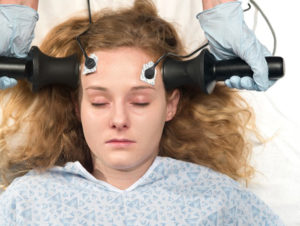
Myth 3: Electroconvulsive Treatment (ECT) is an Effective Last Resort
Andrew Solomon in The Noonday Demon alsostates, “ECT seems to have some significant impact between 75 and 90 percent of the time. About half of those who have improved on ECT still feel good a year after treatment.” Is ECT really that effective?
In 2004, researcher Joan Prudic, M.D. and her team at New York State Psychiatric Institute conducted a major study of ECT, which involved 347 patients at seven hospitals. Reported were both the immediate outcomes and the outcomes over a 24-week follow-up period. With respect to immediate outcomes, Prudic reported: “In contrast to the 70 to 90 percent remission rates expected with ECT, remission rates, depending on criteria, were 30.3 to 46.7 percent.” Even worse for ECT advocates, Prudic noted that, “10 days after ECT, patients had lost 40 percent of the improvement.”
There are also studies comparing ECT with a placebo (called “sham ECT”). In sham ECT, patients receive muscle-relaxing and anesthetizing drugs that routinely accompany ECT, and they are hooked up to the ECT apparatus, but they receive no electric voltage. Psychiatrist Colin Ross reports, “No study has demonstrated a significant difference between real and placebo (sham) ECT at 1 month post-treatment.”
Myth 4: Cognitive Behavior Therapy (CBT) is the Best Psychotherapy for Depression
First, the good news about CBT. The only non-drug treatment examined in STAR*D was a form of cognitive therapy (which was not fully detailed by STAR*D authors and only administered in Step Two). Among those who failed Celexa in the first step, three groups in Step Two switched from Celexa to one of three antidepressants, and their remission rates ranged from 25 to 26.6 percent; but one group in Step Two switched from Celexa to cognitive therapy, and its remission rate was 41.9 percent. STAR*D researchers did not assess whether any differences in treatment effectiveness were statistically significant.
Another group in Step Two maintained Celexa and added cognitive therapy, and this “Celexa plus cognitive therapy” group’s remission rate was 29.4 percent, not as high as the group that received cognitive therapy without medication. This begs the question: Is it also a myth that “antidepressants plus psychotherapy” works better than either treatment alone? Research psychologist David Antonuccio at the University of Nevada School of Medicine reports, “Combined psychotherapy and drug treatment do not appear to be superior to therapy or drug treatment alone.”
What psychotherapy is best for depression? While Americans hear most about CBT, it turns out that CBT or some form of cognitive therapy is no more effective for depression than any of several other types of psychotherapy. In 2008, psychologists Pim Cuijpers and Annemicke van Straten at the University of Amsterdam reported on a meta-analysis of 53 studies, each of which compared two or more different types of psychotherapy for depression. Included were varieties of “cognitive-behavior therapy,” “psychodynamic therapy,” “behavioral activation therapy,” “social skills training,” “problem-solving therapy,” “interpersonal therapy,” and “nondirective supportive therapy.” The major finding? “No large differences in efficacy between major psychotherapies for mild to moderate depression.”
So, if psychotherapy technique is not all that important, what is? Psychologist Bruce Wampold at the University of Wisconsin reviewed the psychotherapy outcome literature, examining hundreds of studies and meta-analyses, for his book The Great Psychotherapy Debate. Wampold unequivocally states that outcome effectiveness does not depend on the specific techniques of psychotherapy but instead depends on so-called “non-specific” factors such as the nature of the alliance between therapist and their client, and clients’ confidence in the therapy and in their therapist. “Simply stated,” Wampold concludes, “the client must believe in the treatment or be led to believe in it.”
Myth 5: No Treatment for Depression Works
In April 2002, an NIMH-funded study on the antidepressant Zolof, the herb St. John’s wort, and a placebo had some curious results. The findings were that 32 percent of placebo-treated patients experienced remission, better than the 25 percent remission for the Zoloft-treated patients or the 24 percent remission for the St. John’s wort-treated patients. Most scientists would say that this study shows that neither Zoloft nor St. John’s wort worked, but those subjects who had positive outcomes with these two treatments would disagree. So, does this study show that antidepressants and St. John’s wort are not helpful, or does it show that “expectations,” belief,” and “faith” are the likely factors that make all treatments work?
When assessing whether a specific treatment is effective, scientists are trained to rule out the effect of expectations. Researchers evaluate a depression treatment as effective if, in a controlled study, the treatment outcome is significantly better than a placebo. However, the reality of depression treatments is that expectations, faith, belief, and the placebo effect are—far and away—the most important reasons why anything works.