Posts Tagged ‘dsm’

Marketing Crazy—manual doctors use to diagnose mental illness has critics fearing a bonanza of over-medication

Friday, May 17th, 2013

The Global Mail – May 17, 2013
by Claire Blumer

Dr Allen Frances is a man with regrets.

The man the New York Times once described as “the most powerful psychiatrist in America” is at the career point where others would retire and board a cruise, to endlessly sail the Caribbean. But Frances can’t stop now. His legacy in the field of mental health is something he’s trying both to destroy and to resurrect.

Twenty years ago he chaired the task force of mental-health clinicians and academics who wrote the fourth version of what’s often called the bible of mental health — that is, the Diagnostic and Statistical Manual of Mental Disorders (DSM-IV). It’s compiled and distributed by the American Psychiatric Association and it basically determines which symptoms equate to a mental disorder.

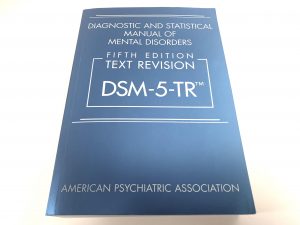
Now, with the fifth edition to be released on May 22 — at a mammoth four-day ‘meeting’ keynoted by none other than President Bill Clinton — Frances is doing everything he can to undermine the manual’s contents.

Drafts have been circulated and tested for a a couple of years, but even before the formal launch of DSM-5, Frances had written two books criticising its content: Essentials of Psychiatric Diagnosis: Responding to the Challenge of DSM-5; and Saving Normal: An Insider’s Revolt Against Out-of-Control Psychiatric Diagnosis, DSM-5, Big Pharma, and the Medicalization of Ordinary Life which was released this week). This is despite the fact that DSM-5 still contains the legacy of his own work on DSM-IV. (The publishers dropped the Roman numerals.)

So why such a change of heart?

“Not a change of heart — change of the world,” he says in an interview with The Global Mail. Frances is concerned about the rapid inflation in mental-health diagnoses over the past 35 years. He feels the ups and downs of everyday life are being turned into medical disorders, and he knows from experience that the diagnostic manual can exaggerate that effect, with the result that a disorder label will be attached to more and more people with even mild symptoms.

Read the rest of the article here

Also read, Mental Disorders: The Facts Behind the Marketing Campaign

« Return to news items


Share

Shrink wrapping—A single book has come to dominate psychiatry. That is dangerous

Thursday, May 16th, 2013

The Economist—May 16, 2013


THE human brain is the most complex object in the known universe. It contains 100 billion nerve cells. Considering how complex that is, it goes wrong remarkably rarely.

But go wrong it sometimes does. Which is why, since 1952, the American Psychiatric Association has published its “Diagnostic and Statistical Manual of Mental Disorders”, the DSM. This book, the newest version of which will hit the shops on May 22nd (see article), contains the association’s thinking on what constitutes a disorder of the mind. It is consulted not only by psychiatrists, but also by insurance firms, drug companies and anxious patients and parents—not only in America, but around the world. It has become the industry standard for defining what is and is not a mental illness, and thus who gets treated, and who pays for treatment.

No other major branch of medicine has such a single text, with so much power over people’s lives. And that is worrying. Because in no other branch of medicine is the scientific reality underpinning the pronouncements of doctors so uncertain.

The categorical imperative

This uncertainty flows from a profound ignorance about how brains actually work. Neuroscientists understand how nerve cells work. They also know which bits of the brain deal with vision, locomotion, language, memory and suchlike. But between these two anatomical levels all is darkness. Psychiatrists have thus had to use behaviour patterns as proxies for underlying problems. And what constitutes a pattern is too often a matter of opinion rather than a statistically rigorous fact.

It is this desire to find and classify patterns which gives the DSM its power. By naming things it gives shape to the fledgling science. That is not a bad thing in principle. But in practice it has gone too far. The main criticisms are that it medicalises normal behaviour and that the strict categories of mental illness it creates are increasingly at odds with what research suggests is actually going on in the brain.

Read the rest of the article here


« Return to news items


Share

Should We Dump the DSM? Author exposes DSM’s arbitrary & totalitarian influence in treatment of mental/emotional distress

Friday, May 10th, 2013

Gary Greenberg’s new book skewers the inner workings of the DSM just three weeks before the latest version is scheduled to be released.

The Pacific Standard, May 10, 2013

Editor’s Note: The post originally appeared on The Fix, a Pacific Standard partner site.

“I don’t think psychiatric diagnosis is necessary, at least not until psychiatry has the knowledge to render diagnoses on the same basis as other medical specialties.”

On May 22, the American Psychiatric Association will release the fifth version of the Diagnostic and Statistical Manual of Mental Disordersthe DSM-5. The last version, the DSM IV, was published in 1994 and has provided the clinical terms for diagnoses that allow for insurance payments, treatment costs, and public support for such afflictions as Asperger’s and grief—all of which, among a host of established disorders, are set to be altered by the new version.

Last week, Blue Rider Press published Gary Greenberg’s The Book of Woe: The DSM and the Unmaking of Psychiatry, a powerful critique of the entire DSM methodology. Greenberg is a practicing psychotherapist who also authored Manufacturing Depression: The Secret History of an American Disease and The Noble Lie. He has been referred to as “The Dante of our Psychiatric age,” by Errol Morris, and blogs about the DSM for the New Yorker.

With The Book of Woe, written during and after his own participation in the revision process of the DSM-5, Greenberg doesn’t just paint the DSM as irrelevant, but as an arbitrary and totalitarian influence in the treatment of mental and emotional distress. Greenberg makes an unsparing case against the DSM’s hold on the naming rights to our psychic suffering.

What is the most disturbing aspect of the DSM-5 to you?

The most disturbing aspect is not unique to the DSM-5, but intrinsic to any DSM: that a private guild—the American Psychiatric Association (APA)—owns such an important public trust. The DSM plays a significant role in determining who gets treatment, what drugs get approved, what research gets funded, who gets special education services, and the disposition of criminal cases. The APA represents only one of many mental health professions, is rife with conflicts of interest with the pharmaceutical industry, has its own, scientifically questionable approach to treatment, it also stands to make hundreds of millions of dollars from the manual and associated products. That’s unseemly. But even worse, it leaves the public at the mercy of people who are not accountable to anyone except their own organization. It’s the worst kind of privatization.

What effect do you see the DSM-5 having on treatment for drug and alcohol addiction?

I’m not sure the DSM-5 will have any direct effect on treatment; the DSM-5 is not a treatment manual. But any DSM has a major indirect effect on treatment: It provides the diagnoses that are the tickets to treatment resources. To put it more concisely: money. The DSM-5 will most likely eliminate the categories of Substance Abuse and Substance Dependence in favor of a new super-category of Substance Use Disorder. Qualifying for this diagnosis may be easier than for the DSM-IV diagnoses, largely because the number of criteria a patient has to meet has been reduced. Some studies indicate that this will result in a large increase in prevalence. If General Motors comes out with a new car, that doesn’t change the number of drivers, and if the APA comes out with a new diagnosis, that doesn’t change the number of people who will qualify for a mental disorder diagnosis. Whether this happens, and if it does, whether it’s a bad thing (treatment resources are overburdened by an influx of new patients) or a good thing (more people get treatment), or whether it will have any effect at all, remains to be seen.

You say that psychiatry should not have a monopoly on the diagnoses and treatment of human suffering, such as addiction. Who else should be involved? Based on what “expertise” or “interests”?

Diagnosis and treatment are really two separate issues. I don’t think psychiatry claims to have a monopoly on treatment, although it does have (mostly) a monopoly among mental health providers on drug treatments. On this, I think I agree with the psychiatrists. I’m not sure that anyone else besides people who have been to medical school should be prescribing drugs. As for diagnosis, I don’t think psychiatric diagnosis is necessary, at least not until psychiatry has the knowledge to render diagnoses on the same basis as other medical specialties. Psychiatrists don’t treat mental disorders. They treat symptoms. So they don’t really need diagnoses to do their job. But if there has to be psychiatric diagnosis, then it should be in the hands of a public agency, one that doesn’t have a profit motive in fashioning a manual, one that is not wedded to its own professional interests, and one that is not fooling around with the drug industry.

Addiction is increasingly being recognized as a brain disease. One aim of the DSM-5 is said to be to bring diagnoses of substance use disorders into line with the burgeoning neuroscience about addiction. Does the DSM-5 meet its goal?

The only way in which DSM-5‘s addictive disorders section reflects neuroscience is in its reliance on “craving” as one of the two diagnostic criteria for substance use disorder. This change reflects the belief that craving is a single phenomenon with a particular brain chemistry. While there are some indications that this is the case, it is far from proven. 50 or 100 years from now, I am sure our understanding of the brain will seem as laughable as phrenology seems to us. So for the moment, popping people into PET scanners or MRI machines strikes me as wishful thinking multiplied by greed. The fact that addiction is increasingly being recognized as a brain disease does not mean that addiction is—or is best understood as—a brain disease. I don’t doubt that is the direction in which research is moving, but I’m not sure this means we are approaching the truth about addiction, or about the brain and its relationship to the mind.

What is your opinion on the effect of 12-step based programs on recovery—the spiritual solution rather than the medical?

I think the 12-step program is useful for many people, and I have both friends and patients who benefit from it. I also think it is only one of many ways that people can stop using the drugs they are addicted to, and is surely not the only “spiritual” approach. Nor is it necessarily correct to think of it in contradistinction to the medical approach. After all, the 12-step program owes much of its success to a concerted effort on the part of doctors, including psychiatrists, to popularize the disease model of addiction, which Alcoholics Anonymous in many respects originated.

The DSM-5 includes the first “behavioral disorder”—compulsive gambling—in the Addiction section. Proponents say that compulsive behaviors have very similar effects on the brain as substances do. Critics say this is opening the door to the medicalization of more and more of everyday life. What do you think?

I think that long before the behavioral disorders opened the door to medicalization of daily life, that goal had been accomplished. The struggle of psychiatry since 1980 has not been to fashion more and more illnesses, but rather to convince us that when we are unhappy, anxious, compulsive, etc., we have a mental illness. In this they have been successful, at least to judge from the vast increase in numbers of people seeking treatment. It’s a predictable outcome of the DSM approach to mental suffering.

Read the rest of the article here


« Return to news items


Share

Beginning of the end of the DSM-IV? Feds Move Away from Psychiatry’s Billing Bible

Monday, May 6th, 2013

Now, in a move sure to rock psychiatry, psychology and other fields that address mental illness, the director of the National Institutes of Mental Health has announced that the federal agency–which provides grants for research on mental illness–will be “re-orienting its research away from DSM categories”

Salon Magazine – May 6, 2013—this article originally appeared in Scientific American

What is mental illness? Schizophrenia? Autism? Bipolar disorder? Depression? Since the 1950s, the profession of psychiatry has attempted to provide definitive answers to these questions in the Diagnostic and Statistical Manual of Mental Disorders. Often called The Bible of psychiatry, the DSM serves as the ultimate authority for diagnosis, treatment and insurance coverage of mental illness.

Now, in a move sure to rock psychiatry, psychology and other fields that address mental illness, the director of the National Institutes of Mental Health has announced that the federal agency–which provides grants for research on mental illness–will be “re-orienting its research away from DSM categories.”  Thomas Insel’s statement comes just weeks before the scheduled publication of the DSM-V, the fifth edition of the Diagnostic and Statistical Manual. Insel writes:

“While DSM has been described as a ‘Bible’ for the field, it is, at best, a dictionary, creating a set of labels and defining each. The strength of each of the editions of DSM has been ‘reliability’–each edition has ensured that clinicians use the same terms in the same ways. The weakness is its lack of validity. Unlike our definitions of ischemic heart disease, lymphoma, or AIDS, the DSM diagnoses are based on a consensus about clusters of clinical symptoms, not any objective laboratory measure.

In the rest of medicine, this would be equivalent to creating diagnostic systems based on the nature of chest pain or the quality of fever. Indeed, symptom-based diagnosis, once common in other areas of medicine, has been largely replaced in the past half century as we have understood that symptoms alone rarely indicate the best choice of treatment.

Read the rest of the article here

« Return to news items


Share

Psychiatry in Crisis! Mental Health Director Rejects Psychiatric “Bible” and Replaces With… Nothing

Saturday, May 4th, 2013

Scientific American
By John Horgan
May 4, 2013

What is mental illness? Schizophrenia? Autism? Bipolar disorder? Depression? Since the 1950s, the profession of psychiatry has attempted to provide definitive answers to these questions in the Diagnostic and Statistical Manual of Mental Disorders. Often called The Bible of psychiatry, the DSM serves as the ultimate authority for diagnosis, treatment and insurance coverage of mental illness.

Now, in a move sure to rock psychiatry, psychology and other fields that address mental illness, the director of the National Institutes of Mental Health has announced that the federal agency–which provides grants for research on mental illness–will be “re-orienting its research away from DSM categories.” Thomas Insel’s statement comes just weeks before the scheduled publication of the DSM-V, the fifth edition of the Diagnostic and Statistical Manual. Insel writes:

“While DSM has been described as a ‘Bible’ for the field, it is, at best, a dictionary, creating a set of labels and defining each. The strength of each of the editions of DSM has been ‘reliability’–each edition has ensured that clinicians use the same terms in the same ways. The weakness is its lack of validity. Unlike our definitions of ischemic heart disease, lymphoma, or AIDS, the DSM diagnoses are based on a consensus about clusters of clinical symptoms, not any objective laboratory measure. In the rest of medicine, this would be equivalent to creating diagnostic systems based on the nature of chest pain or the quality of fever. Indeed, symptom-based diagnosis, once common in other areas of medicine, has been largely replaced in the past half century as we have understood that symptoms alone rarely indicate the best choice of treatment. Patients with mental disorders deserve better.”

Insel said that the NIMH will be replacing the DSM with the “Research Domain Criteria (RDoC),” which define mental disorders based not just on vague symptomology but on more specific genetic, neural and cognitive data. But then, immediately after making this dramatic announcement, Insel added that “we cannot design a system based on biomarkers or cognitive performance because we lack the data.”

Hunh? So the NIMH is replacing the DSM definitions of mental disorders, which virtually everyone agrees are profoundly flawed, with definitions that even he admits don’t exist yet! What more evidence do we need that modern psychiatry is in a profound state of crisis?

Insel’s statement is also an implicit admission that there is no real theoretical basis for drug treatments for mental illness. As I have pointed out previously, drug treatments have surged over the past few decades, while rates of mental illness, far from falling, have risen.

Ironically, some pharmaceutical companies that have enriched themselves by selling psychiatric drugs are now cutting back on further research on mental illness. The “withdrawal” of drug companies from psychiatry, Steven Hyman, a psychiatrist and neuroscientist at Harvard and former NIMH director, wrote last month, “reflects a widely shared view that the underlying science remains immature and that therapeutic development in psychiatry is simply too difficult and too risky.” Funny how this view isn’t incorporated into ads for antidepressants and antipsychotics.

NIMH director Insel doesn’t mention it, but I bet his DSM decision is related to the big new Brain Initiative, to which Obama has pledged $100 million next year. Insel, I suspect, is hoping to form an alliance with neuroscience, which now seems to have more political clout than psychiatry. But as I pointed out in posts here and here on the Brain Initiative, neuroscience still lacks an overarching paradigm; it resembles genetics before the discovery of the double helix.

Since I became a science writer 30 years ago, I have heard countless claims about breakthroughs in our understanding and treatment of mental illness. And yet as the NIMH decision on the DSM indicates, the science of mental illness is still appallingly primitive. Instead of forming fancy new programs and initiatives and alliances, leaders in mental health should perhaps do some humble, honest soul searching before they decide how to proceed. And they should think of what’s best not for their professions or the pharmaceutical industry but for those suffering from mental illness, who deserve better.

http://blogs.scientificamerican.com/cross-check/2013/05/04/psychiatry-in-crisis-mental-health-director-rejects-psychiatric-bible-and-replaces-with-nothing/

« Return to news items


Share

The New Yorker: Does Psychiatry Need Science? (Answer—Yes, because they have none)

Thursday, April 25th, 2013

The New Yorker - April 23, 2013

by Gary Greenberg

Watch Video: Dr. Niall McLaren, practicing psychiatrist,
22 years

In 1886, Pliny Earle, then the superintendent of the state hospital for the insane in Northampton, Massachusetts, complained to his fellow psychiatrists that “in the present state of our knowledge, no classification of insanity can be erected upon a pathological basis.” Doctors in other specialties were using microscopes and chemical assays to discern the material causes of illness and to classify diseases accordingly. But psychiatrists, confronted with the impenetrable complexities of the brain, were “forced to fall back upon the symptomatology of the disease—the apparent mental condition, as judged from the outward manifestations.”

The rest of medicine may have been galloping into modernity on the back of science, but Earle and his colleagues were being left in the dust.

Thirty years later, they had not caught up.

In 1917, Thomas Salmon, another leading psychiatrist, echoed Earle’s worry in an address to his colleagues, drawing their attention to the way that their reliance on appearances had resulted in a “chaotic” diagnostic system, which, he said, “discredits the science of psychiatry and reflects unfavorably upon our association.” Psychiatry, Salmon continued, needed a nosology that would “meet the scientific demands of the day” if it was to command public trust.

In the century that has passed since Salmon’s lament, doctors in most medical specialties have only gotten better at sorting our suffering according to its biochemical causes. They have learned how to turn symptom into clues, and, like Sherlock Holmes stalking a criminal, to follow the evidence to the culprit. With a blood test or tissue culture, they can determine whether a skin rash is poison ivy or syphilis, or whether a cough is a symptom of a cold or of lung cancer. Sure-footed diagnosis is what we have come to expect from our physicians. It gives us some comfort, and the confidence to submit to their treatments.

But psychiatrists still cannot meet this demand. A detailed understanding of the brain, with its hundred billion neurons and trillions of synapses, remains elusive, leaving psychiatry dependent on outward manifestations for its taxonomy of mental illnesses.

Quote from “DSM: Diagnosing for Money and Power” by Ofer Zur, Ph.D., and Nola Nordmarken, MFT

Indeed, it has been doubling down on appearances since 1980, which is when the American Psychiatric Association created a Diagnostic and Statistical Manual of Mental Disorders (D.S.M.) that intentionally did not strive to go beyond the symptom. In place of biochemistry, the D.S.M. offers expert consensus about which clusters of symptoms constitute particular mental illnesses, and about which mental illnesses are real, or at least real enough to warrant a name and a place in the medical lexicon. But this approach hasn’t really worked to establish the profession’s credibility.

In the four revisions of the D.S.M. since 1980, diagnoses have appeared and disappeared, and symptom lists have been tweaked and rejiggered with troubling regularity, generally after debate that seems more suited to the floors of Congress than the halls of science. The inevitable and public chaos—diagnostic epidemics, prescription-drug fads, patients labelled and relabelled—has only deepened psychiatry’s inferiority complex.

But it’s not entirely clear that psychiatrists want a solution to the problem, at least not to judge from what happened when the experts conducting the most recent revision of the manual, the D.S.M.-5, were offered one… Read the rest of the article here

« Return to news items


Share

New edition of psychiatry manual pushes more ‘invented victims’ of fabricated diseases

Monday, April 22nd, 2013

Natural News – April 21, 201

by Ethan A. Huff

The latest edition of the psychiatry industry’s Diagnostic and Statistical Manual of Mental Disorders, Fifth Edition (DSM-V), which is set for publication in May 2013, is expected to contain the most sweeping reclassification of essentially all human conditions, feelings, and emotions as mental disorders, based on official manuscripts recently approved by the American Psychiatric Association (APA). And what this portends for the future of society and the medical treatment of normal human behaviors is chilling, that is if the fraudulent document is even taken seriously.

As reported by Barbara Kay over at the National Post, DSM-V casts aside all reason by typifying many common behaviors and emotional states as mental disorders, which of course will be used as an excuse to push more pharmaceutical drugs on the masses as “cures.” So-called “generalized anxiety disorder” (GAD), for instance, which used to categorize only anxieties without a specific cause, will soon be expanded to include common anxieties that stem from known turmoils such as financial instability, domestic problems, or heavy school workloads, for example.

Other normal human behaviors to be reclassified as mental disorders in DSM-V include things like child temper tantrums, or what DSM-V refers to as “Disruptive Mood Dysregulation Disorder,” and “Major Depressive Disorder,” the new made-up name for normal feelings of grief following the loss of a loved one. These and many other fantasy health conditions will all be included in DSM-V as mental conditions that require synthetic drug interventions in order to effectively treat, according to the industry.

“It seems that every DSM upgrade contains more and more ‘disorders’ that are open to question for their vagueness and open-endedness,” writes Kay, noting that psychiatrists really hold no special authority when it comes to pinpointing whether or not human conditions are truly mental disorders anyway. She also heavily quotes the work of Dr. Tana Dineen, a psychologist who witnessed first-hand the corruption of an industry that she says tends to “translate all of life into a myriad of abuses, addictions and traumas.”

Dr. Allen Frances, M.D., a psychiatrist himself, is actually urging the psychiatry profession to ignore DSM-V, as he says it is a “deeply flawed” disaster of a guide filled with “many changes that seem clearly unsafe and scientifically unsound.” Among these changes, he writes for Psychology Today, are all the new “fad diagnoses” that have no grounding in reality. Dr. Frances also calls out the very motives behind DSM-V’s publishing, which he says are questionable because of the “financial conflict[s] of interest” between those who worked on the manual and the pharmaceutical industry.

No matter how you look at it, DSM-V is a complete disaster scientifically speaking, as is the entity commonly known as the psychiatry profession. Dr. Dineen actually refers to the general practice of psychology in her book Manufacturing Victims: What the Psychology Industry is Doing to People, as “big business,” and claims “[i]t is simply no longer accurate to speak of it as a science and it is unscrupulously misleading to call it a profession.” And based on the outlandish additions to DSM-V, this appears to be a more than accurate assessment of this clearly exploitative industry.

« Return to news items


Share

MSN News—New guidebook could label more than half of Americans with mental disorders

Friday, April 19th, 2013

Click image to read about psychiatrists who have spoken out against psychiatry’s ‘billing bible’ of mental disorders, the DSM

MSN News – April 19, 2013
Critics of the new “Diagnostic and Statistical Manual of Mental Disorders” fear more than 50 percent of Americans will display symptoms of one of its disorders during their lifetime.

By next month, more than half of us could have a mental disorder.

The new “Diagnostic and Statistical Manual of Mental Disorders” (DSM) is scheduled for release in May and, according to its critics, the odds are that more than 50 percent of Americans will display symptoms that fit the description of one of the disorders in it.

According to the National Center for Biotechnology Information (NCBI), 46.4 percent of Americans will have a mental disorder in their lifetime by the standards of the current DSM – DSM-IV.

And the new DSM – DSM-5 – could capture even more of us, if its critics’ fears are realized.

On its website, APA says DSM-5 will not increase the number of mental disorders. “Relatively few diagnoses are changing substantially from the past edition,” the website says. “Also, as it is slated right now, there will be fewer disorders in DSM-5 than in DSM-IV.”

Although there won’t be more mental disorders, the broader definition of a disorder could drive the number of Americans with disorders up.

In fact, the Autism Research Institute, in evaluating the potential changes, notes with concern that Autistic Disorder, Asperger’s Disorder and developmental disorders not otherwise specified will be grouped under one umbrella term in DSM-5: Autism Spectrum Disorder.

But the new DSM has some vehement critics.

Allen Frances, who served as the chair of the DSM-IV Task Force and worked on DSM-5, called approval of DSM-5 “the saddest moment in my 45-year career.”

He called it “deeply flawed.”

According to Frances, DSM-5 will include Disruptive Mood Dysregulation Disorder, which, according to him, is little more than “temper tantrums.” He also decries Binge Eating Disorder, defined as excessive eating 12 times in three months, which previously only appeared in the appendix of DSM-IV.

The DSM has faced similar criticism in the past. As recently as 1973, homosexuality appeared in the DSM as a disorder.

The APA is still reviewing DSM-5, which took input from health professionals, patients and families, advocates and others. They note the DSM-5 is by no means final at this point.

Click here for psychiatrists who have spoken out against psychiatry’s billing bible of mental disorders, the DSM

« Return to news items


Share

NaturalNews—Five lies psychiatry tells for power and profit

Monday, April 15th, 2013

Natural News -  April 15, 2013 by Mike Bundrant

The field of psychiatry has succeeded in branding some whoppers into the minds of millions, to the tune of billions, with no accountability.

You’d think the Federal Trade Commission would hold psychiatry accountable for blatantly misleading the public, but there is zero accountability.

You’d think people would take a second to think before putting their mental health into the hands of a psychiatrist – someone who has zero training in mental health.

You’d think people would ask for evidence that their poor moods are caused by these mysterious chemical imbalances, but there is zero logic.

Here are the five lies psychiatry tells for power and profit

1. Poor moods are caused by chemical imbalances

These chemical imbalances are profitable for doctors who tell you they have the antidote, the pill that will put your brain back in balance. The problem is, there is no such thing as a chemical imbalance that creates a poor mood. At least there is not one shred of evidence to back this idea.

Put it this way: You lose your job. You feel discouraged. Is the discouragement caused by a chemical imbalance or by your response to this unfortunate event and the perception of an uncertain future? Is the remedy a pill or a new job?

You get into a car wreck. You feel anxious while driving after that. Is the anxiety caused by a chemical imbalance? Is the remedy a pill, or to learn to reconcile the trauma that rests in your mind?

Where is the evidence that chemical imbalances cause poor moods?

2. Psychiatrists are trained in mental health

Mental health is a vast field, filled with models of human relations and subjective experience. In mental health, we create models of thinking and relating in order to improve the prospect of happiness.

Psychiatry is based on the medical model. The assumption is NOT that people need to learn skills, but take pills. There is no mental health in this. Psychiatrists have ZERO training in mental health.

3. Normal feelings are disorders

Psychiatry is succeeding on a large scale in convincing people that there normal human feelings are wrong – disorders. When you feel down, especially for more than two weeks, you must have major depressive disorder. If you child is super active and creative, he must be ADHD.

In fact, I challenge you to find any normal human emotional challenge that is not labeled as a disorder in the Diagnostic and Statistical Manual, the psychiatric bible.

4. Pills are the solution

If you listen to average people talk these days, you’ll hear it. When poor moods or misbehaved children are discussed, doctors and pills are discussed.

“I’ve been feeling down lately. I wonder if I have some sort of chemical imbalance. I should see if my doctor can give me something for it.”

5. Doctors are the ‘go to’ people for emotional angst

Family doctors and psychiatrists are branding themselves as the “go to” people for mental health concerns. A shocking number of non-psychiatric family doctors prescribe for mental health concerns – 59% of anti-depressants prescribed in the US are prescribed by family doctors, 75% with no formal diagnosis.

Want a pill? Here’s a pill. Make your co-pay on the way out. This is how we treat mental illness today.

Where psychiatry lacks in honesty, it makes up for in marketing. You’ve got to give that to them. They are succeeding in convincing the world that psychiatry is the solution to mental anguish.

I wonder what a psychiatric society would look like? If psychiatry ultimately gets what it wants – total domination over emotional life – what would that look like?

« Return to news items


Share

Normal behaviour, or mental illness?

Tuesday, March 19th, 2013

Macleans – March 19, 2013
by Anne Kingston

A look at the new psychiatric guidelines that are pitting doctors against doctors

Jonathan Kirn/Getty Images

Every parent of a preteen has been there: on the receiving end of sullen responses, bursts of frustration or anger, even public tantrums that summon the fear that Children’s Aid is on its way. Come late May, with the publication of the fifth edition of the Diagnostic and Statistical Manual of Mental Disorders (DSM-5), however, such sustained cranky behaviour could put your child at risk of a diagnosis of “disruptive mood dysregulation disorder.” This newly minted condition will afflict children between 6 and 12 who exhibit persistent irritability and “frequent” outbursts, defined as three or more times a week for more than a year. Its original name, “temper dysregulation disorder with dysphoria,” was nixed after it garnered criticism it pathologized “temper tantrums,” a normal childhood occurrence. Others argue that even with the name change the new definition and diagnosis could do just that.

“Disruptive mood dysregulation disorder” isn’t the only new condition under scrutiny in the reference manual owned and produced by the American Psychiatric Association (APA)—and lauded as psychiatry’s bible. Even though the final version of DSM-5 remains under embargo, its message is being decried in some quarters as blasphemous. Its various public drafts, the third published last year, have stoked international outrage—and a flurry of op-ed columns, studies, blogs and petitions. In October 2011, for instance, the Society for Humanistic Psychology drafted an open letter to the DSM task force that morphed into an online petition signed by more than 14,000 mental health professionals and 50 organizations, including the American Counseling Association and the British Psychology Society.

Of fundamental concern is a loosening and broadening of categories to the point that everyone potentially stands on the brink of some mental-disorder diagnosis, or sits on some spectrum—a phenomenon the American psychologist Frank Farley has called “the sickening of society.” One change summoning criticism is DSM-5’s reframing of grief, that inescapable fact of life, by removing the “bereavement exclusion” for people who’ve experienced loss. Previously, anyone despairing the death of a loved one wasn’t considered a candidate for “major depression” unless their despondency persisted for more than two months or was accompanied by severe functional impairment, thoughts of suicide or psychotic symptoms. No longer.

Other updates to DSM-5, the first full revision in nearly two decades, have raised red flags. Forgetting where you put your keys or other memory lapses, a fact of aging formerly shrugged off as “a senior moment,” could portend “minor neurocognitive disorder,” a shift destined to also stoke anxiety. Anyone who overeats once a week for three weeks could have a “binge-eating disorder.” Women not turned on sexually by their partners or particularly interested in sex are candidates for “female sexual interest/arousal disorder.” Nail-biters join the ranks of the obsessive-compulsive, alongside those with other “pathological grooming habits” such as “hair-pulling” and “skin-picking.”

The fuzzy boundary between “generalized anxiety disorder” (GAD) and everyday worries has also been blurred. As Allan V. Horowitz, a sociology professor at Rutgers University, points out, changes in this category are potentially the most important because they affect the largest number of people. Under the new “somatic symptom disorder” (SSD), for instance, people who express any anxiety about physical symptoms could also be saddled with a mental illness diagnosis, which could thwart their attempts to have their physical issues taken seriously. To meet the definition one only needs to report a single bodily symptom that’s distressing and/or disruptive to daily life and have just one of the following three reactions for at least six months: “ ‘disproportionate’ thoughts about the seriousness of their symptom(s); a high level of anxiety about their health; devoting excessive time and energy to symptoms or health concerns.”

DSM-5 represents a step back in mental health care, says psychologist Peter Kinderman, head of the Institute of Psychology, Health and Society at the University of Liverpool. Kinderman, who is organizing an international letter of objection to DSM-5 to be posted on dsm5response.org, which launches March 20, believes many new DSM classifications, among them “female orgasmic disorder,” defy common sense. “If you’re not enjoying sex, it’s a problem, but it’s crazy to say it’s a mental illness,” he says. He also questions the new criteria for alcohol and drug “substance-use disorders.” “According to it, 40 to 50 per cent of college students should be considered mentally ill.” Such diagnoses interfere with the human helping response, says Kinderman. “When women get raped, it’s traumatic; when soldiers go to war, they come back emotionally affected. We don’t need the new label, ‘post-traumatic stress disorder,’ ” he says.

Read the rest of the article here

« Return to news items


Share