Posts Tagged ‘DSM-5’

Psychiatry in Crisis! Mental Health Director Rejects Psychiatric “Bible” and Replaces With… Nothing

Saturday, May 4th, 2013

Scientific American
By John Horgan
May 4, 2013

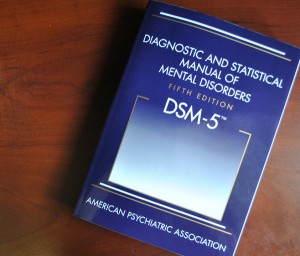
What is mental illness? Schizophrenia? Autism? Bipolar disorder? Depression? Since the 1950s, the profession of psychiatry has attempted to provide definitive answers to these questions in the Diagnostic and Statistical Manual of Mental Disorders. Often called The Bible of psychiatry, the DSM serves as the ultimate authority for diagnosis, treatment and insurance coverage of mental illness.

Now, in a move sure to rock psychiatry, psychology and other fields that address mental illness, the director of the National Institutes of Mental Health has announced that the federal agency–which provides grants for research on mental illness–will be “re-orienting its research away from DSM categories.” Thomas Insel’s statement comes just weeks before the scheduled publication of the DSM-V, the fifth edition of the Diagnostic and Statistical Manual. Insel writes:

“While DSM has been described as a ‘Bible’ for the field, it is, at best, a dictionary, creating a set of labels and defining each. The strength of each of the editions of DSM has been ‘reliability’–each edition has ensured that clinicians use the same terms in the same ways. The weakness is its lack of validity. Unlike our definitions of ischemic heart disease, lymphoma, or AIDS, the DSM diagnoses are based on a consensus about clusters of clinical symptoms, not any objective laboratory measure. In the rest of medicine, this would be equivalent to creating diagnostic systems based on the nature of chest pain or the quality of fever. Indeed, symptom-based diagnosis, once common in other areas of medicine, has been largely replaced in the past half century as we have understood that symptoms alone rarely indicate the best choice of treatment. Patients with mental disorders deserve better.”

Insel said that the NIMH will be replacing the DSM with the “Research Domain Criteria (RDoC),” which define mental disorders based not just on vague symptomology but on more specific genetic, neural and cognitive data. But then, immediately after making this dramatic announcement, Insel added that “we cannot design a system based on biomarkers or cognitive performance because we lack the data.”

Hunh? So the NIMH is replacing the DSM definitions of mental disorders, which virtually everyone agrees are profoundly flawed, with definitions that even he admits don’t exist yet! What more evidence do we need that modern psychiatry is in a profound state of crisis?

Insel’s statement is also an implicit admission that there is no real theoretical basis for drug treatments for mental illness. As I have pointed out previously, drug treatments have surged over the past few decades, while rates of mental illness, far from falling, have risen.

Ironically, some pharmaceutical companies that have enriched themselves by selling psychiatric drugs are now cutting back on further research on mental illness. The “withdrawal” of drug companies from psychiatry, Steven Hyman, a psychiatrist and neuroscientist at Harvard and former NIMH director, wrote last month, “reflects a widely shared view that the underlying science remains immature and that therapeutic development in psychiatry is simply too difficult and too risky.” Funny how this view isn’t incorporated into ads for antidepressants and antipsychotics.

NIMH director Insel doesn’t mention it, but I bet his DSM decision is related to the big new Brain Initiative, to which Obama has pledged $100 million next year. Insel, I suspect, is hoping to form an alliance with neuroscience, which now seems to have more political clout than psychiatry. But as I pointed out in posts here and here on the Brain Initiative, neuroscience still lacks an overarching paradigm; it resembles genetics before the discovery of the double helix.

Since I became a science writer 30 years ago, I have heard countless claims about breakthroughs in our understanding and treatment of mental illness. And yet as the NIMH decision on the DSM indicates, the science of mental illness is still appallingly primitive. Instead of forming fancy new programs and initiatives and alliances, leaders in mental health should perhaps do some humble, honest soul searching before they decide how to proceed. And they should think of what’s best not for their professions or the pharmaceutical industry but for those suffering from mental illness, who deserve better.

http://blogs.scientificamerican.com/cross-check/2013/05/04/psychiatry-in-crisis-mental-health-director-rejects-psychiatric-bible-and-replaces-with-nothing/

« Return to news items


Share

New Scientist: Psychiatry divided as mental health ‘bible’ denounced

Saturday, May 4th, 2013

Read: Mental Disorders: The Facts Behind the Marketing Campaign

New Scientist
By Andy Coghlan and Sara Reardon
May 3, 2013

The world’s biggest mental health research institute is abandoning the new version of psychiatry’s “bible” – the Diagnostic and Statistical Manual of Mental Disorders, questioning its validity and stating that “patients with mental disorders deserve better”. This bombshell comes just weeks before the publication of the fifth revision of the manual, called DSM-5.

On 29 April, Thomas Insel, director of the US National Institute of Mental Health (NIMH), advocated a major shift away from categorising diseases such as bipolar disorder and schizophrenia according to a person’s symptoms. Instead, Insel wants mental disorders to be diagnosed more objectively using genetics, brain scans that show abnormal patterns of activity and cognitive testing.

This would mean abandoning the manual published by the American Psychiatric Association that has been the mainstay of psychiatric research for 60 years.

The DSM has been embroiled in controversy for a number of years. Critics have said that it has outlasted its usefulness, has turned complaints that are not truly illnesses into medical conditions, and has been unduly influenced by pharmaceutical companies looking for new markets for their drugs.

There have also been complaints that widened definitions of several disorder have led to over-diagnosis of conditions such as bipolar disorder and attention deficit hyperactivity disorder.

Now, Insel has said in a blog post published by the NIMH that he wants a complete shift to diagnoses based on science not symptoms.

“Unlike our definitions of ischaemic heart disease, lymphoma or AIDS, the DSM diagnoses are based on a consensus about clusters of clinical symptoms, not any objective laboratory measure,” Insel says. “In the rest of medicine, this would be equivalent to creating diagnostic systems based on the nature of chest pain, or the quality of fever.”

Insel says that elsewhere in medicine this type of symptom-based diagnosis been abandoned over the past half-century as scientists have learned that symptoms alone seldom indicate the best choice of treatment.

Read entire article here: http://www.newscientist.com/article/dn23487-psychiatry-divided-as-mental-health-bible-denounced.html

« Return to news items


Share

New edition of psychiatry manual pushes more ‘invented victims’ of fabricated diseases

Monday, April 22nd, 2013

Natural News – April 21, 201

by Ethan A. Huff

The latest edition of the psychiatry industry’s Diagnostic and Statistical Manual of Mental Disorders, Fifth Edition (DSM-V), which is set for publication in May 2013, is expected to contain the most sweeping reclassification of essentially all human conditions, feelings, and emotions as mental disorders, based on official manuscripts recently approved by the American Psychiatric Association (APA). And what this portends for the future of society and the medical treatment of normal human behaviors is chilling, that is if the fraudulent document is even taken seriously.

As reported by Barbara Kay over at the National Post, DSM-V casts aside all reason by typifying many common behaviors and emotional states as mental disorders, which of course will be used as an excuse to push more pharmaceutical drugs on the masses as “cures.” So-called “generalized anxiety disorder” (GAD), for instance, which used to categorize only anxieties without a specific cause, will soon be expanded to include common anxieties that stem from known turmoils such as financial instability, domestic problems, or heavy school workloads, for example.

Other normal human behaviors to be reclassified as mental disorders in DSM-V include things like child temper tantrums, or what DSM-V refers to as “Disruptive Mood Dysregulation Disorder,” and “Major Depressive Disorder,” the new made-up name for normal feelings of grief following the loss of a loved one. These and many other fantasy health conditions will all be included in DSM-V as mental conditions that require synthetic drug interventions in order to effectively treat, according to the industry.

“It seems that every DSM upgrade contains more and more ‘disorders’ that are open to question for their vagueness and open-endedness,” writes Kay, noting that psychiatrists really hold no special authority when it comes to pinpointing whether or not human conditions are truly mental disorders anyway. She also heavily quotes the work of Dr. Tana Dineen, a psychologist who witnessed first-hand the corruption of an industry that she says tends to “translate all of life into a myriad of abuses, addictions and traumas.”

Dr. Allen Frances, M.D., a psychiatrist himself, is actually urging the psychiatry profession to ignore DSM-V, as he says it is a “deeply flawed” disaster of a guide filled with “many changes that seem clearly unsafe and scientifically unsound.” Among these changes, he writes for Psychology Today, are all the new “fad diagnoses” that have no grounding in reality. Dr. Frances also calls out the very motives behind DSM-V’s publishing, which he says are questionable because of the “financial conflict[s] of interest” between those who worked on the manual and the pharmaceutical industry.

No matter how you look at it, DSM-V is a complete disaster scientifically speaking, as is the entity commonly known as the psychiatry profession. Dr. Dineen actually refers to the general practice of psychology in her book Manufacturing Victims: What the Psychology Industry is Doing to People, as “big business,” and claims “[i]t is simply no longer accurate to speak of it as a science and it is unscrupulously misleading to call it a profession.” And based on the outlandish additions to DSM-V, this appears to be a more than accurate assessment of this clearly exploitative industry.

« Return to news items


Share

MSN News—New guidebook could label more than half of Americans with mental disorders

Friday, April 19th, 2013

Click image to read about psychiatrists who have spoken out against psychiatry’s ‘billing bible’ of mental disorders, the DSM

MSN News – April 19, 2013
Critics of the new “Diagnostic and Statistical Manual of Mental Disorders” fear more than 50 percent of Americans will display symptoms of one of its disorders during their lifetime.

By next month, more than half of us could have a mental disorder.

The new “Diagnostic and Statistical Manual of Mental Disorders” (DSM) is scheduled for release in May and, according to its critics, the odds are that more than 50 percent of Americans will display symptoms that fit the description of one of the disorders in it.

According to the National Center for Biotechnology Information (NCBI), 46.4 percent of Americans will have a mental disorder in their lifetime by the standards of the current DSM – DSM-IV.

And the new DSM – DSM-5 – could capture even more of us, if its critics’ fears are realized.

On its website, APA says DSM-5 will not increase the number of mental disorders. “Relatively few diagnoses are changing substantially from the past edition,” the website says. “Also, as it is slated right now, there will be fewer disorders in DSM-5 than in DSM-IV.”

Although there won’t be more mental disorders, the broader definition of a disorder could drive the number of Americans with disorders up.

In fact, the Autism Research Institute, in evaluating the potential changes, notes with concern that Autistic Disorder, Asperger’s Disorder and developmental disorders not otherwise specified will be grouped under one umbrella term in DSM-5: Autism Spectrum Disorder.

But the new DSM has some vehement critics.

Allen Frances, who served as the chair of the DSM-IV Task Force and worked on DSM-5, called approval of DSM-5 “the saddest moment in my 45-year career.”

He called it “deeply flawed.”

According to Frances, DSM-5 will include Disruptive Mood Dysregulation Disorder, which, according to him, is little more than “temper tantrums.” He also decries Binge Eating Disorder, defined as excessive eating 12 times in three months, which previously only appeared in the appendix of DSM-IV.

The DSM has faced similar criticism in the past. As recently as 1973, homosexuality appeared in the DSM as a disorder.

The APA is still reviewing DSM-5, which took input from health professionals, patients and families, advocates and others. They note the DSM-5 is by no means final at this point.

Click here for psychiatrists who have spoken out against psychiatry’s billing bible of mental disorders, the DSM

« Return to news items


Share

Hoarding, skin picking and temper tantrums are now classified as mental disorders in controversial revision of ‘psychiatric bible’

Friday, April 12th, 2013

Daily Mail
By Sadie Whitelocks
April 12, 2013

People who hoard, pick their skin, binge eat or throw temper tantrums will soon be classed as having a serious mental illness.

The fifth edition of the Diagnostic and Statistical Manual of Mental Disorders (DSM-5), to be released on May 22, includes an extended list of psychological behaviors.

But the decision to categorize seemingly benign habits as full-fledged disorders has divided opinion, and many believe it just extends the ‘reach of psychiatry further into daily life.’

Advocates say it will lead to more accessible treatment and greater understanding of the conditions, but others argue it will add to America’s growing prescription drug abuse problem.

Gary Greenberg, author of The Book of Woe: The DSM and the Unmaking of Psychiatry, writes in The New Yorker: ‘Every revision of the DSM causes controversy; that’s what happens when experts argue in public about the nature of human suffering.

‘But never has the process provoked warfare so brutal, with attacks coming from within the profession as well from psychiatry’s usual opponents.’

Some critics have suggested that the new guidelines will make mental illness more common. For instance, according to the DSM-5 those who eat to excess 12 times in three months will be a candidate for binge eating disorder.

The Daily Beast jokingly writes: ‘[This] makes us think twice about the last time we devoured a pizza pie (last week) or ate three doughnuts in one sitting (this morning).’

And prominent names in the psychiatric profession have highlighted the serious consequences of the revisions.

Duke University psychiatrist Allen J. Frances, who was tasked with putting together the fourth edition of the DSM published in 1994, but did not work on the updated handbook, expressed concern over the changes.

‘A new diagnosis can be more dangerous than a new drug,’ he told The Daily Beast.

He said the new diagnosis of ‘disruptive mood dysregulation disorder’(DMDD) – a term used to describe children’s temper tantrums combined with mood swings – is one of the most worrying entries.

And clinical social worker Joe Wegmann said it was based on ‘no credible research’ and would trigger an ‘zealous binge’ of over-diagnosis.

However those in favor of DMDD hope it will have the opposite effect, and reduce misdiagnoses of childhood bipolar disorder and subsequent over-treatment.

Hoarding has long been considered a symptom or subtype of obsessive compulsive disorder and affects an estimated 4 million people in the U.S.

But as of May it will get its own clinical definition.

In the DSM-5 it is defined as a ‘persistent difficulty discarding or parting with possessions, regardless of their actual value’ and the harmful emotional, social, and financial impacts both on the hoarder and the hoarder’s family members are highlighted.

Another new criterion under obsessive-compulsive related disorders is skin-picking.

This applies to those who consistently pick blemishes, pimples or scabs and ‘do extensive damage’ to their body as a result.

A new section on areas that ‘need further research’ has also been incorporated into the DSM-5.

This means that conditions including sex addiction and internet overuse require additional research before they can be incorporated into the official diagnoses.

The DSM-5 has been 11 years in the making and was written and published by the American Psychiatric Association.

The first edition of the DSM - widely considered the ‘bible of psychiatry’ – was published in 1952 and today it influences practitioners around the world.

« Return to news items


Share

The New Yorker: The D.S.M. and the Nature of Disease

Tuesday, April 9th, 2013

The New Yorker
By Gary Greenberg
April 9, 2013

When the fifth edition of the American Psychiatric Association’s Diagnostic and Statistical Manual of Mental Disorders hits the stores on May 22nd, it will signal the end of a fraught thirteen-year campaign. Every revision of the D.S.M. causes controversy; that’s what happens when experts argue in public about the nature of human suffering. But never has the process provoked warfare so brutal, with attacks coming from within the profession as well from psychiatry’s usual opponents. Indeed, it’s possible that no book has ever been subject to such scrutiny in the course of being written. It is as if J. K. Rowling had produced her Harry Potter sequels in a glass studio with fans looking on and banging the windows whenever she typed something they didn’t like.

All the critics seem to agree on one thing, which is that the D.S.M.-5 will “extend the reach of psychiatry” further into daily life. That complaint has even united the psychiatrist who ran the last revision with the Church of Scientology. The new book will make many more of us eligible for psychiatric diagnoses, they argue, and thus for even more drugs than we are already taking. (More than ten per cent of American adults take antidepressants.)

But there is little reason to think that a new D.S.M. will increase the prevalence of mental-disorder diagnoses, and less to think that we will ever really know how many people are sick. Psychiatrists have never been able to establish the line between mental health and mental illness. As a result, ever since 1840, when the U.S. Census Office first asked states for an accounting of the mentally ill, doctors have been hard pressed to know how to supply it. Most counting methods have yielded suspicious results. The 1961 Midtown Manhattan Study, for instance, indicated that nearly eighty-five per cent of New Yorkers had some degree of mental disorder, a number that beggars common sense, unless perhaps you’re a Woody Allen fan.

The first edition of the D.S.M., published in 1952, was in effect at the time of the Midtown Manhattan study, but the researchers did not use it. They weren’t as interested in counting the mentally ill as they were in how many people suffered psychological distress of any kind or degree, and even if they had been, the disorders it listed did not have criteria that could easily be turned into survey questions. But the D.S.M.-III, issued in 1980, provided a set of criteria for each disorder (as has every D.S.M. since then), and epidemiologists almost immediately created test instruments keyed to the new manual. In 1992, they concluded that about twenty-two per cent of Americans would qualify for a D.S.M.-III diagnosis in any given year, and thirty-three per cent of us in our lifetimes. By that time, however, the D.S.M.-IIIR (“R” for “revision”) had been published, and, in 1994, a different research group, using the newer manual and an entirely different survey, turned up a one-year prevalence of 29.5 per cent and a lifetime prevalence of forty-eight per cent. That study came out just in time for the A.P.A. to release yet another manual, the D.S.M.-IV. And in 2005, researchers using the D.S.M.-IV found rates of twenty-six per cent in a year and forty-six per cent lifetime.

No one knows exactly what effect, if any, revisions to the D.S.M. have on these numbers. According to Ronald Kessler, the Harvard epidemiologist who ran the 1994 and 2005 projects, this “wasn’t a question we set out to answer.” Questioning all patients with both sets of criteria and then analyzing the results was an undertaking that would have distracted from other efforts, and, he adds, D.S.M.-related overdiagnosis just wasn’t a “burning issue” at the time. It is now, of course, but the A.P.A. didn’t directly address the question as it field-tested the D.S.M.-5.

Still, some tentative conclusions can be drawn. Michael First, a psychiatrist at Columbia and leading D.S.M. researcher, thinks the sharp increase between the D.S.M.-III and the D.S.M.-IIIR results has little to do with changes to the manual. “The prevalence appears to have changed,” he told me, “but this is most likely due to the differences between the instruments used to conduct the study.” N.Y.U.’s Jerome Wakefield, who has closely compared the two studies, explained that the earlier study “seemed to have a glitch. Subjects realized that if they answered yes to a general question they would then be asked a lot of detailed questions on the same subject, so they tended to say no as the interview wore on.” In the D.S.M.-IIIR study, researchers asked all the general questions up front and then moved on to specifics. Researchers used the same approach in the D.S.M.-IV study, and although the manual had added such popular diagnoses as Asperger’s syndrome and relaxed criteria for bipolar disorder and A.D.H.D., the overall prevalence barely budged. How many of us qualify as mentally ill appears to have more to do with how you count than with how many diagnoses are available.

The D.S.M.-5 is not likely to change that. Nor will it necessarily lead to more drugging of the populace. Drug companies are sure to seize on new diagnostic labels to get lucrative indications for their drugs, which they will then advertise to consumers who will in turn request the drugs from their doctors. But that won’t necessarily translate into an increase in diagnoses. Doctors don’t have to render diagnoses when they reach for the prescription pad. Seventy-two per cent of antidepressant prescriptions, for instance, are written in the absence of a psychiatric diagnosis. Indeed, disregarding the D.S.M.’s particulars may be the industry standard. As one D.S.M.-5 committee member told her colleagues at the A.P.A.’s annual meeting in May, “If the clinician’s gut feeling is that the patient has the disorder, it’s appropriate for them to get it [the diagnosis].” The D.S.M.-5 may only provide doctors with a new manual to ignore.

What will change with a revision is the prevalence of specific diagnoses. Come May 22nd, there will surely be more children diagnosed with disruptive mood dysregulation disorder, since that is a category new to the D.S.M.-5. And the prevalence of Asperger’s syndrome will certainly drop to zero, as the diagnosis is being eliminated. But the D.M.D.D. kids are probably already diagnosed with bipolar disorder or some other mental illness, and many of the displaced Aspies may end up on the autism spectrum created for the D.S.M.-5. Adding or subtracting a diagnostic label won’t necessarily change the overall prevalence of mental disorders any more than putting out a new Chevrolet model or eliminating the Oldsmobile badge would change the number of drivers.

The market for mental disorders is already enormous, thanks in part to the relentless effort of the A.P.A. to use the D.S.M. to convince us that our psychological suffering is best understood as diseases that should be treated by doctors. Psychiatrists don’t need any more disorders to expand the market; they only need franchise that allows them to dole out the diagnoses. Doctor or patient, we can all browse the updated catalog just as easily as we could the previous one—and as easily as we can browse Amazon for a book or video.

Of course, there are a couple of differences between G.M. or Amazon and the A.P.A. Cars and books are real, physical things; even by the A.P.A.’s own account, the D.S.M.’s categories are only useful constructs, the best psychiatrists can do until they figure out how to identify and classify mental illnesses in the same way other specialists now identify physical diseases. And the A.P.A., unlike those companies, has a monopoly on its market.

The D.S.M. has enormous impact on the public health. It determines which conditions insurers will cover, which drugs regulators will approve, which children will receive special-education services, and which criminal defendants will be able to stand trial and, in some cases, how they will be sentenced. Psychiatry has already reached far into our daily lives, and it’s not by virtue of the particulars of any given D.S.M. It’s because the A.P.A., a private guild, one with extensive ties to the drug industry, owns the naming rights to our pain. That so significant a public trust is in private hands, and on such questionable grounds, is what we ought to worry about.

http://www.newyorker.com/online/blogs/elements/2013/04/the-dsm-and-the-nature-of-disease.html

« Return to news items


Share

Normal behaviour, or mental illness?

Tuesday, March 19th, 2013

Macleans – March 19, 2013
by Anne Kingston

A look at the new psychiatric guidelines that are pitting doctors against doctors

Jonathan Kirn/Getty Images

Every parent of a preteen has been there: on the receiving end of sullen responses, bursts of frustration or anger, even public tantrums that summon the fear that Children’s Aid is on its way. Come late May, with the publication of the fifth edition of the Diagnostic and Statistical Manual of Mental Disorders (DSM-5), however, such sustained cranky behaviour could put your child at risk of a diagnosis of “disruptive mood dysregulation disorder.” This newly minted condition will afflict children between 6 and 12 who exhibit persistent irritability and “frequent” outbursts, defined as three or more times a week for more than a year. Its original name, “temper dysregulation disorder with dysphoria,” was nixed after it garnered criticism it pathologized “temper tantrums,” a normal childhood occurrence. Others argue that even with the name change the new definition and diagnosis could do just that.

“Disruptive mood dysregulation disorder” isn’t the only new condition under scrutiny in the reference manual owned and produced by the American Psychiatric Association (APA)—and lauded as psychiatry’s bible. Even though the final version of DSM-5 remains under embargo, its message is being decried in some quarters as blasphemous. Its various public drafts, the third published last year, have stoked international outrage—and a flurry of op-ed columns, studies, blogs and petitions. In October 2011, for instance, the Society for Humanistic Psychology drafted an open letter to the DSM task force that morphed into an online petition signed by more than 14,000 mental health professionals and 50 organizations, including the American Counseling Association and the British Psychology Society.

Of fundamental concern is a loosening and broadening of categories to the point that everyone potentially stands on the brink of some mental-disorder diagnosis, or sits on some spectrum—a phenomenon the American psychologist Frank Farley has called “the sickening of society.” One change summoning criticism is DSM-5’s reframing of grief, that inescapable fact of life, by removing the “bereavement exclusion” for people who’ve experienced loss. Previously, anyone despairing the death of a loved one wasn’t considered a candidate for “major depression” unless their despondency persisted for more than two months or was accompanied by severe functional impairment, thoughts of suicide or psychotic symptoms. No longer.

Other updates to DSM-5, the first full revision in nearly two decades, have raised red flags. Forgetting where you put your keys or other memory lapses, a fact of aging formerly shrugged off as “a senior moment,” could portend “minor neurocognitive disorder,” a shift destined to also stoke anxiety. Anyone who overeats once a week for three weeks could have a “binge-eating disorder.” Women not turned on sexually by their partners or particularly interested in sex are candidates for “female sexual interest/arousal disorder.” Nail-biters join the ranks of the obsessive-compulsive, alongside those with other “pathological grooming habits” such as “hair-pulling” and “skin-picking.”

The fuzzy boundary between “generalized anxiety disorder” (GAD) and everyday worries has also been blurred. As Allan V. Horowitz, a sociology professor at Rutgers University, points out, changes in this category are potentially the most important because they affect the largest number of people. Under the new “somatic symptom disorder” (SSD), for instance, people who express any anxiety about physical symptoms could also be saddled with a mental illness diagnosis, which could thwart their attempts to have their physical issues taken seriously. To meet the definition one only needs to report a single bodily symptom that’s distressing and/or disruptive to daily life and have just one of the following three reactions for at least six months: “ ‘disproportionate’ thoughts about the seriousness of their symptom(s); a high level of anxiety about their health; devoting excessive time and energy to symptoms or health concerns.”

DSM-5 represents a step back in mental health care, says psychologist Peter Kinderman, head of the Institute of Psychology, Health and Society at the University of Liverpool. Kinderman, who is organizing an international letter of objection to DSM-5 to be posted on dsm5response.org, which launches March 20, believes many new DSM classifications, among them “female orgasmic disorder,” defy common sense. “If you’re not enjoying sex, it’s a problem, but it’s crazy to say it’s a mental illness,” he says. He also questions the new criteria for alcohol and drug “substance-use disorders.” “According to it, 40 to 50 per cent of college students should be considered mentally ill.” Such diagnoses interfere with the human helping response, says Kinderman. “When women get raped, it’s traumatic; when soldiers go to war, they come back emotionally affected. We don’t need the new label, ‘post-traumatic stress disorder,’ ” he says.

Read the rest of the article here

« Return to news items


Share

Disordering Normal—Here comes the new DSM

Friday, March 1st, 2013

Common Ground
By Alan Cassels
March 1, 2013

Towards the end of May, the fifth version of the Diagnostic and Statistical Manual of Mental Disorders (DSM-V), the iconic bible of psychiatry, is coming off the presses after much revision and delay. It’s bound to keep people asking, “Am I normal or do I have a mental illness?”

If you think most diseases are established with objective criteria and rigorous debate, you’d be somewhat wrong. The DSM has a strong track record of taking clusters of symptoms and wrapping labels around them, which lead to the accelerated use of some of the most toxic medications on the planet. How does this happen?

The DSM is owned and operated by the American Psychiatric Association (APA), an organization that many feel is itself owned and operated by the pharmaceutical industry. Seventy percent of the authors of the DSM-V have declared ties to pharmaceutical manufacturers and in some disease categories it’s 100%. This is the bizarre situation we’ve shamelessly come to accept: Big Pharma is allowed to put their own people on the committees to define what is and isn’t illness.

Many people agree that the old DSM-IV has been responsible for widening disease definitions and accelerating the medicalization of many diseases such as autism, ADHD and bipolar disorder. The principle here is that the broader you define a disease, the more people can be defined as having it and the bigger the market for drugs for the condition. The new bible will have more disease labels constructed from personality quirks, mood upheavals, normal bouts with sadness or common signs of aging, inevitably leading to even more prescribing.

A new category of mental illness known as “mild cognitive impairment” is the first time the label of ‘pre-dementia’ will apply to whole populations. Let me ask (most gently) who among us is not ‘pre-demented? In addition to the worries around our aging tendency to forget names, words and where we put the keys, we now have a name for it. As one ad for Alzheimer’s medications asks, “Is it just forgetfulness? Or maybe it’s “Pre-Alzheimer’s?” What better way to get perfectly healthy people to start shuffling down the cattle ramp towards a good jolt of the yet-to-be-launched pre-dementia medicines that the drug industry will soon be zapping us with? There are none yet, but trust me; those drugs are in the pipeline.

Right now, there is no cure or treatment for Alzheimer’s disease and unfortunately the drugs that do exist are next to useless. They are promoted as “slowing the rate of decline,” but there is little evidence to support that claim and they make many patients miserable with vomiting and severe nausea. Alzheimer’s is devastating for families but no one can explain how much anyone would benefit from adding “pre-dementia” to the burgeoning list of categories of mental illness.

How about grieving? According to a recent medical journal article, about 280,000 Canadians die every year and many of us are deeply affected by the death of loved ones. We experience profound grief and, for some, dealing with loss is very difficult. But here’s the hitch: What used to be considered a normal response to loss is now in the gambit of being considered a mental disorder.

Psychiatrist Dr. Allen Frances, who led the creation of the DSM-IV and lists its many sins, says the new DSM-V is going to be a disaster on the bereavement issue, adding that changing the definition of what is considered depressed (by including bereavement) “inflates estimates of the current incidence of depression in epidemiological studies” and will automatically ramp up even more demands for medical services and antidepressant medication. Should people who experience severe grief be tossed a pill that will, in effect, eclipse the many social and familial ways we have of dealing with loss? The makers of the new DSM-V think so.

Another new definition in the DSM-V suggests that being worried about disease and searching for information about it on the Internet is now worthy of a mental diagnosis. Last December, Dr. Frances blogged on the Psychology Today website about the DSM-V, stating, “One in six people suffering from cancer, heart and other serious diseases risks being saddled with a psychiatric diagnosis just because they are worried about their illness or spending more time on the internet researching their symptoms than the American Psychiatric Association (APA) thinks good for them.”

Add the word ‘Cyberchondria’ to the list of new mental health diagnoses.

Read full article here:  http://commonground.ca/2013/03/disordering-normal-5-0/

« Return to news items


Share

Psychiatry Set to Medicalize Hissy Fits

Thursday, November 15th, 2012

Wired
By David Dobbs
November 14, 2012

Every decade or two, the American Psychiatric Association reworks its Diagnostic Statistical Manual, or DSM, to try to have diagnostic categories reflect the current state of theory and practice. Given enormous evidence that we’re currently overdiagnosing things and medicalizing normal behavior, many had hope that the upcoming DMS-5 — the fifth major revision — would show some restraint. We may see it yet — but not if we go down the track described in a post today by neuroscientist, blogger, and DSM watchdog Neuroskeptic:. It seems that the DSM-5 may include a new proposed “mood disorder” called “disruptive mood dysregulation disorder,” or DMDD

If DSM-5 is officially published (it’s due in 2013), kids will be deemed DMDD if they show

“severe recurrent temper outbursts that are grossly out of proportion in intensity or duration to the situation.” … at least three times a week.

Do you know any kids like that? If you don’t, then you don’t know many kids. This could be anything, like the meltdown when the shoes can’t be found, the homework got lost, or the braids aren’t quite right. Crimey, I met this criteria last week, just yelling at Karl Rove.

As Neuroskeptic notes, my folk-wisdom skepticism is backed by science:

Pittsburg psychiatrists David Axelson and colleagues have just shown that the DMDD concept is deeply flawed. They took a large sample of kids assessed for emotional or behavior problems, and compared those who would meet the new DMDD criteria, to those who wouldn’t.

“DMDD” turned out not to be correlated with anxiety or mood symptoms in either the child or their parents – rather unusual for a so-called ‘Mood Dysregulation Disorder’ which is found in the ‘Depressive Disorder’ section of the DSM-5.

In fact, DMDD can’t be distinguished from two existing disorders that get wildly overused, “Conduct Disorder” and “Oppositional Defiant Disorder,” which are often used to justify medication for Kids Who Just Won’t Listen.

Read entire article here:  http://www.wired.com/wiredscience/2012/11/psychiatry-set-to-medicalize-hissy-fits/

« Return to news items


Share

ABC News: DSM-5 Criticized for Financial Conflicts of Interest—70% of task force members have ties to Pharma

Tuesday, March 13th, 2012

ABC News – March 13, 2012
By Katie Moisse

70 percent of DSM-5 task force members reporting financial relationships with pharmaceutical companies— up from 57 percent for DSM-4

Controversy continues to swell around the fifth edition of the Diagnostic and Statistical Manual of Mental Disorders, better known as DSM-5. A new study suggests the 900-page bible of mental health, scheduled for publication in May 2013, is ripe with financial conflicts of interest.

The manual, published by the American Psychiatric Association, details the diagnostic criteria and recommended treatments — many of which are pharmacological — for each and every psychiatric disorder. After the 1994 release of DSM-4, the APA instituted a policy requiring expert advisors to disclose drug industry ties. But the move toward transparency did little to cut down on conflicts, with nearly 70 percent of DSM-5 task force members reporting financial relationships with pharmaceutical companies — .

“Organizations like the APA have embraced transparency too quickly as the solution,” said Lisa Cosgrove, associate professor of clinical psychology at the University of Massachusetts-Boston and lead author of the study published today in the journal PLoS Medicine. “Our data show that transparency has not changed the dynamic.”

The DSM is developed by an APA-appointed task force and panels consisting of experts in various fields of psychiatry. But many of these experts serve as paid spokespeople or scientific advisors for drug companies, or conduct industry-funded research. Some of most conflicted panels are those for which drugs represent the first line of treatment, with two-thirds of the mood disorders panel, 83 percent of the psychotic disorders panel and 100 percent of the sleep disorders panel disclosing “ties to the pharmaceutical companies that manufacture the medications used to treat these disorders or to companies that service the pharmaceutical industry,” according to the study.

“We’re not trying to say there’s some Machiavellian plot to bias the psychiatric taxonomy,” said Cosgrove, who is also a research fellow at Harvard’s Edmond J. Safra Center for Ethics. “But transparency alone cannot mitigate unintentional bias and the appearance of bias, which impact scientific integrity and public trust.”

The DSM-5 has also drawn criticism for introducing new diagnoses that some experts argue lack scientific evidence. Dr. Allen Frances, who chaired the revisions committee for DSM-4, said the new additions would “radically and recklessly” expand the boundaries of psychiatry.

“They’re at the boundary of normality,” said Frances, who is professor emeritus of psychiatry at Duke University. “And these days, most diagnostic decisions are not made by psychiatrists trained to distinguish between the two. Most are made by primary care doctors who see a patient for about seven minutes and write a prescription.”

Under the new criteria, grief after the loss of a loved one, mild memory loss in the elderly and frequent temper tantrums in kids would constitute psychiatric disorders. An online petition challenging the proposed changes, which would label millions more Americans as mentally ill, has accrued more than 12,000 signatures.

Read the rest of the article here: http://abcnews.go.com/Health/MindMoodNews/dsm-fire-financial-conflicts/story?id=15909673#.T1–WXnBj4s

« Return to news items


Share