Posts Tagged ‘Diagnostic and Statistical Manual of mental disorders’

Psychiatry bible ‘turns sorrow into sickness’

Saturday, December 3rd, 2011

The Age
By Jill Stark
December 4, 2011

IT’S been branded a “dangerous public experiment” that could turn normal human experiences into an epidemic of mental illness with healthy people being drugged unnecessarily.

In radical changes to the way mental health conditions are diagnosed, what was once considered a child’s temper tantrum could be labelled ”disruptive mood dysregulation disorder”. If a widow grieves for more than a fortnight she might be diagnosed with ”major depressive disorder”.

If a mother in a custody battle tries to turn a child against the father, it might create ”parental alienation disorder”.

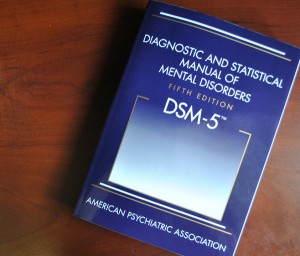
These are among new conditions proposed for the fifth edition of the psychiatrist’s bible, the Diagnostic and Statistical Manual of Mental Disorders (DSM-5), due to be finalised next year.

Some doctors in Australia are arguing the revised manual – used globally to diagnose mental disorders – is pathologising unhappiness.

The changes have also caused an international outcry, with the American Counselling Association, American Psychological Association, the British Psychological Society and others calling for the draft of the new edition to be independently reviewed.

They fear it is so inclusive, it risks labelling millions of healthy people as mentally ill.

”It’s such a narrow and limited view of human experience, to want to reduce every bit of suffering to medical diagnosis,” said Jon Jureidini, professor of psychiatry at the University of Adelaide. He said the changes would lead to increased prescribing.

The authors say ”misinformation” about the manual, produced by the American Psychiatric Association since 1952, is creating unnecessary fear and any inclusions will be based on robust scientific evidence. Psychiatrist Ian Hickie, director of Sydney University’s Brain and Mind Research Institute, rejects claims that the new manual would medicalise unhappiness. ”When people are in pain and suffering elsewhere we don’t say people are pathologising that. We say, let’s try and do the best we can to relieve that and get them back to function in the appropriate way,” Professor Hickie said.

The rift reflects division within the mental health community over a global rise in the use of antidepressants, stimulants and antipsychotics, with many clinicians critical of drugs with potentially serious side effects being favoured over more costly talk-based therapies. Others argue that medication can be life-saving where other therapies have failed. The inclusion of conditions such as attention deficit hyperactivity disorder (ADHD) and autism in previous DSM editions is believed to have contributed to increased prescribing.

In the new edition, the diagnosis threshold for some existing disorders is also being lowered so that

over the death of a loved one can qualify as a major depressive illness.

The authors of DSM-5, however, argue that a bereaved person who is suffering from major depression is currently ineligible for that diagnosis, preventing them from getting help if they need it.

”A broad range of evidence … shows that there are little to no systematic differences between individuals who develop a major depression in response to bereavement and in response to other severe stressors – such as being … raped … or the loss of your treasured job,” Dr Kenneth Kendler, a member of the DSM-5 mood disorders group, said.

The changes also mean children only have to display six of 13 possible symptoms for a diagnosis of ADHD, compared with six of nine in the previous manual.

”Under the new criteria it’s almost harder not to get diagnosed with ADHD than it is to get diagnosed with it,” Martin Whitely, a West Australian Labor MP and anti-ADHD medication campaigner, said. ”There were about 60,000 Australian children on ADHD medications in 2010 – a lot of money has gone into marketing and selling the disease.”

One of the manual’s biggest critics is the man who developed the last edition, American psychiatrist Allen Frances. He told The Sunday Age the fact that the authors of the new edition have described it as a ”living document” makes it a ”dangerous public health experiment”.

”The DSM-5 is used in real life-and-death decisions – it shouldn’t be a set of hypotheses to be tested,” he said. ”The worst outcome of this would be all these suggestions get included and a lot of people get medicine they don’t need. But an almost equally bad outcome would be that psychiatry gets so tarred by this aberration that people who really need psychiatry and need the medicine stop taking it.”

http://www.theage.com.au/national/psychiatry-bible-turns-sorrow-into-sickness-20111203-1ocmm.html

« Return to news items


Share

ONE DRUG TO MAKE YOU HAPPY

Monday, November 28th, 2011

NewsWithViews.com – 11/28/2011
by Jonathan Emord, Constitutional Attorney and Author

Psychiatric drugs are big sellers. They are among the best selling drugs made. In 2010, Americans or their insurers doled out some $16.1 billion for anti-psychotics; $11.6 billion for anti-depressants; and $7.2 billion for ADHD treatments.

Within the last two decades the field of psychiatry has mushroomed from a fringe body of Sigmund Freud admirers to a mainstream player in the field of medical pharmacology, largely because of an unseemly union between that profession and the drug industry, leading to the creation of many never before known disease states and profitable ways to exploit those alleged diseases with psychiatric services and drugs.

The field of psychiatry has persistent and well-informed critics who point to the excessive drugging of institutionalized patients, of children commonly misdiagnosed as suffering from Attention Deficit Disorder or Attention Deficit Hyperactivity Disorder, and of the elderly misdiagnosed with treatable dementia, among others. The drugs given these patients have their own side-effects, including increased risk of depression, suicidal thoughts, birth defects, and even death. Because of the movement of psychiatry from the fringe of medicine to its heart, a majority of Americans are likely to come into contact with psychiatric drugs, either recommended for use by their children or for use by them at some point in their lives. Indeed, presently some 1 in 5 adults take anti-depressants, anti-psychotic, or anti-anxiety drugs.

The next edition of the American Psychiatric Association’s Diagnostic and Statistical Manual (DSM-5), the profession’s so-called diagnostic bible, will soon be published in 2013. It comntinues the trend of identifying as “diseases” conditions that have previously been considered within the normal range. It adds to the list of “disease” states “apathy syndrome” (i.e., not caring enough); “internet addiction disorder” (i.e., liking the web too much); “parental alienation syndrome” (i.e., not liking your parents enough); “mild neurocognitive disorder” (i.e., age-related decline in mental function); “absexual” disorder (i.e., disliking sex); and “sluggish cognitive tempo” (i.e., daydreaming too much). Characteristics that we all used to think within the realm of normal brain function (such as teenage angst at parental rules; parental angst at teenage rebellion; a loss of quick wittedness in the elderly; youthful exuberance or youthful preoccupation with daydreams beyond the confines of academia) are all fast becoming “diseases.” The APA’s overall movement has been one of calling into question characteristics of eccentricity, leading to an unscientific conclusion that anything different may be rightly called a disease and rightly prescribed a treatment.

Every newly identified psychiatric disorder begets a new slate of psychiatric drugs for their treatment, giving leading pharmaceutical companies new opportunities to profit from the expansion of psychiatric diagnoses.

Psychiatric drugs are big sellers. They are among the best selling drugs made.

In 2010, Americans or their insurers doled out some $16.1 billion for anti-psychotics;

$11.6 billion for anti-depressants;

and $7.2 billion for ADHD treatments.

Profit lies in designing drugs for the treatment of these conditions. As the drug industry continues to pump out new elixirs that, in turn, leads to more reliance on psychologists and psychiatrists, which leads them in turn to prefer identifying more conditions as disease. The perverse incentives abound, and the FDA is pleased to approve the drugs at the behest of the drug company sponsors.
Everyone standing to profit from the sale of these agents wins at the expense of patients.

The drugging of America is an enormous problem, having spill-over effects that include drug addiction and destruction of the family, productivity, even national security. With an ever rising population taking these drugs which alter cognitive function, it becomes ever more apparent that the very fabric of our society, its common commitment to stable family life, self-sacrifice for the greater good, and adherence to laws that protect life, liberty, and property are all imperiled. As the drug industry and psychiatric profession profits enormously with each new declared disease state, there is a loss of free agency in the population, a movement that saps self-control from the individual in favor of control by the medical community over basic life-affecting decisions. Patients become dependent, event addicted, to drugs, and ever more dependent on their medical counselors to cope with life.

Whatever may be said for use of psychiatric drugs in those who cannot function in society, the expansion of those drugs to embrace those who can, including those with virtually any characteristic that exceeds the norm, represents a horrific sacrifice of the very promise of life that lies in those eccentricities. It is particularly horrific to watch beautiful, energetic children with all their great promise become addicted to drugs that alter brain chemistry in ways that yield drug dependency and lessen their perception of and enthusiasm for life and their ability to achieve. A majority of children prescribed anti-depressant and anti-psychotic drugs are wrongly prescribed those drugs, even by accepted psychiatric standards. That misguided course is itself a form of deviant behavior by this profession, calling into question the mental stability of those who would profit off of misdiagnosis and mistreatment.

The psychiatric drugging of America is bearing and will continue to bear for generations to come toxic consequences, whether in the form of the destruction of the family, increases in crime, or decreases in productivity and inventiveness. It’s high time for a rebellion against this drugging for the sake of sanity.

http://www.newswithviews.com/Emord/jonathan220.htm

Jonathan W. Emord is an attorney who practices constitutional and administrative law before the federal courts and agencies. Congressman Ron Paul calls Jonathan “a hero of the health freedom revolution” and says “all freedom-loving Americans are in [his] debt . . . for his courtroom [victories] on behalf of health freedom.” He has defeated the FDA in federal court a remarkable eight times, six on First Amendment grounds, and is the author of Amazon bestsellers The Rise of Tyranny, and Global Censorship of Health Information. He is also the American Justice columnist for U.S.A. Today Magazine. For more info visit Emord.com.

« Return to news items


Share

Psychiatry fighting over what is and what isn’t a mental disorder…again

Thursday, November 17th, 2011
Note from CCHR: We modified the original headline (below) for the sake of accuracy.
Expanding catalog of mental disorders worries some anyone who is rational

Networks – November 16, 2011 by Maiken Scott

The so-called bible of psychiatry, the Diagnostic and Statistical Manual of Mental Disorders, is getting a make-over. The latest version, DSM 5, will come out in 2013. In the meantime, conflicts over which diagnoses should be added, removed or changed are heating up.

Thousands of mental health professionals who are not happy with the direction of the new DSM are signing an online petition.

The DSM is a highly influential publication—it guides diagnosis, research and policy. The last edition of the manual was published in 1994, meaning this new edition must reflect almost 20 years of new research and treatment advances. The stakes are high, and so is anxiety around changes and additions.

The online petition posted by several professional organizations for psychologists criticizes those working on the new DSM for what they call “lowering diagnostic thresholds.”

Philadelphia psychologist Cindy Baum-Baicker, who has signed the petition, said the number of different mental health diagnoses is growing too quickly.

“We already have 297 diagnoses. When we started the DSM, we had 106,” she said. “We’re going to have even more.”

She is concerned about several specific aspects of the new DSM, for example changes that could turn prolonged grieving into a diagnosis. Grief, she said, is a natural and important part of life.

“If we pathologize the sadness of grief, and we put people on medicine so that they don’t experience their sadness and feel it through, they oftentimes aren’t going to be making the changes they need to be making to get on with life,” Baum-Baicker said.

University of Pennsylvania psychology professor Marna Barrett has not signed the petition—even though she shares some of the concerns it addresses.

She said the professionals working on the DSM have been receptive to feedback—which she says is a good thing, but can also cause difficulties.

“In no other aspect of medicine do we have a handbook of disorders where the public can put their two cents in as to what is a disorder or not, where colleagues can say this is a disorder or not,” Barrett said.

Barrett said decisions about the DSM should be firmly based in evidence and research and not yield to social and political pressures, or lobbying efforts from interest groups such as advocacy organizations headed by parents or consumers.

The online petition criticizing the DSM has collected more than 6,000 signatures so far.


« Return to news items


Share

Those in favor of Psychiatry’s Billing Bible? The American Psychiatric Association. Against it? Just About Everyone else

Thursday, November 3rd, 2011

Click image to watch video (explaining in simple terms, what the “problem” with psychiatry is….)

Psychology Today – November 1, 2011

by Allen Frances, MD (Psychiatrist and former Chairman of the DSM task force)

So far, opposition to DSM 5 has been expressed by the following organizations: British Psychological Society; American Counseling Association; Society for Humanistic Psychology (APA Division 32); Society for Community Research and Action: Division of Community Psychology (APA Division 27); Society for Group Psychology & Psychotherapy (APA Division 49); Developmental Psychology (APA Division 7); UK Council for Psychotherapy; Association for Women in Psychology; Constructivist Psychology Network; Society for Descriptive Psychology; and the Society of Indian Psychologists.

An editorial by the Society Of Biological Psychiatrywondered whether DSM 5 was necessary at all. The community of personality disordersresearchers is virtually unanimous in its opposition to the DSM 5 personality disorders section. There has also been widespread opposition to the sections on somatic, autistic, gender, paraphilic, and psychotic disorders.

Last week, a petition was posted quietly be several divisions of the American Psychological Association. It demands reform of the DSM 5 process and the elimination of a number of its most risky and ill conceived proposals. The petition is gaining increasing support and has already been signed by almost 3000 people. It can be accessed at http://www.ipetitions.com/petition/dsm5/ )

Strikingly, there seems to be virtually no support for DSM 5 outside the very narrow circle of the several hundred experts who have created it and the leadership of the American Psychiatric Association (APA) which stands to reap large profits from its publication. There is no group and precious few individuals outside of APA who have anything good to say about DSM 5. And even within the DSM 5 work groups and the APA governance structures, there is widespread discontent with the process and considerable disagreement about the product.

http://www.psychologytoday.com/blog/dsm5-in-distress/201111/dsm-5-against-everyone-else


« Return to news items


Share

Was Sybil a psychiatrist’s creation?

Thursday, October 20th, 2011

New Scientist
By Samantha Murphy
October 20, 2011

It is the tale that launched a thousand alter egos: the famous true story of “Sybil”, who endured years of torture at the hands of her sadistic mother and grew up into the meek, anxiety-ridden adult whose head was said to house 16 personalities.

For many, she provided a startling introduction to a rare and intriguing condition: then known as multiple personality disorder (MPD), a disease of the mind affecting mostly women, in which a person hosts several vastly different personalities representing fractured aspects of a haunted past.

Luckily, with the help of her psychiatrist’s enduring dedication to her treatment – which included many punched-out office windows and late-night house calls – Sybil was finally able to come to terms with the other sides of herself and integrate them, triumphing over her disease. The tale made for a compelling book, Broadway show and an even more engaging movie in 1976 (and a less riveting remake in 2007). The book and film became instant classics, not to mention teaching tools for psychology students.

But according to investigative journalist Debbie Nathan, the story of Sybil has one big problem: it’s mostly bunk.

In Sybil Exposed, Nathan, famous for her exposés on “recovered memory syndrome”, goes through the story, claim by claim, with a fine-toothed comb. It’s a massive undertaking of research that teases apart fact from fiction to reveal an even more interesting and educational account of, not 16, but just three personalities: the author, Flora Schreiber, the psychiatrist, Cornelia Wilbur, and “Sybil”, Shirley Mason.

What Nathan found among the archives was “shocking but utterly absorbing”, she says. Mason’s 16 personalities had not appeared spontaneously as they do in the book and movie, but were “provoked over many years of rogue treatment that violated practically every ethical standard of practice for mental health practitioners”, she writes.

This is quite a firebomb to throw into a heated battle that started in the late 1990s and is still being fought today. The lines are drawn between whether MPD, since renamed dissociative identity disorder, exists as an artefact of post-traumatic stress disorder, as its own unique illness, or if it is merely the product of wishful, reinforcing therapy and willing clientele.

While the next edition of psychiatry’s bible, the Diagnostic and Statistical Manual of Mental Disorders, is in development, this is no small quibble.

Nathan uses direct quotes from the actual psychoanalysis session transcripts, excerpts from Mason’s diaries, and Schreiber’s author notes to provide fascinating insights into how these three women turned sickness and desire into a business.

When Wilbur, an ambitious female psychiatrist in a field packed with men, found Mason, an attention-starved and admiring patient, it was not long before they were engaged in a twisted parent-child kind of relationship. Nathan shows how Wilbur supplied her patient with attention and affection, and Mason eagerly performed whatever dance seemed to please Wilbur most.

At one point Mason wrote a letter attempting to confess to Wilbur that she had invented these personalities. She also asked that they stop “demonizing” her mother – who Wilbur had cast as a vicious abuser but who Nathan suggests was just religiously strict and emotionally unpredictable. Wilbur dismissed the letter as a defence mechanism, and her patient, desperate not to lose the doctor’s interest, continued the charade. Soon after, the two women met Schreiber, who spun their story into the profitable and sexy legend we know today.

Sybil remains a good book and movie, but perhaps Nathan’s version of the story is the one worth telling in classrooms. Though it is the less sensational tale, it is a cautionary one. It is a solemn reminder of why mistrust plagues the mental health field, and why we must always be careful to pin down the facts, and leave it to fiction to get carried away with the story.

http://www.newscientist.com/blogs/culturelab/2011/10/was-sybil-a-psychiatrists-creation.html

« Return to news items


Share

If I have mental illness, I want doctors to prove it

Wednesday, October 12th, 2011

The Irish Times, October 11, 2011
by John McCarthy

Click on image to read the Mental Health Declaration of Human Rights

I AM MAD, a proud member of the mad community. Of course, madness exists – it’s normal, it’s as old as mankind, and it’s in every family. But if I have a disease in my brain called “mental illness”, I want the doctors to prove it. The brain is the most complicated organ in the body, yet doctors diagnose mental illness just by looking at you, and then you are labelled for life.

I’ve been diagnosed with unipolar depression, bipolar or manic depression, dysphoric elation – whatever that’s supposed to be – and paranoia. I’ve been told that I have a chemical imbalance in my brain that shows I have a mental illness. Yet not one of these fellows even took my pulse. They did it by sitting looking at me and talking to me.

I had a breakdown as a consequence of my dysfunctional childhood and because my business was collapsing – the banks were hounding me and I owed thousands. I was locked up for a year. I attempted suicide when I was on my heaviest dose of medication – a mixture of 10 different drugs a day.

There’s no such thing as a sudden breakdown: the madness was like the San Andreas Fault within me, lying dormant and buried. It was like an emotional stroke, a stroke of the spirit rather than the brain. But stroke victims can recover and they aren’t permanently labelled as disabled.

Our mental health laws allow two psychiatrists to sign a piece of paper and lock you up for the rest of your life because you’ve been diagnosed with a mental health problem. It’s based on nothing more than opinion, and that’s part of the cruelty of the mental health system in this country. You can be incarcerated and force treated against your will.

Why try to define madness? We should stop defining. We are all individuals with individual lives, and people react differently to different life situations. But the pharmaceutical industry, working with psychiatrists, tries to mass treat the individual, putting everyone in the same box.

Of course, madness has a downside. I hated it, but my hate was for myself really. I lost the ability to receive love. I was a complete pain in the arse, but my wife and family never stopped loving me. Yet you can learn from being mad. In fact, it was one of the most constructive learning experiences of my life.

I learned how to receive love with confidence. I have learned how to be at peace with who I am.

How do you learn to receive love? Well, if someone says you look well today, you say thank you. That’s the first step, but when I was in my negative side, that felt as hard as climbing Everest.

The Murphy and Ryan reports quite clearly showed that when you give power and authority to one section of the community over another abuse is bound to follow.

Mad Pride Ireland brings out the stories of people who have been abused under this system.

Society has bought into this idea that the mad community is dangerous and to be feared. The nuns got away with the same kind of thing for years with “loose women”; they took the problem part of the community away and buried them.

But we need to be free to ask awkward questions, to challenge the ethos of power and control. There is an aura of fear around psychiatric units. If you’re hopeless and helpless, you’ll be embraced and looked after. If you start asking questions, if you speak out with strength, they don’t want to know. When I started questioning things, I was offered more medication and told I was developing paranoia.

With every Mad Pride event we open up a public playground; there are no protests, no speeches. We scan everyone for normality – clowns use rubber chicken “normality detectors” to check people for signs of normality – and no-one has passed that test yet. We had 17,000 people at our event in Cork, all rocking to the music on a beautiful summer’s day.

It’s all about showing that madness is an everyday occurrence that affects everyone, and it can be dealt with in an open, loving way, with no fear. Now key people are beginning to listen to us. It shows what you can do with no money but a bit of goodwill.

Today I am lying here with motor neurone disease. I prefer the old name for it – creeping paralysis. You lose the use of your limbs, the ability to swallow, you end up incontinent. It’s a relentless disease. But there’s an honesty about the way neurology approaches it. Neurologists admit they don’t know the cause or cure for it.

They have done every test under the sun, I’ve undergone the deepest brain scan imaging in the country. But they admit they don’t know where it comes from and there is no fix, no treatment. Yet a psychiatrist can diagnose you just by looking at you.

I am happy for the psychiatric diagnoses I have had to be scientifically tested. I have a suggestion: I will put myself forward for psychiatrists to carry out any test they wish to do, in public, and I will publish the results. I’m dying, so I have nothing to lose.

click image to read more

But no-one is ever going to get a diagnosis of mental illness out of science: you will only ever get a diagnosis based on an assessment of behaviour. There is no science behind this disease, yet we have given the power of law to this guesswork. How are they getting away with this?

http://www.irishtimes.com/newspaper/health/2011/1011/1224305573629.html

« Return to news items


Share

Depression? Don’t believe it —Big Pharma has gained an ever greater hold over our mental & emotional lives

Friday, September 9th, 2011

The Brisbane Times, Australia – Spetember 9, 2011
by Lisa Appignanesi

"Over the last 40 years the Diagnostic and Statistical Manual of Mental Disorders - the bible of the psychiatric professions - has spawned more and more diagnostic categories, "inventing" disorders along the way and radically reducing the range of what can be construed as normal or sane. Meanwhile Big Pharma, feeding its appetite for profits and ours for drugs, has gained an ever greater hold over our mental and emotional lives, medicalising normality."

In 2000 the World Health Organisation named depression as the fourth leading contributor to the global burden of disease and predicted that by 2020 it would rise to second place. I suppose WHO didn’t mean it to sound like a target to be aimed for, but we seem to be rising to the challenge in any case.

A new survey from the European College of Psychopharmacology, a meta-analysis of a mass of research, reports that a staggering 164.8 million Europeans – 38.2 per cent of the population – suffer from a mental disorder in any year.

As well as depression, this includes neural disorders such as dementia and Parkinson’s; childhood problems from ADHD to “conduct disorder”; and the leading anxiety disorders – everything from panic attacks to obsessive-compulsive disorder to shyness. The latest figures for Australia, from 2007, indicate that more than one in five people – 3.2 million – had suffered from anxiety, a mood disorder or substance abuse in the preceding 12 months; 2-3 per cent more were estimated to have been affected by other mental illnesses.

Depression and anxiety, they tell us, are disproportionately women’s ailments. Men, it seems, become alcoholics (another illness category) rather than depressives, particularly in eastern Europe.

Such reports are worrying. They may draw attention to a rising toll of human suffering, but they pinpoint the imperialising tendency of the mental health sector. Our ills and unhappiness are squeezed into a package labelled “disorder” and an ever-proliferating assortment of supposedly objective diagnostic categories. A cure is somehow promised, though it rarely seems to come, certainly not for everyone or for ever. In talking to the press or drafting press releases, researchers often extrapolate from their material in order to create good copy.

The notion that women are somehow more prone to mental illness often emerges. According to Hans-Ulrich Wittchen, one of the report’s authors, the reason women suffer nearly twice as much depression and anxiety disorders as men lies in the changing social pattern in which women take on work on top of marriage and children.

So stay home, ladies, and you’ll be as happy as apple pie; though in the 50s when we stayed home to bake it, the doctors gave us Miltown and Valium to help us take pain-free care of hubby and the young ones.

On the subject of women’s greater susceptibility, it’s just as well to remember that women go to doctors far more than men, for all kinds of ills: indeed, women’s greater incidence of mental ills just about equals their greater number of visits to the doctors. If men went to doctors as often as they go to the pub, it’s a fair guess that their unhappiness would be represented as depression or anxiety as well.

One of the many things that became clear to me as I was working on my book on the rise and rise of the mind-doctoring professions over the last 200 years, is that classifications of mental disorder are hardly absolutes. They are far more often constructs that mirror their time’s aspirations and ways of understanding. They may reflect subjective experience, but only insofar as we can prod and organise our inchoate inner lives to fit pre-existing psychiatric tick lists.

Useful tools for statisticians, the classifications are also useful to public health administrators, insurance companies, lobbying bodies, or pharmaceutical companies who need “homogeneous populations” on whom to carry out drug trials. But I remain to be convinced that these proliferating classifications help individuals find relief – except, of course, that momentary relief from giving an expert name to what may feel like an intractable set of problems.

Over the last 40 years the Diagnostic and Statistical Manual of Mental Disorders – the bible of the psychiatric professions – has spawned more and more diagnostic categories, “inventing” disorders along the way and radically reducing the range of what can be construed as normal or sane. Meanwhile Big Pharma, feeding its appetite for profits and ours for drugs, has gained an ever greater hold over our mental and emotional lives, medicalising normality.

The more studies that come along to tell us about the rise in mental illness, the more we fit our problems and unhappiness into a category of mental disorder, developing symptoms to take to the doctor in search of a cure. Humans are suggestible creatures. And doctors like to help: they provide the pills Big Pharma recommends, though many must now know that research has shown placebos can work just as well and with fewer side effects.

If doctors – rather than politicians or teachers or priests or friends and family – are to be the guardians of our wellbeing, then doctors really should be provided with new kinds of “treatments”. Psycho- and group therapy could, of course, be rolled out, and not just of the 10-week variety: anything that builds up the individual’s inner resources and allows emotions to be reflected on can’t be bad.

But doctors could recommend group running for depression, proved to have far better effects than SSRIs. Reading groups, too, offer a definite lift. As for women, more free childcare, after-school clubs and husbands who take days off to go to the doctor with the kids (or sort out that drinking problem) would lift a depressed mood wonderfully. Then there’s poverty, terrible schools … could health systems take those on as well?

« Return to news items


Share

DSM 5 Will Further Inflate The ADD Bubble

Tuesday, August 2nd, 2011

Psychology Today
by Allen Frances, Former Chairman, DSM Task Force

Video: ADHD Labeling Normal Kids "Mentally Ill"

The Child Work Group Fails Again To Learn From Its Experience

Martin Whiteley is an MP who represents Perth in the Australian parliament. He has been actively involved in mental health issues and succeeded in a crusade to curb what had been Perth’s alarming overdiagnosis and overmedication of  Attention Deficit Disorder Disorder (ADD). Mr Whiteley has become expert in the intricacies of ADD and is alarmed that the changes suggested for DSM 5 will greatly exacerbate the ADD fad he worked so hard to tame. Read Mr Whiteley’s careful item by item review and you will be alarmed too:

http://speedupsitstill.com/dsm-5-proposal-adhd-%e2%80%93-making-l…

We are already in the midst of a false epidemic of ADD. Rates in kids that were 3-5% when DSM IV was published in 1994 have now jumped to 10%. In part this came from changes in DSM IV, but most of the inflation was caused by a marketing blitz to practitioners that accompanied new on-patent drugs amplified by new regulations that also allowed direct to consumer advertising to parents and teachers. In a sensible world, DSM 5 would now offer much tighter criteria for ADD and much clearer advice on the steps needed in its differential diagnosis. This would push back ,however feebly, against the skilled and well financed drug company sell. DSM 5 should work hard to improve its text, not play carelessly with the ADD criteria in a way that may unleash a whole set of dreadful unintended consequences- unneeded medication, stigma, lowered expectations, misallocation of resources, and contribution to the illegal secondary market peddling stimulants for recreation or performance enhancement.

The DSM 5 child and adolescent work group has perversely gone just the other way. It proposes to make an already far too easy diagnosis much looser.

How puzzling and troubling. Child mental health has already promoted no fewer than three false epidemics in just 15 years- ADD, childhood bipolar, and autism. Any reasonable group would now be learning from this past experience. For the future, it would be chastened, cautious, and eager to correct the damage it has done- rather than embarking on any reckless new adventures. A prudent DSM 5 would tighten its criteria for ADD and put in a black box warning against the blatant current off-the-DSM-label diagnosis of childhood bipolar. DSM 5 instead does everything wrong it possibly could with ADD and then remarkably takes the mischievous further step of adding yet another new candidate for diagnostic fad (Disruptive Mood Dysregulation Disorder) likely that will increase the already scandalous overprescription of dangerous antipsychotic medication to children. Go figure.

In many circles, the accepted wisdom is that DSM 5 workers are making such unaccountably bad decisions because they want to promote drug sales to kids. To support this accusation, cynics raise the Biederman affair and also APA’s previous excessive financial support from Pharma.

This is one time when the cynics are dead wrong. The DSM 5 work group is making simply disastrous decisions for the purist of reasons. These are not people with close industry ties and their conflict of interest is intellectual, not financial. Experts in child psychiatry are dangerously naïve about the likely misuses of their well meaning suggestions. They are blind, not corrupt.

What is needed is outside supervision to curb child psychiatry’s seemingly endless taste for diagnostic excess. And APA should also realize the grave harm done to its credibility by the appearance that DSM 5 is far too Pharma friendly even if this has not been the real motivation behind the bad DSM 5 proposals.

To make matters worse, the DSM 5 field trial will be completely worthless- providing no information at all about the magnitude of the rate increase in ADD that will occur once DSM 5 opens the floodgates even wider. We did careful field trials before DSM IV to compare the impact on rates of the different possible definitions and predicted a 15% increase for the one finally chosen. Instead, the rates more than doubled- courtesy of pressure from the drug companies. For obscure reasons, DSM 5 is conducting extraordinarily expensive field trials that (again perversely) avoid the only question that really counts- just how high will the rates skyrocket under the even easier to meet new DSM 5 definition.

DSM 5 will be flying completely blind into dangerous territory, unimpeded by adult supervision. The leaders of child psychiatry (who already have the unfortunate track record of producing fads) will now be given a free pass to further feed their blossoming ADD fad. Will they never learn from past mistakes?

http://www.psychologytoday.com/blog/dsm5-in-distress/201108/dsm-5-will-further-inflate-the-add-bubble

« Return to news items


Share

Harvard Expert Ties Mental Illness “Epidemic” to Big Pharma’s Agenda

Friday, July 29th, 2011

Minyanville
By Minyanville Staff
July 28, 2011

When the DSM-II was published in 1980, it became “the bible of psychiatry,” writes Angell, who adds, “but like the real Bible, it depended a lot on something akin to revelation. There are no citations of scientific studies to support its decisions.”

For any mental illness or passing mood swing that may trouble a person, the Diagnostic and Statistical Manual of Mental Disorders — better known as the DSM — has a label and a code. Recurring bad dreams? That may be a Nightmare Disorder, or 307.47. Narcolepsy uses the same digits in a different order: 347.00. Fancy feather ticklers? That sounds like Fetishism, or 302.81. Then there’s the ultimate catch-all for vague sadness or uneasiness, General Anxiety Disorder, or 300.02. That’s a label almost everyone can lay claim to.

These codes are used by doctors, psychologists, and regulators to maintain a mutual language; it’s a handy shorthand system for bureaucratic purposes. But over the past few decades, the staggering, ever-expanding influence of the ever-expanding DSM, which is published by the American Psychiatric Association, has also played a lead role in building wealth and off-label product uses for the major drug manufacturers. In an insightful essay in this week’s New York Review of Books, Marcia Angell, a senior lecturer in social medicine at Harvard Medical School and former Editor in Chief of The New England Journal of Medicine, explains how.

The medical director of the American Psychiatric Association (APA), Melvin Sabshin, declared in 1977 that “a vigorous effort to remedicalize psychiatry should be strongly supported."

Angell’s essay is based on a review of three current books examining the psychiatric industry: The Emperor’s New Drugs: Exploding the Antidepressant Myth, by Irving Kirsch; Anatomy of an Epidemic: Magic Bullets, Psychiatric Drugs, and the Astonishing Rise of Mental Illness in America by Robert Whitaker, and Unhinged: The Trouble with Psychiatry–A Doctor’s Revelations About a Profession in Crisis, by Daniel Carlat. She also cites the DSM-IV, the most recent edition of the manual, while her review traces big pharma’s role in our current mental disorder epidemic to the DSM-III, published in 1980.

To begin, Angell describes the psychiatric profession’s backlash against a developing perception in the 1960s and 1970s that the practice was a “soft” almost pseudo science:

In the late 1970s, the psychiatric profession struck back–hard. As Robert Whitaker tells it in Anatomy of an Epidemic, the medical director of the American Psychiatric Association (APA), Melvin Sabshin, declared in 1977 that “a vigorous effort to remedicalize psychiatry should be strongly supported,” and he launched an all-out media and public relations campaign to do exactly that. Psychiatry had a powerful weapon that its competitors lacked. Since psychiatrists must qualify as MDs, they have the legal authority to write prescriptions. By fully embracing the biological model of mental illness and the use of psychoactive drugs to treat it, psychiatry was able to relegate other mental health care providers to ancillary positions and also to identify itself as a scientific discipline along with the rest of the medical profession. Most important, by emphasizing drug treatment, psychiatry became the darling of the pharmaceutical industry, which soon made its gratitude tangible.

Of the 170 contributors to the current version of the DSM (the DSM-IV-TR), ninety-five had financial ties to drug companies, including all of the contributors to the sections on mood disorders and schizophrenia.

These efforts to enhance the status of psychiatry were undertaken deliberately. The APA was then working on the third edition of the DSM, which provides diagnostic criteria for all mental disorders. The president of the APA had appointed Robert Spitzer, a much-admired professor of psychiatry at Columbia University, to head the task force overseeing the project. The first two editions, published in 1952 and 1968, reflected the Freudian view of mental illness and were little known outside the profession. Spitzer set out to make the DSM-III something quite different. He promised that it would be “a defense of the medical model as applied to psychiatric problems,” and the president of the APA in 1977, Jack Weinberg, said it would “clarify to anyone who may be in doubt that we regard psychiatry as a specialty of medicine.”

When the DSM-II was published in 1980, it became “the bible of psychiatry,” writes Angell, who adds, “but like the real Bible, it depended a lot on something akin to revelation. There are no citations of scientific studies to support its decisions.”

Despite its lack of citations, that DSM named 265 disorders doctors were meant to identify by matching (or mostly matching) a list of symptoms in the book with symptoms described by a patient. The drug companies were quick to see this radical shift in psychiatry as an opportunity. From the 1980s until now, as Angell demonstrates, the drug makers have supported the move away from talk therapy to the drug therapy, which also benefits practitioners, since doling out drugs and tweaking prescriptions earns a psychiatrist more money for less time spent with a patient.

Here Angell explains how companies influence the DSM itself. The bold typeface is ours.

Drug companies are particularly eager to win over faculty psychiatrists at prestigious academic medical centers. Called “key opinion leaders” (KOLs) by the industry, these are the people who through their writing and teaching influence how mental illness will be diagnosed and treated. They also publish much of the clinical research on drugs and, most importantly, largely determine the content of the DSM. In a sense, they are the best sales force the industry could have, and are worth every cent spent on them. Of the 170 contributors to the current version of the DSM (the DSM-IV-TR), almost all of whom would be described as KOLs, ninety-five had financial ties to drug companies, including all of the contributors to the sections on mood disorders and schizophrenia.

The drug industry, of course, supports other specialists and professional societies, too, but Carlat asks, “Why do psychiatrists consistently lead the pack of specialties when it comes to taking money from drug companies?” His answer: “Our diagnoses are subjective and expandable, and we have few rational reasons for choosing one treatment over another.” Unlike the conditions treated in most other branches of medicine, there are no objective signs or tests for mental illness—no lab data or MRI findings—and the boundaries between normal and abnormal are often unclear. That makes it possible to expand diagnostic boundaries or even create new diagnoses, in ways that would be impossible, say, in a field like cardiology. And drug companies have every interest in inducing psychiatrists to do just that.

Eli Lilly gave $551,000 to NAMI

In addition to the money spent on the psychiatric profession directly, drug companies heavily support many related patient advocacy groups and educational organizations. Whitaker writes that in the first quarter of 2009 alone, “Eli Lilly gave $551,000 to NAMI [National Alliance on Mental Illness] and its local chapters, $465,000 to the National Mental Health Association, $130,000 to CHADD (an ADHD [attention deficit/hyperactivity disorder] patient-advocacy group), and $69,250 to the American Foundation for Suicide Prevention.”

And that’s just one company in three months; one can imagine what the yearly total would be from all companies that make psychoactive drugs. These groups ostensibly exist to raise public awareness of psychiatric disorders, but they also have the effect of promoting the use of psychoactive drugs and influencing insurers to cover them. Whitaker summarizes the growth of industry influence after the publication of the DSM-III as follows:

“In short, a powerful quartet of voices came together during the 1980’s eager to inform the public that mental disorders were brain diseases. Pharmaceutical companies provided the financial muscle. The APA and psychiatrists at top medical schools conferred intellectual legitimacy upon the enterprise. The NIMH [National Institute of Mental Health] put the government’s stamp of approval on the story. NAMI provided a moral authority.”

And now here we are in 2011, with almost everyone we know taking two or three different mood disorder drugs. (This trend is not limited to mental disorder, mind you. See Disease Branding.)

Work started on the DSM-V in 1999, which is due out in 2013. It will contain many new disorders, such as “binge eating” and “restless leg disorder.” It will also expand existing categories by tacking on words like “spectrum” to the end of a known disorder, Angell reports. “It looks as though it will be harder and harder to be normal,” she writes.

But the curtain gets pulled back further still.

In her review of Daniel Carlat’s book, Angell calls attention to the “disillusioned insider’s” frank admission that when he prescribes a drug, his decision process is largely guesswork. Carlat’s view is that although any psychiatrist will acknowledge that he or she has had great success with mental disorder drugs for say, depression or anxiety, no doctor can say with certainty whether the drugs are working or if a placebo effect has taken effect.

[Carlat's] work consists of asking patients a series of questions about their symptoms to see whether they match up with any of the disorders in the DSM. This matching exercise, he writes, provides “the illusion that we understand our patients when all we are doing is assigning them labels.” Often patients meet criteria for more than one diagnosis, because there is overlap in symptoms. For example, difficulty concentrating is a criterion for more than one disorder. One of Carlat’s patients ended up with seven separate diagnoses. “We target discrete symptoms with treatments, and other drugs are piled on top to treat side effects.” A typical patient, he says, might be taking Celexa for depression, Ativan for anxiety, Ambien for insomnia, Provigil for fatigue (a side effect of Celexa), and Viagra for impotence (another side effect of Celexa).

As for the medications themselves, Carlat writes that “there are only a handful of umbrella categories of psychotropic drugs,” within which the drugs are not very different from one another. He doesn’t believe there is much basis for choosing among them. “To a remarkable degree, our choice of medications is subjective, even random. Perhaps your psychiatrist is in a Lexapro mood this morning, because he was just visited by an attractive Lexapro drug rep.”

Messy. And, of course, the whole system is now being exported to China and other countries where the middle class is growing and the mental health industry is still in a developing stage.

Angell’s latest book is The Truth About the Drug Companies: How They Deceive Us and What to Do About It.

Read the rest of her essay, which examines the controversial use of brain chemistry drugs to treat children, here.

http://www.minyanville.com/dailyfeed/2011/07/25/harvard-expert-links-our-mental/

« Return to news items


Share

The problem with the DSM

Wednesday, June 29th, 2011

The Commons – June 29, 2011

Do you have a shopping addiction disorder? Perhaps an addiction to food? Maybe one of your kids has Internet addiction disorder, or video-game attachment syndrome.

Well, not quite yet, because these kinds of new mental diagnoses are only proposed, not final, for the new revision of the Diagnostic and Statistical Manual of Mental Disorders (DSM), the bible of the American Psychiatric Association (APA).

And there is a terrible problem with this.

The DSM was first created in the 1920s. Based on psychoanalytic theory, it enumerated fewer than 100 mental problems that a psychiatrist could diagnose, all of them attributable to environmental conditions, generally the role of parenting.

We know now that this theoretical stance was limited and, in many cases, wrong. In 1980, the second revision of the DSM took place. Freud was discarded, and the revised bible now included several hundred disorders, all delineated by a list of observable symptoms and a framework for limiting and differentiating diagnoses.

Three versions later, the current DSM lists more than 1,000 disorders. No theories are espoused for their origins, though implicit in it is that there is a mix of genetic and environmental causes that shape neurological development.

During this period of about three decades, the incidence of attention disorders in the general population has increased from 2 percent to 10 percent.

In the 1980s, people diagnosed with bipolar disorder represented less than 1 percent of the population; now the number has increased to 5 percent.

New diagnoses, like oppositional defiant disorder and conduct disorder, now cover as many as 5 percent of children.

Autism, which afflicted a tiny percentage of the population in the 1990s, now accounts for 1 out of every 100 children.

What is wrong with this picture? Do we have an epidemic on our hands? Something in the water we drink, or the air we breathe?

The standard APA explanation is that we now recognize and treat disorders that in the past were overlooked, often judged in moral terms, and left untreated.

In this view, a reasonable estimate of the current percentage of adults with undiagnosed attention deficit hyperactivity disorder would be about 1 out of 20, since we were born too early for the new diagnostic scheme. Maybe you. Certainly me.

There is another way to tell the story, however.

In this story, one could argue that each change in the DSM has essentially recruited a new batch of subjects for identification and treatment.

Instead of seeing difference as a natural outcome of personal characteristics, all of which have their place in the wonderful diversity of humankind, we have come to see individuals as made up of symptoms.

In this view, these symptoms are all treatable, usually by medication, within an implicit vision of normality arising from a dominant culture that is mainly driven by economic considerations.

And that’s the problem. The psychiatric and pharmaceutical industries essentially depend on a tautological logic, a kind of nightmarish Field of Dreams approach in which, if you define it, they will come and take their meds.

But it is not the only problem. The reality is that there are real mental disorders that carry a terrible cost, and that many of these can be treated effectively through a combination of medication, psychotherapy, and environmental support.

That our current approach mixes apples and oranges, the relatively small population that is truly in need of medical help with the much larger group that does not, risks discrediting the field in general, in ways that might ultimately mean that individuals who truly require medical intervention might choose not to get it.

It also adds costs to our yearly health-care budget which are largely unnecessary, though I have yet to hear this discussed in the Sturm und Drang that has attended President Obama’s attempt to make sense out of our broken health-care system.

Perhaps the greatest problem is that children who, in another age, were simply different — odd, quirky, restless, bored, sad, angry — are now disordered, and often drugged to make them more “normal.”

Adults, too. Between 2006 and 2010, the number of prescriptions for antidepressants increased by 43 percent. More than 23 million prescriptions were filled last year.

All of this while the world we have shaped seems to be spinning rapidly out of control, whether in the loss of contact with nature caused by urbanization and suburbanization, the terrible dislocations of a post-industrial society in which 1 percent of the population controls almost all the wealth, or in the simple reality that the climate we live in will change over the next decades in ways that will take a horrific human toll.

Who wouldn’t feel sad, or angry?

* * *

The new DSM is coming, probably in 2013 or 2014 — a lot later than its original projected deadline of 2011, in part because debates over what it should include have been so fierce.

One of the main external critiques of the process is that so many of the shrinks working on the bible are affiliated with pharmaceutical companies. It’s an important point, one that the public has barely seen in the popular press.

To my mind, the more important critique is that the fundamental underpinnings of the DSM are flawed, and that the lack of a theoretical basis means that any quirk or problem a person might express can be categorized as illness. Even expert tautological logic is still tautological.

There are reasons why people shop when they are sad, or why children stay up all night playing video games. There are reasons that a lot of preadolescent boys find it hard to sit still in class and cause problems for their teachers. There are reasons why children with overstressed parents, children who spend a lot of time living in an internal world of television, music, Facebook, instant messaging, and texting, have difficulty developing the skill of social interaction. There are reasons why children get sad, or angry, in the world they live in.

You won’t find these in the DSM.

Read the rest of the article here: http://www.commonsnews.org/site/site04/story.php?articleno=3712&page=3

For more information see this video featuring CCHR Co-founder, Dr. Thomas Szasz

http://www.cchrint.org/videos/experts/thomas-szasz/

« Return to news items


Share