Posts Tagged ‘Citizens Commission on human rights’

NY Times—Payments to Doctors by Pharma Raise Issues of Conflicts, CCHR warns of tainted mental health policies

Friday, November 25th, 2011

New York Times November 24, 2011

The financial relationships raise questions about the influence of drug companies on prescribing patterns or research results. The practice “puts patients and tax dollars at risk,” said Lee Spiller, the policy director for the Texas branch of the Citizens Commission on Human Rights,  a nonprofit mental health watchdog. “It taints the whole process. I’d hate to think donations were shaping state mental health policy in particular.”

State records show that of the 74 doctors and psychiatrists statewide who have routinely prescribed the highest number of costly antipsychotic drugs to patients on Medicaid, the joint state-federal health insurance program for the disabled, children and the very poor, 10 received payments from drug companies in 2009-11 — from $11,000 to $180,000 each.

By EMILY RAMSHAW and RYAN MURPHY
Published: November 24, 2011

Thousands of Texas doctors, researchers and medical experts — including more than 100 who are employed by the state and are paid with taxpayer dollars — routinely supplement their salaries with income from pharmaceutical companies.

Drug companies pay medical professionals for a wide range of activities, from speaking engagements to consulting. While legal, the practice raises questions about potential conflicts, and whether the interests of patients may be compromised.

From 2009 to early 2011, at least 25,000 Texas physicians and researchers received a combined $57 million — and probably far more — in cash payments, research money, free meals, travel and other perks, according to data culled from 12 drug companies and provided by the nonprofit investigative news organization ProPublica.

Dozens of these medical professionals were paid more than $100,000 each during that period. And 114 were professors, physicians, psychiatrists or researchers who were already paid a salary by the state — in some cases more than a half-million dollars a year. These state employees brought in nearly $3 million combined from pharmaceutical companies from 2009 to early 2011, according to a Texas Tribune analysis of the ProPublica data.

Nationwide, pharmaceutical manufacturers routinely pay medical professionals to assess a new product or to help contribute to the drug company’s sales. The companies fly medical professionals to seminars and conferences and may also pay speaking fees. State-employed doctors and researchers are generally no exception, though they are supposed to comply with their individual institutions’ conflict-of-interest policies.

“It’s important to state out of the gate the importance of these interactions, the value they bring to physicians, to health care professionals in general and ultimately to patients,” said Karl Uhlendorf, vice president of Pharmaceutical Research and Manufacturers of America.

But the financial relationships raise questions about the influence of drug companies on prescribing patterns or research results. The practice “puts patients and tax dollars at risk,” said Lee Spiller, the policy director for the Texas branch of the Citizens Commission on Human Rights, a nonprofit mental health watchdog. “It taints the whole process. I’d hate to think donations were shaping state mental health policy in particular.”

Dr. Stanley Self, a part-time psychiatrist at Texas’ state-run Rusk psychiatric hospital, earns $166,000 a year from the state. He also earned at least $145,000 from drug companies in 2009-10, largely for speaking engagements. Dr. Self did not return calls seeking comment on his work for drug companies, but his receptionist said he is “not doing much of that anymore.”

Christine Mann, a spokeswoman for the Department of State Health Services, said agency employees, like Dr. Self, are allowed to hold a second job as long as there is not a conflict of interest. The agency “is looking into this issue further and will examine its policies to see if there are provisions that need to be strengthened,” Ms. Mann said.

Dr. Joseph Bailes, an oncologist and the vice chairman of the executive committee at the Cancer Research and Prevention Institute of Texas, earned roughly $250,000 between 2009 and 2010 as a consultant for Pfizer. Dr. Bailes said that he has advised Pfizer on Medicare policy — not on drug development — and that it has no bearing on his role with the institute, a $3 billion endeavor financed by voter-approved bonds, for which he is an “unpaid volunteer” specializing in efforts to bring new cancer therapies to market.

“It doesn’t influence anything I do,” Dr. Bailes said, adding that his committee is not responsible for selecting projects for financing.

Dr. Stanley Lemon, who left his post as the director of the Institute for Human Infections and Immunity at the University of Texas Medical Branch in April and is now at the University of North Carolina, made nearly $80,000 consulting for Pfizer in 2009-10. Dr. Lemon, who is still an adjunct professor at U.T.M.B. but is no longer on the state payroll, said consulting for the pharmaceutical industry has enriched his academic life and made him a more productive scientist.

“As long as they are properly reported and do not engender conflicts of interest or commitment, such interactions between industry and academia help to move drug development forward in a positive way,” Dr. Lemon wrote in an e-mail.

The analysis of Texas pharmaceutical payments comes as the state attorney general’s office prepares for a mammoth trial in January against Janssen Pharmaceuticals and its parent company, Johnson & Johnson. Janssen, which has vigorously denied any wrongdoing, has been accused of offering trips and kickbacks to state health officials to get the schizophrenia drug Risperdal on an approved drug list for medications that are paid for by the state.

Across the country, the reporting of such perceived conflicts has traditionally fallen short. Companies have not been required to disclose payments, and medical institutions have made limited efforts to police their employees.

The ProPublica data covers just a part of drug company payments — it represents about 40 percent of the 2010 pharmaceutical market in the United States — and includes manufacturers that have either begun disclosing their payments voluntarily, or as a result of legal settlements.

Beginning in March, federal law will require drug and device companies to report and disclose all of their payments to medical professionals and researchers; by September, the data is supposed to be displayed in a searchable online government database. Texas universities — whose doctors and researchers account for $2.7 million of the pharmaceutical money statewide from 2009 to early 2011 — are working to update their own conflict policies and monitoring systems.

The University of Texas System will require its faculty members to report every dollar they are paid by a drug or device manufacturer and all financial interests in their research beginning Jan. 1.

The U.T. Southwestern Medical Center in Dallas is working on an electronic conflict-of-interest filing system that will feed into a soon-to-be-released public disclosure Web site, said Tim Doke, U.T.-Southwestern’s vice president for communications.

“We’ve been working feverishly here for the last couple of months,” Mr. Doke said. “Transparency is the absolute key to the public being confident that conflicts that exist are being managed appropriately.”

At the University of Texas MD Anderson Cancer Center in Houston, university administrators monitor drug company databases to ensure that faculty-conflict filings match, and to set limits on how much doctors and researchers can accept, said Dr. Raymond DuBois, the center’s provost and executive vice president.

But such efforts at transparency vary widely depending on the institution, or may be nonexistent when there is no institution at all. State records show that of the 74 doctors and psychiatrists statewide who have routinely prescribed the highest number of costly antipsychotic drugs to patients on Medicaid, the joint state-federal health insurance program for the disabled, children and the very poor, 10 received payments from drug companies in 2009-11 — from $11,000 to $180,000 each.

All but one got the payments from the maker of the drug they most commonly prescribed.

http://www.nytimes.com/2011/11/25/us/payments-to-doctors-by-pharmaceutical-companies-raise-issues-of-conflicts.html?_r=1

« Return to news items


Share

International human rights group protest as public distrust of psychiatry mounts

Friday, July 8th, 2011

by CCHR UK

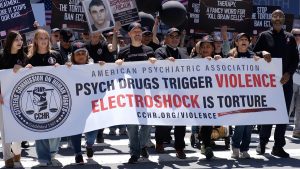
Hundreds of protesters opposing the junk science and dangerous drugs that make up psychiatry marched through Brighton last week.

The protest coincided with the opening of the Royal College of Psychiatrists’ Annual Conference at the Metropole Hotel on Kings Road. The march started in Victoria Gardens and finished outside the hotel to highlight the use of dangerous psychiatric drugs that have resulted in multiple deaths of teenagers who had been labelled with so-called ‘disorders’.

The protest was organized by psychiatric watchdog the Citizens Commission on Human Rights (CCHR).

Following the protest, a traveling exhibition was opened on the seafront opposite the hotel, exposing the hidden agendas and dangers of the psychiatric industry.

Called “How to Protect and Preserve Your Mental Health”, the exhibition presented information not being made known by the psychiatric industry, information which CCHR says prevents patients making an informed choice about so-called treatment.

It also exposed the lack of transparency in the field of mental health, where only selective data is being made available to patients, and where the effects of psychiatric treatments including violence, aggression and suicide, are being washed over or even withheld.

CCHR says a series of needless young deaths could have been avoided if parents had been fully informed about psychiatric drugs and their effects, citing the recent suicide of 10-year-old Harry Hucknall, who hanged himself while on Ritalin and Prozac. The fact parents are not being told about the dangers of psychiatric drugs prescribed to children and adolescents has added to the mounting public distrust of the psychiatric profession, which has been worsened by problems within the profession itself.

Ahead of the Conference, Dinesh Bhugra, President of the RCP, came out saying mental health was in crisis due to staff shortages. His comments have come despite mental health receiving the largest portion of the NHS budget. According to Department of Health figures, mental health received £11.2 billion in 2010, an amount far in excess of what was invested in other areas such as cancer or heart problems.

Brian Daniels, spokesman for CCHR in the UK, says psychiatry is the only profession that has to continually advertise its failures as well as promoting how bad it is to get more government funding. He says any other profession would be in administration by now.

He also points to the fact that most doctors like to treat patients humanely, giving them a choice when it comes to treatment. He said, “Choices don’t exist in psychiatry. It’s no wonder doctors don’t want to go towards a profession where forced treatment is the order of the day, and where you are a jailer if the person doesn’t comply. Further, psychiatry has no scientific or medical basis and young doctors are recognizing this.”

« Return to news items


Share

In Soviet Relapse, Critics Sent to Psychiatric Hospitals

Tuesday, June 28th, 2011

The Moscow Times – June 28, 2011

By Natalya Krainova

Editor’s note: This is the first article in a series on punitive psychiatry.

In the Soviet Union, dissidents were labeled schizophrenics, thrown into psychiatric hospitals and drugged just for questioning the government. It wasn’t until the Soviet demise that officials grasped the difference between criticism and mental illness.

But old habits die hard.

Galina Yartseva, 47, editor of a small opposition newspaper in Veliky Novgorod, learned this the hard way after she took on the city establishment, accusing local officials of corruption and a local plant of air pollution damaging to children’s health.

She was slammed with dubious charges of showing disrespect to a judge in 2010, but cleared by a jury. A few weeks later, the Supreme Court overturned the acquittal at the request of regional prosecutors and sent the case back to the regional court.

In the new trial, regional prosecutors asked the court to order a psychiatric examination of Yartseva. Local psychiatrists found that she showed “signs of a personality disorder” but was “criminally sane,” meaning she could be tried in court, her lawyer Yegor Mylnikov said.

In mid-June, a jury acquitted Yartseva of the charges again.

“It was clear beforehand that the examination was ordered to discredit me,” Yartseva said by telephone on June 24 from Veliky Novgorod, located 550 kilometers northwest of Moscow.

“This is not just an offense but an obstruction of my journalistic activities, because who will listen to me if I am declared insane?” she said.

Yartseva was distraught but appeared otherwise normal during a separate interview in April in Moscow, where she came for an independent psychiatric examination intended to clear her name. The Moscow psychiatrist confirmed her mental health to be sound.

Yartseva’s ordeal places her in the company of at least a dozen activists across the country whose sanity has been questioned over the past decade after they crossed local authorities.

The people are a ragtag bunch, ranging from liberal activists and neo-Nazis to poets and college professors. All those located by The Moscow Times were eventually declared sane and released, but they insist that their plight was persecution for political or anti-corruption activism. If true, this would imply a dangerous precedent for a country still mired in its Soviet legacy.

Regional authorities use psychiatric examinations as part of intimidation campaigns against people who “file lots of complaints in courts and other state bodies trying to instate justice,” said Tatyana Malchikova, president of the Civil Commission for Human Rights in Moscow, which has been tracking abuse in psychiatry since 2000.

The centralized Soviet system of prosecution by mental treatment is now dismantled, and authorities “are afraid to use psychiatry for political goals,” said Yury Savenko, president of the Independent Psychiatric Association.

But while that may be true for the federal government, officials on the ground are not above declaring critics insane, said lawyer Yury Yershov, who defends victims of psychiatric abuse.

Criminal cases do not require the psychiatric examination of suspects, but a check can be ordered during the trial if any party appeals to the court with doubts about the defendant’s sanity, said Mylnikov, Yartseva’s lawyer.

There are no set rules on what mandates a check. The decision on whether to order it rests with the judge — many of whom are known to be on amiable terms with local authorities and prosecutors and willing to lend an ear to their pleas regardless of how justified they are.

The Veliky Novgorod regional court said in its order for Yartseva to undergo a psychiatric examination that she had showed “unusual emotionality.”

Savenko, the psychiatrist, said suspicions are not always unfounded, because some people who pester the authorities with complaints suffer from ”querulent and litigious syndrome.”

Lawyer Yershov retorted that the syndrome is only a ”very convenient” pretext to get rid of people “who sue too much.”

Actual mental health treatment is less severe than in Soviet times, when dissidents were kept in psychiatric hospitals for months or even years on forced treatment. Among those who faced the ordeal were human rights champions Vladimir Bukovsky, Valeria Novodvorskaya, Zhores Medvedev and Andrei Almarik. None have had their sanity questioned since 1991, when the Soviet Union collapsed. These days a stay in a psychiatric facility is generally limited to weeks and usually includes no mandatory medication.

Still, even a short time spent in a psychiatric hospital for an examination qualifies as punitive psychiatry simply because it is “always a stress to be among people with grave mental disorders,” said Roman Chorny, president of the Civil Commission for Human Rights in St. Petersburg.

The medical community offers little resistance, because state clinics — where court-ordered psychiatric examinations must be held — depend on the very authorities who request checks of their critics, Chorny said. “Psychiatrists often opt to admit a person even when a court order for an examination is flawed for fear that if they refuse too often, the authorities might close their clinics,” he said.

Between 2001 and 2010, at least 12 people at odds with the authorities were prosecuted with the help of psychiatrists, according to people interviewed by The Moscow Times and media reports. A 13th person, a university professor, had his sanity questioned amid a business dispute. Malchikova, Chorny and Yershov said additional cases might have gone unnoticed.

Among the group are political activists Roman Nikolaichik, Artyom Basyrov and Larisa Arap, all members of the Other Russia opposition group, and Vadim Charushev, founder of an Internet community for supporters of State Duma Deputy Galina Starovoitova, who was murdered in 1998.

On the other side of the political spectrum are two members of the banned National-Socialist Society: Dmitry Ufimtsev, suspected of killing judge Eduard Chuvashov last year; and Vasilisa Kovalyova, accused of involvement in several ethnic hate killings.

Two reporters who contributed for media outlets run by Chechen separatists — Andrei Novikov, who wrote for the Chechenpress news agency, and Sergei Kryukov, a reporter with Ichkeria.info — also received psychiatric treatment.

Local lawmakers and opposition candidates in elections have also complained of psychiatric abuse. Among them were Rifkhat Khakimov, who ran for office in the Urals town of Pervouralsk; Albert Imendayev, a candidate for the Cheboksary city legislature; and Igor Molyakov, an opposition deputy who served four terms in Cheboksary’s regional parliament.

Rounding out the list are a senior member of the human rights watchdog Memorial in Novosibirsk, Alexei Manannikov, and the poet Yulia Privedyonnaya, who was accused of creating a militant group and abusing minors.

The revival of the practice of requesting psychiatric examinations emerged in the late 1990s, when two successful but low-profile rights activists were confined to psychiatric hospitals, historian Anatoly Prokopenko wrote in a 2005 book on psychiatric abuse.

Yartseva’s story is a case study into the problem, although she got off more easily than some. State psychiatrists said after the first check that they lacked data to determine whether Yartseva was sane, and the court ordered an additional examination — by the same doctors — in February. The psychiatrists then questioned Yartseva’s acquaintances.

Incidentally, Yartseva had repeatedly criticized local psychiatrists in her articles and accused them in court of cooperating with “swindlers protected by the authorities” who defraud pensioners, the disabled and emancipated orphans of their apartments.

While Yartseva was waging her battle in Novgorod, Left Front activist Vladislav Ryazantsev was sent for a sanity check by the Rostov-on-Don police two days ahead of a March 31 opposition rally that he was to lead.

He was eventually found sane, but only an hour before the rally, one of many held nationwide on the last day of every month with 31 days to draw attention to Article 31 of the Constitution, which guarantees freedom of assembly.

A Rostov-on-Don police spokesman did not immediately return a request for comment about Ryazantsev’s detention.

“A senior doctor at the facility told me that unidentified authorities called several hours before I was detained and asked that I be diagnosed as insane,” Ryazantsev said by telephone.

To the doctors’ credit, they never did.

« Return to news items


Share

In Australia – Electric shock therapy on the rise for young

Saturday, June 25th, 2011

Note from CCHR:  More than 1 million people are electroshocked every year, including children, the elderly and pregnant women.   This is simply a brutal, invasive and damaging ‘treatment’ where up to 450 volts of electricity are sent through the skull.  Psychiatrists admit they don’t know how electroshock ‘works’ and the reason behind this is simple:  it doesn’t work.  Not unless you consider cognitive impairment, brain seizures, permament memory loss and death ‘workable.’ Now in Australia, the use of electroshock for the young is on the rise.   Mentioned in this article are the atrocities that were committed in Chelmsford psychiatric hospital where patients were put into drugged induced coma’s and electroshocked, killing dozens.  That lethal and inhumane practice was exposed and then banned due  to the efforts of CCHR.   No organization has done more to expose the deadly practice of electroshock, or helped enact more international laws restricting or prohibiting its use, than CCHR.    To get the facts about electroshock ‘treatment’ read this article by psychologist John Breeding, “Think They Don’t Electroshock People Anymore? Think Again” http://qr.net/edoh

Sydney Morning Herald – June 26, 2011

by Natalie O’Brien

Revelations about the practises at Chelmsford and the film One Flew Over the Cuckoo's Nest led to a major drop in treatments.

ELECTRIC shock treatments for mental health patients have increased by almost 30 per cent in the past five years in NSW, particularly among young women, Medicare figures show.Female patients – all aged under 24 – received almost 600 procedures last year, more than twice the rate of young women in Victoria.

The trend has sparked concern among some psychiatrists about the ”start of a slippery slope”.

An investigation by The Sun-Herald into the resurgence of the treatment, also known as electro-convulsive therapy, or ECT, reveals that the number of voluntary sessions received by young women rose from 184 in 2000 to 575 last year.

The figures do not specify how many women were involved in the procedures, as one patient can often undergo more than one session.

Electric shock treatment still carries the stigma from its brutal portrayal in the film One Flew over the Cuckoo’s Nest and from the Sydney experience of the horrific practices at the Chelmsford Hospital in the 1960s and ’70s, where dozens of patients died after being given deep sleep therapy and ECT. But doctors say they are working with new treatments and patients no longer suffer a physical convulsion.

The Medicare figures show that last year, NSW men aged under 24 were given the therapy at three times the rate of men in that age group in Victoria.

Across Australia, 24,714 ECT sessions were administered to patients of all ages. In NSW, 5733 treatments were carried out – slightly fewer than in Victoria.

A former president of the Royal Australian and New Zealand College of Psychiatrists, Dr Jonathan Phillips, who works as a private clinician, said he was worried by the number of sessions younger people had undertaken.

”In a way it is very easy to order ECT treatment,” he said. ”I would not like to think that it is being used just because it’s easy.”

He was especially surprised by the rate of young women receiving the treatment and said he would find it hard to explain.

”I don’t know why there is a such a difference in statistics. I do hope it is not the start of the slippery slope. Are we going back to an era where we resort to ECT rather than talking to people and using the art of psychiatry?

Read the rest of the article here -  http://www.smh.com.au/nsw/electric-shock-therapy-on-the-rise-for-young-20110625-1gklc.html#ixzz1QIdHnpE0

To get the FACTS about electroshock, watch this video:

Electroshock — It’s Not Treatment, It’s Torture


http://www.youtube.com/watch?v=QDR3cD8_kck&feature=channel_video_title

« Return to news items


Share

US expert slams Patrick McGorry’s psychosis model

Monday, June 13th, 2011

Note from CCHR:   CCHR International was the first organization  to expose  the complete insanity of psychiatrist and “Australian of the Year” Patrick McGorry’s campaign to “pre-diagnose” children before they ‘develop” mental disorders.  But we’re no longer the only ones.   Even his fellow psychiatrists are attacking it.  Let’s just break it down; psychiatrists admit there are no medical tests in existence to prove any child suffers from a mental ‘illness.”  Diagnoses is based solely on opinion, yet more than 20 million children worldwide have been ‘diagnosed’ and prescribed dangerous and potentially lethal drugs based on nothing more than psychiatry’s junk science.     Yet this doesn’t seem to be a problem to McGorry, or Australia for that matter, considering they just allocated $400 million to McGorry’s  crystal ball theory of “pre-diagnoses,”  for ‘psychosis’ adding even  more lunacy to the child labeling and drugging epidemic that is literally killing kids.   Now that, is psychotic – and it’s psychiatrist Patrick McGorry that’s leading the way.

The Australian – June 14, 2011

by Sue Dunlevy

PATRICK McGorry’s model of early diagnosis of psychosis, favoured by the federal government and the Coalition in their mental-health policies, has come under attack from a leading US psychiatrist, who warns that predicting psychosis is unreliable and could lead to patients being wrongly medicated.

Allen Frances, who chaired the committee that produced the current diagnostic bible for psychiatry, the DSM-IV, has warned that Professor McGorry’s Early Psychosis Intervention Centres do not have a reliable early diagnosis tool.

Professor Frances, an emeritus professor at Duke University in North Carolina, fears early diagnosis could lead to people without psychosis being put on medications that have serious side-effects, including massive weight gain.

He has also attacked the Gillard government’s plans to spend $222 million expanding Professor McGorry’s EPIC program by another 16 centres as a “vast untried public-health experiment”.

“The Australian experiment will be flying blind on an airplane that is not at all ready to leave the ground,” he said in a blog posted on Psychology Today in the US.

His concerns are shared by Adelaide University psychiatry professor Jon Juredini, who says the Gillard government should have shared mental-health funding around many different early intervention projects to see what worked best. “A lot of the evaluation of EPIC shows any advantages it has disappear over time, so that tends to suggest that in terms of intervention they are good while they are happening, but they don’t necessarily give long-term protection,” Professor Juredini told The Australian.

Their criticism came as the past president of the Royal Australian College of Psychiatrists, Louise Newman, attacked the $197 million the government will spend on expanding the number of Headspace youth mental health centres from 60 to 90.

“There have been certain statements about the efficacy of  the Headspace approach that have been overstated,” she told Australian Doctor magazine.

Early intervention to prevent mental illness needed to happen at a much earlier stage of development than adolescence, Dr Newman said.

A spokeswoman for Mental Health Minister Mark Butler said the government was making substantial investments in youth mental health and early psychosis prevention services. “We are confident these evidence-based models will be of benefit to young Australians,” she said.

Professor Frances’s arguments have been seized on by Scientologists, who argue against the notion of mental illness.

Although Professor Frances chaired the committee that produced the fourth version of the Diagnostic and Statistical Manual of Mental Disorders in 1994, he has been left off the panel developing the fifth version.

He has written extensively of his concerns about how strict medical definitions of mental illness can lead to misdiagnosis by non-experts.

Professor McGorry dismissed Professor Frances’s attack as a “beat-up”, and said no one received anti-psychotic drugs at his centres unless they had had a psychotic episode.

While Professor Frances agreed that Professor McGorry did not recommend anti-psychotic medication as a preventive measure, he feared general practitioners might overuse the drugs if they started using Professor McGorry’s diagnostic tool for early psychosis.

Professor Frances said in his Psychology Today blog that early intervention to prevent psychosis required first that there be an accurate tool to identify who would become psychotic.

“The false positive rate in selecting pre-psychosis is at least 60-70 per cent in the very best hands and may be as high as 90 per cent in general practice . . . these are totally unacceptable odds,” he said.

Professor McGorry agreed that false positive rates of diagnosing prepsychosis were high, but said the first line of treatment for people who had sub-threshold psychosis was supportive care.

http://www.theaustralian.com.au/national-affairs/us-expert-slams-patrick-mcgorrys-psychosis-model/story-fn59niix-1226074544901

« Return to news items


Share

Psychiatrists Push to Gain Support for Electroshocking Kids

Tuesday, May 31st, 2011
Note from CCHR:  The audacity of psychiatry never ceases to amaze us.   Take the issue of electroshock ‘treatment’,
a brutal procedure born out of an Italian slaughterhouse when psychiatrist Ugo Cerletti saw how pigs were easier to slaughter after being electroshocked,  and decided to try it on humans.     For decades psychiatrists have attempted to prove the efficacy of sending up to 450 volts of electricity searing through the brain, and for decades they have failed.  The entire premise is so moronic  it’s hard for any rational human being to comprehend how any ‘medical professional’ could justify it as “treatment.”   In fact, this is probably the reason that the public, having a natural and rational abhorrence for electroshock, often don’t believe psychiatrists still shock people.    But they do.   In fact, millions are electroshocked each year, including the ‘ elderly, pregnant women and children.    And now psychiatrists are attempting to legitimize  shocking kids, “hoping” that they can gain support for this plan.   They want to do more “research” which really means experimenting on innocent kids by eletroshocking them.     As cited in the article below, this isn’t quite so easy for them to do,  considering the laws prohibiting and/or restricting the use of electroshock on children – laws, incidentally, which were largely due to the work of CCHR.     So we are going to make this really, really simple.  Electroshocking kids is child abuse.    Period.
To read how psychiatry hopes to legitimize and gain support for electroshocking kids, read below:
May 30, 2011

Electroconvulsive Therapy in Pediatric Psychiatry

Electroconvulsive therapy (ECT) is a controversial practice of dealing with mental disorders and one that has attracted its fair share of detractors. Despite the fact that it was first used as long ago as 1938, it still carries with it a stigma that some find difficult to overlook. One might believe this method is one as harebrained as those employed in the middle ages to rid people of the demons that had possessed their minds. Unlike holes drilled into the skull, the use of ECT as a form of psychiatric treatment has continued into the present day. However, the ethical questions and legislations governing its practice mean that its use in the resolution of the severe symptoms of mental disorders in children is bound to be a delicate topic.

In recent years, the research on the effective ECT has been extended to its application in pediatrics. A recent study provides hope that the may be beneficial in the treatment of the more severe symptoms of autism as well as mood disorders in children. This study, undertaken by Wachtel, Jaffe and Kellner, examined the effectiveness of pediatric ECT in treating the symptoms exhibited by an autistic prepubescent boy with bipolar affective disorder. The 11-year-old child had been diagnosed with autism when he was two and a half years old. This combined with his unpredictable mood swings had resulted in him behaving aggressively towards his own family and caregivers. However the damage meted out to those who looked after him in no way compared to that he inflicted on himself. Photographs included with the research show the child with his face and hands bloodied from self-abuse.

A slew of pharmaceuticals prescribed to subdue these symptoms had no discernible effect on his behavior. As an inpatient, he was put on a new combination of drugs that led to some improvement but the violent symptoms returned in full force shortly after he was discharged. It was possibly the severity of the situation that led to his case being accepted as a candidate for pediatric ECT.

Eight ECT treatments were conducted on a three-times-a-week basis. By the fourth treatment, the child who had been unable to go to school or interact with other children due to “safety concerns” and needed two adult supervisors around him at all times, could now enjoy family outings and community interaction. He was reported to be “happy and calm” and, for what might have been the first time, could sleep soundly through the night. The paper closes with a recent picture of this boy we know only as J., sliding down a tunnel in a public playground smiling broadly for the camera. Following the end of J.’s ECT treatment he still required “maintenance” ECT on a weekly or fortnightly basis to prevent the symptoms from returning. While his therapists work on weaning him off the treatment entirely, his parents and carers continue to report on his ever-increasing cache of achievements, most recently spending five days away at summer camp.

Lee Wachtel has done some extensive work in the field of autism and the catatonic symptoms that accompany it in its more severe forms. She tends to focus her research on disorders that affect children and adolescents and the effectiveness of ECT on cases that are exceptionally severe. In addition to this study, Wachtel together with Griffin, Dhossche and Reti also put together a paper documenting their work with 14 year old autistic boy who was exhibiting the standard symptoms of catatonia including waxy flexibility, mutism and unresponsiveness. In this case, the symptoms were non-violent but more resistant to treatment. A number of variants of electroconvulsive therapy were utilised before a change in behavior was evident. However, those changes in behavior include independent performance of all activities of daily living, an active return to academics via home-schooling, and participation in sports including running, swimming, basketball and even horse-riding as a component of equine therapy.

The use of ECT in pediatrics is inadequately researched, not just because of the stigma associated with the practice,, but also because of legislation that governs the administration of this form of therapy on minors due to ethical concerns. In addition, Croarkin et al say that most psychologists who deal with adolescent and child psychiatry are not sufficiently trained in the use of ECT. Even more sparsely researched are the long term effects of ECT on its recipients. Though a handful of longitudinal studies do exist that attempt to cover this, the standard of the research methods employed remains ambiguous. Studies such as those conducted by Wachtel and others like her demonstrate the almost immediate benefits ECT has to offer in the field of pediatric mental health. However the question remains as to whether these benefits will hold in the long run without causing in any additional damage to the brain. Unfortunately, the answer is one we will have to wait for, but till then we can hope.

http://brainblogger.com/2011/05/30/electroconvulsive-therapy-in-pediatric-psychiatry/

« Return to news items


Share

Hickierie Dickory Doc – McGorry Turns Back the Clock

Monday, May 30th, 2011

Seroxat Sufferers – Stand Up and Be Counted
By Bob Fiddaman
May 30, 2011

Patrick McGorry

McGorry’s Delorean continues on it’s trip back to the future in Australia, it’s new passenger, Prof Ian Hickie.

I say new, Hickie has been around for years.

Judging by an article in today’s Australian Telegraph, there seems to be questions being asked regarding the number of Australian children being prescribed antidepressant medication.

Elissa Doherty and Marianne Betts write:

The number of children aged six and under being prescribed anti-depressants has soared by almost 50 per cent since the federal government pledged to investigate the issue, new figures show.

Thing is, just two meetings have been held since Australian Health Minister, Nicola Roxon, ordered an investigation over three years ago!

In the meantime, McGorry’s Delorean [early intervention program] continues to pick up speed…with government backing!

Ian Hickie

Ian Hickie was the inaugural CEO (2000-2003) of ‘beyondblue: the national depression initiative’, which has very successfully sold depression in Australia, with many millions of dollars of government money. This has worked brilliantly for the drug companies, and beyondblue does not accept pharma funding, so the drug companies get the promotion for free. I’ve previously wrote about beyondblue back in November 2008.

Graham “Biff Tannen” Burrows, whom I wrote about here, is now retired but has played a huge role in promoting psychiatric diagnoses and psychotropic drugs in Australia, particularly in the 1990′s.

It would appear that Burrows has been totally in bed with the pharmaceutical companies. More importantly, he influenced government policy in the 1990′s to focus on depression. Without him, it could be suggested that beyondblue would not have come about nor would McGorry’s meteoric rise a decade or so later.

Beyondblue and Hickie paved the way for EPPIC, a psychiatric service aimed at addressing the needs of older adolescents and young adults with emerging psychotic disorders.

Hickie, it would appear, is the Burrows of the 21st century.

McGorry shot to fame last year when he was appointed Australian of the Year. Hickie and McGorry had already been working together for several years, in fact Hickie is a key player in McGorry’s ‘Headspace’).

Anything they say to the Aussie government seems to be taken at face value, this is something that baffles me. We can all make claims about “fixing” mental disorders because they simply cannot be diagnosed. The way forward for Australians is nipping these disorders in the bud by ‘catching them early.’ I cannot believe the Aussie government could fall for this – what evidence has McGorry supplied to back up these claims?

Whatever they say is usually accepted as gospel, and it is very rare for either of them to be criticised, save for a handful of advocates, a few Australian MP’s and the Citizens Commission on Human Rights [CCHR]

SPHERE

The PDF above is a seemingly egregious example of the conflicts of interests that exist: a whole journal supplement based on the SPHERE project clinical audit. The audit was funded by Bristol-Myers Squibb (see p. S54), the manufacturer of Serzone. The publication of the supplement was funded by beyondblue with Commonwealth [Australian] Government money (see title page).

The audit, which used Hickie’s SPHERE questionnaire, found ridiculously high rates of mental disorders. This was reported in the supplement by Hickie, Davenport, Naismith, & Scott (2001, p. 52) as:

‘Sixty-three per cent of people attending general practice have some evidence of mental disorder (including alcohol or other substance misuse) by self-report or GP’s diagnosis of psychological difficulties.’

63%?

That’s some cash cow huh?

Not surprisingly, if you scroll to the bottom of the PDF you will find: Source: Hickie et al. Educational Health Solutions; 2000

McGorry claimed in a recent interview, “…we are trying to do is provide effective treatment for those young people for what they are presenting with and trying to reduce the risks. There are other effective ways of reducing the risk including cognitive behaviour therapy, the use of omega-3 fatty acids and so on.”

With previous involvement of Hickie and the pharmaceutical industry, I’d really love to believe that McGorry would use CBT and omega-3 fatty acids etc to help kids diagnosed with a mental disorder…before they actually get it!

I am left wondering if the Australian government have done their homework on McGorry & Co or if they just like to throw money into projects without first taking a look at the scientific proof – Has the current Australian Prime Minister, Julia Gillard, ever sought to seek evidence about the chemical imbalance myth? Has she taken a good look at the deaths associated with psychiatric drugs?

Here’s an idea for the Aussie PM, ask for scientific proof of McGorry & Co’s time-travelling prediction vehicle, don’t just take it as gospel that it works.

For the record, and so Patrick McGorry and his cronies totally understand, I was raised a Catholic. I denounced myself as one in later years. McGorry & Co can throw the Scientology tag at me if they wish, they have done it in the past when backed into a corner by CCHR. If that is all they have in their armour then I envisage a future of mind altering drugs being prescribed to Australian children on the basis that they may have an illness rather than they actually have an illness. If parents of those children dare question McGorry & co, prepare yourselves for some mud slinging – you may as well sign yourselves up to the Church of Scientology, you’ll be labelled one regardless…and we all know how psychiatrists, such as McGorry, just love to use labels.

How do I know this? Well, like McGorry & Co, I travelled forward in time…in my Tardis – my DeLorean is at the garage in need of a new flux capacitor.

Fid

http://fiddaman.blogspot.com/2011/05/hickierie-dickory-doc-mcgorry-turns.html

« Return to news items


Share

The Fraudulent Nature of Psychiatric Labels Exposed by Human Rights Group

Monday, April 25th, 2011

There are no genetic tests, no brain scans, blood tests, chemical imbalance tests or X-rays that can scientifically/medically prove that any psychiatric label is a real medical condition.

Vancouver, British Columbia — (SBWIRE) — 04/25/2011 — A new must-see video produced by the Citizens Commission on Human Rights International graphically demonstrates the fraudulent nature of psychiatry’s labels.

In real life, 20 million children are now wearing these labels that are based solely on a checklist of behaviors. There are no brain scans, x-rays, genetic or blood tests that can prove the scientific validity of any of the psychiatric labels, yet these children are prescribed dangerous and life-threatening psychiatric drugs based on nothing more than the invented label.

Child drugging is a $4.8 billion-a-year industry.

The psychiatric/pharmaceutical industry spends billions of dollars a year in order to convince the public, legislators and the press that these labels such as Bi-Polar Disorder, Depression, (ADD/ADHD), Post Traumatic Stress Disorder, etc., are medical diseases on par with verifiable medical conditions such as cancer, diabetes and heart disease. This is simply a way to maintain their hold on a $84 billion dollar-a-year psychiatric drug industry that is based on marketing and not science.

Brian Beaumont, president of the Vancouver chapter of the Citizens Commission on Human Rights (CCHR) said, “Unlike real medical disease, there are no scientific tests to verify the medical existence of any psychiatric disorder. Falsely labeling children is fraud and drugging these children is child abuse”.

Despite decades of trying to prove mental disorders are biological brain conditions, due to chemical imbalances or genetic factors, psychiatry has failed to prove even one of their hundreds of so-called mental disorders is due to a faulty or “chemically imbalanced” brain”.

http://www.sbwire.com/press-releases/sbwire-89685.htm

To find out more about psychiatric diagnosing, labels and drugs, click here: http://www.cchrint.org/psychiatric-disorders/

« Return to news items


Share

Psychiatrist Patrick McGorry Ticked Off CCHR’s Busted Him Over Bogus “Early Intervention” Claims

Thursday, April 21st, 2011

Psychiatrist Patrick McGorry promotes a highly dangerous and outrageous agenda of pre-diagnosing youth as mentally ill "before" they develop it...

Seroxat Sufferers – April 21, 2011

by Bobby Fiddaman

I had to laugh at the article from the Herald written last August.

It would appear that Australian psychiatrist Patrick McGorry [originally an Irish born lad] doesn’t like it when he is brought to task regarding his early intervention claims [He can predict if a child can get a mental disorder in later years you know]

The article,  written by Brigid O’Connell, lays claim that McGorry has become the target by the Church of Scientology after he and other psychiatrists spoke out against them.

I think you will find that it’s the other way around.

The Citizens Commission on Human Rights [CCHR] have, for a long time, been on McGorry’s back. Where McGorry gets confused [bless him] is that CCHR is not the Church of Scientology. Okay, CCHR was founded by the Church [and actually also a psychiatrist Thomas Szasz, who no doubt wouldn't agree with your "early intervention" drugging kids fad either] but they are funded by Tom, Dick and Harry…that is, by anyone concerned enough about human rights.

CCHR have requested documents under the Freedom of Information Act. Documents that may or may not show McGorry’s links to the pharmaceutical industry. We are not talking about a free dinner here, we are talking millions of Aussie dollars.

You see, McGorry has devised a program whereby it could be…um…guessed through early intervention if children would develop a mental disorder in later years. Your modern day DeLorean time machine if you will.

One would imagine that such a test would involve some sort of brain scanning machine or maybe a series of blood tests. Nope… just form filling or rather box-ticking. That’s all the info the early intervention program needs to diagnose [stigmatise] a child…or rather “predict” if a child will fall foul to a mental disorder. Hey, and McGorry and friends know exactly how to treat this invisible futuristic illness too.

I find it odd that McGorry would cry victim, even more so that he would claim to be the target of “harassment.” Would he do the same if Joe Bloggs requested information under the Freedom of Information Act or is he just pissed at CCHR? If the Catholic Church were to request such documents would McGorry & Co scream that they were being victimised?

For the record Paddy [McGorry], I’m not a great fan of yours either. I’d also like to see if you are funded by the industry and would ideally love to take a ride in your Delorean to predict now if I will get an ingrowing toenail when I’m 55. “Please Massa, show me the boxes to tick. I promise to be a gooooood patient”

Oh, I’m not a Scientologist either but have won two human rights awards from CCHR. Geez, they must have “brainwashed” me [which, by the way Paddy, only your drugs can do]…can your early intervention program undo what they have done to my brain? Can you give me some drugs please Paddy?

Come on Paddy, be a good little psychiatrist and show the world that you have nothing to hide…unless of course you have something to hide? Show the Aussie government the $3.5 billion “investment” plan for its kids you want to rip off the taxpayers isn’t gonna be used to put them on antipsychotics that those drug companies which probably fund you are going to benefit from. Is this really why you feel harassed – you may not get your booty?

The only way people can seek the truth is by going through proper channels, namely by using the Freedom of Information Act. That’s their given right, Paddy! Everyone has a right to use this tool be they Scientologists, a human rights movement, someone who claims to be from the planet Zog or someone who has delusions that Shania Twain will one day mattress dance with them.

Oh by the way, I walk under ladders as I’m not very superstitious – if I were to avoid walking under ladders I’m sure your profession would label me with some disorder, have me drugged to the eyeballs, restrained and injected with experimental drugs. Maybe you can tell me if I will walk under ladders in future years?

Face it, your crystal ball is no more effective than a fortune teller at the end of a seaside pier. At least she has the signs outside telling customers that she is paid for her crystal ball gazing.

It never ceases to amaze me that when psychiatrists are backed into a corner they scream victim. When their patients are backed into a corner, restrained, injected and/or force-fed psychiatric drugs they have no choice but to take it on the chin.

Your Delorean needs a new flux capacitator Paddy. CCHR are coming to getcha…and there are many who support their work.

Bob Fiddaman
Shania Twain fan.

http://fiddaman.blogspot.com/2011/04/psychiatrist-patrick-mcgorry-slams-his.html

Read more about Patrick McGorry here: Prison Planet -Pharma Backed Australian of the Year Psychiatrist Wants Millions in Government Funding for Brave New World of Pre-Drugging Kids

http://www.prisonplanet.com/pharma-backed-australian-of-the-year-psychiatrist-wants-millions-in-government-funding-for-brave-new-world-of-%E2%80%9Cpre-drugging%E2%80%9D-kids.html

« Return to news items


Share

FDA Advisory Panel Recommends Electroshock Machine Too Risky For Reclassification to Less Dangerous Device

Monday, January 31st, 2011
A panel of the U.S. Food and Drug Administration (FDA) recommended Friday that devices used to deliver ECT, or psychiatric shock treatment, remain in the most high-risk category (Class III), reserved for the most dangerous medical devices.

January 31, 2011

by CCHR International— The Neurological Devices Advisory Panel of the U.S. Food and Drug Administration (F.D.A.), recommended Friday that devices used to deliver shock treatment, also known as electroconvulsive therapy (ECT) remain in the most high-risk category (Class III), reserved for the most dangerous medical devices and not be downgraded to a lower risk category.  In so doing, it recommended that the companies which manufacture ECT devices be required to prove that ECT is both effective and safe in order to remain in use.

ECT has long been known to cause serious harm to patients, including extremely severe and permanent memory loss, inability to learn and remember new events, depression, suicide, cardiovascular complications, prolonged and dangerous seizures and even death.

Patients who have undergone ECT felt vindicated by the decision, saying the ECT device is dangerous and causes irreparable harm.  The chairman of the advisory panel, Dr. Thomas G. Brott, a Professor of Neurosciences, at the Mayo Clinic expressed concern about 100,000 people being given ECT each year in the U.S., yet psychiatrists had not bothered to conduct MRI scans before and after the procedure to monitor potential brain damage.

Ms. Jan Eastgate, President of the Citizens Commission on Human Rights (CCHR), a psychiatric watchdog, spoke at the Hearing and was critical of the ECT device manufacturers, Mecta and Somatics, Inc. for their failure to conduct safety studies and submit a Pre-Marketing Application (PMA), while making more than $30 million from sales of the machine over the past 3 decades.  She said psychiatrists claiming that a PMA would be “too expensive” had put profit above patient safety— With ECT costing between $1,000 and $2,500 a treatment, psychiatrists had made more than $28 billion during the same period.

The hearings were prompted by a GAO investigation in January 2009 resulting in a report stating the FDA must examine all devices which had remained for a substantial time in Class III without critical evaluation of safety and effectiveness. The GAO said the FDA should take steps to ensure that high-risk device types are approved through the most stringent review process reserved for new machines coming on to the market which may be potentially dangerous.

The FDA Office of Medical Device Evaluation thereafter called for hearings before a panel of experts to advise the FDA whether shock devices could be downgraded to Class II – and therefore require little review – or remain in the highest risk category with a mandated approval process with stringent clinical trials. The FDA Advisory Panel agreed that this device was sufficiently dangerous to require that it remain in Class III.  It is up to the FDA whether to act on the recommendations of the panel.

Ms. Eastgate said the decision is the first step towards getting needed greater protections for patients but said there were still considerable concerns about the F.D.A.’s handling of the safety and efficacy issues concerning ECT.  She said there are potential conflicts of interest with psychiatrists helping write the F.D.A.’s Executive Summary on ECT and advising the agency about the procedure.

Watch video: Electroshock—It’s Not Treament, It’s Torture

here:  http://www.youtube.com/watch?v=QDR3cD8_kck

« Return to news items


Share