Posts Tagged ‘bipolar’

The National Post: “Message to disease industry — That’s why they call it ‘acting like a child’”

Tuesday, April 27th, 2010

National Post
By John Baglow
April 27, 2010

Some time back I remarked on a new childhood “affliction” to be dealt with by the judicious use of drugs and psychiatrists: “Oppositional Defiant Disorder.” If you had four or more of the following as a child, you were ODD, and I guess I was, too:

1. often loses temper [check]
2. often argues with adults [check]
3. often actively defies or refuses to comply with adults’ requests or rules [check]
4. often deliberately annoys people [check]
5. often blames others for his or her mistakes or misbehavior
6. is often touchy or easily annoyed by others
7. is often angry and resentful
8. is often spiteful or vindictive

To qualify as ODD, those “disturbances” must cause “clinically significant impairment in social, academic, or occupational functioning.” But of course that can mean almost anything. Talking back. Fighting back. Asking a lot of questions. Standing up for yourself in a hostile environment.

In those days teachers and jocks simply bullied you into submission. Now it’s all white coats and Ritalin.

Creativity? Lateral thinking? Oddball hypotheses? Questioning authority? For goodness sake, tell your kids to leave it at home, for their own good. That’s what the Internet is for.

In any case, it looks as though I was onto something. The Diagnostic and Statistical Manual of Mental Disorders is going through another update. The first version of the DSM, published in 1952, listed 128 disorders (including homosexuality, delisted in 1973). DSM-IV, appearing in 1994, listed 357–almost three times the original number. And DSM-5, scheduled for publication in 2013, may swell the list even more.

Dr. Allen Frances chaired the committee that wrote DSM-IV. He has, to put it mildly, had a change of heart, after having had more than a quarter-century to observe the human tragedies that resulted:

Frances says [DSM-IV] unintentionally contributed to vast and sudden increases in the diagnosis of attention-deficit hyperactivity disorder, autism and childhood bipolar disorder (manic depression), after it made changes in those definitions.

Rates of bipolar disorder alone jumped 40-fold in the U.S. after the definition was broadened to suggest that children don’t have to experience the typical manic symptoms seen in adults to be diagnosed bipolar — and that depression in kids can be a persistent irritable mood.

Read entire article:  http://network.nationalpost.com/NP/blogs/fullcomment/archive/2010/04/27/john-baglow-message-to-disease-industry-that-s-why-they-call-it-acting-like-a-child.aspx

« Return to news items


Share

FDA says Pfizer overdosed 13 children in antipsychotic drug trial

Tuesday, April 20th, 2010

Reuters
April 20, 2010

U.S. health regulators have warned Pfizer Inc. over a series of failures that led to the overdosing of at least 13 children in a clinical trial of its antipsychotic drug Geodon, according to a letter made public on Tuesday.

The FDA, in an April 9 warning letter to the world’s largest drugmaker, said Pfizer “failed to ensure proper monitoring of the investigation” for a product.

The agency did not name the drug in the public version of the letter, but Pfizer confirmed it related to the use of Geodon in children with bipolar disorder.

It said the company did not properly monitor the study and, “as a result of inadequate monitoring, widespread overdosing of study subjects at multiple study sites was neither detected nor corrected in a timely manner.”

Several children given overdoses experienced tremors, restless legs and other complications, the letter said.

Pfizer recognizes the issue’s seriousness and is committed to addressing the concerns, it said. Pfizer reported many items cited in the letter as many as four years ago, it said.

Since then it “has instituted several new measures designed to improve monitoring and execution of clinical trials, including our oversight of clinical investigators,” it said.

Read entire article:  http://www.reuters.com/article/idUSTRE63J4XQ20100420

« Return to news items


Share

Killing You with Drugs: Legally—Pharma’s attempts to bury increasing # of studies linking psychiatric drugs to suicide

Thursday, April 15th, 2010

The Market Oracle
By Michael Stathis
April 15, 2010

Is there any reason why Pfizer shares are down today?

Just yesterday, shares were trading at ~ $17.30. Today, with the DJIA up by 0.7%, Pfizer is down by nearly 1%.

A clue to this sell-off MIGHT be due to the anticipation by investors of increasing pressure to change the way drugs are prescribed. This could also trigger several lawsuits down the road.

Recently, another study was published in the Journal of the American Medical Association discussing elevated suicide risks associated with the use of anticonvulsant drugs. Anticonvulsants have been approved by the FDA for people diagnosed with epilepsy.

Of course, this is not the first study showing anticonvulsants raised the risk of suicide.

In 2008, the FDA required all anticonvulsant drugs to have a warning label that disclosed a two-fold increased risk of suicide. However, warning labels are rarely effective. They simply enable drug companies to continue to sell what many experts feel to be dangerous drugs, while having the safeguard of a disclaimer.

When patients receive a prescription for a drug to address a medical condition, they assume it’s a safe drug; otherwise, it wouldn’t be approved for use. And their doctor certainly wouldn’t prescribe it if it weren’t safe, would he?

According to DEA and FDA regulations, physicians are free to prescribe any drug for any condition they see fit, known as off-label use. As a result of off-label usage, anticonvulsants are prescribed for many different medical conditions like bipolar disorder, pain and migraine headaches. As you might imagine, in some cases, off-label use has accounted for a big chunk of drug sales.

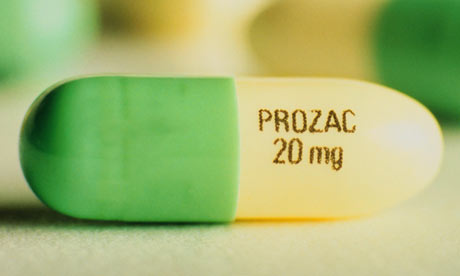
The class of drugs prescribed most by physicians for off-label uses are the antipsychotics (Prozac, Xanax, Zyprexa, etc). The FDA has approved these drugs to treat a variety of neurologic conditions such as depression and bipolar disease. However, drug companies have used many methods to get physicians to prescribe them for a wide range of off-label uses.

Read entire article:  http://www.marketoracle.co.uk/Article18652.html

« Return to news items


Share

“Drugged Warriors: Sharp Rise in U.S. Military Psychiatric Drug Use and Suicides” by Psychologist Bruce Levine

Friday, April 2nd, 2010

Sharp Rise in U. S. Military Psychiatric Drug Use and Suicides

CounterPunch
By Bruce E. Levine
April 2, 2010

One in six service members is now taking at least one psychiatric drug, according to the Navy Times, with many soldiers taking “drug cocktail” combinations. Soldiers and military healthcare providers told the Military Times that psychiatric drugs are “being prescribed, consumed, shared and traded in combat zones.”

The Navy Times reporters Andrew Tilghman and Brendan McGarry also noted that there has been a large increase in military suicides. From 2001 to 2009, the Army’s official suicide rate increased from 9 per 100,000 soldiers to 23 per 100,000. During that same period, the Marine Corps suicide rate increased from 16.7 per 100,000 soldiers to 24 per 100,000.

A Military Times investigation of records obtained from the Defense Logistics Agency revealed that the DLA spent $1.1 billion on psychiatric and pain medications from 2001 to 2009, and that there was a 76 percent increase in psychiatric drugs. DLA records show:

• Antipsychotic drugs spiked most dramatically — orders jumping by more than 200 percent.

• Orders for anti-anxiety drugs and sleeping pills such as Valium and Ambien increased 170 percent.

• Orders for antiepileptic drugs (also known as anticonvulsants) such as Depakote, routinely used as psychiatric medications, increased 70 percent.

• Antidepressants showed a 40 percent increase.

Investigators found that antipsychotic and antiepileptic drugs, approved for bipolar disorder and schizophrenia, are now commonly used to treat post-traumatic stress disorder (PTSD) symptoms such as nightmares, nervousness, and anger outbursts. The use of antipsychotic drugs for non-psychotic conditions such as PTSD is called “off-label” prescribing. The general public is also subject to off-label prescribing, which is considered legal.

Read entire article:  http://www.counterpunch.org/levine04022010.html

« Return to news items


Share

Wholesale sedation of young children medically, morally indefensible

Monday, March 29th, 2010

The Patriot Ledger
By Larry Diller
March 27, 2010

The twin murder trials of the parents of Rebecca Riley, who died at age 4 of an overdose of the psychiatric drug, clonidine, have cast a spotlight on the beliefs and practices of the doctor who prescribed the drug.

Kayoko Kifuji was granted immunity in both trials in exchange for her cooperation for testifying. Reactions from jurors, comments online and letters to the editor based on newspaper accounts of Kifuji’s testimony range from confusion, shock, and outrage directed at the doctor’s role in the tragedy.

Kifuji did go before a grand jury and was not indicted, avoiding any criminal prosecution for her actions. Massachusetts’ medical licensing board, the Board of Registration in Medicine (BRM) initially suspended Kifuji’s license to practice medicine. But after conducting an investigation the BRM fully restored Kifuji’s privileges. She is now back at Tufts Medical Center practicing child psychiatry without any restrictions, penalties or supervision.

Kifuji did not literally place the extra lethal doses of clonidine in Rebecca’s mouth which may explain why she was not criminally charged. Ironically, from testimony at the father’s trial, neither did Michael Riley. Still the jury found him guilty of murder. What’s more disturbing is the BRM’s decision to take no further actions and allow Kifuji unfettered practice.

The testimonies offered at the grand jury and BRM hearings were kept secret so the Riley trials offer the public the first details of Kifuji’s management of the Riley children. Here are some of the facts extracted from the trial transcripts:

Kifuji’s diagnoses were based entirely on reports coming from the children’s mother, Carolyn, herself diagnosed with mental illness and at times heavily medicated to the point of falling asleep in Kifuji’s office.

Kifuji essentially ignored late warnings from a school nurse about possible sedating over dosages to Rebecca and from a mental health counselor for Rebecca whom the mother fired after the counselor alerted the local child protective service agency about potential child abuse.

Kifuji believed testimony from the children as young as 3 regarding “hallucinations” about monsters to support the bipolar diagnosis while discounting any other information reported by the children as “unreliable.”

Kifuji repeatedly allowed, without drawing any effective limits, Carolyn Riley to increase the doses of clonidine she gave her children. For her last month of life, Kifuji overall prescribed 835 pills to Rebecca.

Read entire article:  http://www.wickedlocal.com/hull/news/opinions/x905411678/COMMENTARY-Wholesale-sedation-of-young-children-medically-morally-indefensible

« Return to news items


Share

After $1.4 billion criminal fine for illegal marketing, Eli Lilly tries something new—promoting “ethical behavior”

Monday, March 8th, 2010

IndyStar.com
John Russell
March 8, 2010

Eli Lilly and Co. has agreed to add four new senior positions to “promote highly ethical and compliant behaviors” as part of a settlement of two lawsuits arising from the company’s illegal marketing and promotion of several drugs.

The Indianapolis drugmaker also has agreed to upgrade its policies and procedures to ensure that patient safety “shall be of paramount importance,” according to a government filing the company made today.

Last year, Lilly paid $1.4 billion, the largest criminal fine ever imposed on a U.S. corporation, over the illegal marketing of Zyprexa. The company also pleaded guilty to a misdemeanor and agreed to additional oversight to resolve a 5-year-old federal investigation.

Federal prosecutors had said Lilly unlawfully promoted Zyprexa for agitation, aggression, hostility, dementia, depression and generalized sleep disorder, although the drug was approved only for schizophrenia and bipolar disorder.

The company had also improperly marketed Evista, its osteoporosis drug, and Prozac, its antidepressant.

In response, several shareholders sued the company, claiming it breached fiduciary duty in connection with the illegal marketing, exposing Lilly to substantial risk of damage. The suits are known as “derivative claims” as they were brought by shareholders on behalf of the company, rather than on behalf of shareholders, seeking to force the company to take corrective steps.

Read entire article:  http://www.indystar.com/article/20100308/BUSINESS/3080383/Eli-Lilly-adding-four-ethics-watchdogs

« Return to news items


Share

Drug Giant AstraZeneca to drop psychiatric drug research for schizophrenia, bipolar, depression & anxiety drugs

Tuesday, March 2nd, 2010

Reuters
By Ben Hirschler
March 2, 2010

AstraZeneca (AZN.L) is to stop researching some disease areas that form the backbone of its current business — including schizophrenia and acid reflux — in a drive to focus R&D efforts and cut costs.

The Anglo-Swedish drugmaker, which faces one of the sector’s worst “cliffs” of expiring drug patents, told its staff on Tuesday it would cease discovery in 10 of its current disease areas, or around one quarter of the total.

A wide-ranging overhaul had been expected since the group said in January it was cutting a further 8,000 staff, or some 12 percent of the workforce, including a net 1,800 in research. But it is only now that staff know where the axe will fall.

AstraZeneca is not alone in taking the knife to previously sacrosanct R&D, though its cuts are particularly deep. Pfizer (PFE.N) and GlaxoSmithKline (GSK.L) are also ditching drug discovery work that does not pay its way. [ID:nLDE61408I]

Read entire article:  http://www.reuters.com/article/idUSLDE62019Q20100302?type=marketsNews

« Return to news items


Share

Kickbackers’ motto: ‘Do no harm’ (to profits)—How drug company used kickbacks to get patients on psych drugs

Tuesday, January 26th, 2010

Boston Globe
By Donald A. MacGillis
January 26, 2010

TALK ABOUT death panels. The US attorney in Boston recently filed suit against the world’s largest maker of health products, Johnson & Johnson, for using kickbacks to get more nursing home patients onto its drugs, including one that was later found to be so lethal to the elderly it had to carry a black-box warning. The government’s complaint leaves little doubt that the drug company acted in a predatory way to increase sales and market share for its products, especially Risperdal, an antipsychotic often used to keep Alzheimer’s and dementia patients under control.

Risperdal is used principally for the treatment of schizophrenia and bipolar disorder. Doping the elderly into placidity is an off-label use of the drug, one that the Food and Drug Administration finally cautioned against in 2005. The reason for the black box warning the FDA required? Too many of the elderly who got the drug were dying.

There is one other reason to thank the federal government for going after the suspect payments Johnson & Johnson made to the middleman to juice up sales of its drugs: Since Medicaid covers most of the nursing home patients, the taxpayer ends up paying much of the bill.

The middleman between Johnson & Johnson and the nursing homes is Omnicare, the country’s largest pharmacy for nursing homes. Last November, it agreed, without “any finding of wrongdoing’’ or “any admission of liability,’’ to a $98 million settlement with the government for its role in helping Johnson & Johnson boost sales to nursing homes. The government says that between 1999 and 2004 Omnicare received tens of millions of dollars in the form of escalating rebates based on greater market share for Johnson & Johnson drugs and in payments ostensibly made by Johnson & Johnson for “data’’ from Omnicare, much of which Omnicare never provided. Other kickbacks, the government says, came in the form of “grants’’ and “educational funding.’’

Read entire article:  http://www.boston.com/bostonglobe/editorial_opinion/oped/articles/2010/01/26/kickbackers_motto_do_no_harm_to_profits/

« Return to news items


Share

Cooking the Books:The statistical games behind “off-label” prescription drug use

Monday, December 21st, 2009

Darshak Sanghavi
Slate
December 21, 2009

Years ago, mathematician John Allen Paulos described a brilliant stock scam, in which a crooked broker sends out a huge number of letters to potential clients. Half the letters say the market will rise; the other half predict the opposite. As Paulos explains, “No matter whether the index rises or falls, a follow-up letter is sent, but only to [people] who initially received a correct prediction.” On that half, the scam is repeated. After several iterations, the broker has hooked some fraction of his initial marks—the guy correctly predicted a half-dozen or so market moves!—and the unsuspecting rubes are ready to be fleeced.

Pharmaceutical companies employed a similar ruse to propel sales of drugs for “off-label” indications, or uses not green-lighted by the Food and Drug Administration. The FDA approves new prescription drugs only after clinical trials show a benefit in the form of a pre-specified outcome, such as fewer asthma attacks, better blood sugar control, or some other metric. (For example, Neurontin was approved to control seizures.) Companies are forbidden to advertise or promote the drug for any other problem. However, no law stops doctors from prescribing the drug for whatever reason they like—and they certainly do.

In 1996, a young researcher named David Franklin left Parke-Davis due to his disgust over off-label marketing of the anti-seizure drug Neurontin. (Franklin reported that one company executive told him, “[W]e need to be … holding [physicians'] hands and whispering in their ear, Neurontin for pain, Neurontin for monotherapy, Neurontin for bipolar, Neurontin for everything.”) A resulting class action suit was settled for $430 million in 2004, and thousands of pages of corporate documents soon ended up in a searchable digital library at the University of California-San Francisco.

Read entire article: http://www.slate.com/id/2239360/

« Return to news items


Share

And yet another FDA warning – Depakote – used to treat people diagnosed “Bipolar” found to cause severe birth defects

Thursday, December 3rd, 2009

FDA MedWatch Safety Information
Dec. 3, 2009

Audience: Neurological and Obstetrical healthcare professionals

The FDA notified health care professionals and patients about the increased risk of neural tube defects and other major birth defects, such as craniofacial defects and cardiovascular malformations, in babies exposed to valproate sodium and related products (valproic acid and divalproex sodium) during pregnancy. Healthcare practitioners should inform women of childbearing potential about these risks, and consider alternative therapies, especially if using valproate to treat migraines or other conditions not usually considered life-threatening.

Read entire article:  http://www.fda.gov/Safety/MedWatch/SafetyInformation/SafetyAlertsforHumanMedicalProducts/ucm192788.htm

« Return to news items


Share