Posts Tagged ‘antipsychotic’

At annual convention, psychiatrists collaborate on mental disease mongering to boost profits

Wednesday, June 8th, 2011

Natural News – June 8, 2011

by Monica G. Young

While sipping drinks from coconut shells, psychiatrists from around the world recently met in Honolulu to discuss more ways to capitalize on human behavior and promote drug dependency. The occasion was the annual meeting of the American Psychiatric Association (APA), held in a Hawaiian convention center lined with mental disorder displays and pharmaceutical booths.

“Hot” topics (potential markets for social control and drug pushing) included:

1) Mental health issues during a woman’s reproductive cycle, such as “treating” pregnant women for bipolar – a disorder said to cause unusual shifts in mood and energy levels. In speaking to Medscape News, an APA committee co-chair, Dr. Don Hilty, called this “a really nice-growing area.”

Yet most every woman experiences mood and energy shifts during pregnancy. Despite this, it is not uncommon for pregnant women to be diagnosed as bipolar and prescribed antipsychotics, some of the most powerful drugs on the market. Even the FDA website alerts doctors to “be aware of the effects of antipsychotic medications on newborns when the medications are used during pregnancy.” The site warns of abnormal muscle movements and withdrawal symptoms, and the FDA’s adverse effects reporting program (Medwatch) includes cerebral hemorrhage, heart malformations and death as documented reactions in newborns. Similarly, studies show birth defects and other serious risks for infants whose mothers took antidepressants while pregnant.

2) Childhood disorders were a particularly popular issue at the convention. But they didn’t stop there – prenatal and newborn genetic screening for mental illness has taken on new emphasis in the psychiatric world. “It’s also trying to understand how genetics predict what medications can be used,” stated APA’s Dr. Hilty.

Having already labeled millions of kids “abnormal” and drenched their brains in toxic substances – a multi-billion dollar business – apparently they aren’t satisfied. They aim to brand children as mental patients and destine them for drug-dependency before they’re even born.

The conference even touched upon electroconvulsive shock therapy (ECT) for children – sending electric volts through their heads. That will teach ‘em to shut up and sit still! It will also cause permanent brain damage.

3) ADHD is usually promoted as a childhood disorder but a team of psychiatrists proposed a new definition to make it easier to diagnose (and drug) older teens and adults. They claim people who tend to miss work deadlines and interrupt others deserve this label.

This would surely lead to millions more on daily meds. Who doesn’t know co-workers who miss deadlines or even friends who interrupt you? Not emphasized however is that, per a study published in The Clinical Neuropsychologist, one in four adults seeking an ADHD diagnosis fake it to obtain stimulant drugs.

4) Capitalizing on America’s service men and women was another hot one: diagnosing and drugging the military for post-traumatic distress disorder, depression and anxiety.

Did they mention that 18 U.S. veterans commit suicide daily, largely due to psychiatric drugs? Not likely. As reported by Neev M. Arnell in NaturalNews, “the increasingly high number of deaths among both veterans and active duty soldiers-including suicides, accidental overdose, and lethal drug interactions-have now been linked to the exponential increase in the prescribing of drugs for post traumatic stress disorder, depression and other psychological illnesses.” (http://www.naturalnews.com/032598_v…)

5) Anticipating the “silver tsunami” as the Baby Boomer generation moves into the over-65 bracket, psychiatrists stressed the need for more psychiatric services for the elderly.

Not stressed, if mentioned at all, is the rampant over-use of psychiatric drugs in nursing homes. Elderly patients’ reactions to physical ailments are often squelched with mind-altering drugs. And a recently released government audit shows nearly one in seven elderly nursing home residents are given antipsychotics – nearly all of them dementia patients for whom the drugs can be lethal. Many lawsuits and settlements have revealed that drug companies have falsely promoted these drugs to doctors and nursing homes for years.

6) While not on the “hot” list, another issue that bit was bedbugs. A New York psychiatrist and his colleagues presented a detailed study showing bedbugs can trigger anxiety.

What a remarkable – and potentially profitable – discovery! Gee, with the rise in bedbug infestation in New York City, maybe Bedbug Anxiety should be included in the next edition of the DSM (psychiatry’s diagnostic and billing bible).

Father of psychiatry – the bloodletter

The American Psychiatric Association calls itself “the voice and conscience of modern psychiatry.”

Adorning the convention hall was the APA logo which enshrines Dr. Benjamin Rush (1746-1813) as the father of psychiatry. A very influential doctor, teacher and statesman of his time, Rush propagated his theory that Blacks suffered from an inherited disease called “Negritude.” The only evidence of a cure, he said, was the skin turning white. He warned, “whites should not intermarry with them, for this would tend to infect posterity with the ‘disorder.’” Whites, seeking not to be “infected,” used this fabled disease to justify segregation.

Rush was also a chief proponent of bloodletting as a cure-all for mental and physical illnesses. Widespread in America in those days, he made lots of money at it. One of Rush’s students applied his teachings to a patient who complained of a sore throat: nine pints of blood were removed from the man’s body in twenty-four hours and he died. That patient was George Washington, the first President of the United States.

Sources for this article include:
http://www.medscape.com/viewarticle…

http://www.medscape.com/viewarticle…

http://healthland.time.com/2011/05/…

http://healthland.time.com/2011/04/…

http://www.nytimes.com/2011/05/10/h…

http://www.jstor.org/pss/985399

http://www.websters-online-dictiona…

http://www.cchr.org/cchr-reports/cr…

About the author:
Monica G. Young is a human rights investigator and educational writer with a purpose to expose the truth about the pharmaceutical and psychiatric industries and safeguard human liberty. She encourages non-drug alternative approaches based on healthy lifestyles and human decency. She supports the Citizens Commission on Human Rights and like-minded groups.

« Return to news items


Share

Mother battles Michigan over daughter’s medication

Monday, May 23rd, 2011

Centre Daily Times
By Corey Williams
May 22, 2011

This May 12, 2011 photo shows Maryanne Godboldo in Detroit. Godboldo is locked in a battle with Michigan's Department of Human Services over her right to determine whether her physically impaired daughter should continue taking the anti-psychotic drug Risperdal, since she claims the girl has responded better to holistic treatment. AP Photo

DETROIT — Frustration over her physically impaired daughter’s medical care led Maryanne Godboldo to lash out at what she considered state interference and into a 12-hour standoff when Detroit police came to take the girl away.

When it ended, the unemployed mother was in handcuffs; her daughter placed in a psychiatric hospital for children.

Godboldo now is locked in a bitter battle with Michigan’s Department of Human Services over her right to determine whether the girl should continue taking the anti-psychotic drug Risperdal and the government’s responsibility to look after the child’s welfare.

Godboldo doesn’t trust doctors much – she blames some of the girl’s past medical problems on possible physician negligence and complications from childhood immunizations, but did not name the doctors or release her daughter’s medical records to The Associated Press. She claims the girl has responded better to holistic treatment that does not include Risperdal.

But the state is not budging on its assertion that without the proper medication, Ariana is at risk.

“Our mandate is to go into court and prove there is medical neglect,” said Human Services Director Maura Corrigan, who declined to speak directly about Godboldo’s case due to the ongoing court proceedings.

“Is there harm to the child? That’s what we are trying to assess,” Corrigan told the AP in a recent interview.

A defiant Godboldo still believes she was right to defy police, despite five days in jail and criminal charges, including discharge of a firearm, three counts of assault with a dangerous weapon and resisting officers.

“I was in my home. Why should I come out? They were invading my home,” Godboldo said.

Citing the charges, Godboldo declined to say if she fired a gun when police arrived at her home March 24. But officers said a gun and about 43 rounds of live ammunition were in the house, and a spent shell casing was found after the standoff, according to court records. Ariana also was in the house.

“I would always be concerned with a parent who has a gun and is using it when a child is present because accidents happen,” said Oakland County Probate Court Judge Linda Hallmark, who isn’t connected to the case but handles child custody issues. “If a parent feels the child is going to be removed and there isn’t a basis for it, there are legal avenues that the parent needs to follow.”

Ariana already had her share of medical troubles when Godboldo started giving her Risperdal more than a year ago at a doctor’s suggestion. She had lost her right leg below the knee as an infant and wears a prosthesis. Godboldo claims she also developed encephalitis, or inflammation of the brain, before entering 6th grade.

She said her daughter complained often of being dizzy and had a hoarse voice, became more clingy and fearful, and avoided playing outside.

“It happened slowly at first, but it was enough to know when your child makes a change,” Godboldo said.

She sought help at a Detroit area center. Staff there put Ariana on a treatment plan that included Risperdal, said Allison Folmar, one of Godboldo’s attorneys.

Child Protective Services in its petition wrote that Ariana was diagnosed with “psychosis NOS,” or “not otherwise specified,” Folmar said.

“They are saying ‘it’s something going on in her head, but we don’t know what it is,’” the attorney added.

But Godboldo balked at a suggestion that her daughter be placed in a mental hospital. She took the girl’s treatment to another center. She also decided to wean her from Risperdal, which sometimes is used to treat schizophrenia.

“Ariana has some issues. She requires one-on-one attention,” said Folmar, describing how the girl at times appears unresponsive. But “she writes. She reads.”

Risperdal often is used to contain behaviors like aggression and even treat autism, said Derek H. Suite, a board certified psychiatrist and president and chief executive of Full Circle Health in the Bronx, N.Y. Risperdal use has shown dramatic reductions in psychotic symptoms, but there can be side-effects, he added.

“Sometimes kids can have neurological problems … muscular tics,” Suite said. “These drugs can slow you down.”

After Godboldo’s confrontation with police, Ariana spent about a month in a children’s psychiatric facility. She now is living with Godboldo’s sister, Penny. A judge has ordered that other adult relatives be present when Godboldo visits with her daughter.

But “to this day, there is not one court order saying give her the medication,” Folmar said. “No one has recommended giving the child the medication.”

It’s not unusual for parents and the state to be at odds over what’s best.

Two Idaho parents lost a civil lawsuit last year when a judge ruled their rights were not violated by an officer who took custody of their infant daughter so a doctor could check for signs of meningitis. Dale and Leilani Neumann of Wisconsin were convicted of reckless homicide following the 2008 death of their 11-year-old daughter, whose undiagnosed diabetes was treated with prayer instead of conventional medicine.

Godboldo said the state was not involved in the care of her daughter until she pursued a more holistic treatment. When asked by the AP what that entailed, she replied: “God’s medication.”

After Godboldo refused to attend a meeting with Child Protective Services, officers arrived at her home to remove Ariana. Godboldo claimed they never showed her a court order.

Detroit police declined to comment about the case “because of the litigation involved,” Sgt. Eren Stephens said in an email.

When Godboldo refused to allow police in, the officers tried to force their way through a side door but backed off after hearing a gun shot, court documents said.

“Maryann did not shoot at police and she did not fire a gun with any intention of scaring the police,” Folmar said. “But even if she did fire a so-called warning shot, right now the question is of self-defense.”

Read article here:  http://www.centredaily.com/2011/05/22/2728095/mother-battles-michigan-over-daughters.html

« Return to news items


Share

Unregulated prescription of antipsychotic drugs in elder care facilities on the rise

Monday, May 16th, 2011

Santa Cruz Sentinel -  May 15, 2011

A recent study by the Office of the Inspector General of the United States indicates that residents of some nursing homes may be regularly given atypical antipsychotic drugs as a means of chemical restraint, sometimes to the detriment of their health, including death.

The report, published May 9, states: “For the period January 1 through June 30, 2007, we determined using medical record review that 51 percent of Medicare claims for atypical antipsychotic drugs were erroneous.”

A member of Congress requested the office evaluate the extent to which nursing home residents receive atypical antipsychotic drugs and the associated cost to Medicare. The member expressed concern with these drugs were being prescribed for off-label conditions — i.e. conditions other than schizophrenia and/or bipolar disorder — and/or in the presence of a condition specified in the Food and Drug Administration’s boxed warning.

“We determined that 83 percent of Medicare claims for atypical antipsychotic drugs for elderly nursing home residents were associated with off-label conditions and that 88 percent were associated with the condition specified in the FDA boxed warning,” the Office of the Inspector General found.

The California Advocates for Nursing Home Reform has been concerned about this issue for some time. For more information, visit www.canhr.org/help.html

http://www.santacruzsentinel.com/ci_18067580


« Return to news items


Share

Antipsychotic Drugs Deadly for Elderly Patients, Prescribed Anyway

Thursday, May 12th, 2011

ThirdAge.com

by Alex Heig

Antipsychotic drugs prescribed to as many as one in seven patients with dementia at nursing homes increase the risk of death and are not approved for such uses, a government audit has found.

Drugs such as Risperdal, Zyprexa, Seroquel, Abilify and Geodon are “potentially lethal” to many of the patients getting them and in many cases, completely unnecessary and unneeded.

The Centers for Medicare and Medicaid Services said that some of the inappropriate use of antipsychotics can be attributed to drugmakers’ habit of paying kickbacks to nursing homes to increase prescriptions for the medicines.

Medicare officials said that diagnosis information is for the most part omitted from prescriptions so officials are unable to tell whether the prescription is appropriate.

The Food and Drug Administration has warned doctors of the risk of using antipsychotic drugs in elderly dementia patients, but doctors have continued the practice because of a relative lack of other options.

Doctors want to maximize quality of life by treating the patient’s agitation even if that means the patient will die a bit sooner,” said Dr. Daniel J. Carlat, editor-in-chief of The Carlat Psychiatry Report, a medical education newsletter for psychiatrists.

The results of the government audit showed that during the first six months of 2007, 304,983 elderly patients in nursing homes (out of 2.1 million total) had at least one Medicare claim for an antipsychotic medicine.

Meanwhile, 83 percent of antipsychotic prescriptions for elderly nursing home residents were for uses not approved by federal drug regulators, and 88 percent were to treat patients with dementia, for whom the drugs can be lethal.

Federal regulations prohibit any drug paid for by the government from being used for non-approved reasons. Auditors found that 51 percent of claims for antipsychotic medication violated this rule.

Additionally, the government bans drugs used in excessive duration or dose level, even for patients that qualify. Auditors found that 22 percent of claims failed to live up to this requirement.

http://www.thirdage.com/news/antipsychotic-drugs-deadly-for-elderly-patients-prescribed-anyway_05-10-2011?page=1

« Return to news items


Share

Maryanne Godboldo’s daughter released as parents, state wrangle over her medical care

Tuesday, May 10th, 2011

Livingston Daily
By Gina Damron
May 8, 2011

Maryanne Godboldo’s supporters will gather today for a reunion party at Hartford Memorial Baptist Church in Detroit.

They’re celebrating the fact that Godboldo’s 13-year-old daughter — at the center of a struggle between her parents and the state over her medical care — was released Friday from a medical facility in Northville into her aunt’s care.

Godboldo, who has garnered significant community support, says she has the right to determine her daughter’s care and had been weaning her off a prescribed psychotropic drug in favor of holistic treatments.

But in an order to take the child into protective custody in March, Child Protective Services accused Godboldo of being in denial about her daughter’s mental health.

The state also accused her of neglecting the girl by not giving her the psychotropic drug.

With police assistance, state workers came to take the girl, but Godboldo has said she wasn’t going to allow that.

She is accused of firing a gun, triggering an hours-long standoff, and is facing criminal charges.

Last month, authorities determined there was no emergency need for the girl to be medicated.

On the order of a Wayne County juvenile court judge, doctors for the family and of a facility where the girl was taken after the standoff have come up with a treatment plan that can be implemented now that the girl is in family custody.

The trial in the case is set to begin in June.

“We still have a long way to go,” read an e-mail Saturday from the Justice 4 Maryanne Action Committee. But now that the girl is back with family, “we have much cause to celebrate.”

A love of dance

Godboldo, 56, said she and the girl’s father, Mubarak Hakim, met at a Detroit restaurant in the 1990s. Hakim, she said, was a jazz musician.

The two began to date and, in 1998, they had a baby girl.

“It was wonderful,” Godboldo said. “It was absolutely delightful.”

The girl’s right leg had to be amputated below the knee when she was 3 days old, but Godboldo said her daughter became athletic, frequented social occasions with her aunt and loved to dance.

She got that from her mom.

Godboldo was a young girl when she and her sister, Penny, started taking dance classes on Saturdays. They learned ballet, modern dance and tap.

Godboldo said she grew up on the city’s west side, born to parents who moved to Detroit from the South. She was the youngest girl and 11th in a line of 12 children.

In the early 1980s, Godboldo and her sister went to New York to study dance. Godboldo later went back to pursue dance and landed with a jazz dance company. Her father died in the late ’80s and, in 1993, she came home to take care of her mother. But dance was always within reach, and her sister hooked her back in. The art has been a release for Godboldo.

“It’s relaxing,” she said. “It rejuvenates you.”

A treatment plan

Dr. Margaret Betts, the family’s physician and friend, said Godboldo’s daughter used to be active — she danced, was in choir, took horseback riding lessons.

But a series of immunizations in 2009, Godboldo has said, changed her.

Now she seems shy, Betts said.

According to the order to take the girl, she was diagnosed with an unspecified psychosis and was placed on medication.

In a petition filed by CPS, allegations were made that the girl became aggressive after Godboldo stopped the medication, and her behavior was unpredictable.

Betts, who believes in alternative medicine, questioned the original diagnosis and said more tests will be done.

The new treatment plan includes resuming an alternative regimen, while consulting with a psychiatrist, neurologist and other medical specialists.

Betts said alternative medicine may not work for everyone, but “it should be the starting point for most.”

According to the National Center for Complementary and Alternative Medicine, a 2008 survey of Americans showed that in 2007, more than 38% of adults and nearly 12% of children were using some form of complementary and alternative medicine.

The organization is a federal government agency for scientific research on complementary and alternative medicine, which the agency defines as “a group of diverse medical and health care systems, practices and products that are not generally considered part of conventional medicine.”

According to the survey, some diseases or conditions for which complementary or alternative medicine were used most frequently included back or neck pain, colds, anxiety or stress, Attention Deficit Hyperactivity Disorder and insomnia.

Betts said parents have the right to determine what is best for their children.

“As guardian and parent, that is our responsibility,” she said. “No one knows you better.”

Read article here: http://www.livingstondaily.com/article/C4/20110508/NEWS01/105080569/Maryanne-Godboldo-s-daughter-released-parents-state-wrangle-over-her-medical-care?odyssey=nav|head

For more information on alternatives, click here: http://www.cchrint.org/alternatives/

« Return to news items


Share

Detroit mother’s heroism sends message to all parents: Say “no” to child drugging

Wednesday, April 27th, 2011

NaturalNews.com

by Monica G. Young

Click image to watch video: Drugging our Children—Side Effects

The story of the Detroit mother, Maryanne Godboldo, undergoing a police siege on her home after refusing to give her daughter a psychotropic drug has set off a national outcry. Many facts not only vindicate her defiance but point the finger squarely at the correct villains: the psychiatric and pharmaceutical industries.

As a recap, on March 24 a Children’s Protective Services (CPS) case worker petitioned to remove Maryanne Godboldo’s 13-year-old daughter from her care and place her in state custody. Only two weeks on the assignment (scarcely knowing the girl), the case worker claimed the mother was medically neglecting her child by taking her off Risperdal – a highly toxic antipsychotic drug.

A police SWAT team, accompanied by the case worker, was promptly dispatched to the home – complete with assault weapons, an armored carrier and helicopter. Despite police breaking down her door, the mother refused to give up her daughter and allegedly fired a warning shot. After a 12-hour standoff, the woman surrendered.

This mother – a teacher, dancer and respected figure in Detroit’s art circles – was then jailed and arraigned on multiple felony charges. Maryanne was since released from jail but faces criminal charges. The child was essentially kidnapped by the police and CPS and placed in a juvenile psychiatric facility.

State officials since confirmed there was no need for her to take the drug and a judge has announced a plan to get the teen out of the facility and into her aunt’s home.

The mother says her daughter’s troubles began in September 2009 with a bad reaction to immunizations. Upon seeking help for the girl at a Detroit Children’s Center, a psychiatrist prescribed the antipsychotic drug Risperdal – without any diagnosis and despite no history of mental problems.

Maryanne at first complied, but after months of worsening symptoms and severe side effects she consulted with a holistic doctor who advised weaning her daughter off the drug. The child’s aunt confirms, “There were absolutely no mental issues with her until she had the immunizations and even more with the Risperdal. It’s been hell ever since.” The girl’s father, Mubuarak Hakim, reports, “Maryanne’s decision to wean her from that was making a difference, making her better, helping her to be a happy kid again.”

Court documents show Maryanne was within her legal rights in halting the drug. On June 3, 2010 she signed an informed consent on behalf of her child, stating, “It has been explained to me that I have the right to withdraw this consent at any time and can stop taking the medication at any time.” The document was also signed by the psychiatrist who prescribed the drug – reportedly the same one who later complained to child welfare workers when she stopped administering the drug.

It’s no wonder a mom would go to such lengths to protect her child from psychotropic drugs. Reported Risperdal “side” effects include abdominl pain, vomiting, sore throat, agitation, aggression, anxiety, chest pain, nasal inflammation, dizziness, drowsiness, insomnia, dry skin, difficulty urinating, heavy menstruation, tremor, weight gain, lethargic feelings, joint pain, respiratory infection, tardive dyskinesia (involuntary movements of face and limbs), liver failure, stroke, blood clots, hemorrhaging and suicidal thoughts.

Follow the money

It is not uncommon for Children’s Protective Services – an agency ostensibly dedicated to protecting children – to coerce parents to give their kids dangerous psychiatric drugs, often three or four drugs at a time.

CPS’s funding comes from the state and federal grants (as is the case with the Children’s Center which originally put Maryanne’s daughter on the drug). And one of the most powerful and high-rolling government lobbying forces in the U.S. is the pharmaceutical industry.

In reporting on the Godboldo story, the Voice of Detroit talked to Starletta Banks who filed suit in 2005 when her three children were snatched by CPS. Banks says, “The sole reasons that children are being stolen from their families and homes are the financial incentives associated with each child and circumstance. There is federal grant money given to states and child placement agencies to create situations that do not exist to generate these funds. The state of Michigan is financially broke, thus surviving on the backs of our children.”

Big Pharma’s stronghold over Michigan is evidenced by it being the only state with an immunity law for drug makers. Per Michigan State Representative, Vicki Barnett, “Michigan is the only state in the nation that gives drug companies total immunity when their products harm or kill consumers.”

Ironically, the same week Michigan officials busted a mother’s door down for taking her child off Risperdal, a South Carolina jury found the drug’s manufacturer (Johnson & Johnson) guilty of deceiving doctors about its side effects and effectiveness. “It was all about the money,” says the South Carolina state attorney. At least ten other states have similar Risperdal lawsuits pending trial in federal courts.

But it is not only Michigan parents or those involved with child protection who have been marginalized by psychiatric influence. Millions of parents across the country, in every economic strata and race, have been misled into believing that they must defer to mental health “experts”. Yet these psychiatric drug pushers sacrifice children’s health and futures for the sake of profit.

About the author:
Monica G. Young is a human rights investigator and educational writer with a purpose to expose the truth about the pharmaceutical and psychiatric industries and safeguard human liberty. She encourages non-drug alternative approaches based on healthy lifestyles and human decency.   She supports the Citizens Commission on Human Rights and like-minded groups.

« Return to news items


Share

Court Files Vindicate Detroit Mom In Stand Off With Police: She Had Legal Authority To Stop Daughter’s Drugging

Friday, April 22nd, 2011

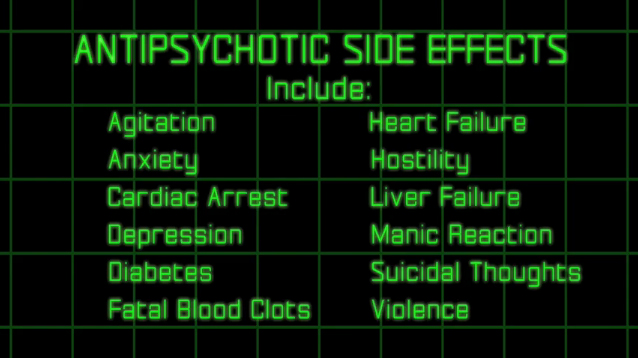
Note from CCHR:  Court documents now vindicate  Maryanne Godboldo in having every legal right to stop administering her daughter an antipsychotic drug documented by international drug regulatory agencies to cause agitation, aggression, cardiac arrest, fatal  blood clots, liver failure, mania, suicide and violence yet this did not stop the state from ordering an assault on this woman in her own home, complete with Swat Teams and a tank.  There can be no doubt that Child Protective Services were in violation of every legal and civil right this mother has to protect her daughter from harm, not to mention her fundamental right as a parent.   We’re not sure why this isn’t being investigated as kidnapping case, because Maryanne Godboldo’s daughter was for all intents and purposes, kidnapped under the authority of Child Protective Services.   We,  as a society, must stand up to the use of force in what our co-founder, Dr. Thomas Szasz calls “The Therapeutic State,” the alliance between psychiatry and government in exerting social control over citizens.  This is not an isolated incident of parents being pressured, coerced, threatened to administer drugs to their child, via “child protective services” on behalf of “the state.”

“In the therapeutic state, treatment is contingent on, and justified by, the diagnosis of the patient’s illness and the physician’s prescription of the proper remedy for it… Today, the therapeutic state exercises authority and uses force in the name of health.  The Founding Fathers could not have anticipated…that an alliance between medicine and the state would then threaten personal liberty and responsibility exactly as they had been threatened by an alliance between church and state.” — Thomas Szasz (read more here http://qr.net/38D )

The Detroit News – April 22

by Doug Guthrie

Detroit — A mother accused of medical neglect for refusing to give her daughter a prescribed drug had authority to halt treatment, court files indicate.

The “informed consent” form signed by Maryanne Godboldo, who sparked a debate over parents’ rights when her daughter was removed from her care March 25, authorized her to give her daughter, Ariana, the antipsychotic drug Risperdal.

“It has been explained to me that I have the right to withdraw this consent at any time and can stop taking the medication at any time,” the form reads.

The agreement was signed June 3, 2010, by Godboldo and a psychiatrist associated with a children’s health organization that later complained to child welfare workers when Godboldo stopped giving her daughter the drug used in treatment of symptoms of schizophrenia and bipolar disorder.

Lawyers for the 13-year-old’s mother and father will be in Wayne County Circuit Court Juvenile Division today attacking the validity of a petition obtained on a medical emergency claim by a county Child Protective Services worker to take the girl from her home by force March 25. Ariana has since been kept in a state facility for mentally ill juveniles.

The social worker’s efforts to take Ariana set off a 12-hour siege after armed police broke open a door at Godboldo’s west side home and a shot was fired. The 56-year-old mother and the girl’s father, Mubarak Hakim, 58, face neglect claims and attempts by state authorities to make the girl a ward of the court and possibly resumption of drug therapy. Godboldo also is charged separately with criminal assault and resisting and opposing the three Detroit Police officers who entered her home.

The case has drawn nationwide attention from groups advocating parents’ rights, concerns about the safety of childhood immunizations and use of psychotropic drugs, and those opposed to government intrusion on personal decisions.

Godboldo has said her daughter’s problems began in 2009, after she took a cocktail of immunizations to catch up with requirements to switch from homeschooling to a regular school environment. Godboldo, who believes her daughter’s problems are from encephalitis caused by a severe reaction to the immunizations, has said drug therapy worsened her daughter’s behavior. Godboldo has said she sought a “holistic’ alternative with the help of another doctor.

The form was signed by Dr. Rajendra Kanneganti, a psychiatrist associated with the Children’s Center of Wayne County. The treatment plan resulted from a mental health assessment of then 12-year-old Ariana after she was found by police wandering naked in her neighborhood last Memorial Day weekend.

The document, signed by the mother on behalf of her minor child, says, “I understand that I will not be forced to take this medication and that I can stop taking it at anytime. I also understand that discontinuation of prescribed medication without consultation with my doctor could cause my condition to worsen.”

“I think that document proves our case,” said Godboldo’s lawyer, Wanda Evans. “She understood she had a right to stop giving the medication. If you sign an informed consent that says you can stop, and you stop, you did the right thing, and CPS (Child Protective Services) is just being nasty.”

Kanneganti did not respond to a Detroit News telephone call.

A legal expert said the signed document might not carry much weight in court.

“In this case you do have these countervailing rights and obligations and they are difficult to assess,” said John Pirich, professor at Michigan State University College of Law. “But, in practice, a court usually looks first at the health, safety and welfare of the child.”

The News obtained access earlier this week to the previously withheld court file. The file was made available only after a lawyer for The News reminded officials that court files are open to the public under Michigan law.

The original petition to remove the child was obtained by case worker Mia Wenk, two weeks on the assignment, who expressed frustration with Godboldo’s lack of cooperation in her investigation of accusations of medical neglect from at least four sources, including the Children’s Center.

Evans said Godboldo consulted another doctor before weaning her daughter from the drug.

“Our intention is to begin an evidentiary hearing (today) on why the girl was removed from the home,” Evans said. “On what authority did they (Protective Services) act when it is a parent’s responsibility to make these decisions?”

Wayne County Child Protective Services workers last week filed an expanded explanation of claims. It quotes the clinical director of the facility where Ariana is being held, saying the girl, “may have a severe case of childhood onset schizophrenia, which would require medication for her to be treated properly.”

However, Assistant Attorney General David Law, representing Protective Services in court last week, said there was no current emergency need to medicate the girl.

dguthrie@detnews.com

« Return to news items


Share

How Big Pharma’s Deceptive Advertising Helps Addict Patients, Screw Over Doctors and Jack Up Insurance Rates

Monday, April 18th, 2011

AlterNet – April 18, 2011

by Martha Rosenberg

All you knew about prescription drugs were creepy ads in a JAMA at the doctor’s office with a lot of fine print. Even if you knew the name of a drug, you’d never ask your doctor for it because that would be self-diagnosing and cheeky for a patient.

Flash forward to the late 1990s when direct-to-consumer (DTC) drug advertising, drug Web sites and online drug sales came on board, and self-diagnosing and demanding pills has become medicine-as-usual for the doctor/patient encounter.

The DTC/Web perfect storm didn’t just sell drugs like Claritin, Prozac and the Purple Pill, it sold the diseases to go with them like seasonal allergies, GERD and depression. It sold risk of diseases like heart events for which you’d take a statin like Lipitor, osteoporosis for which you’d take a bone drug like Boniva and asthma attacks for which you’d use a second asthma drug like Advair. Of course, by the very definition of prevention, you didn’t know if the drugs were working but you weren’t paying out of pocket anyway so what the hay…

Thanks to DTC advertising, people started taking seizure drugs like Topamax and Lyrica for everyday pain or headaches and antipsychotics– hello? — for everyday blues or mood problems. They started taking monoclonal antibodies made from genetically engineered hamster cells like Humira that invite cancer, superinfections and TB when they didn’t have to. And FDA mandated risk disclosures — brain bleeds, sudden death, difficulty breathing, stomach bleeding, liver failure, kidney failure, muscle breakdown, fainting, hallucinations — perversely increased drug sales either because people like the identity in having a disease, chemically experimenting on themselves and/or taking a dare or because ad frequency itself sells regardless of the message.

Soon anxiety graduated to depression which graduated to bipolar disorder. Children got schizophrenia and depression like adults and adults got ADHD like kids. And it didn’t stop there. If the depression you or your kid had didn’t go away — maybe because it wasn’t depression in the first place but a thing called “life” — you needed to add a drug like Abilify or Seroquel on to the original drug(s) because your depression was “treatment resistant.”

Of course if people were paying for the drugs out of their pocket and you told them to add a drug that costs almost $500 a month because the first one isn’t working, they would say the only thing “treatment resistant” is your sales pitch — go find another sucker. But if third party payers get stuck with the bill, no one seems to mind pharma’s double-(and triple)-its-money plan — or even notice it.

In fact psychiatric drug cocktails of eight, ten and twelve drugs are now common medical practice for “treatment resistant” depression and PTSD (often paid by government entitlement health plans) even though the drugs have never been tested when taken together. Unless you count the patients taking them now!

Pharma also adds an urgency pitch to the sell in case you think you can wait to take you or your child’s treatment resistant drug cocktail until symptoms worsen. Depression is now a “progressive” disease say pharma-paid doctors after being known for decades as a self-limiting disease. (The one good thing you could say about depression; it would go away.)

And don’t think kids will outgrow mood problems either, says pharma. That erratic behavior is no doubt early mental illness that will become Worse if you’d don’t treat it in the bud. Even mothers of one-year-olds with the sniffles are told serious asthma is just around the corner if they don’t treat their toddler now.

Pharma is also having a field day with sleep because everyone is in the demographic. In fact comedian Chris Rock riffs about hearing a DTC ad that asks, “Do you fall asleep at night and wake up in the morning?” and recognizing himself. “Yeah, I got THAT,” he says.”

Not falling asleep soon enough of course is the disease of insomnia which can have “strains” like “middle-of-the-night” and “terminal” insomnia. But it also sets you up for — what’s the pharma euphemism — wakefulness problems the next day. And once you’re using a wakefulness aid like Adderall or Nuvigil, what do you bet you’ll have sleep problems?

Because of pharma-paid doctors, PR firms and industry subsidized medical journals and Web sites like WebMD, pharma is able to create new diseases (osteopenia, the “risk” of osteoporosis), perimenopause and Low T), “humanize” others by giving them nicknames (ED, RA, RLS, Hep C) and elevate others to public health problems like HPV/venereal warts. (It doesn’t hurt that Julie Gerberding, MD, former CDC head resurfaced as head of Merck vaccines after she left the government.)

But a more insidious sell are pharma subsidized “patient groups” that lobby FDA and state agencies about expensive drugs, often psychiatric. While these “patients” — often flown by pharma to testify at FDA hearings — pretend they can’t get needed drugs like terminal cancer patients, the issue is seldom availability but money: either they want a new use covered by insurers or don’t want an older, cheaper drug substituted.

The same patients appear on Web site testimonials and phony grassroots PSAs (public service messages) about the epidemic of depression or childhood mental illness. How can you tell they’re not real patients but pharma plants? The Web sites and PSAs look exactly like direct-to-consumer ads.

« Return to news items


Share

Seroquel Marketing Undeterred by Deceptive-Marketing Settlement

Monday, April 11th, 2011

The Epoch Times – April 11, 2011

by Martha Rosenberg

AstraZeneca has already settled nearly 25,000 personal-injury lawsuits pertaining to its antipsychotic drug Seroquel

Google the word “depression” and the first search result you’ll get will be for the antipsychotic drug Seroquel XR.

Visit WebMD and you’ll find the home page hosts similar ads for Seroquel XR, above and adjacent to the lead news story.

Who would know that AstraZeneca inked the largest multi-state consumer-protection settlement on record relating to deceptive Seroquel marketing on March 14 for $68.5 million? And only a year after inking a similar settlement related to burying side effect and safety information for $520 million with the government!

Who would know AstraZeneca has already settled nearly 25,000 personal-injury lawsuits pertaining to Seroquel, with more to come, says ABC News?

First approved in 1997, Seroquel has enjoyed the camel-nose-under-the-tent phenomenon known as indications creep. First approved for schizophrenia, it was later approved for bipolar disorder and psychiatric conditions in children.

But it was Seroquel’s 2009 approval as a drug for depression that helped it reach its spectacular sales of $5.3 billion in 2010 thanks to the United States’ walloping depression “market” of 20 million depression sufferers.

Seroquel’s blood sugar, weight gain, and heart side effects are well-known. That’s why FDA regulators opposed its use as a first-choice, stand-alone treatment for the 10 percent of the U.S. population with depression when safer drugs exist.

“I saw no clear advantage demonstrated in efficacy,” said Dr. Wayne Goodman, who chaired the FDA panel considering the depression indication. “There were side effects, and I would expect unintended consequences associated with wide-scale use of the drug.”

The drug also can cause increased mortality in elderly patients with dementia-related psychosis, suicide, neuroleptic malignant syndrome, cataracts, seizures, increase in blood pressure, and movement disorders in neonates when their mothers take it.

Seroquel’s fraud trail is also well-known, with more than six conflict-of-interest scandals swirling around Seroquel researchers and promoters. Psychiatrist Richard Borison was sentenced to a 15-year prison sentence in 1998 for a pay-to-play Seroquel research scheme, which helped establish Seroquel’s original perception as being safe.

But how many realize Seroquel’s cost to the individual taxpayer and health insurance consumers at a red-book price of almost $500 per month per person?

Auditors with the Michigan Corrections Department say the state could save $350,000 a month by switching just half of its Seroquel prescriptions to another pill. North Carolina spends $29.4 million per year on Seroquel prescriptions. Who knows how much more states and taxpayers are paying to control the metabolic side effects that emerge from taking Seroquel?

Reports are also starting to surface about the effects $6,000-a-year Seroquel prescriptions are having on rising insurance premiums for private insurance holders.

In fact, the public is really paying twice for irrepressible Seroquel marketing: first, for drug purchases by state and private plans, and, second, in suffering the drug’s side effects.

Martha Rosenberg is a freelance writer who lives in Chicago.

http://www.theepochtimes.com/n2/health/seroquel-marketing-undeterred-by-deceptive-marketing-settlement-54506.html

« Return to news items


Share

Mom in Detroit standoff incident released—Says she was protecting daughter from unnecessary drugging—

Thursday, March 31st, 2011

* See note at end of this post from CCHR

UPI.com
March. 31, 2011

Click video to watch

DETROIT, March 31 (UPI) — A Detroit woman accused of using a gun in a standoff with police when child welfare workers came to take her 13-year-old daughter was released, officials said.

Maryanne Godboldo, 56, had been in custody since surrendering to police Friday after a 10-hour standoff at her home during which she allegedly fired a shot at officers, The Detroit News reported.   Godboldo, released Wednesday, has said she was protecting the girl from unnecessary medication welfare workers insisted she be given.

Maryann Godboldo

“I feel wonderful and I’m very excited to see my daughter,” Godboldo said after leaving the Wayne County Jail. “The support of the community has been unbelievable.”

Godboldo has said her daughter’s physical and mental problems were caused by a bad reaction to immunizations the formerly home-schooled teen was given so she could be enrolled last year in a regular middle school.

Lawyers and family say Godboldo’s dispute with authorities is over a subsequent treatment plan that called for psychotropic drugs the mother believed were doing more harm than good.

Police said Godboldo locked the doors of her home when child welfare workers showed up with a warrant to take her daughter and allegedly fired on officers when they broke open her door.

She has been charged with assault, resisting and opposing police and using a firearm in the commission of a felony.

Read article here:  http://www.upi.com/Top_News/US/2011/03/31/Mom-in-Detroit-standoff-incidnt-released

/UPI-41791301590762/

*Note from CCHR: In 2004,  following nationwide reports of parents being coerced, pressured and forced to drug their children as a condition of attending school, including Child Protective Services threatening parents to have their children removed from their custody,  CCHR worked for the introduction and passage of the Prohibition on Mandatory Medication Amendment which passed into federal law in 2004 and states

Prohibition on mandatory medication.

“(a) IN GENERAL. – The State educational agency shall prohibit State and local educational personnel from requiring a child to obtain a prescription for substances covered by the Controlled Substances Act as a condition of attending school, receiving an evaluation under section 614 (a) and (c) or receiving services.

There are three things we want to point out related to this incident in Detroit :

1)   Was the mother charged with medical neglect by Child Protective Services and was it under this guise that they attempted to have her child removed from her custody?  (See point 3 regarding ‘medical neglect’ in cases of parents refusing to administer a psychiatric drug to a child)

2)  The law above [unfortunately] only states that it is illegal for schools to require parents to administer any drug covered under “The Controlled Substances Act” which are drugs classifed by the US DEA as Schedule ll drugs (highly addictive – including Ritalin, Concerta,  Cocaine, Morphine, Opium etc).   This needs to be changed to all psychotropic drugs particularly considering antipsychotics and antidepressants are documented by the FDA to cause suicidal ideation as well as death. No parent should ever be required to give their child a potentially lethal drug, or face losing their child to “Child Protective Services”. The language change was something that CCHR opposed as the original language of the bill included prohibiting schools from requiring a parent to give their child ANY psychotropic drug as a condition of attending school.

3) There needs to be a new federal law which prohibits any parent from being pressured, coerced and/or required by government agencies (especially Child Protective Services which has the power to have a child removed from a parent’s custody) to administer any type of psychiatric drug to their child,  considering there is no medical or scientific test to prove any child has a ‘mental illness.’  Therefore the bogus charges being levied at these parents of  “medical neglect” are completely unjustified—in fact, fraudulent.  Without evidence of a “medical condition”  (meaning something that can be medically proven by x-ray, lab test or brain scan) it is impossible to cite  “medical neglect” should a parent refuse to administer a potentially lethal drug to their child.   Psychiatric drugs given to children including stimulants, antidepressants and antipsychotics, are documented by international drug regulatory agencies to cause; heart attack, stroke, mania, psychosis, worsening depression, fatal blood clots, diabetes, death,  violence, suicidal ideation and more.

See CCHR International’s Psychiatric Drug Database for all international studies and warnings on psychiatric drugs: http://www.cchrint.org/psychdrugdangers/


« Return to news items


Share