Posts Tagged ‘Allen Frances’

Marketing Crazy—manual doctors use to diagnose mental illness has critics fearing a bonanza of over-medication

Friday, May 17th, 2013

The Global Mail – May 17, 2013
by Claire Blumer

Dr Allen Frances is a man with regrets.

The man the New York Times once described as “the most powerful psychiatrist in America” is at the career point where others would retire and board a cruise, to endlessly sail the Caribbean. But Frances can’t stop now. His legacy in the field of mental health is something he’s trying both to destroy and to resurrect.

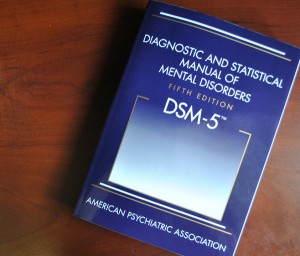
Twenty years ago he chaired the task force of mental-health clinicians and academics who wrote the fourth version of what’s often called the bible of mental health — that is, the Diagnostic and Statistical Manual of Mental Disorders (DSM-IV). It’s compiled and distributed by the American Psychiatric Association and it basically determines which symptoms equate to a mental disorder.

Now, with the fifth edition to be released on May 22 — at a mammoth four-day ‘meeting’ keynoted by none other than President Bill Clinton — Frances is doing everything he can to undermine the manual’s contents.

Drafts have been circulated and tested for a a couple of years, but even before the formal launch of DSM-5, Frances had written two books criticising its content: Essentials of Psychiatric Diagnosis: Responding to the Challenge of DSM-5; and Saving Normal: An Insider’s Revolt Against Out-of-Control Psychiatric Diagnosis, DSM-5, Big Pharma, and the Medicalization of Ordinary Life which was released this week). This is despite the fact that DSM-5 still contains the legacy of his own work on DSM-IV. (The publishers dropped the Roman numerals.)

So why such a change of heart?

“Not a change of heart — change of the world,” he says in an interview with The Global Mail. Frances is concerned about the rapid inflation in mental-health diagnoses over the past 35 years. He feels the ups and downs of everyday life are being turned into medical disorders, and he knows from experience that the diagnostic manual can exaggerate that effect, with the result that a disorder label will be attached to more and more people with even mild symptoms.

Read the rest of the article here

Also read, Mental Disorders: The Facts Behind the Marketing Campaign

« Return to news items


Share

New edition of psychiatry manual pushes more ‘invented victims’ of fabricated diseases

Monday, April 22nd, 2013

Natural News – April 21, 201

by Ethan A. Huff

The latest edition of the psychiatry industry’s Diagnostic and Statistical Manual of Mental Disorders, Fifth Edition (DSM-V), which is set for publication in May 2013, is expected to contain the most sweeping reclassification of essentially all human conditions, feelings, and emotions as mental disorders, based on official manuscripts recently approved by the American Psychiatric Association (APA). And what this portends for the future of society and the medical treatment of normal human behaviors is chilling, that is if the fraudulent document is even taken seriously.

As reported by Barbara Kay over at the National Post, DSM-V casts aside all reason by typifying many common behaviors and emotional states as mental disorders, which of course will be used as an excuse to push more pharmaceutical drugs on the masses as “cures.” So-called “generalized anxiety disorder” (GAD), for instance, which used to categorize only anxieties without a specific cause, will soon be expanded to include common anxieties that stem from known turmoils such as financial instability, domestic problems, or heavy school workloads, for example.

Other normal human behaviors to be reclassified as mental disorders in DSM-V include things like child temper tantrums, or what DSM-V refers to as “Disruptive Mood Dysregulation Disorder,” and “Major Depressive Disorder,” the new made-up name for normal feelings of grief following the loss of a loved one. These and many other fantasy health conditions will all be included in DSM-V as mental conditions that require synthetic drug interventions in order to effectively treat, according to the industry.

“It seems that every DSM upgrade contains more and more ‘disorders’ that are open to question for their vagueness and open-endedness,” writes Kay, noting that psychiatrists really hold no special authority when it comes to pinpointing whether or not human conditions are truly mental disorders anyway. She also heavily quotes the work of Dr. Tana Dineen, a psychologist who witnessed first-hand the corruption of an industry that she says tends to “translate all of life into a myriad of abuses, addictions and traumas.”

Dr. Allen Frances, M.D., a psychiatrist himself, is actually urging the psychiatry profession to ignore DSM-V, as he says it is a “deeply flawed” disaster of a guide filled with “many changes that seem clearly unsafe and scientifically unsound.” Among these changes, he writes for Psychology Today, are all the new “fad diagnoses” that have no grounding in reality. Dr. Frances also calls out the very motives behind DSM-V’s publishing, which he says are questionable because of the “financial conflict[s] of interest” between those who worked on the manual and the pharmaceutical industry.

No matter how you look at it, DSM-V is a complete disaster scientifically speaking, as is the entity commonly known as the psychiatry profession. Dr. Dineen actually refers to the general practice of psychology in her book Manufacturing Victims: What the Psychology Industry is Doing to People, as “big business,” and claims “[i]t is simply no longer accurate to speak of it as a science and it is unscrupulously misleading to call it a profession.” And based on the outlandish additions to DSM-V, this appears to be a more than accurate assessment of this clearly exploitative industry.

« Return to news items


Share

MSN News—New guidebook could label more than half of Americans with mental disorders

Friday, April 19th, 2013

Click image to read about psychiatrists who have spoken out against psychiatry’s ‘billing bible’ of mental disorders, the DSM

MSN News – April 19, 2013
Critics of the new “Diagnostic and Statistical Manual of Mental Disorders” fear more than 50 percent of Americans will display symptoms of one of its disorders during their lifetime.

By next month, more than half of us could have a mental disorder.

The new “Diagnostic and Statistical Manual of Mental Disorders” (DSM) is scheduled for release in May and, according to its critics, the odds are that more than 50 percent of Americans will display symptoms that fit the description of one of the disorders in it.

According to the National Center for Biotechnology Information (NCBI), 46.4 percent of Americans will have a mental disorder in their lifetime by the standards of the current DSM – DSM-IV.

And the new DSM – DSM-5 – could capture even more of us, if its critics’ fears are realized.

On its website, APA says DSM-5 will not increase the number of mental disorders. “Relatively few diagnoses are changing substantially from the past edition,” the website says. “Also, as it is slated right now, there will be fewer disorders in DSM-5 than in DSM-IV.”

Although there won’t be more mental disorders, the broader definition of a disorder could drive the number of Americans with disorders up.

In fact, the Autism Research Institute, in evaluating the potential changes, notes with concern that Autistic Disorder, Asperger’s Disorder and developmental disorders not otherwise specified will be grouped under one umbrella term in DSM-5: Autism Spectrum Disorder.

But the new DSM has some vehement critics.

Allen Frances, who served as the chair of the DSM-IV Task Force and worked on DSM-5, called approval of DSM-5 “the saddest moment in my 45-year career.”

He called it “deeply flawed.”

According to Frances, DSM-5 will include Disruptive Mood Dysregulation Disorder, which, according to him, is little more than “temper tantrums.” He also decries Binge Eating Disorder, defined as excessive eating 12 times in three months, which previously only appeared in the appendix of DSM-IV.

The DSM has faced similar criticism in the past. As recently as 1973, homosexuality appeared in the DSM as a disorder.

The APA is still reviewing DSM-5, which took input from health professionals, patients and families, advocates and others. They note the DSM-5 is by no means final at this point.

Click here for psychiatrists who have spoken out against psychiatry’s billing bible of mental disorders, the DSM

« Return to news items


Share

Psychiatry’s Weapon of Mental Destruction (WMD)—The Diagnostic & Statistical Manual of Mental Disorders

Monday, March 11th, 2013

By Kelly Patricia O’Meara
March 11, 2013

Photo: Garry Mcleod; Origami: Robert Lang – from Wired Magazine, “Inside the Battle to Define Mental Illness”

In 1952, the first hydrogen bomb was detonated and the American Psychiatric Association, APA, published its first book of mental illnesses: the Diagnostic and Statistical Manual of Mental Disorders, DSM.

No one, then, could have imagined that this seemingly innocuous manual would be more destructive, and result in producing more victims, than a nuclear weapon.

Since then the DSM has mushroomed and with each revised DSM untold millions carry the scars from its devastating effects.

Oddly enough, governments seem oblivious to the fallout of psychiatry’s arbitrary and devastating mental illness labels. Why? Could the answer lie in the extraordinarily profitable relationship between psychiatry and the pharmaceutical industrial complex?

The fact is pharmaceutical companies can’t push their latest mind-altering chemical concoctions until the deep-thinkers of psychiatry first vote the mental illness into existence. Then, unfortunately, the unsuspecting public becomes ground zero for these pharmaceutical Weapons of Mental Destruction (WMD).

How lucky, then, for the pharmaceutical industry. Very soon the APA will introduce its updated book of mental illnesses, the DSM-V.  The APA’s latest book of behaviors it believes are abnormal actually may read longer than Leo Tolstoy’s War and Peace.

More importantly, though, according to recent reports, the newest book of mental disorders is not only horribly flawed but also is more dangerous than its previous version – the whopping 886-page DSM-IV-TR.

In fact, Allen J. Frances, M.D., former chairman of the APA’s DSM-IV Task Force and long-time cheerleader of the APA’s apparent philosophy of “we-can-find-a-mental illness-for-every-human-emotion,” now oddly has become an outspoken critic of the upcoming release of the DSM-V.

Last year Frances published an op-ed in Psychology Today in which he slams the APA for approving “a deeply flawed DSM5 containing many changes that seem clearly unsafe and scientifically unsound.”

The DSM-V is “unsafe and scientifically unsound?” Wow, Frances is just now figuring that out?! That cat long has been out of the bag and, no matter how the APA tries to spin it, psychiatric diagnosing is not now, nor has it ever been, based in science.

It is an important step, however, that the former chairman of the DSM Task Force is openly admitting that psychiatry’s diagnosing bible is “scientifically unsound.” But, Frances doesn’t stop there.

According to the psychiatrist, “the history of psychiatry is littered with fad diagnoses that in retrospect did far more harm than good.” Wow, there’s a confession!

One can only assume that it was only due to lack of space that Frances refrained from disclosing which “fad diagnoses” were more “harmful.” However, given that none of the diagnoses are based in science, Frances inadvertently raises a stunning point that lawmakers may want to explore.

For instance, since none of the alleged mental disorders are based in science, how does one determine which are “fads?”

Nevertheless, it is Frances’ comments about the relationship between psychiatry and the pharmaceutical industry that finally reveal what the nation’s mental illness epidemic is all about.

“New diagnoses in psychiatry,” says Frances, “are more dangerous than new drugs because they influence whether or not millions of people are placed on drugs…” Bada bing, bada boom! No diagnosis, no drugs. Yep, the APA first has to pull a disorder out of its…ear before the drugs can be prescribed.

Despite this glaring admission, the DSM-V will hit the streets in the Spring and, along with the old invented mental illness stand-bys, like depression, bipolar, ADD, ADHD and such, the APA will add many new mental disorders.

For instance, infant temper tantrums now are labeled as Disruptive Mood Dysregulation Disorder, normal grief becomes Major Depressive Disorder, forgetfulness in old age morphs into Minor Neurocognitive Disorder and excessive eating will now be diagnosed as Binge Eating Disorder.

Does anyone with a drug-free mind doubt that the pharmaceutical companies aren’t already preparing the newest line of mind-altering drugs to “treat” the newly invented mental disorders? And, for that matter, that the top drug pushers aren’t splitting their sides over the temper tantrum diagnosis?

Clearly the APA has yet to find a normal human emotion it can’t twist into a mental illness, and there’s little doubt that the pharmaceutical companies are biting at the bit to cash in on these newly invented labels. After all, peddling psychiatric mind-altering drugs is a booming business.

For example, between 2001 and 2010, the use of psychotropic drugs by adult Americans increased 22 percent, with one in five adults taking at least one mind-altering drug.

In 2010, alone, more than $16 billion dollars was spent on antipsychotics, $11 billion on antidepressants and $7 billion on ADHD drug “treatments.”

There is no doubt that with every revised edition of the DSM, always increasing the number of invented and utterly ridiculous mental illnesses, the pharmaceutical companies kept pace in creating magic mind-altering drugs for “treatment.”

In 2009, total U.S. prescription sales were $300 billion, with psychiatric mind-altering drugs accounting for half of those sales. And these data are based on drugs prescribed for the old stale diagnoses.

If the enormous sales from drugging kids diagnosed with the invented ADD/ADHD is any indication, one can only imagine the profits for the pharmaceutical companies from drugging toddlers whose temper tantrums are now labeled mental illness.

And in order to reap these enormous profits the pharmaceutical companies have to convince the public they’re needed as “treatment.” Between 1996-2005, the pharmaceutical industry tripled its direct-to-consumer advertising, making it easy to understand why today more than one in 10 Americans take antidepressants. Not surprising, antidepressants also happen to be the second most commonly prescribed drugs in the United States.

To add insult to injury the federal government, rather than question the lack of science behind the invented mental illnesses, actually contributes millions of dollars in grants to help develop psychiatry’s DSM—the very vehicle that allows the pharmaceutical companies to reap their enormous profits. In today’s debt-ridden economy, this is one government subsidy in desperate need of a furlough.

Worse still, the Food and Drug Administration (FDA), which is responsible for protecting the public against dangerous mind-altering drugs, is dominated by psychiatrists who shuttle between the drug industry, academia, private practice and government service—a virtual revolving door.

With an estimated 3,000 people dying from psychiatric drugs every month, a serious and immediate retaliatory response from lawmakers is required. The threat to the mental health of the nation can’t get any clearer than Frances’ conclusion that the “DSM 5 violates the most sacred (and most frequently ignored) tenet in medicine – First Do No Harm!”

Kelly Patricia O’Meara is an award winning investigative reporter for the Washington Times, Insight Magazine, penning dozens of articles exposing the fraud of psychiatric diagnosis and the dangers of the psychiatric drugs – including her ground-breaking 1999 cover story, Guns & Doses, exposing the link between psychiatric drugs and acts of senseless violence.  She is also the author of the highly acclaimed book, Psyched Out: How Psychiatry Sells Mental Illness and Pushes Pills that Kill.  Prior to working as an investigative journalist, O’Meara spent sixteen years on Capitol Hill as a congressional staffer to four Members of Congress. She holds a B.S. in Political Science from the University of Maryland.

« Return to news items


Share

Disordering Normal—Here comes the new DSM

Friday, March 1st, 2013

Common Ground
By Alan Cassels
March 1, 2013

Towards the end of May, the fifth version of the Diagnostic and Statistical Manual of Mental Disorders (DSM-V), the iconic bible of psychiatry, is coming off the presses after much revision and delay. It’s bound to keep people asking, “Am I normal or do I have a mental illness?”

If you think most diseases are established with objective criteria and rigorous debate, you’d be somewhat wrong. The DSM has a strong track record of taking clusters of symptoms and wrapping labels around them, which lead to the accelerated use of some of the most toxic medications on the planet. How does this happen?

The DSM is owned and operated by the American Psychiatric Association (APA), an organization that many feel is itself owned and operated by the pharmaceutical industry. Seventy percent of the authors of the DSM-V have declared ties to pharmaceutical manufacturers and in some disease categories it’s 100%. This is the bizarre situation we’ve shamelessly come to accept: Big Pharma is allowed to put their own people on the committees to define what is and isn’t illness.

Many people agree that the old DSM-IV has been responsible for widening disease definitions and accelerating the medicalization of many diseases such as autism, ADHD and bipolar disorder. The principle here is that the broader you define a disease, the more people can be defined as having it and the bigger the market for drugs for the condition. The new bible will have more disease labels constructed from personality quirks, mood upheavals, normal bouts with sadness or common signs of aging, inevitably leading to even more prescribing.

A new category of mental illness known as “mild cognitive impairment” is the first time the label of ‘pre-dementia’ will apply to whole populations. Let me ask (most gently) who among us is not ‘pre-demented? In addition to the worries around our aging tendency to forget names, words and where we put the keys, we now have a name for it. As one ad for Alzheimer’s medications asks, “Is it just forgetfulness? Or maybe it’s “Pre-Alzheimer’s?” What better way to get perfectly healthy people to start shuffling down the cattle ramp towards a good jolt of the yet-to-be-launched pre-dementia medicines that the drug industry will soon be zapping us with? There are none yet, but trust me; those drugs are in the pipeline.

Right now, there is no cure or treatment for Alzheimer’s disease and unfortunately the drugs that do exist are next to useless. They are promoted as “slowing the rate of decline,” but there is little evidence to support that claim and they make many patients miserable with vomiting and severe nausea. Alzheimer’s is devastating for families but no one can explain how much anyone would benefit from adding “pre-dementia” to the burgeoning list of categories of mental illness.

How about grieving? According to a recent medical journal article, about 280,000 Canadians die every year and many of us are deeply affected by the death of loved ones. We experience profound grief and, for some, dealing with loss is very difficult. But here’s the hitch: What used to be considered a normal response to loss is now in the gambit of being considered a mental disorder.

Psychiatrist Dr. Allen Frances, who led the creation of the DSM-IV and lists its many sins, says the new DSM-V is going to be a disaster on the bereavement issue, adding that changing the definition of what is considered depressed (by including bereavement) “inflates estimates of the current incidence of depression in epidemiological studies” and will automatically ramp up even more demands for medical services and antidepressant medication. Should people who experience severe grief be tossed a pill that will, in effect, eclipse the many social and familial ways we have of dealing with loss? The makers of the new DSM-V think so.

Another new definition in the DSM-V suggests that being worried about disease and searching for information about it on the Internet is now worthy of a mental diagnosis. Last December, Dr. Frances blogged on the Psychology Today website about the DSM-V, stating, “One in six people suffering from cancer, heart and other serious diseases risks being saddled with a psychiatric diagnosis just because they are worried about their illness or spending more time on the internet researching their symptoms than the American Psychiatric Association (APA) thinks good for them.”

Add the word ‘Cyberchondria’ to the list of new mental health diagnoses.

Read full article here:  http://commonground.ca/2013/03/disordering-normal-5-0/

« Return to news items


Share

New Psych Disorder Could Mislabel Sick as Mentally Ill

Wednesday, February 27th, 2013

ABC News
By Susan Donaldson James
February 27, 2013

Lori Chapo-Kroger was an active intensive care unit nurse, but after a series of mysterious symptoms began a decade ago, her thinking became “cloudy” and she said her legs “felt like they were made of lead.”

“I felt like every system in my body was collapsing,” said Chapo-Kroger, who lives in Grand Rapids, Mich. “I remember not even being able to stand up to make my own bed. I literally lay on the floor and had to ask my daughter to change the bed sheets for me. She was 13.”

But for three years she went from doctor to doctor, all who told her she was crazy, that her symptoms were in her head.

“They said, ‘You don’t look sick,’” explained Chapo-Kroger, now 54 and in a wheelchair. “The more I pushed and tried to be normal, the worse I got.”

She was finally vindicated in 2005 when doctors at the Mayo Clinic diagnosed Chapo-Kroger with myalgic encephalomyelitis/chronic fatigue syndrome (ME/CFS), a chronic and complex illness that is associated with dysfunction of the brain, gastro-intestinal, immune, endocrine and cardiac systems.


Lori Chapo-Kroger has chronic fatigue syndrome which could be confused with a new controversial mental disorder—somatic symptom disorder.

But Chapo-Kroger’s symptoms could easily have fit the criteria for a controversial psychiatric illness that will appear in the latest Diagnostics and Standards Manual or DSM-5 — somatic symptom disorder.

The newly-labeled psychiatric disorder has fueled a debate among patients and advocacy groups who fear that broader and “looser” criteria may make it easier for doctors to dismiss patients as mentally ill when in fact they have a physical illness.

Somatic (or bodily) symptom disorder or SSD is characterized by symptoms that suggest physical illness or injury that are either “very distressing” or result in disruption in a person’s functioning. The symptoms are also often accompanied by “excessive and disproportionate thoughts, feelings and behaviors,” according to the American Psychiatric Association.

Extreme anxiety and “overwhelming fear” are classic symptoms. To be diagnosed, a person must have these symptoms for at least six months.

Some criteria for disorders like chronic fatigue require post-exertion collapse for six months before doctors can give a diagnosis.

“Anytime someone has a chronic illness, you have a fixation on your health,” said Chapo-Kroger, who is president of the P.A.N.D.O.R.A. network, an organization that helps those with poorly understood neuro-endocrine-immune disorders. “Studies on people after heart surgery say they got depressed afterwards. Who wouldn’t when they face their own mortality?”

Critics worry that patients will be misdiagnosed as mentally ill and won’t get treatment, affecting mostly those with chronic and difficult to diagnose neurological disorders and multi-system diseases like ME/CFS, ones that are poorly understood and can take years to get medical answers.

“A lot of people will be written off as crocks — it’s just in their head,” said Dr. Allen Frances, who was chair of the task force that created the DSM-4 and professor emeritus of psychiatry at Duke University. “They won’t get the medical work-up they need. A lot of times they diagnose it as depression and anxiety and they get stigmatized.”

Read entire article here:  http://abcnews.go.com/Health/somatic-syndrome-disorder-mislabel-sick-mentally-ill/story?id=18606406

« Return to news items


Share

NaturalNews—Wolves Circling Prey: Psychiatrists Targeting More Kids for ‘Treatment’

Tuesday, January 29th, 2013

NaturalNews.com
by Jon Rappaport—January 29, 2013

To understand even a little bit about real psychiatry, versus the false picture, you have to know that someone running around the streets naked and screaming has nothing to do with a mental disorder.

If you can’t grasp that, you’ll always have a lingering sense that psychiatry is on the right track. It isn’t, and never was. Not from its earliest days, and not now, when it has the full backing and force of the federal government behind it.

Psychiatry is the kind of all-out fraud few people grasp.

In a moment of weakness and exhaustion, Allen Frances, the most famous and honored psychiatrist in America at the time (2000), understood part of it. He told Gary Greenberg of Wired Magazine, “There is no definition of a mental disorder. It’s bullshit. I mean, you just can’t define it.”

BANG.

That’s on the order of the designer of the Hindenburg, looking at the burned rubble on the ground, remarking, “Well, I knew there would be a problem.”

After a suitable pause, Dr. Frances remarked to Greenberg, “These concepts [of distinct mental disorders] are virtually impossible to define precisely with bright lines at the borders.”

This was an admission that the bible of the profession, the DSM, the latest edition of which Frances himself had led in compiling, could not draw separations between the 297 official mental disorders listed in it. It was, in other words, a pretense. The whole bible.

In a PBS Frontline episode, Does ADHD Exist?, Dr. Russell Barkley, an eminent professor of psychiatry and neurology at the University of Massachusetts Medical Center, spelled out the fraud even more clearly.

Here it is.

PBS FRONTLINE INTERVIEWER: Skeptics say that there’s no biological marker – that it [ADHD] is the one condition out there where there is no blood test, and that no one knows what causes it.

BARKLEY: That’s tremendously naive, and it shows a great deal of illiteracy about science and about the mental health professions. A disorder doesn’t have to have a blood test to be valid. If that were the case, all mental disorders would be invalid…There is no lab test for any mental disorder right now in our science. That doesn’t make them invalid. [Emphasis added]

Oh, indeed, that does make them invalid. Utterly and completely. All 297 mental disorders. They’re all hoaxes. Because there are no tests of any kind to back up the diagnosis.

You can sway and tap dance all you like and you won’t escape the noose around your neck. We are looking at a science that isn’t a science. That’s called fraud. Rank fraud.

But you see, we’re still left with the naked man who’s running around the street screaming. What is he? Doesn’t he have a mental disorder?

He does not, because the term “mental disorder” isn’t just a colloquial phrase, it’s a technical designation, and it underpins everything that psychiatry is. And there is no basis for its diagnosis. None.

There are many reasons the man may be running naked in the street. If he has a blood clot or lesion on his brain, if he has been poisoned, if he folded up and left this world as a child after he received a vaccine, if he has been pushed over the edge by Paxil or Zoloft, if he has been brutalized and is terrified, if he has been given electric shocks by a psychiatrist, if he is on Vicodin, if he has snorted cocaine laced with some horrible filler, if he has been driven mad through starvation, if he has been harassed by people who are threatening his life, he could be running naked in the street. Now that President Obama has decided the expansion of mental healthservices must be effected to protect us all from people with guns, we are looking up the immediate road at government programs in schools, among other disastrous innovations.

Children are concocted as a prime target for early diagnosis of non-existent mental disorders, because in the past, a number of these children, diagnosed and drugged by psychiatrists, went on to kill people as a result of the drugs’ actions on their brains. That’s called irony. It’s also called a crime, in the very real sense that psychiatrists contributed mightily to the killings.

So now, every child in school who twitches the wrong way or picks up a bubble-gum toy shaped like a pistol, or points his finger at a friend and says Bang, or looks sad and lonely for ten minutes at the back of the class on a rainy Tuesday, or draws pictures when he should be adding numbers in his notebook, or wears odd clothes, or gets angry for any reason at all, or objects to taking a vaccine, or wears a jacket with a small American flag sewn to the shoulder, or doesn’t play well with others, or makes a positive statement in class about the Bill of Rights, or reminds a teacher of a little criminal in a movie, or has a bottle opener in his pocket, or dreams in class about designing a rocket that will take people to Mars…can be referred to a counselor, who in turn will refer him to a psychiatrist, who will make some sort of off-the-shelf diagnosis, which will travel with the child for the rest of his life, making the child believe he has a brain problem, and the psychiatrist will prescribe that child drugs like Ritalin, Adderall, Zoloft, Paxil, or Prozac, drugs that scramble neurotransmitter systems and can very certainly cause that child to go violent.

That is the reality.

When Obama announced his intention, in the wake of Sandy Hook, to go nuclear with expanded mental-health services across the country, the president of the American Psychiatric Association, Dr. Dilip Jeste, praised the program.

“I am strongly encouraged by the President’s recommendations because they include a focus on improving mental health,” Jeste said to a Psychiatric News reporter.

The Psychiatric News article continues: “A new initiative outlined by Obama would provide training for school personnel and help ensure that young people who need help are referred to treatment…[and this new program would] train 5,000 additional mental health professionals to serve students and young adults.”

What we are looking at here is wolves circling prey.

If you don’t think so, consider these hidden facts about Ritalin, which is normally considered to be a much lighter drug than any of the SSRI antidepressants (Prozac, Zoloft, Paxil) or the drugs given for so-called Bipolar Disorder (Valproate, Lithium).

Ritalin, manufactured by Novartis, is the close cousin to speed which is given to perhaps four million American schoolchildren for a condition called Attention Deficit Disorder (ADD), or ADHD (Attention Deficit Hyperactivity Disorder).

ADD and ADHD, for which no organic causes have ever been found, are touted as disease-conditions that afflict the young, causing hyperactivity, unmanageability, and learning problems. Of course, when you name a disorder or a syndrome and yet can find no single provable organic cause for it, you have nothing more than a loose collection of behaviors with an arbitrary title.

Correction: you also have a pharmaceutical bonanza.

Dr. Peter Breggin, referring to an official directory of psychiatric disorders, the DSM-III-R, writes that withdrawal from amphetamine-type drugs, including Ritalin, can cause “depression, anxiety, and irritability as well as sleep problems, fatigue, and agitation.” Breggin then remarks, “The individual may become suicidal in response to the depression.”

The well-known Goodman and Gilman’s The Pharmacological Basis of Therapeutics reveals a strange fact. It states that Ritalin is “structurally related to amphetamines … Its pharmacological properties are essentially the same as those of the amphetamines.” In other words, the only clear difference is legality. And the effects, in layman’s terms, are obvious. You take speed and after awhile, sooner or later, you start crashing. You become agitated, irritable, paranoid, delusional, aggressive.

A firm and objective medical review needs to be done in all of the school shootings, to determine how many of the shooters were on, or had at one time been on, Ritalin.

In his landmark classic, Toxic Psychiatry, Dr. Breggin discusses the subject of drug combinations: “Combining antidepressants [e.g., Prozac, Luvox] and psychostimulants [e.g., Ritalin] increases the risk of cardiovascular catastrophe, seizures, sedation, euphoria, and psychosis. Withdrawal from the combination can cause a severe reaction that includes confusion, emotional instability, agitation, and aggression.”

Children are frequently medicated with this combination, and when we highlight such effects as aggression, psychosis, and emotional instability, it is obvious that the result is pointing toward the very real possibility of violence.

In 1986, The International Journal of the Addictions published a most important literature review by Richard Scarnati. It was called “An Outline of Hazardous Side Effects of Ritalin (Methylphenidate”) [v.21(7), pp. 837-841].

Scarnati listed over a hundred adverse affects of Ritalin and indexed published journal articles for each of these symptoms.

For every one of the following (selected and quoted verbatim) Ritalin effects then, there is at least one confirming source in the medical literature:

• Paranoid delusions
• Paranoid psychosis
• Hypomanic and manic symptoms, amphetamine-like psychosis
• Activation of psychotic symptoms
• Toxic psychosis
• Visual hallucinations
• Auditory hallucinations
• Can surpass LSD in producing bizarre experiences
• Effects pathological thought processes
• Extreme withdrawal
• Terrified affect
• Started screaming
• Aggressiveness
• Insomnia
• Since Ritalin is considered an amphetamine-type drug, expect amphatamine-like effects
• psychic dependence
• High-abuse potential DEA Schedule II Drug
• Decreased REM sleep
• When used with antidepressants one may see dangerous reactions including hypertension, seizures and hypothermia
• Convulsions
• Brain damage may be seen with amphetamine abuse.

If psychiatrists are the wolves—and they are—and children are the sheep, then what do you call the parents who permit their children to be captured by these marauders?

Am I saying that “mental health,” as defined by organized psychiatry, and backed by the federal and state governments, is a vast criminal enterprise, rather than a science?

Yes, absolutely. I’m saying that because that’s what it is.

« Return to news items


Share

Fox News: A psychiatrist tells the truth— it’s OK not to be ‘normal’

Friday, March 16th, 2012

Note from CCHR: We didn’t come up with the headline, but we think its interesting that Fox News did.  So our question is, what about the rest of psychiatry?  When are they going to  be required to tell the truth, considering they are funded billions of dollars by governments based on untruths?

Fox News – March 15, 2012
By Dr. Dale Archer

When Mark Twain’s hero Huckleberry Finn was forced to study spelling for an hour every day, he said, “I couldn’t stand it much longer. It was deadly dull, and I was fidgety.” His teacher, Miss Watson, threatened him with eternal damnation if he didn’t pay attention. Huck admits it didn’t seem like such a bad alternative. “But I didn’t mean no harm. All I wanted was to go somewheres; all I wanted was a change, I warn’t particular.”

If that had happened today, Huck would have been diagnosed as ADHD, put on Adderall, and forced to attend school, while the book about his adventures would never have been written.

The American Psychiatric Association invented the term “ADHD” in 1980 to give kids with hyperactivity, impulsivity, short attention span and easy distractibility a diagnosis.

Who would have thought that 28 years later, the National Center for Health Statistics would report that over 5 million American kids (8 percent) between the ages of 3-17 would receive this diagnosis? That’s 1 out of 12, with about half of those on medication.

William Evans, Ph.D., with the Journal of Health Economics found that a huge predictor for the diagnosis of ADHD was the age of the child with respect to their grade. In other words, younger children in a given grade, have more ADHD symptoms than older ones. No surprise there- younger kids clearly are more restless and less able to concentrate on a topic, or sit quietly in a classroom all day long. According to his research, “approximately 1.1 million children received an inappropriate diagnosis and over 800,000 received stimulant medication due only to relative maturity.”

Let me quickly point out that I’m not opposed to medication to treat those with severe symptoms, but does 1 out of every 12 kids really have ADHD?

I wish this was just about ADHD, but that’s just what I’ve chosen to illustrate my point. I could have chosen bipolar disorder, OCD, generalized anxiety, social anxiety or many others because this is about the over-diagnosing, over-treating and over-medicating of psychiatric problems throughout America The first psychiatric diagnostic manual, DSM-I, in 1952 had 106 disorders listed. The revised DSM- IV in 2000 had 365!

The National Institute of Mental Health has found that 26 percent of Americans (1 in 4) have a diagnosable psychiatric illness.

The only word for that is “ludicrous.”

A disorder of any kind is by definition something wrong, screwed up, malfunctioning. A mental disorder is an irregularity in the functioning of the brain. If the brains of one quarter of the U.S. population are disordered then something is very, very wrong with the human mind.

Or with our mental health system.

In a Wired magazine interview in January 2011, Allen Frances (lead editor of the Diagnostic and Statistical Manual for Mental disorders –IV) blamed the DSM- IV itself. “We made mistakes that had terrible consequences,” says Frances. One of these consequences, the article notes, is that diagnoses of ADHD have skyrocketed. Greenberg writes: “Frances thinks his manual inadvertently facilitated these epidemics— and, in the bargain, fostered an increasing tendency to chalk up life’s difficulties to mental illness and then treat them with psychiatric drugs.”

Here’s the problem: The profession of psychiatry has taken on the role of defining ‘normal’ in our society. Even Webster’s dictionary defines normal as being, “free from a mental disorder.”

As we purposely shrink the box called normal and it gets smaller and smaller, the abnormal universe expands to include almost everyone. But we say, “don’t worry, we can fix that with a pill and make you normal just like everyone else.”

My profession has not only redefined mental health by over-diagnosing and over-medicating an ever-expanding number of diagnoses, we are also taking away the hope of human nature by telling our patients that they are inherently “abnormal” and need to be fixed.

The psychiatrist’s office has gone from being the place no one would be caught dead visiting…to the place where a pill could fix anything. And psychiatry itself has gone from being stigmatized to glamorized.

Psychiatric conditions don’t come with an on/off switch, but rather occur along a continuum. High levels of any given trait may represent a severe psychiatric diagnosis requiring medication, BUT in small to medium doses, these very same traits can represent your greatest strengths.

On a scale of 1 to10, what separates an ADHD 7 from an ADHD 10? Who gets medicated…..and why? How could one person use a set of “symptoms” as a springboard for success while another with the exact same symptoms needs meds and therapy? How are CEOs like Richard Branson (Virgin Airlines), John Chambers (Cisco), and Charles Schwab able to parlay their ADHD into tremendously successful careers, while others are searching for a magic pill and a cure?

David Neeleman, founder of JetBlue has said that if he found a magic pill to make his ADHD go away, he wouldn’t take it. Creativity and innovation are hallmarks of those with ADHD. When a child first presents with symptoms, why aren’t we telling them that they are 3 times more likely to form their own business, will thrive in disruptive situations, will embrace adventure and are adept at multitasking, as opposed to giving them a diagnosis and a pill?

We must stop thinking about how to give the “patient” what they think they want and start taking a look at what’s good about what they have.

We must empower individuals to think it’s ok to be “not normal” and change the mindset that everything can be “fixed” with a pill or a few therapy sessions.

We must help them understand that what they perceive as their worst trait, may in reality be their best.

It’s time for a new order of business in mental health, based on the premise that when you try to conform to a perceived “normal,” you lose your uniqueness—which is the foundation for your greatness.

Dr. Dale Archer is a psychiatrist and frequent guest on “FoxNews.com Live.” He is the author of the new bestselling book “Better Than Normal: How What Makes You Different Can Make You Exceptional”For more, visit his website: Dr.DaleArcher.com.

http://www.foxnews.com/opinion/2012/03/15/psychiatrist-tells-truth-its-ok-not-to-be-normal/

« Return to news items


Share

ABC News: DSM-5 Criticized for Financial Conflicts of Interest—70% of task force members have ties to Pharma

Tuesday, March 13th, 2012

ABC News – March 13, 2012
By Katie Moisse

70 percent of DSM-5 task force members reporting financial relationships with pharmaceutical companies— up from 57 percent for DSM-4

Controversy continues to swell around the fifth edition of the Diagnostic and Statistical Manual of Mental Disorders, better known as DSM-5. A new study suggests the 900-page bible of mental health, scheduled for publication in May 2013, is ripe with financial conflicts of interest.

The manual, published by the American Psychiatric Association, details the diagnostic criteria and recommended treatments — many of which are pharmacological — for each and every psychiatric disorder. After the 1994 release of DSM-4, the APA instituted a policy requiring expert advisors to disclose drug industry ties. But the move toward transparency did little to cut down on conflicts, with nearly 70 percent of DSM-5 task force members reporting financial relationships with pharmaceutical companies — .

“Organizations like the APA have embraced transparency too quickly as the solution,” said Lisa Cosgrove, associate professor of clinical psychology at the University of Massachusetts-Boston and lead author of the study published today in the journal PLoS Medicine. “Our data show that transparency has not changed the dynamic.”

The DSM is developed by an APA-appointed task force and panels consisting of experts in various fields of psychiatry. But many of these experts serve as paid spokespeople or scientific advisors for drug companies, or conduct industry-funded research. Some of most conflicted panels are those for which drugs represent the first line of treatment, with two-thirds of the mood disorders panel, 83 percent of the psychotic disorders panel and 100 percent of the sleep disorders panel disclosing “ties to the pharmaceutical companies that manufacture the medications used to treat these disorders or to companies that service the pharmaceutical industry,” according to the study.

“We’re not trying to say there’s some Machiavellian plot to bias the psychiatric taxonomy,” said Cosgrove, who is also a research fellow at Harvard’s Edmond J. Safra Center for Ethics. “But transparency alone cannot mitigate unintentional bias and the appearance of bias, which impact scientific integrity and public trust.”

The DSM-5 has also drawn criticism for introducing new diagnoses that some experts argue lack scientific evidence. Dr. Allen Frances, who chaired the revisions committee for DSM-4, said the new additions would “radically and recklessly” expand the boundaries of psychiatry.

“They’re at the boundary of normality,” said Frances, who is professor emeritus of psychiatry at Duke University. “And these days, most diagnostic decisions are not made by psychiatrists trained to distinguish between the two. Most are made by primary care doctors who see a patient for about seven minutes and write a prescription.”

Under the new criteria, grief after the loss of a loved one, mild memory loss in the elderly and frequent temper tantrums in kids would constitute psychiatric disorders. An online petition challenging the proposed changes, which would label millions more Americans as mentally ill, has accrued more than 12,000 signatures.

Read the rest of the article here: http://abcnews.go.com/Health/MindMoodNews/dsm-fire-financial-conflicts/story?id=15909673#.T1–WXnBj4s

« Return to news items


Share

Millions mistakenly classed mentally ill—including shy or defiant children, grieving relatives

Thursday, February 16th, 2012

The Sun—Feb 15, 2012

by Kate Kelland

MILLIONS of healthy people – including shy or defiant children, grieving relatives and people with fetishes – may be wrongly labelled mentally ill by a new international diagnostic manual, specialists said recently.

Healthy people who are shy may be wrongly classified as mentally sick in a new health manual issued by the American Psychiatric Association. AFP/SOURCES

In a damning analysis of an upcoming revision of the influential Diagnostic and Statistical Manual of Mental Disorders (DSM), psychologists, psychiatrists and mental health experts said its new categories and “tick-box” diagnosis systems were at best “silly” and at worst “worrying and dangerous”.

Some diagnoses – for conditions like “oppositional defiant disorder” and “apathy syndrome” – risk devaluing the seriousness of mental illness and medicalising behaviours most people would consider normal or just mildly eccentric, the experts said.

At the other end of the spectrum, the new DSM, due out next year, could give medical diagnoses for serial rapists and sex abusers – under labels like “paraphilic coercive disorder” – and may allow offenders to escape prison by providing what could be seen as an excuse for their behaviour, they added.

The DSM is published by the American Psychiatric Association (APA) and has descriptions, symptoms and other criteria for diagnosing mental disorders.

It is used internationally and is seen as the diagnostic “bible” for mental health medicine.

More than 11,000 health professionals have already signed a petition (at http://dsm5-reform.com) calling for the development of the fifth edition of the manual to be halted and re-thought.

“The proposed revision to DSM … will exacerbate the problems that result from trying to fit a medical, diagnostic system to problems that just don’t fit nicely into those boxes,” said Peter Kinderman, a clinical psychologist and head of Liverpool University’s Institute of Psychology at a briefing about widespread concerns over the book in London.

He said the new edition – known as DSM-5 – “will pathologise a wide range of problems which should never be thought of as mental illnesses”.

“Many people who are shy, bereaved, eccentric, or have unconventional romantic lives will suddenly find themselves labelled as mentally ill,” he said.

“It’s not humane, it’s not scientific, and it won’t help decide what help a person needs.”

Simon Wessely of the Institute of Psychiatry, King’s College London, said a look back at history should make health experts ask themselves: “Do we need all these labels?”

He said the 1840 Census of the United States included just one category for mental disorder, but by 1917 the APA was already recognising 59.

That rose to 128 in 1959, to 227 in 1980, and again to around 350 disorders in the fastest revisions of DSM in 1994 and 2000.

Allen Frances, Emeritus professor at Duke University and chair of the committee that oversaw the previous DSM revision, said the proposed DSM-5 would “radically and recklessly expand the boundaries of psychiatry”.

“It will also result in the medicalisation of normality, individual difference and criminality,” he said.

As an unintended consequence, he said in an emailed comment, many millions of people will get inappropriate diagnoses and treatments, and already scarce funds would be wasted on giving drugs to people who do not need them and may be harmed by them.

Nick Craddock of Cardiff University’s department of psychological medicine and neurology, who also spoke at the London briefing, cited depression as a key example of where DSM’s broad categories were going wrong.

Whereas in previous editions, a person who had recently lost a loved one and was suffering low moods would be seen as experiencing a normal human reaction to bereavement, the new DSM criteria would ignore the death, look only at the symptoms, and class the person as having a depressive illness.

Other examples of diagnoses cited by experts as problematic included “gambling disorder”, “internet addiction disorder” and “oppositional defiant disorder” – a condition in which a child “actively refuses to comply with majority’s requests” and “performs deliberate actions to annoy others”.

“That basically means children who say ‘no’ to their parents more than a certain number of times,” Kinderman said.

“On that criteria, many of us would have to say our children are mentally ill.” – Reuters

http://www.thesundaily.my/news/295352

« Return to news items


Share