Posts Tagged ‘ADHD Drugs’

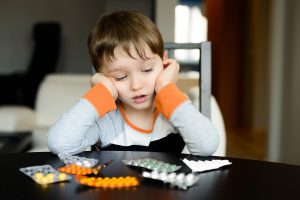
The DEA classifies ADHD drugs with cocaine/opium/morphine—all highly addictive. Teen abuse of ADHD drugs skyrockets.

Friday, January 22nd, 2010

NaturalNews
By David Gutierrez
January 21, 2010

Inquiries to poison control centers about teenage abuse of drugs for attention deficit hyperactivity disorder (ADHD) increased by 76 percent over the last eight years, indicating a surge in rates of the abuse itself, according to a study conducted by researchers from the Cincinnati Children’s Hospital Memorial Center and published in the journal Pediatrics.

“It’s more bad news on an entrenched problem,” said Steve Pasierb, head of The Partnership for a Drug-Free America, who was not involved in the study.

The researchers reviewed data collected by the American Association of Poison Control Centers between 1998 and 2005. They found that the number of calls by parents, emergency room doctors and others about teenagers abusing ADHD drugs increased from 330 per year in 1998 to 581 per year in 2005, far outpacing the rate of increase in calls about other forms of teenage substance abuse. The majority of teenagers involved in the calls ended up being treated in emergency rooms, and 42 percent suffered moderate or severe side effects. Four of the teenagers died.

Far more teenagers are probably experiencing side effects, the researchers noted, since most cases of abuse don’t end in calls to poison control.

During the time period covered by the study, prescriptions for ADHD drugs rose 86 percent in children between the ages of 10 and 19, from roughly four million to almost eight million.

Read entire article:  http://www.naturalnews.com/027988_drug_abuse_ADHD.html

« Return to news items


  • Share/Bookmark

No More ADHD

Tuesday, September 15th, 2009

by Dr. Mary Ann Block
Author, No More ADHD:Ten Steps to Help Your Child’s Attention and Behavior without Drugs
September 15, 2009

Because of my medical training, my goal as a physician is to look for and treat the underlying conditions causing the patient’s problem, rather than just covering up those symptoms with drugs. I have seen and treated thousands of children from all over the United States, who had previously been labeled ADHD and treated with amphetamine drugs. By taking a thorough history and giving these children a complete physical exam as well as doing lab tests and allergy testing, I have consistently found that these children do not have ADHD, but instead have allergies, dietary problems, nutritional deficiencies, thyroid problems and learning difficulties that are causing their symptoms. All of these medical and educational problems can be treated, allowing the child to be successful in school and life, without being drugged.

The Annals of Allergy, reported in 1993, that children with allergies perform less successfully in school, across the board, than children who do not have allergies.

A study in the Journal of Pediatrics, 1995, reported that children who ate sugar had an increase in adrenaline levels that caused difficulty concentrating, irritability and anxiety. A double blind, crossover study published in Biological Psychiatry, 1979, found that Vitamin B6 was more effective than Ritalin in a group of hyperactive children. Another study found that children with magnesium deficiencies were characterized by excessive fidgeting and learning difficulties. There are many more studies indicating an association between nutritional deficiencies and attention and behavior problems.

There is no valid test for ADHD. The diagnosis called ADHD is completely subjective. While some compare ADHD to diabetes, there really is no comparison. Diabetes is an insulin deficiency that can be objectively measured. Insulin is a hormone manufactured by the body and needed for life. ADHD cannot be objectively measured and amphetamines are not made by the body or needed for life.

The drugs used on children diagnosed ADHD come with a host of potential side effects. According to the manufacturers of the drugs, the following side effects can and do occur: insomnia, anorexia, nervousness, seizures, headaches, heart palpitations, cardiac arrhythmia, psychosis, angina, abdominal pain, hepatic coma, anemia, depressed mood, hair loss, weight loss, tachycardia (too fast a heartbeat), increased blood pressure, cardiomyopathy (weakening or change in heart muscle), dizziness and tremor to name a few. The U.S. FDA has warned ADHD drugs such as Ritalin, Adderall and Concerta can cause heart attack, stroke and sudden death. These drugs are classified as schedule II controlled substances with high abuse potential. According to reports in the Journal of the American Medical Association, the drug Ritalin has been found to be very similar to and more potent than cocaine. Ritalin and cocaine are so similar that they are used interchangeably in scientific research. There are no long-term studies on the safety and effectiveness of these amphetamine drugs, though millions of children are treated with them for years at a time.

When I was in school and when my children were in school, there was no need to drug millions of children. While there are children who have attention and behavior problems and these problems may have increased due to poor diets, an increase in soda and candy in our schools, an increase in allergies due to changes in our environment and an increase in learning problems does not mean these children have a psychiatric disorder called ADHD. It means they have medical and educational problems that can be fixed.

Most of the children I have seen who have been prescribed these drugs have never even had a physical exam. No doctor listened to their hearts even though many of the side effects are heart related. Since there is no valid test for ADHD, most doctors get the information for the diagnosis from the child’s teacher in the form of a checklist. If the teacher wants the child to be taking these drugs, all she or he has to do is fill out the checklist indicating the child has many problems in the classroom. One child was diagnosed as ADHD and prescribed Ritalin. I treated him instead. Once his allergies and learning problems were corrected he went on to become a National Merit Finalist and accepted to an Ivy League University.

Every child deserves that opportunity. Many of the parents of these children have told me that the teachers and principals have pressured them to put the children on these drugs, threatening to report them to Child Protective Services (CPS) if they do not comply. CPS actually removed a child from his home after the school reported the mother for not giving the child his drugs. The ironic thing was, she had given him the drug, but the drug made his symptoms worse, not better. I cannot imagine any reason to give a child an amphetamine to cover up symptoms when the problem can be fixed and no drug is required. Let’s give our children the medical and educational evaluations they need to diagnose the real problems. Let’s treat those real problems and give our children the future they deserve, without drugs.

Dr. Mary Ann Block is founder and Medical Director of the Block Center in the Dallas/Fort Worth area.  Dr. Block specializes in the drug-free treatment of health problems and learning disabilities and is an outspoken critic of the dangers of psychiatric drugging of children. She travels the world speaking to public and professional audiences about safer and more effective non-drug treatments for children with attention and behavior problems. Her books include No More ADHD: Ten Steps to Help Your Child’s Attention and Behavior without Drugs and No More Ritalin: Treating ADHD Without Drugs.

For more information visit Dr. Block’s website:
http://www.blockcenter.com/web_content/ADD_ADHD/ADHD.html

RETURN TO BLOGS PAGE


  • Share/Bookmark