

Psychiatric Drugs—Regulatory Warnings on Violence, Mania, Psychosis, Homicide
Fact: Despite 49 international drug regulatory warnings on psychiatric drugs citing effects of mania, hostility, violence and even homicidal ideation, and dozens of high profile shootings/killings tied to psychiatric drug use, there has yet to be a federal investigation on the link between psychiatric drugs and acts of senseless violence.
Fact: At least 39 school shootings and/or school-related acts of violence have been committed by those taking or withdrawing from psychiatric drugs resulting in 200 wounded and 100 killed (in other school shootings, information about their drug use was never made public—neither confirming or refuting if they were under the influence of prescribed drugs).
Fact: Between 2004 and 2012, there have been 14,773 reports to the U.S. FDA’s MedWatch system on psychiatric drugs causing violent side effects including: 1,531 cases of homicidal ideation/homicide, 3,287 cases of mania & 8,219 cases of aggression. Note: The FDA estimates that less than 1% of all serious events are ever reported to it, so the actual number of side effects occurring are most certainly higher.
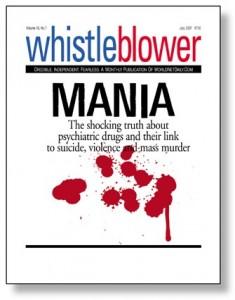
Click image to read MANIA—The shocking link between psychiatric drugs, suicide, violence and mass murder
School-related acts of violence aren’t the only cases commonly found to be under the influence of psychiatric drugs. There are 64 other acts of senseless violence committed by individuals taking or withdrawing from psychiatric drugs resulting in an additional 432 dead and 773 wounded.
To read all drug regulatory agency warnings & studies on psychiatric drugs, visit CCHR’s Psychiatric Drug Side Effects Search Engine.
The Drug Regulatory Agency Warnings on Psychiatric drugs and violence, mania, psychosis or homicide:
- United States, January 6, 2022: The FDA updated the safety label for Strattera (atomoxetine) to warn of the possibility of the drug causing the emergence or worsening of aggressive behavior or hostility. In addition, bipolar disorder patients may be at an increased risk of developing mania or mixed episodes when taking Strattera. Patients and caregivers are to be instructed to look for signs of activation of mania or hypomania.
Source: “STRATTERA (NDA-021411) Drug Safety-related Labeling Changes Approved By FDA Center for Drug Evaluation and Research (CDER),” Food and Drug Administration, 6 Jan 2022.
- United States, November 10, 2021: The FDA updated the safety label for Effexor XR (venlafaxine) to include postmarketing reports of serious discontinuation symptoms including completed suicide, suicidal thoughts, aggression, and violent behavior while reducing dosage or discontinuing the drug.
Source: “EFFEXOR XR (NDA-020699) Drug Safety-related Labeling Changes Approved By FDA Center for Drug Evaluation and Research (CDER),” Food and Drug Administration, 10 Nov 2021.
- United States, November 10, 2021: The FDA updated the safety label for Pristiq (desvenlafaxine) to note that there have been postmarketing reports of serious discontinuation symptoms including completed suicide, suicidal thoughts, and aggression (including hostility, rage, and homicidal ideation) while reducing dosage or discontinuing the drug.
Source: “PRISTIQ (NDA-021992) Drug Safety-related Labeling Changes Approved By FDA Center for Drug Evaluation and Research (CDER),” Food and Drug Administration, 10 Nov 2021.
- United States, March 4, 2021: The FDA updated the safety label for Symbyax (a combination of the antipsychotic olanzapine & antidepressant fluoxetine) in the Postmarketing Experience section for each drug. Under fluoxetine, reported adverse reactions included violent behavior.
Source: “SYMBYAX (NDA-021520) Drug Safety-related Labeling Changes Approved By FDA Center for Drug Evaluation and Research (CDER),” Food and Drug Administration, 4 Mar 2021.
- United States, March 1, 2021: The FDA updated the safety labels for Xanax and Xanax XR (alprazolam) to note in the Warnings and Precautions section that, “Benzodiazepines may worsen depression.” Appropriate precautions (e.g., monitoring for suicidal ideation) should be considered for those with depression. The Postmarketing Experience subsection under Adverse Reactions was updated to include hypomania and mania.
Source: “XANAX (NDA-018276) Drug Safety-related Labeling Changes Approved By FDA Center for Drug Evaluation and Research (CDER),” Food and Drug Administration, 1 Mar 2021; “XANAX XR (NDA-021434) Drug Safety-related Labeling Changes Approved By FDA Center for Drug Evaluation and Research (CDER),” Food and Drug Administration, 1 Mar 2021.
- United States, November 13, 2020: The FDA updated the safety label for Trintellix (vortioxetine) to include aggression, agitation, anger, hostility, and irritability under Postmarketing Experience in the Adverse Reactions section.
Source: “TRINTELLIX (NDA-204447) Drug Safety-related Labeling Changes Approved By FDA Center for Drug Evaluation and Research (CDER),” Food and Drug Administration, 13 Nov 2020.
- United States, February 5, 2019: The FDA updated the safety label for Dyanavel XR (amphetamine). The following was added to the Adverse Reactions section: restlessness, irritability, euphoria, dyskinesia (uncontrolled, involuntary muscle movements), dysphoria, depression, tremor, aggression, anger, logorrhea (excessive and often incoherent wordiness when talking), among other side effects.
Source: “DYANAVEL XR (NDA-208147) Drug Safety-related Labeling Changes Approved By FDA Center for Drug Evaluation and Research (CDER),” Food and Drug Administration, 5 Feb 2019.
- Australia, June 1, 2018: The Therapeutic Goods Administration issued a Medicine Safety Update on Champix (varenicline), bupropion [Wellbutrin], sodium valproate [Epilim], carbamazepine [Tegretol], levetiracetam [Keppra], phenytoin [Dilantin], lamotrigine [Lamictal], topiramate [Topamax], pregabalin [Lyrica], gabapentin [Neurontin], and Strattera (atomoxetine) being associated with neuropsychiatric adverse effects. It stated, “Neuropsychiatric adverse events can range from mild to severe, and encompass a broad range of symptoms including tremor, agitation, aggressive behaviour or hostility, anxiousness, depression, dream abnormalities, hallucinations, insomnia, irritability, restlessness, somnambulism [sleepwalking], suicidal thinking and behaviour.”
Source: “TGA Medicines Safety Update,” Vol. 9, No. 2, June 2018.
- United States, October 25, 2017: The FDA updated the safety label for Klonopin (clonazepam)’s to state under Precautions, “Paradoxical reactions, such as agitation, irritability, aggression, anxiety, anger, nightmares, hallucinations, and psychoses are known to occur when using benzodiazepines. Should this occur, the use of the drug should be discontinued gradually. Paradoxical reactions are more likely to occur in children and in the elderly.” It also warned that Klonopin can cause respiratory depression. Aggression, disturbance in attention, and anger were all added to the Adverse Reactions section.
Source: “KLONOPIN (NDA-017533), Safety Labeling Changes Approved By FDA Center for Drug Evaluation and Research (CDER),” Food and Drug Administration, 25 Oct 2017.
- United States, July 31, 2017: The FDA updated the safety label for Vyvanse (lisdexamfetamine) to include adverse reactions reported in the Clinical Trial Experience section. For ages 6 to 12, reports included anger, among other adverse reactions. For ages 13 to 17, reports included irritability and mood swings in addition to other physical adverse reactions. For adults, reports included agitation, depression, paranoia, and restlessness.
Source: “Safety Labeling Changes Approved By FDA Center for Drug Evaluation and Research (CDER),” Food and Drug Administration, 31 Jul 2017.
- Italy, May 18, 2017: The Italian Medicines Agency sent out a reminder to healthcare professionals about the use of antidepressants, particularly regarding risks in children and adolescents. The reminder warned against the use of Paxil (paroxetine) in those under 18, because of a lack of data on efficacy, in addition to the increased risk of suicidal and hostile behavior.
Source: “AIFA. Comunicazione sull’utilizzo degli antidepressivi,” Agenzia Italiana del Farmaco, 18 May 2017.
- United States, May 12, 2017: The FDA updated Dyanavel XR’s (amphetamine) Medication Guide to include the fact that the drug can cause serious side effects including abuse and dependence; sudden death in children and adolescents who have heart problems or defects; hearing voices; new manic symptoms; and circulation problems in fingers and toes.
Source: “DYANAVEL XR, Safety Labeling Changes Approved By FDA Center for Drug Evaluation and Research (CDER),” Food and Drug Administration, 12 May 2017.
- United States, May 4, 2017: The FDA updated the safety label of Forfivo XL (bupropion) to include aggression in post-market reports for the drug as a smoking cessation treatment. Neuropsychiatric adverse events (e.g., mania, depression, psychosis, hallucinations, paranoia, delusions, homicidal ideation, hostility, agitation, anxiety, panic, suicidal ideation, suicide attempt, and completed suicide) have occurred in those with and without pre-existing mental illness. Some patients experienced worsening mental illness.
Source: “FORFIVO XL (NDA-022497) Drug Safety-related Labeling Changes Approved By FDA Center for Drug Evaluation and Research (CDER),” Food and Drug Administration, 4 May 2017.
- United States, May 4, 2017: The FDA updated the safety label of Zyban (bupropion) to that while Zyban is not indicated for depression, it has the same active ingredient as antidepressants Wellbutrin, Wellbutrin SR, and Wellbutrin XL. Antidepressants increase the risk of suicidal thoughts and behavior in children, adolescents, and young adults in short-term drug trials. Neuropsychiatric adverse events (e.g., mania, depression, psychosis, hallucinations, paranoia, delusions, homicidal ideation, hostility, agitation, anxiety, panic, suicidal ideation, suicide attempt, and completed suicide) have occurred in those with and without pre-existing mental illness. Some patients experienced worsening mental illness. In a clinical trial of patients with or without a history of mental illness, the adverse events reported in over 10% of subjects taking Zyban were nausea, insomnia, and anxiety.
Source: “ZYBAN (NDA-020711) Drug Safety-related Labeling Changes Approved By FDA Center for Drug Evaluation and Research (CDER),” Food and Drug Administration, 4 May 2017.
- United States, May 4, 2017: The FDA updated the safety labels of Wellbutrin and Wellbutrin SR (bupropion) to include aggression, hostility, panic, suicidal ideation, suicide attempt, and completed suicide as reported in post-market reports for bupropion as a smoking cessation treatment. Neuropsychiatric adverse events (e.g., mania, depression, psychosis, hallucinations, paranoia, delusions, homicidal ideation, agitation, and anxiety) have occurred in those with and without pre-existing mental illness. Some patients experienced worsening mental illness.
Source: “WELLBUTRIN (NDA-018644) Drug Safety-related Labeling Changes Approved By FDA Center for Drug Evaluation and Research (CDER),” Food and Drug Administration, 4 May 2017; “WELLBUTRIN SR (NDA-020358) Drug Safety-related Labeling Changes Approved By FDA Center for Drug Evaluation and Research (CDER),” Food and Drug Administration, 4 May 2017.
- United States, December 23, 2016: The FDA updated the safety label for Zoloft (sertraline) to include a warning for suicidal thoughts or actions in patients aged 24 and younger. Pediatric patients are to be monitored for suicidal thoughts, clinical worsening, or unusual behavior, especially when starting the drug or changing the dosage. Patients and their caregivers are advised to look for the emergence of mania/hypomania.
Source: “ZOLOFT (NDA-019839), Safety Labeling Changes Approved By FDA Center for Drug Evaluation and Research (CDER),” Food and Drug Administration, 23 Dec 2016.
- Denmark, October 2016: The Danish Medicines Agency published a report on adverse drug reactions experienced by children prescribed the antipsychotic aripiprazole (Abilify). They found, among other things, that children with Autism Spectrum Disorder who are treated with aripiprazole may develop serious psychiatric adverse reactions such as severe chronic sleep disorders, aggressive behavior, and hallucinations.
Source: “Neurological, metabolic and psychiatric adverse reactions in children and adolescents treated with aripiprazole,” Danish Pharmacovigilance Update, No. 9, Volume 7, October 2016.
- United States, October 2015: The FDA issued a safety alert on Adderall (dextroamphetamine & amphetamine). It stated that Adderall’s safety label was updated to include the following adverse reactions: irritability, tics, aggression, anger, logorrhea (excessive and often incoherent talkativeness or wordiness), dermatillomania (repetitive picking at one’s own skin to the extent of causing damage), vision blurred, mydriasis (dilation of the pupil of the eye that is usually excessive or prolonged), and alopecia (hair loss).
Source: “Adderall (Dextroamphetamine Saccharate, Amphetamine Aspartate, Dextroamphetamine Sulfate and Amphetamine Sulfate) Tablets,” FDA MedWatch, October 2015.
- United States, March 2015: The FDA updated the safety labels for Lamictal and Lamictal XR (lamotrigine) to aggression under Adverse Reactions.
Source: “Lamictal (lamotrigine) tablets, chewable dispersible tablets, Lamictal ODT (lamotrigine) orally disintegrating tablets, and Lamictal XR,” Food and Drug Administration, Mar 2015.
- Australia, October 2013: The Therapeutic Goods Administration issued a warning about atomoxetine (Strattera) and suicidality in children and adolescents. It noted that the risks of suicidal ideation and behavior with atomoxetine are well known, therefore: “Parents and caregivers should be warned of the risks and alerted to the need to monitor for signs of unusual changes in behavior or precursors of suicidality, such as anxiety, agitation, panic attacks, insomnia, irritability, hostility, aggressiveness, impulsivity, akathisia [severe restlessness], hypomania [less severe form of mania] or mania. Parents and caregivers should also be advised of the importance of seeking immediate medical attention if such signs are identified….”
Source: “Atomoxetine and suicidality in children and adolescents,” Medicines Safety Update, Volume 4, Number 5, October 2013.
- United States, August 2013: The FDA added to Strattera (atomoxetine)’s labeling that it can have effects on blood pressure and heart rate, so it should be used with caution in patients whose underlying medical conditions could be worsened by increases in blood pressure or heart rate. In addition, the following was added to the label, “Patients beginning treatment for ADHD should be monitored for the appearance or worsening of aggressive behavior or hostility…”.
Source: “Strattera (atomoxetine hydrochloride) capsule,” FDA Medwatch, August 2013.
- United States, February 2013: The FDA added the following side effects updates to the “Adverse Reactions” in Pristiq’s (desvenlafaxine) drug label which included Suicidal Thoughts and Behaviors in Adolescents and Young Adults and Activation of Mania/Hypomania.
Source: “Pristiq (desvenlafaxine) Extended-Release tablet,” FDA Medwatch, February 2013, FDA Medwatch, February 2013.
- United States, February 2012: The FDA updated Adderall XR‘s (dextroamphetamine and amphetamine) label to include more adverse reactions that occurred with the use of Amphetamine, Adderall XR, or Adderall. This included: Psychotic episodes at recommended doses, overstimulation, restlessness, irritability, euphoria, dyskinesia (difficulty in performing voluntary movements), dysphoria (a feeling of being ill at ease), depression, tremor, tics, aggression, anger, logorrhea (excessive and often incoherent talkativeness or wordiness).
Source: “Adderall XR (dextroamphetamine mixed salts of a single-entity amphetamine product) Capsules,” FDA, February 2012.
- Australia, October 2011: The Therapeutic Goods Administration issued a Medicines Safety Update to inform the public the stimulant Modafinil (Modavigil) has had several safety changes and recommendations to its package insert. These changes include warnings that Modafinil has been associated with aggressive and hostile behavior, suicidal ideation, suicidal-related behavior, psychosis, mania, depression, dependence potential, among other physicl adverse reactions. Modafinil is not approved for pediatric patients for any indication.
Source: “Modafinil (Modavigil) – safety update” Medicines Safety Update, TGA, Volume 2, Number 5, October 2011.
- United States, October 1, 2010: The FDA added “aggression” to the warning section of Provigil’s package insert.
Source: “Provigil (modafinil) tablets,” FDA Center for Drug Evaluation and Research, October 2010.
- New Zealand, June 1, 2010: New Zealand’s drug regulatory agency MedSafe has reviewed recent changes to the European product information for methylphenidate (Ritalin) and recommended that the New Zealand data sheets be updated to include these changes. The changes outline that patients being considered for methylphenidate treatment should be carefully screened for cardiovascular risk, heart disease and psychiatric disorders, including any family risk factors. Also, because methylphenidate can cause or worsen some psychiatric disorders (such as depression, suicidal thoughts, hostility, anxiety, agitation, psychosis, and mania) patients’ “psychiatric well-being” should be monitored.
Source: “Methylphenidate – updated guidance when treating children,” New Zealand Medicines and Medical Devices Safety Authority, June 2010.
- United States, July 01, 2009:The FDA has required the manufacturers of the smoking cessation aid/antidepressant bupropion (Zyban, Wellbutrin) to add new Boxed Warnings and develop patient Medication Guides highlighting the risk of serious neuropsychiatric symptoms in patients using this product. These symptoms include changes in behavior, hostility, agitation, depressed mood, suicidal thoughts, and behavior, and attempted suicide.
Source: “Zyban (bupropion hydrochloride) Sustained-Release tablets,” FDA MedWatch, July 2009.
- Japan, May 2009: The Japanese Ministry of Health, Labor and Welfare investigated news reports of antidepressantusers “who developed increased feelings of hostility or anxiety, and have even committed sudden acts of violence against others.” After its investigation, the Ministry decided to revise the label warnings on newer antidepressants stating, “There are cases where we cannot rule out a causal relationship [of hostility, anxiety, and sudden acts of violence] with the medication.”
Source: “Japan Revises SSRI Warnings–Hostility, Violence,” Medical News Today, May 28, 2009.
- United Kingdom, March 2009:Medicines and Healthcare products Regulatory Agency (UK) published new information about Atomoxetine (Strattera) in their Drug Safety Update newsletter. They warned that Atomoxetine is associated with treatment-emergent psychotic or manic symptoms in Children without a history of such disorders. Continued case reports of possible nervous system and psychiatric adverse effects prompted a review of data from all sources, resulting in updated information on the risk of new-onset or worsening of serious psychiatric disorders, including psychotic reactions, hallucinations, mania, and agitation.
Source: “Atomoxetine: risk of psychotic or manic symptoms,” Drug Safety Update, MHRA, Vol. 2, Iss. 8, March 2009.
- Australia, February 2009:The Australian Therapeutic Goods Administration reported that a boxed warning (the strongest warning) was placed on the ADHD psychostimulant drug methylphenidate (Concerta and Ritalin) for drug dependence. It warns that chronic abuse of methylphenidate can lead to a marked tolerance and psychological dependence with varying degrees of abnormal behavior and frank psychotic episodes can also occur.
Source: “Boxed Warning, Contraindications and Strengthened Precautions for Methylphenidate,” Janssen-Cilag, February 2009.
- Australia, December 2008: The Australian Adverse Drug Reactions Bulletin published an article about the psychostimulant Modafinil (Modavigil). The bulletin advised that this drug has caused serious adverse skin and psychiatric reactions. Psychiatric reactions have been reported in patients using Modafinil both with and without a psychiatric history. Five Australian cases had reported symptoms of anxiety, abnormal behavior, guilt feelings, rapid relapse/onset of depression, suicidal ideation, suicidal behavior, psychotic disorder, and delusion. All had recovered when the drug was ceased. Overseas reports of psychiatric reactions have also described hallucinations, aggression, and mania.
Source: “Modafinil: adverse skin and psychiatric reactions,” Australian Adverse Drug Reactions Bulletin, Vol. 27, No. 6, December 2008.
- European Union, October 22, 2008: Eli Lilly updated their Strattera label to include: “Psychotic or manic symptoms: Treatment emergent psychotic or manic symptoms, e.g., hallucinations, delusional thinking, mania or agitation in children and adolescents without a prior history of psychotic illness or mania can be caused by atomoxetine at usual doses.”
Source: Atomoxetine, Summary of Product Characteristics, eMC, November 11, 2008, http://medicines.org.uk/emc/history/14482.
- United States, October 24, 2007: FDA and Cephalon (pharmaceutical company) notified health care professionals about updates to the Warnings section in the drug label for the company’s stimulant Provigil. The label now includes warnings regarding psychiatric symptoms. Psychiatric adverse experiences (including anxiety, mania, hallucinations, and suicidal ideation) have been reported in patients treated with Provigil. Further healthcare professionals should be aware that Provigil is not approved for use in pediatric patients for any indication.
Source: “Provigil (modafinil) tablets,” FDA MedWatch, October 24, 2007.
- United States, May 2007: The FDA updated Geodon’s drug safety label adding the following adverse reactions that had been observed during post-market use of the drug included mania/hypomania, among other physical adverse effects.
Source: “Detailed View: Safety Labeling Changes Approved By FDA Center for Drug Evaluation and Research (CDER) — May 2007” FDA MedWatch, May 2007.
- United States, May 2007: The FDA updated Desoxyn’s safety label adding the following subsections to the label’s warnings section: psychiatric adverse events (including aggression, bipolar, and the emergence of new psychotic or manic symptoms).
Source: “Detailed View: Safety Labeling Changes Approved By FDA Center for Drug Evaluation and Research (CDER) — May 2007,” FDA MedWatch, May 2007.
- United States, February 21, 2007:The FDA directed ADHD drug manufacturers to distribute “patient-friendly” guides to consumers warning about psychiatric adverse events such as hearing voices, becoming suspicious for no reason, or becoming manic, even in patients who did not have previous psychiatric problems.
Source: “FDA Directs ADHD Drug Manufacturers to Notify Patients about Cardiovascular Adverse Events and Psychiatric Adverse Events,” FDA News, February 21, 2007.
- Australia, October 18, 2006: The Therapeutic Goods Administration (TGA) ordered manufacturers of Strattera and dexamphetamine to add stronger warnings to their information packaging after receiving complaints about the drugs. The TGA had received 23 reports about atomoxetine (Strattera) causing aggression, and seven reports about dexamphetamine causing agitation.
Source: Matthew Franklin, “ADHD drug risks for kids”, The Australian, October 18, 2006.
- United States, August 21, 2006:The FDA said ADHD drug’s prescribing information had been updated to include information about reports of sudden death in children and adolescents with pre-existing heart problems. In addition, there have been reports of drug-related psychotic or manic symptoms such as hallucinations, delusional thinking, or mania even in children and adolescents who did not have previous psychiatric problems.
Source: “Detailed View: Safety Labeling Changes Approved by FDA Center for Drug Evaluation and Research (CDER) — August 2006,” FDA MedWatch, August 2006; “2006 Safety Alerts for Drugs, Biologics, Medical Devices, and Dietary Supplements, Dexedrine (dextroamphetamine sulfate)”, MedWatch, August 21, 2006.
- United States, November 2005: The FDA’s Safety Information and Adverse Event Reporting Program reported safety label changes for Effexor XR (extended-release). This included the following Adverse Reactions: adverse events associated with discontinuation of treatment, panic disorder, and homicidal ideation.
Source: “Detailed View: Safety Labeling Changes Approved By FDA Center for Drug Evaluation and Research (CDER) — November 2005,” FDA MedWatch, November 2005.
- Italy, September 26, 2005: The Italian Medicines Agency issued a resolution that required the drug labeling of tricyclic (older) antidepressants to state the following: tricyclic antidepressants must not be used for treatment in children under 18. Studies regarding other antidepressants have shown that risks of suicide, self-injury, and hostility are associated with the use of these drugs. Such risks can also arise with tricyclic antidepressants.
Source: “Italian Official Gazette #224,” Agenzia Italiana del Farmaco, September 26, 2005.
- European Union, August 19, 2005: The Commission of the European Communities, representing 25 European countries, endorsed and issued the strongest warning yet against child antidepressant use as recommended by Europe’s Committee for Medicinal Products for Human Use (CHMP). Clinical trials had shown that the drugs caused suicidal behavior including suicide attempts and suicidal ideation, hostility (predominantly aggression, oppositional behavior, and anger), and/or related behavior.
Source: ANNEX II – Scientific Conclusions and Grounds for Amendment of the Summaries of Product Characteristics and Package Leaflets Presented by the EMEA. In Commission Decision of 19-VIII-2005 concerning the placing on the market, under Article 31 of the Directive 2001/83/EC of the European Parliament and of the Council…Brussels: Commission of the European Communities. C(2005) 3256.
- Australia, December 2004:The Australian Adverse Drug Reactions Advisory Committee reviewed data on the safety and efficacy of using SSRI antidepressants in children for the treatment of depression. Their assessment of published and unpublished data available for SSRI use in children and adolescents indicated that there is evidence of an increased risk of suicidality, including suicidal ideation, suicide attempts, and self-harm events, associated with each of the SSRIs. Further, in a recent study involving fluoxetine (Prozac), there was an increase in some adverse psychiatric events (acts and ideation of suicide, self-harm, aggression and violence).
Source: Duncan Topliss, et al., “Use of SSRI antidepressants in children and adolescents,” Australian Adverse Drug Reactions Bulletin, Therapeutic Goods Administration, Vol. 23, No. 6, December 2004.
- United Kingdom, September 21, 2004: The British Healthcare Products Regulatory Authority advised that it had issued guidelines that children should not be given most SSRI antidepressants because of clinical trial data showing an increased rate of harmful outcomes, including hostility.
Source: “Antidepressant aggression concern,” BBC News, September 21, 2004.
- Canada, June 03, 2004:Health Canada issued an advisory to the public stating that stronger warnings have been placed on antidepressants. These warnings indicate that people taking these drugs at any age are at greater risk of behavioral or emotional changes including self-harm or harm to others. The advisory said, “[A] small number of patients taking drugs of this type may feel worse instead of better…. For example, they may experience unusual feelings of agitation, hostility or anxiety, or have impulsive or disturbing thoughts that could involve self-harm or harm to others.”
Source: Jirina Vlk, “Health Canada advises Canadians of stronger warnings for SSRIs and other newer anti-depressants,” Health Canada, June 3, 2004.
- European Union, April 22, 2004:The European Agency for the Evaluation of Medicinal Products issued a press release that reported that paroxetine (Paxil) should not be used in children and adolescents as clinical trials have found paroxetine to be associated with increased risk of suicidal behavior and hostility, and did not prove to be effective. In addition, there is a possibility of an increased risk of suicide-related behavior in young adults. The committee also recommended strengthened warnings on the withdrawal symptoms of paroxetine, which are common.
Source: “European Agency for the Evaluation of Medicinal Products: Committee for Proprietary Medicinal Products 20-22 April 2004” EMEA, The European Agency for the Evaluation of Medicinal Products, Press Release April 22, 2004.
- United States, March 22, 2004:The FDA asked drug companies to add new warnings on 10 widely used antidepressants. It said patients given these drugs should be closely monitored for worsening depression or suicidality, especially when the patient first begins taking the drugs or changes doses. At the time the FDA had not concluded whether the worsening of symptoms was due to the underlying disorder or the drug. It also said, “Anxiety, agitation, panic attacks, insomnia, irritability, hostility, impulsivity, akathisia [severe restlessness], hypomania [abnormal excitement, mild mania] and mania, have been reported in adult and pediatric patients being treated with antidepressants….”
Source: “Worsening Depression and Suicidality in Patients Being Treated with Antidepressant Medications,” FDA Public Health Advisory, March 22, 2004.
- Canada, August 22, 2003:Health Canada posted a letter sent out to healthcare professionals about updates to Effexor’s prescribing information. The letter explained that in clinical studies in pediatric patients (aged 6 to 17), efficacy was not established for major depressive disorder or generalized anxiety disorder. Also, there were increased reports among those patients on Effexor XR (vs. placebo) of hostility and suicide-related adverse events, such as suicidal ideation and self-harm.
Source: “Important Safety Information Regarding the use of Effexor (venlafaxine HCI) Tablets and Effexor XR (venlafaxine HCI Capsules in Children and Adolescents – Wyeth Pharmaceuticals,” Health Canada, September 24, 2003.
- United States, October 1995: The U.S. Drug Enforcement Administration (DEA) said methylphenidate (Ritalin) use could lead to addiction. Also, psychotic episodes, violent behavior, bizarre mannerisms, paranoid delusions, and hallucinations have all been associated with its abuse.
Source: “Methylphenidate, (A Background Paper),” Drug and Chemical Evaluation Section, Office of Diversion Control, U.S. Drug Enforcement Administration (DEA), October 1995.
- United States, January 1993: The FDA conducted an analysis of adverse drug reactions to various drugs and found a number of reports stating the anti-anxiety drug Xanax could cause bouts of rage and hostility. Though rare, these side effects were six times more common with Xanax than with another anti-anxiety drug.
Source: “High Anxiety,” Consumer Reports Magazine, January 1993, 58(1), p 23.
SHARE YOUR STORY/COMMENT