

The Corrupt Alliance of the Psychiatric-Pharmaceutical Industry
 In March 2009, the American Psychiatric Association announced that it would phase out pharmaceutical funding of continuing medical education seminars and meals at its conventions. However, the decision came only after years of controversial exposure of its conflict of interest with the pharmaceutical industry and the U.S. Senate Finance Committee requesting in July 2008 that the APA provide accounts for all of its pharmaceutical funding. Despite its announcement, within two months, the APA accepted more than $1.7 million in pharmaceutical company funds for its annual conference, held in San Francisco.
Not surprising. In 2002, the APA’s Anand Pandya said that without pharmaceutical industry funds, membership dues could escalate 455% from $540 a year to $3,000. Pandya is president of the National Alliance on Mental Illness (NAMI), which in 2009 was also asked to provide records of its pharmaceutical company funding to federal investigators. About 56% of its $12 million-a-year income comes from drug makers (more below).
Within a month of the APA’s announcement, its conflicts came under criticism again with the release of a study that found that 18 of the 20 members overseeing the revision of clinical guidelines for treating just three “mental disorders” had financial ties to drug companies. The common diagnoses generate some $25 billion a year in pharmaceutical sales.
Psychiatrists Top the List of Drug Maker Gifts
In June 2007, The New York Times reported that psychiatrists in Vermont and Minnesota topped the list of doctors receiving pharmaceutical company gifts and that this financial relationship corresponds to the “growing use of atypicals [new antipsychotics] in children.” From 2000 to 2005, drug maker payments to Minnesota psychiatrists rose more than six-fold to $1.6 million. During those same years, prescriptions of antipsychotics for children under the state’s insurance program rose more than nine-fold.
Conflicts Under Congressional Investigation
With the U.S. prescribing antipsychotics to children and adolescents at a rate six times greater than the U.K., and with 30 million Americans having taken antidepressants for a “chemical imbalance” that psychiatrists admit is a pharmaceutical marketing campaign, not scientific fact, it is no wonder that the conflict of interest between psychiatry and Big Pharma is under congressional investigation. The following is a summary of some of those under Senate Finance Committee investigation:
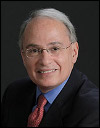 Joseph Biederman: Chief of the Program in Pediatric Psychopharmacology, Massachusetts General Hospital, Biederman has received research funds from 15 pharmaceutical companies. The New York Times exposed how Joseph Biederman earned $1.6 million in consulting fees from drug makers between 2000 and 2007 but did not report all of this income to Harvard University officials. His marketing of the theory that children have “bipolar” was attributed to the increase in antipsychotic drug sales for pediatric use in the United States—today 2.5 million children. Following exposure of his conflicts, he stepped down from a number of industry-funded clinical trials. In March 2009, in newly released court documents, Biederman was reported to have promised drug maker Johnson & Johnson in advance that his studies on the antipsychotic drug Risperidone would prove the drug to be effective when used on preschool age children.
 Melissa DelBello: Research psychiatrist, University of Cincinnati was cited for her failure to disclose to the university much of what she had earned from pharmaceutical companies. In 2002, she was the lead author of a study that reported some patients benefited from the antipsychotic drug Seroquel, which is manufactured by AstraZeneca, which paid her $100,000 in 2003 and $80,000 in 2004. DelBello disclosed that she’d received $100,000 from the company between 2005 and 2007, but federal investigators discovered it was more than double that—$238,000.
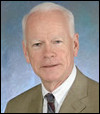 Frederick Goodwin: Former National Institute of Mental Health (NIMH) director, Goodwin earned at least $1.3 million between 2000 and 2007 for giving marketing lectures to physicians on behalf of drug makers—a fact he did not reveal to the audience, broadcaster or producers of “The Infinite Mind,” that he hosted on the National Public Radio during its 10-year run. Subsequently, NPR removed the program from its schedule. Lichtenstein Creative Media issued a statement that this income was a violation of the contract between the company and Goodwin.
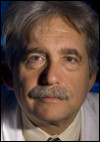 Charles Nemeroff: Professor and Chairman of Psychiatry and Behavioral Sciences, Emory University School of Medicine in Atlanta. From 2000 through 2006, Nemeroff received just over $960,000 from GlaxoSmithKline (GSK), but only disclosed no more than $35,000 to Emory. Between 2000 and 2007, Charles Nemeroff earned more than $2.8 million from various drug makers but failed to report at least $1.2 million. He signed a letter in 2004 promising Emory administrators that he would earn less than $10,000 a year from GSK but on the same day he was at a hotel earning $3,000 of what would become $170,000 in income from the company—17 times greater than the figure he agreed upon. He was the principal investigator for a five-year $3.9 billion grant financed by the NIMH for which GSK provided the drugs, during which he received more than the annual $10,000 threshold allowed from the company. In 2006, he stepped down as editor of Neuropsychopharmacology after publishing a favorable review of the vagus nerve stimulation (VNS) device, manufactured by Cyberonics, for which he was a paid consultant. In 2003, he coauthored a favorable review of three therapies in Nature Neuroscience failing to mention his significant financial interests in these, including owning the patent for one of the treatments—a lithium patch. Nemeroff has consulted for 21 drug and device companies simultaneously. In 1991 Nemeroff testified before the FDA on behalf of Eli Lilly in hearings into Prozac, saying that the drug did not cause suicidal acts of ideation—yet 13 years later, the FDA concluded the opposite and issued a black box warning about suicide risks. Nemeroff resigned his position at Emory in 2008.
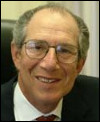 Martin Keller: Professor of Psychiatry and Human Behavior at Brown University, chairman of the psychiatry department at the Alpert Medical School, Keller’s study (329) on GSK’s Paxil use in children and adolescents and its authors have been fiercely criticized in medical journals for allegedly misrepresenting data, suppressing information linking the drug to suicidal tendencies and reaching a conclusion unsupported by the relevant data. There are also claims that a GSK-affiliated employee ghostwrote Study 329, while Keller et al. made huge sums of money from the antidepressant manufacturer. In 1999, it was disclosed that while serving as chief of the psychiatry department at Brown University, Keller earned more than $842,000 from Pfizer, Bristol-Myers Squibb, Wyeth-Ayerst and Eli Lilly, makers of antidepressants he “lauded in a series of medical research reports.” After a three-year criminal investigation by the Attorney General’s Office, Brown University “agreed to return $300,170” of taxpayer money to the state of Massachusetts for psychiatric research Keller’s psychiatry department never performed. Additionally, Keller did not disclose the extent of his financial ties with companies to the medical journals that published his research—this included $93,199 in 1998. In the same year that Keller authored a review article in Biological Psychiatry, and concluded that the newer antidepressants were more effective, he received $77,400 in personal income and $1.2 million in research funding from the makers of two of these drugs. In April 2009, Keller announced he was stepping down as chair of psychiatry at Brown.
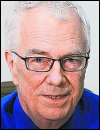 Augustus John Rush: Former Vice-Chairman of the Dept. of Clinical Sciences at the University of Texas Southwestern Medical Center, and now working at Duke University’s medical school in Singapore. He was criticized for disclosing only $3,000 of the nearly $18,000 that Eli Lilly had paid him in 2001. Between 2000 and 2007, he neglected to report another $12,000 from various drug companies. His research studies list financial relationships with more than 20 pharmaceutical companies. In 2003-2005 he received an NIH grant to conduct a clinical training program that dealt with, among other things, medical ethics.
 Alan Schatzberg was appointed APA President in May 2009, despite the exposure of his conflict of interest. As exposed in The New York Times and other media, Schatzberg owned $6 million equity in drug developer Corcept Therapeutics at the same time that he was principle investigator in an NIH-funded, Stanford-based study of Corcept’s drug mifepristone. Schatzberg had initiated the patent application on mifepristone to “treat psychotic depression” in 1997. He co-founded Corcept in 1998, and in 1999, extended the NIH grant for the study of psychotic depression to include mifepristone. In 2008, Schatzberg stepped down from his position as principal investigator in the study following months of Congressional scrutiny regarding his financial ties to the drug industry.
 Thomas Spencer: Assistant Director of the Pediatric Psychopharmacology Unit at Massachusetts General Hospital and Associate Professor of Psychiatry, Harvard Medical School, he is under Senate investigation for reportedly failing to disclose at least $1 million in earnings from drug companies between 2000 and 2007.
 Karen Wagner: Professor, University of Texas Medical Branch at Galveston reportedly failed to disclose more than $150,000 in payments from GSK. Between 2000 and 2008, Wagner had worked on NIH-funded studies on the use of Paxil to treat teenage depression and was a co-researcher on Study 329 (See Keller). In 2001, when study 329 was published, the company reportedly paid her $18,255. Between 1998 and 2001, she was one of several researchers participating in more than a dozen industry-funded pediatric trials of antidepressants and other drugs. In her Zoloft study, Wagner said she had received “research support” from several drug makers, including Pfizer, but did not disclose she had received “sizeable payments” from Pfizer for work related to the study. Between 2000 and 2005 GSK paid her $160,404, but only $600 was disclosed to the university. In 2002, Eli Lily also paid her over $11,000, which was not disclosed.
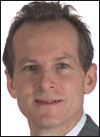 Timothy Wilens: Associate Professor of Psychiatry at Harvard Medical School in Boston allegedly failed to report that between 2000 and 2007 he had earned at least $1.6 million from drug makers. Federal grants received by Dr. Joseph Biederman (above) and Wilens were administered by Massachusetts General Hospital, which in 2005 won $287 million in such grants. He is under Congressional investigation.
NATIONAL ALLIANCE FOR THE MENTALLY ILL: The Senate Finance Committee also requested the financial records of NAMI, a group long accused of being a covert marketing arm of the pharmaceutical industry. The mental health alliance, which is hugely influential in many state capitols, has refused for years to disclose specifics of its fund-raising, saying the details were private. But according to investigators in Mr. Grassley’s office and documents obtained by The New York Times, drug makers from 2006 to 2008 contributed nearly $23 million to the alliance, about three-quarters of its donations.”
While the National Alliance on Mental Illness (NAMI), claims to be an advocacy organization for people with “mental illness,” its actions indicate otherwise. The goup opposed the black box warnings on antidepressants causing suicide for under 18 year olds in 2004, and black box warnings on ADHD drugs causing heart attack, stroke and sudden death in children in 2006, when you look at their biggest source of funding: Pharma.
Read NY Times article here: http://www.nytimes.com/2009/10/22/health/22nami.html?_r=2
Other investigations…
William Weeks: A Dartmouth Medical School professor of psychiatry and community and family medicine, in May 2009, acting U.S. attorney Paul Van de Graff charged the psychiatrist with five federal misdemeanor counts regarding conflict of interests. The U.S. Attorney’s Office also filed an 11-count civil complaint, including 6 counts of conflict of interests, 4 counts of false claims and one count of “breach of fiduciary [financial] duty.” Weeks was allegedly involved in price-fixing contracts in 2003, both initiating the contracts on behalf of the VA and monitoring them.
Jeffrey Bostic, director of school psychiatry at Massachusetts General Hospital, was named in a 34-page court complaint in U.S. District Court in Boston as being a “star spokesman” in helping Forest Laboratories illegally promote its drugs, Celexa and Lexapro for pediatric use despite not having FDA approval for such use. Court documents in March 2009 revealed that the drug company paid Bostic kickbacks, including lavish meals and cash payments disguised as grants and consulting fees, to induce doctors to prescribe the drugs. Forest also paid Bostic to meet other physicians in their offices in order to ease their concerns about prescribing the drugs. The Boston Globe revealed, “…the allegations against Forest are part of a legal and political backlash against potential conflicts of interest in medicine, particularly in psychiatry.”
MORE ON APA-PHARMA CONFLICTS
The APA is steeped in a conflict of interest with the pharmaceutical industry. After all, it has made at least $40 million just in sales of its diagnostic manual, the billing bible that psychiatrists use for insurance reimbursement for “treatment”—most often psychotropic drugs. Consider:
 Nada Stotland: The 2008 APA President, Stotland serves on the Board of the National Mental Health Association (now called Mental Health America), a group that received over $3 million in pharmaceutical company funding in one year alone. In 2008, Pfizer donated at least $500,000 to Mental Health America while Eli Lilly donated $600,000. Stotland is on the speakers’ bureau for Pfizer and GlaxoSmithKline (GSK).
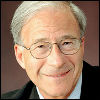 David Kupfer: A member of the DSM-IV Task Force and Chair of the DSM-V Task Force. He has been a consultant to Eli Lilly & Co., Johnson and Johnson, Solvay/Wyeth, Servier and also sat on the advisory boards of Forest Labs and Pfizer. In 2008, Kupfer also disclosed that he had been a consultant for Forest Pharmaceuticals, Pfizer Inc., Hoffman La Roche, Lundbeck and Novartis.
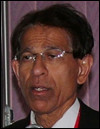 Dilip V. Jeste: APA Trustee and Member of the DSM-V Task Force is a consultant to Bristol-Myers Squibb, Lilly, Janssen, Solvay/Wyeth and Otsuka; honoraria from Bristol-Myers Squibb, Janssen and Otsuka; received “supplemental support to NIMH-funded grants” from Astra Zeneca, Bristol-Myers Squibb, Eli Lilly, and Janssen in the form of donated medication for the study, “Metabolic Effects of Newer Antipsychotics in Older Patients.” Jeste’s 2008 APA disclosure for the DSM-V Task Force stated he received honorarium from Abbott, AstraZeneca, Bristol-Myers Squibb, Eli Lilly Janssen, Pfizer-Eisai, Solvay-Wyeth and Otsuka. He also received consulting fees from nine pharmaceutical companies.
 Steven Sharfstein: Former APA president who sat on the Board of Directors of the American Psychiatric Foundation (APF), an organization formed by the APA that lists 17 major pharmaceutical companies as its corporate adviser. Since 1992, he has been President and CEO of Sheppard Pratt Health System and in 2002, he signed on 6 pharmaceutical companies to test their products at Sheppard Pratt. He signed contracts with Eli Lilly & Co., Merck and Janssen Research Foundation.
As covered elsewhere in this site, Alan Schatzberg was appointed APA President in May 2009, despite the exposure of his $6 million conflict of interest with drug developer Corcept Therapeutics at the same time that he was principle investigator in an NIH-funded, Stanford-based study of Corcept’s drug mifepristone. Schatzberg co-founded Corcept in 1998, and in 1999, extended the NIH grant for the study of psychotic depression to include mifepristone. Dr. Schatzberg co-wrote Textbook of Psychopharmacology with Dr. Charles Nemeroff who is also under Senate Finance Committee investigation for undisclosed conflicts of interest.
DSM: “DIAGNOSIS AS A SOURCE OF MONEY”
In an interview with a psychiatrist outside the American Psychiatric Association conference in May 2009, he commented: “The DSM stands for Diagnosis as a Source of Money”! How true. The financial conflicts between psychiatrists involved with psychiatry’s billing bible, the Diagnostic and Statistical Manual of Mental Disorders (DSM-IV and DSM-V) Task Forces are under scrutiny and the potential pharmaceutical company influence on what “disorders” are included in the DSM. This is especially so as they contribute to the current $25 billion in annual antipsychotic and antidepressant drug sales in the U.S. alone.
A study by Dr. Lisa Cosgrove, Ph.D., from the University of Massachusetts, Boston and Harvard Medical School’s Dr. Harold Bursztjanin showed that despite the APA instituting a disclosure policy for DSM-V (due out in 2012), only 8 out of 27 members of the DSM Task Force had no industry relationship. “The fact that 70% of the task force members have reported direct industry ties—an increase of 14% over the percentage of DSM-IV task force members who had industry ties—shows that disclosure policies alone…are not enough and that more specific safeguards are needed,” stated Dr. Cosgrove. Further, “pharmaceutical companies have a vested interest in the structure and content of DSM, and in how the symptomology is revised.”
A 2006 study by Dr. Cosgrove and Sheldon Krimsky, a Tufts University professor, determined how 56% of the170 psychiatrists who worked on the 1994 edition of the DSM (IV) had at least one monetary relationship with a drug maker. The study also found that every one of the “experts” on DSM-IV panels overseeing so-called “mood disorders” (which includes depression) and “schizophrenia/psychotic disorders” had undisclosed financial ties to drug companies. At the time, international sales of drugs to “treat” these conditions were more than $34 billion.
Dr. Irwin Savodnik, an assistant clinical professor of psychiatry at the University of California, Los Angeles, commented at the time: “The very vocabulary of psychiatry is now defined at all levels by the pharmaceutical industry.”

CCHR is a non-profit, public benefit organization.
SHARE YOUR STORY/COMMENT