Archive for the ‘News’ Category

Huffington Post—Why Relationships May Soon Be Psychiatric Diseases

Monday, April 9th, 2012

April 6, 2012
By Ian Dowbiggin

“Yet in the end analysis, perhaps the most disturbing aspect of consecrating relational disorders is that it is just the latest in a long series of events in the history of psychiatry which has seen professionals increasingly try to extend their authority into the private precincts of everyday life.”

Follow the Money: for some years now there has been a movement afoot in the mental health care field to include a diagnosis called "relational disorder" in the fifth edition of the American Psychiatric Association's Diagnostic and Statistical Manual of Mental Disorders (DSM), due out in 2013.


How many times have we exclaimed in exasperation: “My family’s driving me crazy”?

Until now, it was a mere figure of speech. By this time next year it could entitle you to free therapy.

That’s because for some years now there has been a movement afoot in the mental health care field to include a diagnosis called “relational disorder” in the fifth edition of the American Psychiatric Association’s Diagnostic and Statistical Manual of Mental Disorders (DSM), due out in
2013.

Relational disorders are defined as “persistent and painful patterns of feelings, behavior, and perceptions involving two or more partners in an important personal relationship.” Typically, people suffering from relational disorders have problems with their primary support groups, notably their families.

The concept of relational disorders, like just about everything in diagnostic psychiatry these days, goes back a long way. In the nineteenth century psychiatrists in France coined the phrase “folie â deux” to describe a madness shared by two people.

In a relational disorder between two spouses, for example, while neither person might suffer from an individual disorder, the two could share one. Or as Time magazine put it in 2002, “I’m OK, you’re OK, we’re not OK.”

By now you might be asking: So what?

DSM certification of RD could prove to be a cash cow for all of the professionals treating people from heartbroken marriages and feuding families. 800,000 U.S. couples a year visit offices for marital and family help. Do the math. Some people stand to make a lot of money.

Well, here’s what: the new DSM, the latest in a series stretching back to 1952, ranks among the most important textbooks ever. Its impact affects almost all domains of everyday life, including government, health care, industry, education, the courts and the media.

If the authors of the DSM officially recognize a diagnosis it gives researchers a common vocabulary for studying mental conditions. This comes in handy when someone is researching psychological illnesses, whose causes and symptoms are much less clear than, say, cancer or heart disease.

Proponents of the RD diagnosis say research is on their side and that people with dysfunctional relationships fill up doctors’ waiting rooms.

Yet perhaps most important is the fact that once a diagnosis makes it into the DSM, third party insurance in the United States normally will cover the costs of treatment. No wonder wags have called a DSM diagnosis “an insurance claim.”

Now, I have no insider knowledge of DSM deliberations, so I can’t say for certain that relational disorders will be included in the next volume. What I can tell you is that since the 1990s a group of researchers has been furiously lobbying the DSM’s authors to accept RD as an official diagnosis.

I can also tell you that the marriage and family counseling profession tends to be behind this move. And you can well understand why. By the end of the twentieth century the MFC field had attained status as the fifth “core” mental health group. But at that very time managed care economics began dominating medicine, gutting third-party reimbursement for psychiatric services.

It became imperative for counselors and therapists to get the kind of problems they deal with in treatment recognized as genuine disorders in the DSM. If not, many would go broke.

As Peter Keefe of the University of Toronto’s Department of Psychiatry noted in 2003, some suspect that the move to legitimize RD is a “gambit to loosen the purse strings of managed care providers.”

DSM certification of RD could prove to be a cash cow for all of the professionals treating people from heartbroken marriages and feuding families. 800,000 U.S. couples a year visit offices for marital and family help. Do the math. Some people stand to make a lot of money.

Yet in the end analysis, perhaps the most disturbing aspect of consecrating relational disorders is that it is just the latest in a long series of events in the history of psychiatry which has seen professionals increasingly try to extend their authority into the private precincts of everyday life.

So if the next DSM does include RD, countless people will wake up one morning with a psychiatric disorder. And it’ll have a lot more to do with professional self-interest than hard science.

http://www.huffingtonpost.com/ian-dowbiggin/relationships-may-soon-be-diseases_b_1408948.html

« Return to news items


Share

More States Spank High-Prescribing Docs

Tuesday, April 3rd, 2012

Pharmalot – April 3, 2012
by Ed Silverman

citizens commission on human rights

“Out-of-control pychiatric prescribing is analogous to cutting the brake lines on society. We’ve already seen crashes - witness school shootings, depleted Medicaid coffers, children saddled with ignorant labels such as ADHD. Putting the brakes on out of control psych prescribers is a good first step,” says Ken Kramer, who has investigated high-prescribing doctors for the Citizens Commission on Human Rights International, which objects to psychotropic drugs.

For the past two years, US Senator Chuck Grassley has pressed all 50 states to provide data on doctors who write huge numbers of prescriptions for specific drugs that are paid for by Medicaid programs. Why? There were reports indicating certain meds – widely used antipsychotics and the OxyContin painkiller – have sometimes been prescribed at unusually high rates.

The underlying concern over prescription drug abuse that leads to unnecessary costs and deaths. “Over prescription of these types of drugs strains the financial viability of the Medicaid and Medicare systems and threatens the health and well-being of the American people,” Grassley said last month at a hearing of the Senate Finance Committee Health Care Subcommittee.

The effort is an outgrowth of an earlier investigation into the financial interplay between physicians and the pharmaceutical industry. At issue has been the extent to which these relationships – which can take place in the form of research grants or fees for speaking and consulting – may unduly influence medical research and practice.

Initially, some states refused to comply with his demands. More recently, though, results have begun to trickle in and there are growing signs that some states are taking action against doctors who have been identified as high prescribers. For instance, Minnesota recently reported two physicians to its Board of Medical Practice for disciplinary action in connection with inappropriate prescribing (read here).

In Oregon, 67 prescribers, or 18 percent of 367 prescribers, were recently terminated from Medicaid contracts after a review of data from three years. State officials say most were due to business changes, but there were 15 specific prescribers who were terminated for loss of license, suspension or other disciplinary actions by the Oregon Medical Board (see this).

Simultaneously, Florida has been terminating contracts for high-prescribing docs to participate in its state Medicaid. The list was up to 10 physicians through January, according to documents provided to Grassley (look here, here, here and here). One also had his license suspended (read here).

And as ProPublica noted last fall, one doctor, Huberto Moreyo, was in demand as a speaker and consultant for several drugmakers (see this and this).

The same approach is also under way in Iowa, where the state Board of Medicine is reviewing top prescribers and the state Department of Human Services identified OxyContin and Xanax as among the drugs for which some physicians have written a large number of prescriptions (read this, this and this).

“While the responses from the states are still being received, many states are still reporting a selection of top ten providers that are prescribing at rates double or triple that of their peers,” Grassley said in a recent statement about the ongoing probe. “While some of these outliers are legitimate providers working in high-volume practices, such as mental hospitals, many cannot be explained away.”

He cited one example in which the top prescriber of antipsychotics in Nevada wrote nearly 6,800 prescriptions for these meds in 2010 and 2011, which was more than 10 times other top prescribers. And this one doc accounted for $2.75 million in payments from Medicaid. By contrast, no one doctor in Colorado wrote more than 2,000 prescriptions for the same drugs over the same period.

“Out-of-control pychiatric prescribing is analogous to cutting the brake lines on society. We’ve already seen crashes – witness school shootings, depleted Medicaid coffers, children saddled with ignorant labels such as ADHD. Putting the brakes on out of control psych prescribers is a good first step,” says Ken Kramer, who has investigated high-prescribing doctors for the Citizens Commission on Human Rights International, which objects to psychotropic drugs.

http://www.pharmalot.com/2012/04/more-states-spank-high-prescribing-docs/

« Return to news items


Share

Report: Prescription drug cocktail led to Pennsylvania shooting rampage

Monday, April 2nd, 2012

April 2, 2012 NaturalNews

It is becoming an all-too-common occurrence, but one that deserves far more media attention than it is currently getting -- psychiatric drugs so severely altering the minds of patients that they end up going on violent rampages where people are left seriously injured or dead. A few weeks ago, 30-year-old John F. Shick, a former mental health patient, went on a shooting rampage at the Western Psychiatric Institute and Clinic of the University of Pittsburgh Medical Center (UPMC). And while law enforcement officials were searching Shick’s apartment after the incident, they discovered a shocking 43 different medications in the man’s apartment unit that appear to have played a direct role in triggering the tragic event.

It is becoming an all-too-common occurrence, but one that deserves far more media attention than it is currently getting — psychiatric drugs so severely altering the minds of patients that they end up going on violent rampages where people are left seriously injured or dead. And in the case of Shick, it appears as though both his prescribed psychiatric drugs and treatments sent him over the edge into a drug-induced killing spree that left one man dead and five others seriously wounded.

If the system decides you’re mentally ill, you can kiss your sanity goodbye

It all began in 2009 when Shick was arrested at Portland International Airport in Oregon following an exchange with police where an officer reportedly ended up being kicked in the head. A judge eventually ordered that Shick undergo six months of mental health treatment, which turned out to be primarily psychiatric drug regimens with powerful mind-altering consequences that appear to have left Shick in a worse state than he was prior to the scuffle.

According to the Pittsburgh Post-Gazette, Shick’s apartment after the shooting spree was found to contain the 43 different medications, which were prescribed by about a dozen different doctors, as well as a number of disturbing notes lying around and messages scrawled into the walls complaining about what his psychiatric treatments were doing to him. By all appearances, Shick’s medications, all of which were ordered as part of his state-mandated mental health protocol, appear directly responsible for triggering the crimes he committed.

Shick was particularly incensed with the way an unnamed internal medicine physician at UPMC, who also lived in the same building as Shick, treated him. According to reports, Shick’s notes explained that his psychiatric doctors had misdiagnosed him, and presumably ordered him to take medications for conditions he did not actually have. Shick even reportedly put sticky notes with apparent cries for help on the outside of his apartment door.

So instead of actually trying to help Shick with his obvious mental ailments, the government merely tossed him into the mental health system where he was pumped with drugs and sent on his way to fend for himself. And in the end, these powerful drugs, which are already known to spur violent behavior, led to yet another pharmaceutical drug-induced tragedy that did not need to happen.

Sources for this article include:

http://www.post-gazette.com

http://www.huffingtonpost.com

http://abcnews.go.com


« Return to news items


Share

New Study Showing Effectiveness of Electroconvulsive Treatment (Electroshock) is 100% Bogus

Tuesday, March 20th, 2012

YET ANOTHER BOGUS ELECTROSHOCK STUDY

by CCHR International—March 20, 2012

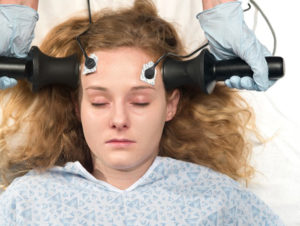
electroshock (renamed electroconvulsive 'treatment') delivers up to 460 volts of electricity through the brain

A new Scottish study hailing the wonders of electroshock treatment  has provided yet another lame theory about how this violent therapy might “work.”  And while the press seem content to robotically reiterate this bogus study, we’d like to point out the actual facts.

Professor Ian Reid from the University of Aberdeen, and colleagues claim that ECT works by “turning down” an overactive connection between areas of the brain causing depression.   Incredibly, the authors claim electric shock may restore the brain’s natural chemical balance.   This logic is so moronic we’re not sure where to start.    First consider the fact that there is no proof that mental distress is due to a “chemical imbalance.”  That theory was an invention of the psychiatric/pharmaceutical industry and has never been proven.   In fact, “leading” psychiatrists on National Public Radio recently admitted that the “chemical imbalance in the brain” theory is a fraud,  and that pharmaceutical companies and psychiatrists invented it to market Prozac.[1]   Another study that revealed that for 13 years media reported psychiatrists’ “discoveries” of a genetic/neurological cause of mental problems, none of which was subsequently proven.[2]

The Aberdeen findings are just more of the same hype: “emerging” theory, “may” constitute a biological marker, they’ve

Even toddlers are being subjected to electroshock

found a “potential” therapeutic target in the brain.  And the all-telling: “It is tempting to speculate that ECT might act to rebalance” specific brain activity “but the data presented here cannot confirm or refute this notion.” [Emphasis added][3]  Let’s look more closely at what doesn’t get reported in the media:

  •  The sample size in the study—9 people—is so small that it’s worthless. The study admits: “the sample size is small.”
  • The patients had to have had a history of failing to “respond to psychotropic medication” yet were kept on drugs during the study. Four patients were taking antipsychotic drugs, which are known to cause brain shrinkage.
  • The researchers admit: “medication effects cannot be ruled out.” In other words, any so-called visible change seen through an MRI could be drug-induced.
  • As “depression” cannot be seen through or diagnosed by any brain scan or MRI, there’s no telling what the MRI used in the study was reacting to.
  • The ECT device was a Thymatron, made by the U.S. company called Somatics. [4] The company is currently embroiled in controversy because in over 30 years, it has never submitted a “Pre-Marketing Application” to the Food and Drug Administration (FDA) which is required to show the device is “safe and effective” before it can be approved for use. Recent testimony to the FDA said the device causes brain damage in patients.
  • Neurologists state that the damage caused by the electricity sent through the brain during ECT is equivalent to that seen in head trauma. Dr. John Friedberg says ECT causes more permanent memory loss than any severe closed-head injury with coma.[5]

Reid is the Chair of “The ECT and Related Treatments Committee” for Royal British College of Psychiatrists and is a long-term proponent of biological interventions for people with mental problems, including antidepressants.  He is opposed to any ban on “compulsory” ECT. [6] Therefore, it is in his interests to devise a theory to justify enforcing the violence of electroshock on someone against their will.

 “These bastards are trying to kill me.”

Yet, patients undergoing electroshock testify it is “cruel and unusual treatment” in violation of Article 5 of the UN Universal Declaration of Human Rights.

Evidence such as these patients who were given ECT and testified before an Australian government inquiry:

  •  “I have memories of shock treatment being administered…it was like someone trying to twist my head…I remember screaming out at one stage about the cruelty I was receiving….”
  •   “…it felt like all the telegraph wires came down on the top of my head and a big blue flash all around me.”
  •  “The feeling was one of pain from the top of your head to the tip of your toes…It was like someone hit you with a sledgehammer, wham, and you exploded.  It was so bad that [I] thought, ‘These bastards are trying to kill me.’”

Reid’s claims about a biological marker for depression that can be corrected by electroshock is about as scientific and as irresponsible as a neurosurgeon performing surgery on a non-existent brain tumor.

The study is self-serving.  As a British Journal of Psychiatry editorial admitted, ECT serves only to stimulate “biological psychiatry” and powerfully reinforces the belief in somatic (physical) treatments in psychiatry. [7]


[1] Jonathan Leo Ph.D. and Jeffrey Lacasse, Ph.D., “Psychiatry’s Grand Confession,” MadinAmerica.com, 23 Jan 2012

http://www.madinamerica.com/2012/01/psychiatrys-grand-confession/

[2] Sarah Colyer, “Media over-optimistic about gene discoveries in psychiatry,”

Psychiatry Update (Magazine from publishers of Australian Doctor) 6 Oct. 2011; http://www.psychiatryupdate.com.au/getattachment/b73012c5-11de-4af7-b56d-e82430aa995d/pdf.aspx

[3] http://www.pnas.org/content/early/2012/03/12/1117206109.full.pdf+html?sid=6b7f2f97-0645-46fe-b44c-a419df537dac

[4] http://www.pnas.org/content/early/2012/03/12/1117206109.full.pdf+html?sid=6b7f2f97-0645-46fe-b44c-a419df537dac

[5] http://www.ect.org/effects/headinjury.html

[6] Psychological Medicine (1999), 29 : pp 221-223, http://journals.cambridge.org/action/displayAbstract;jsessionid=FB7CAB8737E83B61E5DE55F3768E0CF5.journals?fromPage=online&aid=25899 1999 Cambridge University Press

[7] JOHN READ and RICHARD BENTALL, “The effectiveness of electroconvulsive therapy: A literature review,” Epidemiologia e Psichiatria Sociale, 19, 4, 2010


« Return to news items


Share

State Puts Lid on Overprescribing Docs

Saturday, March 17th, 2012

Pittsburgh Tribune – March 17, 2012

by Andrew Conte

“The state’s response to Grassley was made public yesterday when the agency responded to a Right-to-Know Request filed by Ken Kramer, an investigator for Citizens Commission on Human Rights International, a group that investigates and exposes psychiatric abuse.  ”

One doctor last year gave out 6,950 prescriptions for Xanax — or more than 19 every day — at a cost of nearly $70,500.

Pennsylvania has investigated and removed some doctors who were among the top prescribers of painkillers and mental health drugs for Medicaid patients, officials said in a letter made public on Friday.

Five doctors were disqualified from participating in the program; four had their licenses suspended; two were referred to prosecutors for review; and one is under investigation, the state Department of Public Welfare told U.S. Senate investigators.

The state reported its actions in a Feb. 27 letter to Sen. Charles Grassley, R-Iowa, who has been investigating abuses nationwide of medicines such as the anti-depressant Xanax. Pennsylvania initially provided information about the top 10 prescribers of eight antipsychotic, painkiller or anti-anxiety drugs to Grassley in 2010.

“We are seeing that certain states, including Pennsylvania, are reporting that they or the state medical board has taken action against medical providers, and that’s good news,” said Jill Gerber, Grassley’s spokeswoman.

The state welfare department said it sent intervention letters to 51 other doctors, showing their patients’ drug histories. The state said its program encourages doctors to discontinue unnecessary prescriptions, reduce drug quantities or switch to other treatments.

State officials declined to identify any doctors.

“Our administration is dedicated to rooting out all waste, abuse and fraud in our programs and services,” spokeswoman Donna Kirker Morgan said in a statement.

“Although the senator’s questions are an interesting snapshot of antipsychotic drug utilization in the Medicaid system, the questions do not delve into important facts and backgrounds about patients and their current needs for such drugs and the circumstances for such prescriptions.”

Top prescribers continue to dispense many of the drugs at a high cost for taxpayers, the state’s response shows. Along with its letter, public welfare reported the top 10 prescribers for eight drugs, showing the number of prescriptions each doctor wrote and the dollar value of them.

One doctor last year gave out 6,950 prescriptions for Xanax — or more than 19 every day — at a cost of nearly $70,500. The year before, another doctor wrote 1,864 prescriptions for Seroquel, an antidepression and schizophrenia drug that can cost up to $12 per tablet. The Seroquel prescriptions cost taxpayers more than $1 million.

The state attorney general’s office could not immediately provide details about whether any of the public welfare referrals resulted in prosecution. “We aggressively pursue provider fraud, which diverts limited taxpayer resources from Medicaid recipients with legitimate needs,” spokesman Nils Hagen-Frederiksen said.

The state’s response to Grassley was made public yesterday when the agency responded to a Right-to-Know Request filed by Ken Kramer, an investigator for Citizens Commission on Human Rights International, a group that investigates and exposes psychiatric abuse.

“It’s very good to see Pennsylvania taking action,” Kramer, 55, of Clearwater, Fla., said in an email to the Tribune-Review. “There is no debate on this: Patients are overdrugged, Medicaid is overbilled and taxpayers are overburdened — all caused by the bogus prescribing of psychiatrists.”

Read more: State puts lid on overprescribing doctors – Pittsburgh Tribune-Review http://www.pittsburghlive.com/x/pittsburghtrib/news/regional/s_786956.html#ixzz1pOj3N4Rl

« Return to news items


Share

Fox News: A psychiatrist tells the truth— it’s OK not to be ‘normal’

Friday, March 16th, 2012

Note from CCHR: We didn’t come up with the headline, but we think its interesting that Fox News did.  So our question is, what about the rest of psychiatry?  When are they going to  be required to tell the truth, considering they are funded billions of dollars by governments based on untruths?

Fox News – March 15, 2012
By Dr. Dale Archer

When Mark Twain’s hero Huckleberry Finn was forced to study spelling for an hour every day, he said, “I couldn’t stand it much longer. It was deadly dull, and I was fidgety.” His teacher, Miss Watson, threatened him with eternal damnation if he didn’t pay attention. Huck admits it didn’t seem like such a bad alternative. “But I didn’t mean no harm. All I wanted was to go somewheres; all I wanted was a change, I warn’t particular.”

If that had happened today, Huck would have been diagnosed as ADHD, put on Adderall, and forced to attend school, while the book about his adventures would never have been written.

The American Psychiatric Association invented the term “ADHD” in 1980 to give kids with hyperactivity, impulsivity, short attention span and easy distractibility a diagnosis.

Who would have thought that 28 years later, the National Center for Health Statistics would report that over 5 million American kids (8 percent) between the ages of 3-17 would receive this diagnosis? That’s 1 out of 12, with about half of those on medication.

William Evans, Ph.D., with the Journal of Health Economics found that a huge predictor for the diagnosis of ADHD was the age of the child with respect to their grade. In other words, younger children in a given grade, have more ADHD symptoms than older ones. No surprise there- younger kids clearly are more restless and less able to concentrate on a topic, or sit quietly in a classroom all day long. According to his research, “approximately 1.1 million children received an inappropriate diagnosis and over 800,000 received stimulant medication due only to relative maturity.”

Let me quickly point out that I’m not opposed to medication to treat those with severe symptoms, but does 1 out of every 12 kids really have ADHD?

I wish this was just about ADHD, but that’s just what I’ve chosen to illustrate my point. I could have chosen bipolar disorder, OCD, generalized anxiety, social anxiety or many others because this is about the over-diagnosing, over-treating and over-medicating of psychiatric problems throughout America The first psychiatric diagnostic manual, DSM-I, in 1952 had 106 disorders listed. The revised DSM- IV in 2000 had 365!

The National Institute of Mental Health has found that 26 percent of Americans (1 in 4) have a diagnosable psychiatric illness.

The only word for that is “ludicrous.”

A disorder of any kind is by definition something wrong, screwed up, malfunctioning. A mental disorder is an irregularity in the functioning of the brain. If the brains of one quarter of the U.S. population are disordered then something is very, very wrong with the human mind.

Or with our mental health system.

In a Wired magazine interview in January 2011, Allen Frances (lead editor of the Diagnostic and Statistical Manual for Mental disorders –IV) blamed the DSM- IV itself. “We made mistakes that had terrible consequences,” says Frances. One of these consequences, the article notes, is that diagnoses of ADHD have skyrocketed. Greenberg writes: “Frances thinks his manual inadvertently facilitated these epidemics— and, in the bargain, fostered an increasing tendency to chalk up life’s difficulties to mental illness and then treat them with psychiatric drugs.”

Here’s the problem: The profession of psychiatry has taken on the role of defining ‘normal’ in our society. Even Webster’s dictionary defines normal as being, “free from a mental disorder.”

As we purposely shrink the box called normal and it gets smaller and smaller, the abnormal universe expands to include almost everyone. But we say, “don’t worry, we can fix that with a pill and make you normal just like everyone else.”

My profession has not only redefined mental health by over-diagnosing and over-medicating an ever-expanding number of diagnoses, we are also taking away the hope of human nature by telling our patients that they are inherently “abnormal” and need to be fixed.

The psychiatrist’s office has gone from being the place no one would be caught dead visiting…to the place where a pill could fix anything. And psychiatry itself has gone from being stigmatized to glamorized.

Psychiatric conditions don’t come with an on/off switch, but rather occur along a continuum. High levels of any given trait may represent a severe psychiatric diagnosis requiring medication, BUT in small to medium doses, these very same traits can represent your greatest strengths.

On a scale of 1 to10, what separates an ADHD 7 from an ADHD 10? Who gets medicated…..and why? How could one person use a set of “symptoms” as a springboard for success while another with the exact same symptoms needs meds and therapy? How are CEOs like Richard Branson (Virgin Airlines), John Chambers (Cisco), and Charles Schwab able to parlay their ADHD into tremendously successful careers, while others are searching for a magic pill and a cure?

David Neeleman, founder of JetBlue has said that if he found a magic pill to make his ADHD go away, he wouldn’t take it. Creativity and innovation are hallmarks of those with ADHD. When a child first presents with symptoms, why aren’t we telling them that they are 3 times more likely to form their own business, will thrive in disruptive situations, will embrace adventure and are adept at multitasking, as opposed to giving them a diagnosis and a pill?

We must stop thinking about how to give the “patient” what they think they want and start taking a look at what’s good about what they have.

We must empower individuals to think it’s ok to be “not normal” and change the mindset that everything can be “fixed” with a pill or a few therapy sessions.

We must help them understand that what they perceive as their worst trait, may in reality be their best.

It’s time for a new order of business in mental health, based on the premise that when you try to conform to a perceived “normal,” you lose your uniqueness—which is the foundation for your greatness.

Dr. Dale Archer is a psychiatrist and frequent guest on “FoxNews.com Live.” He is the author of the new bestselling book “Better Than Normal: How What Makes You Different Can Make You Exceptional”For more, visit his website: Dr.DaleArcher.com.

http://www.foxnews.com/opinion/2012/03/15/psychiatrist-tells-truth-its-ok-not-to-be-normal/

« Return to news items


Share

Law Enfocement finds Pennsylvania Shooter prescribed 43 drugs ranging from psychiatric drugs to pain pills

Wednesday, March 14th, 2012

Pittsburgh Post-Gazette – March 14, 2012
By Michael A. Fuoco

School shooters under the influence of psychiatric drugs documented to cause violence/mania have left 57 dead and 109 wounded

Law enforcement authorities who searched John F. Shick’s North Oakland apartment following his deadly shooting rampage Thursday found 43 medications ranging from psychotropic drugs to pain pills to erectile dysfunction tablets that had been prescribed by about a dozen different doctors, sources close to the probe said.

Additionally, they found the address for Western Psychiatric Institute and Clinic of UPMC, the scene of the shootings, written on a piece of paper hanging from a wall in Mr. Shick’s fourth-floor flat in the Royal York Apartments.

Rambling messages were written on the walls themselves and in notebooks scattered throughout the apartment. And there were handwritten complaints about his medical treatment for a variety of physical ailments, sources reported.

The notations included complaints about various doctors and what Mr. Shick characterized as their misdiagnoses of his ailments. But Mr. Shick’s ire was particularly centered on a UPMC internal medicine physician who appeared to have treated Mr. Shick, sources said. Mr. Shick and the doctor lived in the same apartment building, the sources said, and they had argued. The doctor could not be reached for comment, so the Pittsburgh Post-Gazette is not identifying him.

Mr. Shick, 30, who killed one person and wounded five others in Western Psych’s first floor before University of Pittsburgh police fatally shot him, had the night before the carnage asked someone in his apartment building to call an ambulance. He vomited in the lobby before being taken to UPMC Presbyterian. There, he complained of having worms in his bowels.

Previously, residents of his apartment said, Mr. Shick sometimes left yellow Post-Its on his door that said, “Now cleaning up vomit of pancreatitis. Please do not disturb.”

Mr. Shick also ranted in his writings about the evils of “corporate America,” sources said, and had a gas mask and a biohazard suit in the apartment.

Executives at the Sterling Land Co., which owns the Royal York Apartments, said in a letter delivered to tenants last week that they “had no knowledge of John Shick’s health problems.” They said Mr. Shick moved to the apartment last July. In a second letter sent to residents this week, they advised “worried, upset or grieving” tenants to seek counseling via the re:solve Crisis Network in the East End.

Pittsburgh police Cmdr. Thomas Stangrecki said he had no comment on what investigators found in the apartment and no further update on the investigation into Mr. Shick’s motivation in the attacks.

Neither he nor UPMC officials would say if Mr. Shick had been a patient at Western Psych. But Karl E. Williams, the Allegheny County medical examiner, said Tuesday that as part of his investigation he had obtained a court order compelling UPMC hospitals, including Western Psych, to provide any medical records for Mr. Shick it may have.

Paul Wood, spokesman for UPMC, said Tuesday he knew nothing about such a court order being served on the institution.

“In order for everything to be purely correct, legally correct, the [medical examiner] has to request a subpoena and it has to be ordered by the court and then we supply any records we have on that person,” Mr. Wood said. “We look forward to cooperating with law enforcement.”

Mr. Wood said UPMC’s legal understanding of the federal privacy law is that it cannot confirm or deny that someone has been a patient or received any care at one of its hospitals — even after that person has died.

In another development, a surveillance video from a Rite Aid Pharmacy at 209 Atwood St. in Oakland obtained by WTAE-TV shows a man that appears to be Mr. Shick shopping at the store about an hour before the shootings. On Tuesday afternoon, an employee said she had seen Mr. Shick in the store at least once in the past two weeks, but she declined to comment further.

Cmdr. Stangrecki said he could not confirm if the man was Mr. Shick, but police had formally requested the surveillance video from Rite Aid.

Read the rest of the article here:  http://www.post-gazette.com/stories/local/region/western-psych-shooters-flat-full-of-rants-medications-248336/?p=0

« Return to news items


Share

ABC News: DSM-5 Criticized for Financial Conflicts of Interest—70% of task force members have ties to Pharma

Tuesday, March 13th, 2012

ABC News – March 13, 2012
By Katie Moisse

70 percent of DSM-5 task force members reporting financial relationships with pharmaceutical companies— up from 57 percent for DSM-4

Controversy continues to swell around the fifth edition of the Diagnostic and Statistical Manual of Mental Disorders, better known as DSM-5. A new study suggests the 900-page bible of mental health, scheduled for publication in May 2013, is ripe with financial conflicts of interest.

The manual, published by the American Psychiatric Association, details the diagnostic criteria and recommended treatments — many of which are pharmacological — for each and every psychiatric disorder. After the 1994 release of DSM-4, the APA instituted a policy requiring expert advisors to disclose drug industry ties. But the move toward transparency did little to cut down on conflicts, with nearly 70 percent of DSM-5 task force members reporting financial relationships with pharmaceutical companies — .

“Organizations like the APA have embraced transparency too quickly as the solution,” said Lisa Cosgrove, associate professor of clinical psychology at the University of Massachusetts-Boston and lead author of the study published today in the journal PLoS Medicine. “Our data show that transparency has not changed the dynamic.”

The DSM is developed by an APA-appointed task force and panels consisting of experts in various fields of psychiatry. But many of these experts serve as paid spokespeople or scientific advisors for drug companies, or conduct industry-funded research. Some of most conflicted panels are those for which drugs represent the first line of treatment, with two-thirds of the mood disorders panel, 83 percent of the psychotic disorders panel and 100 percent of the sleep disorders panel disclosing “ties to the pharmaceutical companies that manufacture the medications used to treat these disorders or to companies that service the pharmaceutical industry,” according to the study.

“We’re not trying to say there’s some Machiavellian plot to bias the psychiatric taxonomy,” said Cosgrove, who is also a research fellow at Harvard’s Edmond J. Safra Center for Ethics. “But transparency alone cannot mitigate unintentional bias and the appearance of bias, which impact scientific integrity and public trust.”

The DSM-5 has also drawn criticism for introducing new diagnoses that some experts argue lack scientific evidence. Dr. Allen Frances, who chaired the revisions committee for DSM-4, said the new additions would “radically and recklessly” expand the boundaries of psychiatry.

“They’re at the boundary of normality,” said Frances, who is professor emeritus of psychiatry at Duke University. “And these days, most diagnostic decisions are not made by psychiatrists trained to distinguish between the two. Most are made by primary care doctors who see a patient for about seven minutes and write a prescription.”

Under the new criteria, grief after the loss of a loved one, mild memory loss in the elderly and frequent temper tantrums in kids would constitute psychiatric disorders. An online petition challenging the proposed changes, which would label millions more Americans as mentally ill, has accrued more than 12,000 signatures.

Read the rest of the article here: http://abcnews.go.com/Health/MindMoodNews/dsm-fire-financial-conflicts/story?id=15909673#.T1–WXnBj4s

« Return to news items


Share

John Shick, Psychiatric ‘Shooter,’ Had Mental Health History; Pittsburgh Cops Seek Motive

Tuesday, March 13th, 2012

Note from CCHR:  In addition to his history of being committed to a mental institution, the shooter at Western Psychiatric Institute and Clinic at the University of Pittsburgh was reported to have bags of unspecified medication found in his apartment by police according to the Pittsburgh Post-Gazette, as well as in his personal belongings at the time of the shooting, as reported by USA Today.   Psychiatric drugs prescribed to treat “mental illness” are documented to cause mania, psychosis, violence, suicidal and homicidal ideation according to the FDA.  12 recent school shooters were found to be under the influence of, or in withdrawal from psychiatric drugs.

Huffington Post – March 13, 2012

Neighbors who lived in suspected gunman John Shick's Pittsburgh apartment building said he behaved erratically and sometimes seemed to walk around while strongly medicated.

PITTSBURGH — The gunman in a fatal shooting rampage inside a Pittsburgh psychiatric clinic was previously committed to a mental health facility for treatment following an altercation with police in Oregon in 2009, a prosecutor said.

Details of John Shick’s previous involvement with mental health professionals come as investigators piece together a motive for last week’s shooting that killed one person and wounded six others in the lobby of the Western Psychiatric Institute and Clinic at the University of Pittsburgh.

Shick was taken for a mental health evaluation following his Dec. 29, 2009, arrest on a road at Portland International Airport that included a scuffle with police that ended with an officer being kicked in the head, according to court documents.

A judge ordered Shick, at the time living under a different name, to undergo up to 180 days of mental health treatment, Multnomah County Deputy District Attorney Robert Leineweber told the Pittsburgh Post-Gazette for Tuesday’s editions. It was not immediately clear how long he was in treatment. Shick had legally changed his name but later changed his name back.

Shick was killed in an exchange of gunfire with University of Pittsburgh police after he entered the clinic and opened fire, killing one person and wounding six, according to authorities.

Hospital officials have refused to say whether Shick was a patient at Western Psychiatric Institute. Allegheny County Medical Examiner Dr. Karl Williams told The Associated Press there are indications he was a patient there but the matter remains under investigation.

Shick had been enrolled as a graduate biology student at nearby Duquesne University but was banned from campus and withdrew after female students brought harassment complaints against him.

Leineweber told the Post-Gazette Shick was never prosecuted after he didn’t hear back from police after the judge ordered Shick’s commitment. Shick’s 2009 arrest was reported Friday by The Oregonian.

Neighbors who lived in Shick’s Pittsburgh apartment building said he behaved erratically, sometimes seemed to walk around while strongly medicated, and posted angry notes on his apartment door in the days before the shooting.

A 25-year-old clinic worker, Michael Schaab, was killed in the shooting. His funeral is scheduled for Thursday.

All the wounded are expected to recover.

Read article here:  http://www.huffingtonpost.com/2012/03/13/alleged-pa-clinic-shooter_n_1341137.html

« Return to news items


Share

Is Mourning Madness? The wrongheaded movement to classify grief as a mental disorder

Monday, March 12th, 2012

Slate – March 12, 2012
By Leeat Granek and Meghan O’Rourke

As Thomas Lynch elegantly put it, “Grief is the price we pay for being close to one another. If we want to avoid our grief,” he said, “we simply avoid each other.”

Is grief a disease? That is one of the crucial questions psychologists are asking as the American Psychiatric Association revamps its Diagnostic and Statistical Manual of Mental Disorders (DSM), used by millions of mental health professionals to diagnose patients, for a fifth edition due out in 2013.

A group of psychiatrists have spearheaded a movement to include ongoing grief as a disorder, to be labeled “complicated” or “prolonged grief.” Others have proposed, separately, that a mourner can be labeled clinically depressed only two weeks after the loss of a loved one. The problem with both potential changes is that more people’s grief will be diagnosed as abnormal or extreme, in a culture that already leads mourners to feel they need to just “get over it” and “heal.”

In January, more than 10,000 mental health professionals, concerned about the credibility of the science behind several proposed additions to the manual, including the potential addition of complicated grief, have signed a petition calling for an “independent review” of the DSM-5. Their concerns are worth taking seriously. Grief, even the ostensibly extreme variety that the DSM might include, is a universal and normal human reaction to the loss of a loved one. Unlike most disorders in the manual, it is a condition we will all experience. It is not a disease and it has no place in a book dedicated to listing mental disorders. In a culture that has largely turned grief into a private experience rather than a communal one, the decision to include grief in the DSM risks doing more harm than good, making it easier than ever to view those who are simply experiencing a painful rite of passage as abnormal.

A major problem with the proposal is that the symptoms of complicated or prolonged grief—such as yearning, sorrow, and sadness—look much the same as those of normal grief. The new diagnosis, spearheaded by two professors of psychiatry, Katherine Shear and Holly Prigerson, at Columbia and Harvard University respectively, would likely characterize complicated grief as a constellation of symptoms that can include intense feelings of sadness, bitterness, and loneliness; difficulty sleeping and concentrating, and detachment and agitation, among others. (Shear and Prigerson each have different definitions; it’s not yet clear what version would be adopted if it were included.)

Advertisement

But at least one large study found that these feelings were experienced by most mourners. And a survey we conducted on grief for Slate found that, out of nearly 8,000 people, the vast majority reported symptoms that resemble those of complicated grief. For example, 81 percent experienced sorrow; more than 72 percent reported overwhelming sadness, yearning, and nostalgia; and close to 60 percent reported trouble sleeping and feelings of longing. Even the advocates of including complicated grief in the DSM acknowledge that there is little qualitative difference between normal and pathological grief.

If the symptoms of complicated grief don’t look any different than those of normal grief, how can we tell the two apart? Right now, advocates for its inclusion argue that the major clinical difference between the two has to do with the duration of these symptoms. In their view, complicated grief can be identified as early as six months after a loss. But research indicates that many people are still in the grips of their grief at this point: In the Slate study, a quarter said they felt normal only “one to two years” after the loss. A mere 30 percent of the respondents reported feeling “normal” or symptom-free again within six months after a major loss. Another large study conducted by George Bonanno and his colleagues at Columbia University found that many mourners reported a long grieving process, with symptoms waning anywhere from six months post-loss to 18 months post-loss.

So what are the downsides of treating grief as a disease? For one thing, more people will be prescribed antidepressants that can have adverse physical and psychological side effects, including increased risk of suicide and addiction and withdrawal problems. (To date, the research has consistently shown that grief counseling and medications do not alleviate grief; they seem most helpful in the cases of people who had pre-existing mental health issues.) It also means that more people will feel shame and embarrassment about not grieving “properly” or getting over their loss fast enough. And the very language of “symptoms” and “duration” seems only to further diminish the significant event that precipitated these feelings in the first place—the death of a beloved person who can’t be replaced.

The inclusion of the diagnosis would be less troubling if we lived in a culture that better understood the fact that grief takes time—and knew how to support it. People used to wear mourning clothes for a year or more, and many cultures have mourning rituals that cluster around the first anniversary of a death. But in the 20th century, Americans began to see the experience primarily as a private and a psychological one rather than a communal one, popularizing Elisabeth Kübler-Ross’ tidy “stage theory” of grief (which moves from “denial” to “acceptance”), and valorizing a “muscling-through-it” approach, to damaging effect.

The truth is that grief is a profound emotional process with very real biological symptoms that can endure for months. For many mourners, grief brings with it feelings of isolation, since a person who occupied a crucial role in your life is gone. It’s easy to see how turning grief into a disease could lead to further feelings of being out of step with those around you—a feeling that already haunts many mourners.

It would be a shame for this to happen. Grief is part of what it means to be human—one of our most significant rites of passage. The majority of mourners do not need medical treatment. They need love, compassion, patience, and a little bit of understanding from their friends, families and colleagues. The truth about grief is that it hurts. It can hurt for a long time—even for years.

That’s because grief is intricately bound up with love. As Thomas Lynch elegantly put it, “Grief is the price we pay for being close to one another. If we want to avoid our grief,” he said, “we simply avoid each other.”

http://www.slate.com/articles/life/grieving/2012/03/complicated_grief_and_the_dsm_the_wrongheaded_movement_to_list_mourning_as_a_mental_disorder_.html

« Return to news items


Share